breakthrough-2010

Living and Learning Is How the Game Is Played

Hot Stamper Pressings of the Music of Elton John Available Now

A classic case of live and learn.

Scroll down to read more about what we learned from a big shootout we did many years ago for the Self-Titled album.

To illustrate how the game is played, we’ve copied some of the previous commentary into this listing to clarify how our understanding had changed from 2004 to roughly 2010, which is when all the comments you see below were written.

Live and Learn, Part One

These domestic original pressings have the very same stamper numbers as the British pressings. It appears that the metalwork was produced in England and shipped to America for pressing on domestic vinyl. What’s strange is that the American pressings are consistently brighter than the British pressings. Why this should be is a mystery, but I have a theory to explain it. The British stampers are used to make British LPs on that lovely see-through purple vinyl, and I’m guessing that that compound is a little smoother sounding than the vinyl that Uni uses. Either that or there is some other way that Uni produces their records so that they end up being brighter, even using the exact same stampers as the British ones.”

Partly true.

We have five British copies in stock, and the reason they don’t sound as good probably has less to do with British vinyl and more to do with the fact that the British ones we have are not the stampers we like the best. The domestic pressings with our favorite stampers have more highs and better highs and just plain sound better to us now.

Notice how I completely contradict myself below, yet both listings were up on the site all this time and nobody, especially me, seems to have noticed.

Live and Learn, Part Two

These original British pressings, with the lovely see-through purple vinyl, are the only good sounding versions of this album that I have ever heard. As you can imagine they are extremely difficult to come by in clean condition.

What is there to say about such a bald-faced turnabout?

Simple. We make our judgments based on the records we have on hand to play. When better pressings come along, or our equipment has improved to the point where we can appreciate other pressings, we will happily and unhesitatingly report what we hear.

The Best Version?

(more…)

Discovering Reversed Polarity on Music for Bang, Baaroom and Harp Was a Breakthrough

schorymusic

Percussion Recordings with Hot Stampers Available Now

Music for Bang Baaroom and Harp is yet another one of the pressings we’ve discovered with reversed polarity on some copies. This happened many years ago, and as you can see from the commentary we wrote back then, it came as quite a shock to us at the time.

Are audiophile reviewers or audiophiles in general listening critically to records like this?

I wonder; I could not find word one about any polarity issues with this title, and yet we’ve played four or five copies with reversed polarity on side two. How come nobody is hearing it, apart from us?

We leave you, dear reader, to answer that question for yourself.

This listing has the latest information on the stamper numbers to avoid.

More stamper and pressing information can be found here.

(more…)

Never a Dull Moment – A Breakthrough Listening Experience

More of the Music of Rod Stewart

In the listing for our 2010 Shootout Winner, we noted:

Having made a number of serious improvements to our system in the last few months, I can state categorically and without reservation that this copy of Never a Dull Moment achieved the best stereo sound I have ever heard in my life (outside of the live event of course). I’m still recovering from it.

In 2022, of course this statement strikes me as way over the top. But I must have believed it when I wrote it.


The credit must go to the engineering of Mike Bobak for the Demo Disc sound. We just finished our most comprehensive shootout ever for the album, culling the best sounding dozen from about twenty-five entrants, and this copy just plain kicked all their butts, earning our highest grade on side one (A+++).

Side one here is OFF THE CHARTS! No other side one could touch it. It’s got all the elements needed to make this music REALLY ROCK — stunning presence; super-punchy drums; deep, tight bass; and tons of life and energy.

The Sound

So many copies tend to be dull, veiled, thick and congested, but on this one you can separate out the various parts with ease and hear right INTO the music.

It’s also surprisingly airy, open, and spacious — not quite what you’d expect from a bluesy British rock album like this, right? But the engineers here managed to pull it off.

One of them was Glyn Johns (mis-spelled in the credits Glynn Johns), who’s only responsible for the first track on side one, True Blue. Naturally that happens to be one of the best sounding tracks on the whole album.

(more…)

What to Listen For on Straight Up

Reviews and Commentaries for the Music of Badfinger

The best sides have the kind of PRESENCE in the midrange that most copies can’t begin to reproduce. The sound on the right pressings just JUMPS out of the speakers, which is exactly what the best copies are supposed to (but rarely) do. 

This is Power Pop, plain and simple. The basics are what count: punchy drums, grungy guitars, present vocals, clear but full bass lines — just the meat and potatoes of rock, no fancy sauces.

For this music to work, all the elements need to be in balance, with correct timbre for the relatively few instruments that make up the arrangements.

Opacity, smear or grit instantly destroy the whole point of having a straightforward production, which is to be able to have all the parts laid out cleanly and clearly.

The idea is to get the production out of the way and just let the music speak for itself.

The truly Hot Stampers remind you of the kind of basic rock and roll record that really knows how to rock. Back in Black comes instantly to mind. Black Dog off Zep IV. This is the sound you want your Straight Up to have. The title of the album is the key to the sound. No fancy packaging, just the band, Straight Up.

From 2007 to 2010 and Beyond

In 2007 we wrote: “Having played more than half a dozen copies of this record during the shootout I can tell you that the most common problem with Straight Up is grainy, gritty sound. Most copies of this record are painfully aggressive and transistory.”

With improvements to cleaning and playback,  I would say that’s not actually true in 2010.

There is some grit to the sound to be sure, but like most records from the era, veiling and smearing are what really hold most copies back.

Good copies of this record, ones that are mastered properly and pressed on “good” vinyl, sound a lot like a stripped down version of Abbey Road, which is what they’re supposed to sound like. That’s clearly the sound Badfinger and their producers George Harrison and Todd Rundgren (with some help from the Beatles’ engineer Geoff Emerick* ) were aiming at.

You will also hear some influences from All Things Must Pass and McCartney’s first. The music owes a lot to both The Beatles as well as Harrison and McCartney as individuals. What’s not to like? Catchy pop songs with grungy guitars — it’s ear candy when the sound is good, and the sound is very good here.


This record is good for testing the following qualities, as are the others linked here:

(more…)

Dad Loves His Work – Beyond White Hot in 2010

Hot Stamper Pressings of the Music of James Taylor Available Now

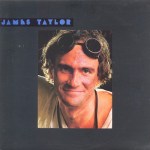
This Hot Stamper original Columbia is THE KING, the Best Sounding Copy we have ever played — the sound was OUT OF THIS WORLD! In fact, side two went so far beyond what we’ve come to expect from this album that we had to award it the rare Four Plus (A++++) grade.

We no longer give Four Pluses out as a matter of policy, but that doesn’t mean we don’t come across records that deserve them from time to time.

Even recordings that are as heavily processed as this one. We don’t have a problem with that approach when it works as well as it does here. Mud Slide Slim this is not. It’s also 1981, not 1971. We prefer the recordings from 1971, undeniably the Golden Age for rock and pop recording quality[1], but we know that to expect the sound of the ’70s in 1981 would simply be setting oneself up for disappointment.

Those days are gone, as are the amazing sounding pressings that came out then, and nobody, repeat nobody, pressing records today can figure out how they did it.

The soundstage and depth on our best Hot Stamper copies is HUGE — this is without a doubt the most spacious recording by James Taylor we’ve ever heard. If you want your speakers to disappear, replaced by a huge studio full of musicians playing their hearts out, this is the album that can do it.

But of course there’s a lot more to the sound of the best copies than a big soundstage.

Tonality is key.

As usually happens in these shootouts, we learned that there’s so much more to this album than just great songs. What really makes this music work on the best copies was the result of two qualities we found were in fairly short supply:

(1) Correct Tonality

Most copies have a phony MoFi-like top end boost in the 10k region that we found irritating as hell. The longer we listened the less we liked the copies that had that boost, which adds a kind of “sparkle” to cymbals and guitars that has no business being there.

Now if you’re a MoFi fan and you like the boosted highs that label is famous for, don’t waste your money buying a Hot Stamper copy from us. Our copies are the ones with the correct and more natural-sounding top end. The guitars will sound like real guitars and the voices will sound like real voices.

(2) Lower Midrange and Bottom End Weight

When the vocals sound thin, bright and phony, as they do on so many copies of this album (partly no doubt the result of the grainy crap vinyl Columbia is infamous for) that hi-fi-ish sound takes all the fun out of the music. Many tracks have background vocals and big choruses, and the best copies make all the singers sound like they are standing in a big room, shoulder to shoulder, with the full lower midrange weight that that image implies.

The good copies capture that energy and bring it into the mix with the full-bodied sound it no doubt had live in the studio. When the EQ or the vinyl goes awry, causing Taylor and crew’s voices to take on a lean or gritty quality, the party’s over.

Transparency and That Feeling of Reality

Transparency is always a big deal on pop recordings such as this. Of course this has to be a multi-miked, multi-tracked, overdubbed pop record — they don’t make them any other way — but it doesn’t have to FEEL like one.

When you get a good copy it feels like all these guys are live in the studio. They may have their own mics, and are certainly being placed artificially in the soundfield to suit the needs of the track (kick drum here, hand-claps over there), but the transparency of the killer pressings makes them sound like they are all in the same room playing together, clearly occupying their own share of the space in the studio.

This is one of our favorite Taylor albums here at Better Records. It’s the last album by the man that bears any resemblance to the genius of his early work. It’s steeply, steeply downhill after DLHW. (Case in point: His specials for PBS of the last few years are a positive cure for insomnia, with every song slowed down and all the energy drained from the material.)

But he still had fire in his belly when he made this one — one listen to Stand and Fight is all the evidence you need; the song rocks as hard as anything the guy ever did. (And it’s got plenty of cowbell, always a good sign.)

(more…)

On Blood, Sweat and Tears’ Second Album, It’s All About the Brass

Hot Stamper Pressings of the Music of Blood, Sweat and Tears Available Now

The commentary you see below was written around 2010.

In it we describe a mind-blowing pair of copies that were each awarded a grade of Four Pluses. There was one Four Plus side one, and another copy had a Four Plus side two.

We no longer give Four Pluses out as a matter of policy, but that doesn’t mean we don’t come across records that deserve them from time to time.

This was one of those records, a true outlier. Out of fifty records, this was one of the two copies that took the sound (and music!) of one of the sides to places we had never heard it go before. We call these kinds of records breakthrough pressings. When you get paid to critically audition records for decades, all day, every day, you are bound to run into some from time to time. These are their stories.


Our commentary from 2010 can be seen below. (Minor changes have been made.)

Our last big shootout was back in early 2008. What we learned this time around for this album can be summed up in a few short words: it’s all about the brass. Man, when the brass is right on this record, everything just seems to come together, top to bottom, floor to ceiling, wall to wall, the sound is almost always JUST RIGHT.

Let me give you just one example of how big a role the brass plays in our understanding of this recording. The best copies present a huge wall of sound that seems to extend beyond the outside edges of the speakers, as well as above them, by quite a significant amount. If you closed your eyes and drew a rectangle in the air marking the boundary of the soundscape, it would easily be 20 or 25% larger than the boundary of sound for the typically good sounding original pressing, the kind that might earn an A or A Plus rating.

The effect of this size differential is ENORMOUS. The power of the music ramps up beyond all understanding — how could this recording possibly be this good? You may need 50 copies to find one like this, which begs the question: why don’t the other 49 sound like this one? The sound of the amazing LP has to be on the master tape in some sense. Mastering no doubt contributes to the sound, but can it really be a factor of this magnitude? Our intuitions say no.

More likely it’s the mastering of the other copies that is one of the factors holding them back, along with worn stampers, bad vinyl, bad needles and all the rest. Any reason you like for why a record doesn’t sound good is as valid as any other, so you might as well pick one you are comfortable with; they’re all entirely meaningless. Of course the reverse of this is just as true: why a record sounds good is anyone’s guess, and a guess is all it can ever be.

(more…)

Julie Is Her Name – What a Record!

More of the Music of Julie London

Reviews and Commentaries for the Music of Julie London

We awarded this copy’s side one our very special Four Plus A++++ grade, which is strictly limited to pressings (really, individual sides of pressings) that take a given recording to a level we’ve never experienced before and had no idea could even exist. We estimate that about one per cent of the Hot Stamper pressings we come across in our shootouts earn this grade. You can’t get much more rare than that.

  • Our lengthy commentary entitled Outliers & Out-of-This-World Sound talks about how rare these kinds of pressings are and how to go about finding them.
  • We no longer give out Four Pluses as a matter of policy, but that doesn’t mean we don’t come across records that deserve them from time to time.

Mono Versus Stereo

This is the kind of record that the mono cartridge owners of the world worship, with good reason: the sound is amazing. But you don’t need a mono cartridge to hear how good, in fact how much better, this copy sounds than the stereo pressing.

The recording is mono, which means that the stereo pressings are actually reprocessed into stereo. Not too surprisingly the sound is terrible.

Consider taking our moderately helpful advice concerning the pressings that tend to win shootouts. In our experience, this record sounds best this way:

Our Review from Circa 2010

Beyond White Hot stamper sound on side one of this Turquoise Liberty Mono pressing – the sound is guaranteed to blow your mind. Julie is in the room with you – intimate, breathy and Tubey Magical like practically nothing you’ve ever heard. For late night listening this may be the best Sultry Female Vocal recording ever made.

Side One

This side had breathy resolution that was hard to believe, along with size and immediacy that no other side of any copy could touch. Phenomenal. (more…)