Month: January 2023

Letter of the Week – “… for some weird reason I never listened to them and… wow. Just wow!”

More of the Music of 10cc

Reviews and Commentaries for 10cc

One of our good customers had this to say about some Hot Stampers he purchased recently:

Hey Tom,   

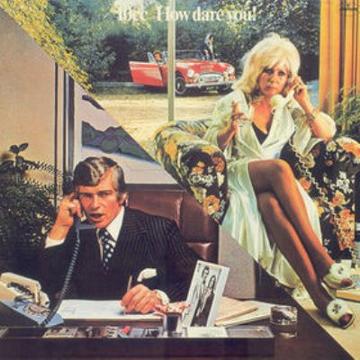
Now, thanks for 10cc. I know I know… for some weird reason I never listened to them and… wow. Just wow! I hesitated between 3 albums on your site and ended up getting Dare because my wife really liked that album — we were listening on crappy Amazon MP3 to pick a LP from you guys. 

But Original Soundtrack… came a close second. And actually Deceptive Bends is great too, just that I wanted my first 10cc to be with the original crew.


Further Reading

New to the Blog? Start Here

What Exactly Are Hot Stamper Pressings?

More Hot Stamper Testimonial Letters

(more…)

Astrud Gilberto – Windy

More Astrud Gilberto

More Bossa Nova

  • This superb pressing boasts Double Plus (A++) sound from start to finish – remarkably quiet vinyl too
  • Forget whatever Heavy Vinyl imposter is in print – this vintage Verve stereo pressing has the kind of High-Rez Tubey-Magical Midrange that will bring Astrud’s soft samba music to life in your very own listening room
  • “… Windy nevertheless proves one of Astrud Gilberto’s most consistent and sublime efforts, artfully straddling the division between Brazilian bossa nova and American sunshine pop.” 

(more…)

Chad Has Served Poor Jethro Tull Most Barbarously

More of the Music of Jethro Tull

With a nod to our old friend, John Barleycorn.

We were finally able to get our hands on Analogue Productions’ newly remastered Stand Up, an album we know well, having played the British copies from every era by the score. Our notes for the sound can be seen below.

If ever a record deserved a “no” grade, as in “not acceptable,” this new 45 RPM pressing mastered by Kevin Gray deserves such a grade, because it’s just awful.

But let’s put that grade in context. The last time a good sounding version of Stand Up was released, as far as we can tell, was 1989, and that version was the Mobile Fidelity Gold CD. I bought mine soon after it came out. I wasn’t even planning on buying a CD player when the Compact Disc was first invented, but then Mobile Fidelity played a dirty trick on me. Instead of releasing Loggins and Messina’s first album on vinyl, they put it out exclusively on CD as part of their Silver MFCD series.

As a die-hard MoFi fan, that sealed the deal: now I had to buy a CD player. I picked up a cheap Magnavox player, the 1040. I think it ran me less than $100, and played my new Sittin’ In CD, which, as I recall, sounded pretty good. (One of my other early CD purchases was Tumbleweed Connection, the regular label release, and it was dreadful.)

I still own Stand Up on Gold CD, and I still find it superb in every way. (Many of the MFSL Gold CDs from this era are excellent and worth seeking out.)

It sounds nothing like this new vinyl release, and that’s a good thing.

On vinyl, Stand Up has rarely been given the care it deserved. The last version of Stand Up to have sound we would want to listen to was pressed in the UK in the early ’70s. That was close to fifty years ago.

We sold some domestic pressings of the album back in the early 2000s, describing them at the time as made from dub tapes with all the shortcomings that entails, but mastered very well from dub tapes. The best domestic pressings are rich, smooth, tonally correct and natural sounding. They’re too dubby to sell as Hot Stampers, but they are not bad records. Some later Chrysalis pressings are big and open, but often they are too thin and bass-shy for the music to work. We’ve never taken them seriously.

It wasn’t long before we’d eliminated everything but the early UK pressings for our shootouts, and we quickly discovered that the earliest of the UK pressings on the older Island label were not good at all. We wrote about the problem with some originals more than ten years ago.

What was surprising about the shootouts we had done in past years was how disappointing most of the early British pressings we played were. They were flat, lacked energy and just didn’t rock the way they should have.

We learned the hard way that most British Pink label pressings aren’t especially rich, that some are small and recessed, and some are just so smeary, thick and opaque that they frustrate the hell out of you as you’re trying to hear what any of the musicians other than Ian Anderson is doing.

So when a reviewer comes along and says something positive about the new pressing compared to some unidentified original, we appreciate the problem that is at the root of his mistaken judgments:

Here’s the deal: if the goal was to duplicate the original pink label Island sound, this reissue misses that, which is good because this new double 45 reissue is far superior to the original in every possible way.

The tape was in great shape, that’s for sure. Clarity, transparency, high frequency extension and especially transient precision are all far superior to the original. Bass is honest, not hyped up and the mastering delivers full dynamics that are somewhat (but only slightly), compressed on the original. Ian Anderson’s vocals are naturally present as if you are on the other side of the microphone. Most importantly, the overall timbral balance sounds honest and correct. But especially great is the transient clarity on top and bottom.

If you’re fortunate to have an original pink label Island, at first you might think the sound is somewhat “laid back”, but that’s only because the mids and upper mids are not hyped up as they are on the original. That adds some excitement, but it clouds the picture and greatly obscures detail.

If you scroll down to our notes, you will see what we thought of the “laid back” sound this reviewer talks about. (Keep in mind that we first read the above review mere moments ago.)

We think “smaller, thick and stuck in the speakers” may be someone’s idea of “laid back,” but, just so there is no misunderstanding, it’s our idea of “awful.”

None of these are good things. Our Hot Stamper pressings are never small, thick or stuck in the speakers. They’re the records with the opposite of that sound. Our records are big, transparent and open. That’s why we can charge so much money for them and have people lining up to buy them.

They deliver the big, bold sound that the brilliant engineer for the album, Andy Johns, was known for. Laid back was not in his vocabulary.

Here is more of what we heard on side one.

Jeffrey Goes to Leicester Square

“Transients are sharp but body is dull. Kinda phony.”

Phony sound is the key here. Messing with the EQ in the mastering benefits some aspects of the sound at the expense of others.

Nothing new there. Audiophile pressings with wacky EQ are the norm. I would be surprised if any common Reprise pressing from back in the day wouldn’t sound more “right,” more tonally correct, more seamless. I’ve played quite a few and I don’t recall ever hearing one sound “phony.”

On side two we played the first two tracks.

(more…)
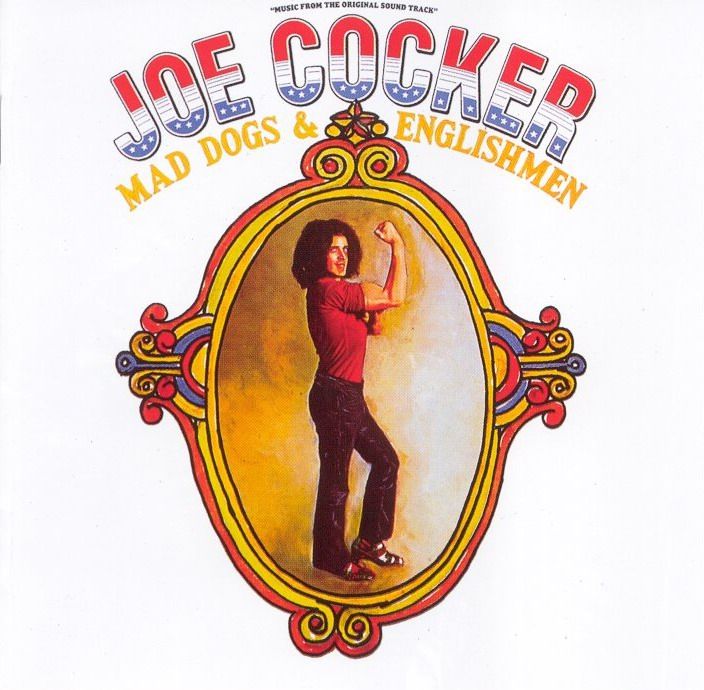
Joe Cocker – Mad Dogs And Englishmen

More of the Music of Joe Cocker

  • This vintage copy boasts KILLER Shootout Winning Triple Plus (A+++) sound on side four and seriously good Double Plus (A++) sound on the other THREE sides, and plays about as quietly as any early pressing ever will
  • The sound is rich and tubey, with driving energy and the top end and clarity that was simply missing from far too many of the copies we had to work through in order to find this one
  • 4 1/2 stars: “Unlike a lot of other ‘coffee table’-type rock releases of the era, such as Woodstock and The Concert for Bangladesh, people actually listened to Mad Dogs & Englishmen – most of its content was exciting, and its sound, a veritable definition of big-band rock with three dozen players working behind the singer, was unique.”

(more…)

One of the Great Audio Disasters, Courtesy of Mobile Fidelity

More of the Music of Steely Dan

We recently amended this listing. Scroll down to see what we have to say about it in 2023.

More MoFi bashing, but boy does this MoFi deserve it. In our estimation, it is tied with the Cisco 180g pressing (2007) for the worst version ever.

I remember back in 1977 when Aja was released. I was a big Steely Dan fan by then, having been turned on to their albums with Countdown to Ecstasy in 73. With each new Dan record I became more impressed with their music, from Pretzel Logic to Katy Lied to Royal Scam and finally on to this, their commercial breakthrough.

At the time I thought the album sounded pretty good on my plain old ABC original.

Then I got a copy of the Mobile Fidelity pressing and I thought it sounded much, much better.

Side two of the MoFi had bass that was only hinted at on my domestic copy. Wow! Listen to all that bass!

Sometime in the 80s, I realized that the MoFi was hideously phony sounding, and that all the bass on side two was boosted far out of proportion to what must be (I’m guessing) on the master tape.

If I May

How much bass is on the master tape is of course of no concern to anyone not mastering the record. The bass has to be right on the record, not the tape.

The song Home At Last has at least an extra three or four DBs added around 50 cycles. It’s ridiculous.

And that’s just the bottom end; the highs are every bit as wrong.

(more…)

Fleetwood Mac – Bare Trees

More Fleetwood Mac

Reviews and Commentaries for Fleetwood Mac

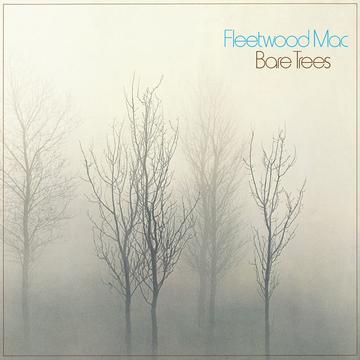
  • With two Double Plus (A++) or BETTER sides, you’ll have a hard time finding a Bare Trees that sounds remotely as good as this vintage UK import
  • It’s the impossibly rare copy that’s this lively, solid and rich… drop the needle on the title track and you’ll see what we mean
  • Many copies were gritty, some were congested in the louder sections, some never got big, some were thin and lacking the lovely analog richness of the best — we heard plenty of copies whose faults were obvious when played against two superb sides such as these
  • “Arguably the first consistently strong album Fleetwood Mac ever recorded [not true, Kiln House is] … 1972’s Bare Trees is also the album where the band finally defines its post-blues musical personality.”

This period of Fleetwood Mac, from Kiln House (1970) through Mystery to Me (1973) — both are albums I would put at the top of my list to take to my Desert Island — has always been my favorite of the band. I grew up on this stuff, and I can tell you from personal experience that it is a positive THRILL to hear the albums from this era sound so good.

Until not that many years ago we simply were not able to successfully shootout Bare Trees, Fleetwood Mac’s wonderful album from 1972. The pressings we were playing just didn’t sound very much like Hot Stampers to us. British, German, Japanese, domestic originals, domestic reissues; all of them left much too much to be desired.

Thankfully we can tell you that the best copies sound a whole lot better now than they did then. (more…)

Are Hot Stampers exceptionally good sounding records?

New to the Blog? Start Here

Not necessarily. What makes a Hot Stamper hot is reasonably good sound. At the very least a Hot Stamper should sound quite a bit better than any other pressing you have heard.

Not every album was well-recorded. (Here are some examples of records that you are not likely to be playing for your friends in order to show off your system, even if you have one of our White Hot Stamper pressings.)

As a result, the records made from those recordings will display most of the limitations that are baked into the master tape. A good engineer can fix an awful lot of problems in mastering, but, to mix a few metaphors, making a silk purse out of a sow’s ear is rarely if ever going to be in the cards.

For that reason, the records we review must be graded on a curve.

In our shootouts we compare apples to other apples. There is simply no other practical way to do it.

Out of the pile of pressings we have available, usually comprising six to twelve records, we clean them up and play them in order to find out which are the best sounding ones. If the winners of the shootout have the best sound we heard on both sides, they go into our Top Shelf section, which as of this writing has 13 members.

Any record that has one Shootout Winning side goes into our White Hot Stampers section. (There are more than ten times as many of those as of this writing. If you think a record you have cannot be beat on either side, that is very unlikely to be the case. We are happy to sell you the record that will beat it, and it will probably beat it on both sides, truth be told, and if it doesn’t, you get your money back.

We also guarantee that no Half-Speed mastered record or Heavy Vinyl LP sounds as good as even the lowest-graded Hot Stampers we offer. We’ve played too many of these so-called audiophile pressings to worry about them being competitive with the records on our site.

(One actually was competitive recently, but what a fluke that record was. Another word for fluke is outlier, and we really, really love those, but a Heavy Vinyl pressing winning a shootout? That has happened exactly once.)

It is our strongly held conviction that the better your system gets, the worse — or at the very least the more artificial, veiled, ambience-challenged, frequency-limited and uninvolving — those records will sound.

The question every audiophile who collects records for sound quality must grapple with is “how high is up?”

That’s what shootouts are for. To judge the relative merits of individual pressings, regardless of how well or how poorly the rcording is (as if we could ever know such a thing.).

(more…)

Ry Cooder – Self-Titled

More Ry Cooder

More Debut Albums of Interest

  • A vintage Reprise pressing of Ry Cooder’s 1970 debut with seriously good Double Plus (A++) sound on both sides
  • If you want to hear the brilliant Lee Herschberg‘s All Analog Recording skills brought to bear on so many different instruments serving an assortment of sonic textures, this is the copy that will let you do it
  • 4 stars: “Cooder’s debut creates an intriguing fusion of blues, folk, rock & roll, and pop, filtered through his own intricate, syncopated guitar; Van Dyke Parks and Lenny Waronker’s idiosyncratic production… Cooder puts this unique blend across with a combination of terrific songs, virtuosic playing, and quirky, yet imaginative, arrangements.”
  • This is clearly Ry Cooder’s best sounding album. Roughly 150 other listings for the Best Sounding Album by an Artist or Group (sounds like a Grammy Awards category, doesn’t it?) can be found here.
  • This is a Must Own Title from 1970, a great year for Rock and Pop music, perhaps the best ever

The music reminds me a lot of early Little Feat, which is a good thing. The sound is somewhat similar as well, which is to say that it is natural and musical, nothing like the hyped-up hi-fi sound of his TAS-listed album Jazz — and that’s a good thing as well.

There are some great songs here, including My Old Kentucky Home, One Meat Ball and How Can A Poor Man Stand Such Times And Live. It may even be his best album. (more…)

Midnight Blue Is a Masterpiece

Hot Stamper Pressings of the Music of Kenny Burrell

Midnight Blue is our favorite Kenny Burrell album of all time, at least in part because it’s one of the All Time Best Sounding Blue Notes. 

If you already own a copy of Midnight Blue and you don’t consider it one of the best sounding jazz guitar records in your collection, then you surely don’t have a copy that sounds the way our Hot Stamper pressings do. In other words, there is a very good chance you simply don’t know what you’re missing.

Don’t think this is just another 60s jazz guitar album. With Stanley Turrentine on sax and Ray Baretto on congas, this music will move you like practically no other. When Turrentine (a shockingly underrated player) rips into his first big solo, you’ll swear he’s right there in the room with you.

And if you do have one of our better Hot Stampers and it still isn’t the best sounding jazz guitar album in your collection, then you have one helluva jazz collection. Drop us a line and tell us what record you like the sound of better than Midnight Blue. We’re at a loss to think of what it might be.

Midnight Blue checks off a number of important boxes for us here at Better Records.

(more…)

Frank Sinatra – Nice ‘N’ Easy

More Frank Sinatra

More Pop and Jazz Vocal Recordings

  • An early stereo pressing with seriously good Double Plus (A++) sound from start to finish – fairly quiet vinyl for Capitol from this era too
  • The reproduction of Sinatra’s voice is exactly what you would expect from a Hot Stamper – he sounds rich, smooth, tonally correct and above all REAL
  • Take this one home and play it against whatever audiophile pressings you own – it’s guaranteed to SMOKE any and all versions you have in your collection, or your money back
  • 5 stars: “… a breezy collection of mid-tempo numbers arranged by Nelson Riddle. Nice ‘N’ Easy doesn’t have a touch of brooding sorrow — it rolls along steadily, charming everyone in its path.”

The immediacy of the vocals on this copy is nothing short of stunning. You get real weight down low, serious energy, a fully extended top end, and tons of that old-time analog tubey magic.

(more…)