vin-clas-w

We judged these vintage classical and orchestral records to have unacceptable sound based solely on the specific pressings we played.

We can’t say that other pressings won’t sound better. We just don’t plan on playing any more copies to find out.

LSC 2433 – Hard to Recommend on Living Stereo

Hot Stamper Pressings of Living Stereo Titles Available Now
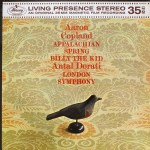
I’ve never liked this recording of the Grand Canyon Suite, but not having played a copy in twenty years or so, I thought we should get one in and give it a spin before we give up on it entirely.

That was money down the drain. The sound was thick, bright and crude.

Definitely not our sound, and we hope not yours either.

Lots of Morton Gould’s recordings for RCA from this era have been disappointing. We’ll add this one to the list.

If you want to avoid records with these problems, click on any of the links below to see the titles we’ve found over the years to have the same issues.

There are quite a number of pressings that we’ve played with crude sound. It’s unlikely that anyone reading this blog would be happy with such crude sounding pressings.

Here are some with thick sound and here are some with bright sound. Audiophiles would do well to avoid all of them.

Lewis Layton is one of our favorite engineers, but this album is clearly not up to his usual standards, at least it isn’t on the copies we’ve played.

Waking Up a Dull Stereo

If your system is dull, dull, deadly dull, the way old school systems tend to be, this record has the hyped-up sound guaranteed to bring it to life in no time.

There are scores of commentaries on the site about the huge improvements in audio available to the discerning (and well-healed) audiophile. It’s the reason Hot Stampers can and do sound dramatically better than the average vintage pressing, or Heavy Vinyl counterpart: because your stereo is good enough to show you the difference.

With such a stereo you will continue to be fooled by bad records, just as I and all my audio buds were fooled thirty and forty years ago. Audio has improved immensely in that time. If you’re still playing Heavy Vinyl and audiophile pressings, as wall as vintage Golden Age classical records that don’t sound good, there’s a world of sound you’re missing. We discussed the issue in a commentary entitled: some stereos make it difficult to find the best sounding pressings

My advice is to get better equipment, and that will allow you to do a better job of recognizing bad records when you play them.

(more…)

This Tchaikovsky 4th with Argenta Didn’t Make the Grade

Hot Stamper Pressings of the Music of Tchaikovsky Available Now
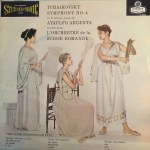
This vintage London Blueback pressing of CS 6048 was released in 1958.

(1958 just happens to be one of the best years for analog recording, as evidenced by this amazing group of albums, all recorded or released in that year.)

CS 6048 seemed to have a lot going for it so we thought we would get one in and give it a spin.

For starters, just take a look at that cover!

Roy Wallace was the engineer and many of his recordings are superb. (As of this posting there are fifteen available on our site.)

Recorded in Geneva’s world-renowned Victoria Hall with L’Orchestre De La Suisse Romande performing, many of of the best sounding records we’ve ever played boast these three elements.

Unfortunately, this London has a case of the “old record” sound we find on far too many vintage pressings, even those with credentials as promising as this one.

All the right people worked on it. How did it all go so wrong?

Who the hell knows?

The world is full of old records that just sound like old records. We’ve suffered through them by the tens of thousands in the 38 years we’ve been in the business of selling premium vinyl to audiophiles.

Our website, as well as this blog, are devoted to helping audiophiles find pressings that don’t sound anything like the millions of run-of-the-mill — and sometimes just awful, as was the case here — LPs that were stamped out over the last seven decades or so.

Even a million dollar stereo can’t make the average record sound good, and the more accurate and revealing the system, the more limited and lifeless the average record will show itself to be.

(more…)

Don’t Waste Your Money on this RCA from 1961

Hot Stamper Pressings of Living Stereo Recordings Available Now

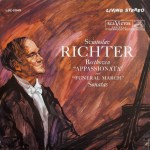
These Beethoven “Appassionata” And “Funeral March” sonata recordings have never impressed us sonically.

On the Shaded Dog pressings of LSC 2545 that we’ve auditioned, the piano is too thin.

Who likes a thin sounding piano?

If you have big speakers that can move air with authority, the kind needed to reproduce the size and power of a concert piano, then check out some of the titles we’ve found to have especially weighty piano reproduction.

The sound is not awful — you could certainly do worse — but we do not see the value in this title considering it will be neither cheap nor quiet.

We say pass.

Lewis Layton is clearly one of our favorite engineers, but this album does not seem to be up to his usual standards, or ours.


There are quite a number of other vintage classical releases that we’ve run into over the years with noticeable shortcomings.

For fans of vintage Living Stereo pressings, here are some to avoid.

Some audiophiles may be impressed by the average Shaded Dog pressing, but I can assure you that we here at Better Records are decidedly not of that persuasion.

Something in the range of five to ten per cent of the major label Golden Age recordings we play will eventually make it to the site. The vast majority just don’t sound all that good to us. (Many have second- and third-rate performances and those get tossed without ever making it to a shootout.)

(more…)

Maazel’s Pines of Rome Is Another Title Not Fit for a Super Disc List

Hot Stamper Pressings of The Pines of Rome Available Now

Sonic Grade: C (at best)

I found a bit of commentary in a listing for Scheherazade, and right away it was clear to me that the shootout we did for that title showed us a recording that had much in common with the one we had done more recently for The Pines of Rome.

Here it is, with the necessary changes having been made.

We did a monster shootout for this music in 2021, one we had been planning for more than twenty years. On hand were quite a few copies of the Reiner on RCA; the Ansermet on London; the Maazel on Decca and London (the Decca being on the TAS List), the Kempe on Readers Digest, and quite a few others we felt had potential.

The only recordings that held up all the way through — the last movement being a real Ball Breaker, for both the engineers and musicians — were those by Reiner and Kempe. This was disappointing considering how much time and money we spent finding, cleaning and playing about twenty or so other pressings.

We learned from that first big go around something that we think will remain true for the foreseeable future: the 1960 Reiner recording with the Chicago Symphony on RCA just can’t be beat.

Could other pressings be better sounding? Of course they could.

Would we ever buy another copy? Not a chance.

The notes for the Decca pressing I played, mastered by G, Ted Burkett, can be seen above.

Hey, here’s an idea.

Why don’t you buy a bunch of them and see if any of them do not have the problems described on my notes.

If you find a good one, please let me know the stampers so I can go out and find one myself.

The above is of course all in good fun. We both know that there is not a snowball’s chance in hell that anyone reading this commentary is going to go out and buy some Decca pressings of The Pines of Rome, clean them up, play them one by one and then critique their strengths and weaknesses.

The most likely thing is that, if you have any Decca pressing of Maazel’s Pines, it’s sitting on a shelf collecting dust. Odds are it has not been played in a very long time.

Which should tell you something. Good records get played and bad ones sit on shelves.

(more…)

Don’t Waste Your Money on these Mozart Symphonies

More of the Music of Wolfgang Amadeus Mozart

Neither the sound nor the performance of this 1958 Mercury are impressive.

1959 just happens to be one of the all time great years for recording in analog.

If you have any doubt, check out this amazing group of albums, all recorded or released that year.

This Mercury might be passable on an old school system, but it was too unpleasant to be played on the high quality modern equipment we use.

There are quite a number of others that we’ve run into over the years with similar shortcomings. Here they are, broken down by label.

  • London/Decca records with weak sound or performances
  • Mercury records with weak sound or performances
  • RCA records with weak sound or performances

Have You Noticed…

If you’re a fan of Mercury Living Presence records — and what right-thinking audiophile wouldn’t be? — have you noticed that many of them, this one for example, don’t sound very good?

If you’re an audiophile with good equipment, you should have.

But did you? Or did you buy into the hype surrounding these rare pressings and just ignore the problems with the sound?

(more…)

The Early London Pressings Of Schubert’s 9th Are Awful

Hot Stamper Classical and Orchestral Imports on Decca & London

There are plenty of Deccas and Londons that we’ve cleaned and played over the years that were disappointing, and some of them can be found here.

What was most striking about this shootout was how poorly the original London Bluebacks (CS 6061) fared when going head to head with the best vintage reissues. In fact, they were so obviously inferior I doubt we would have even needed another pressing to know that they could not possibly be considered Hot Stampers.

The two we had were crude, flat, full of harmonic distortion, and both had clearly restricted frequency extremes.

In other words, it just sounded like an old record, and not a very good one at that. The world is full of them.

But I remember liking the Blueback pressings I played ten or twenty years ago.

Did I have better copies, or was my system not capable of showing me the shortcomings I so clearly heard this time around? Since this is a question that cannot be answered with any certainty, we’ll have to leave it there.

Our favorite performance of the work is this one with Krips and the LSO, but on a much later reissue pressing produced by Decca in the 70s. Imagine that!

(more…)

Blary Brass Ruins Another Mercury – This Time It’s Pictures at an Exhibition

Hot Stamper Pressings of the Music of Modest Mussorgsky Available Now

The sound of the pressings we’ve played over the years has always been awful.

On SR 90217, the brass is just too sour and blary. To our knowledge, no copies of the album do not suffer from these problems.  They may exist — who can say they don’t? — but we’ve yet to play one and have no intention of seeking them out, not when there are other superior performances with top quality sound.

The performance is awful, too.

When the horns have clarity, correct tonality, plenty of space around them and a solid, full-bodied sound, probably every other instrument in the soundscape will too.

One minute into side one we knew that this Mercury had failed the brass test.

It was simply much too unpleasant to be played on modern high quality equipment.

The less revealing systems some audiophiles seem to favor can make the shortcomings of a recording such as this more tolerable, but we’ve worked very hard for many decades to make sure our system is as truthful and unforgiving as possible.

We knew right from the get-go this Mercury was not going to make the grade. Here are some others that we’ve found seriously wanting. We’ve also compiled a list of more than 40 of the worst sounding Heavy Vinyl pressings of orchestral and classical music, and it can be found here.

(more…)

RCA Released This Awful Living Stereo with Reiner in 1958

Hot Stamper Pressings of Living Stereo Recordings Available Now

Some audiophiles buy albums with their favorite labels. For example, this pressing from the Golden Age of RCA Living Stereo might appeal to a certain kind of audiophile who treasures LSC’s on the Shaded Dog label.

More than that, he might even limit himself to 1S Indianapolis pressings.

However, many records from this era simply do not sound good, and this is one of them.

We have never heard a good sounding copy of LSC 2112, and we’ve played plenty of them over the decades we’ve been in the business of selling Golden Age classical records.

A copy came in just last week [which was many, many years ago] and I figured it was time to give it a spin and see if there was any reason to change my opinion. Hey, maybe this one had Hot Stampers! Can’t say it wouldn’t be possible. Unlikely, yes, impossible, no.

So here’s what I heard: A wide stage. A bit dry.

But then the trouble started: Shrill strings?!

That’s all she wrote.

A Johann Strauss record with shrill strings is a non-starter. All is not lost however. Decca knew how to record Strauss, and they had halls with wonderful acoustics to do it in.

(more…)

Don’t Waste Your Money on this RCA from 1960

Hot Stamper Pressings of the Music of Modest Mussorgsky Available Now

Never liked the performance. The sound can be quite good on the best pressings, but too many copies are congested in the loudest passages.

We recently found a pressing that was quite a bit better than the other Reiner pressings we had on hand, which simply means that good pressings exist, but they are very hard to find.

However, without a good cleaning, this record is very unlikely to sound right on high quality modern equipment.

There are quite a number of other vintage classical releases that we’ve run into over the years with similar shortcomings.

For fans of vintage Living Stereo pressings, here are some to avoid.

Some audiophiles may be impressed by the average Shaded Dog pressing, but I can assure you that we here at Better Records are decidedly not of that persuasion.

Something in the range of five to ten per cent of the major label Golden Age recordings we play will eventually make it to the site. The vast majority just don’t sound all that good to us. (Many have second- and third-rate performances and those get tossed without ever making it to a shootout.)

It may be on the TAS super disc list, but that doesn’t mean the sound is up to our standards.

We much prefer Muti’s performance from 1979 for EMI.

(more…)

Don’t Waste Your Money on this Living Stereo from 1962

Hot Stamper Pressings of Living Stereo Titles Available Now

LSC 2612, released in 1962 on the Shaded Dog label, offers Handel’s Water Music and Royal Fireworks with Stokowski conducting, engineered by one of the greats, Robert Simpson.

The sound is terrible however.

The copies we had on hand were loud and crude, with steely strings and not much in the way of hall space. In other words, LSC 2612 seems to suffer from the “old record” sound that we’ve found on many of the hundreds of vintage pressings we’ve auditioned over the years as we were looking for top quality recordings to put in our Hot Stamper shootouts.

If you want a good Water Music, the right stamper pressings of the Philips recording with Leppard are the best we’ve ever played.

The Shaded Dog of LSC 2612 might be passable on an old school system, but it was too unpleasant to be played on the high quality modern equipment we use.

Leave this RCA to the collectors. Some audiophiles are of the opinion that vintage Living Stereo recordings on the original label can do no wrong, but we have never subscribed to that view.

There are quite a number of other records that we’ve run into over the years with similar shortcomings. Here are some of them, a very small fraction of what we’ve played, broken down by label.

  • London/Decca records with weak sound or performances
  • Mercury records with weak sound or performances
  • RCA records with weak sound or performances

1962 was a phenomenal year for audiophile quality recordings – we’ve auditioned and reviewed more than one hundred and twenty titles as of 2024, and there are undoubtedly a great many more that we’ve yet to discover.

When it comes to classical and orchestral titles, more than a dozen are so good that we would consider them Must Owns.

(more…)