vin-clas-w

We judged these vintage classical and orchestral records to have unacceptable sound based solely on the specific pressings we played.

We can’t say that other pressings won’t sound better. We just don’t plan on playing any more copies to find out.

Don’t Waste Your Money on this Living Stereo from 1962

Hot Stamper Pressings of Living Stereo Recordings Available Now

The sound of the copies we’ve played of LSC 2605, Highlights from Rubinstein at Carnegie Hall, released by RCA in 1962, have never impressed us sonically.

We didn’t listen to the music critically because our primary purpose here at Better Records is to evaluate recordings for their sound quality first (hence the name of our business), and if the sound isn’t good enough, we have to move on to titles with better sound that our customers might find more to their liking.

1962 was surely one of the truly glorious years for analog recordings, but the sound of the most recent copy of the album we played may have been rich, but unfortunately is was also opaque.

We would consider the sound no better than passable, and therefore it’s not a title we would consider offering to our customers.

Unless…

Unless you somehow managed to come across a copy noticeably better than the ones we’ve played over the last twenty or more years — a possibility that, although unlikely, cannot be ruled out — we would advise those interested in a top quality piano recital recording to look elsewhere.

Leave this RCA to the people who love collecting records. It’s perfect for record collectors — it’s from the right company, made in the right era, and it has the right original label — but it’s really not suitable for those of us who love playing good sounding records. It will of course sit happily on a shelf, to be pulled out and shown to other like-minded souls, but it is unlikely to spend much time spinning on a turntable platter with a needle tracing its grooves.

Some audiophiles are of the opinion that vintage Living Stereo recordings on the original Shaded Dog label can do no wrong, but we have never subscribed to that view. We’ve played too many that did plenty wrong. Maybe one out of three are good enough for the audiophile who wants to experience music reproduced at a highest levels of sound quality.

There are quite a number of records that we’ve run into over the years with more shortcomings than this one. Here are some of them, a very small fraction of the titles we’ve played, broken down by label.

  • London/Decca records with weak sound or performances
  • Mercury records with weak sound or performances
  • RCA records with weak sound or performances

(more…)

Don’t Waste Your Money on this Living Stereo from 1964

Hot Stamper Pressings of Living Stereo Recordings Available Now

The copies of LSC 2606 we’ve played to date have never impressed us with the quality of their sound.

They are tonally natural, sure, but the acoustic tends to be too dry for our taste.

We are officially giving up on it since it’s very unlikely to sound good enough on the high quality modern equipment we, as well as our customers, use.

It’s much better suited to the old school audio systems of the 60s and 70s, but we would be surprised if anyone reading this blog still has one of those in this day and age.

Audio has come a long way since then.

Higher quality playback has revealed that some vintage records are dramatically better sounding than anything that has come after them over the course of the last fifty years.

Others have been left behind, and rightly so. Based on our experience of playing and critically listening to thousands and thousands of vintage pressings, it is our belief that the latter group must now include LSC 2606.

If you see a copy sitting in the bins of your local record store, by all means pick it up (for cheap) if you’re interested in the repertoire. Audiophiles looking for higher quality sound are advised to look elsewhere.

On that note, readers might want to consider trying something from our Hot Stamper Classical section. It typically has close to a hundred titles and they are all guaranteed to demonstrate dramatically better sound than any other pressing of the same album you can find, especially when compared to any record pressed on Heavy Vinyl.

(more…)

Don’t Waste Your Money on this Living Stereo from 1959

Hot Stamper Pressings of Living Stereo Recordings Available Now

The sound of the copies we’ve played of LSC 2293 with Piatigorsky performing these two works for cello have never impressed us with their sound.

They are tonally natural but the acoustic is much too dry for our taste.

Perhaps Radio Recorders was not the ideal place to record this music.

Or we got unlucky with the copies we’ve played. Either way, we are not going to pursue this one. It’s a title that is very unlikely to sound right on high quality modern equipment.

There are quite a number of other vintage classical releases that we’ve run into over the years with similar shortcomings.

For fans of vintage Living Stereo pressings, here are some to avoid.

1959 was a phenomenal year for audiophile quality recordings – as of 2025 we’ve auditioned and reviewed more than one hundred and seventy titles, and there are undoubtedly a great many more that we’ve yet to discover.

We think there are close to 50 that belong in any audiophile record collection worthy of the name.


Our Pledge of Service to You, the Discriminating Audiophile 

(more…)

Beethoven Symphony No. 7 – This London with Solti Didn’t Make the Grade

Hot Stamper Classical and Orchestral Imports on Decca & London
In our survey for the work, we played a number of the better known recordings from the top conductors and orchestras around the world.

Here is what we heard when we dropped the needle on an early pressing of CS 6093, released in 1959.

Our notes read:

  • Awful,
  • so dry,
  • steely,
  • crude,
  • bad

In other words, it just sounded like an old record. The world is full of records that don’t sound very good. As a matter of fact they undoubtedly make up the bulk of large record collections.

And if you just happen to be the proud owner of a big record collection, how can you possibly find the time to play more than a small fraction of it in any given year. Or even over the course of a decade for that matter.

The fact is that you can’t. Which, on the upside, means that, as far as you know, all your records sound great!

No need to buy another copy of whatever title you care to name. What for? You haven’t played it in twenty years and probably won’t get around to pulling it off the shelf for a spin for at least another twenty.

Here’s hoping your kids like old records because they are going to end up with an awful lot of them.

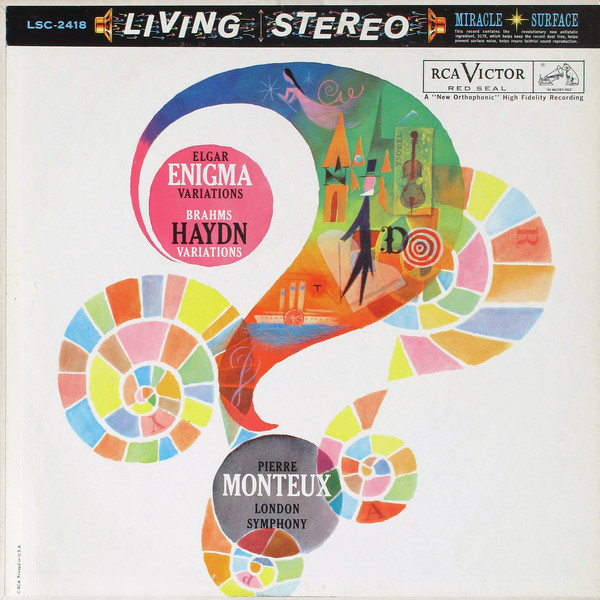
Back to the Beethoven 7th. What a beautiful cover!

But what good is a beautiful cover when the record sounds as bad as this one does?

(more…)

Why are the First Pressings of this Title the Worst Sounding?

Hot Stamper Pressings of Recordings by Decca Available Now

The record you see pictured is not the record we are discussing in this posting. The stamper numbers you see below belong to a different album.

We’ve lately been giving out much more stamper information than we used to, but for now we are keeping this title close to the vest.

We happen to know the best stampers for this album, but somehow a copy with the “bad” stampers ended up in our shootout. It did about as badly as they usually do.

Of course, the person sitting in the listening chair had no idea that a copy with the worst stampers was playing. The jackets and labels of this pressing are identical to the copies with the good stampers.

He simply heard what the recording actually sounds like when it’s mastered badly and registered his complaints.

Side One

  • Dull and crude. Old school.
  • 1+

Side Two

  • So metallic and crude and lo-fi. Nasty!
  • NFG

Apparently Mr. D, real name: Jack Law, did a piss-poor job mastering this album. Another engineer would come along sooner or later and master the record right, so right that it became one of our favorite Demo Discs for sound and performance.

How did this pig’s ear eventually manage to become a silk purse?

Simple. It was always a great recording, it just needed to be mastered right, and whoever got the job to remaster it knocked it out of the park the first time through.

(more…)

Hungarian Rhapsodies 1, 4, 5 & 6 – Wait a Minute

Hot Stamper Pressings of Orchestral Spectaculars Available Now

1963 was a phenomenal year for audiophile quality recordings, but this is not one of the better records produced that year. Far from it.

The sound of our vintage Mercury here, SR 90371, was awful. The overall sound was crude and the strings were shrill.

It has been our experience that many Mercury recordings suffer from these shortcomings.

But wait a minute.

Dorati recorded Hungarian Rhapsodies 2 and 3 with the London Symphony for Mercury, and those can sound amazing when you get hold of a good one.

How did they get this one so wrong?

We don’t know, and we doubt anyone else does either.

Like so many realities of the world of records, it’s a mystery, one that is very unlikely to be solved.

One of the best reasons mysteries such as this have little chance of being solved is that no one with any real expertise, using methodologies that are reliable and reproducible in any serious way, is taking on this kind of work — besides us.

We actually like testing records, and we refined* a method for doing it that is as reliable and reproducible as any method can be in the world of audio: the record shootout.

(more…)

Mercury Produced a Truly Awful Collection of Verdi Overtures in 1959

Hot Stamper Classical and Orchestral Pressings Available Now

The sound of this 1959 Mercury release, SR 90156, is terrible. It’s crude and hot like an “old record,” a sound we find on far too many vintage pressings. The world is full of old records that just sound like old records. We’ve suffered through them by the tens of thousands.

Our website, as well as this blog, are devoted to helping audiophiles find pressings that don’t sound anything like the millions of run-of-the-mill LPs that have been stamped out over the last seven decades.

Even a million dollar stereo can’t make the average record sound good, and the more accurate and revealing the system, the more limited and lifeless the average record will show itself to be.

There are quite a number of others that we’ve run into over the years with similar shortcomings. Here they are, broken down by label.

(more…)

This Mercury Copland Record Had Screechy, Shrill Strings

Hot Stamper Classical and Orchestral Pressings Available Now

Our notes for SR 90246 read:

Lively and clear but screechy strings. Dry and bright sound.

To help you avoid records with these sonic faults, we’ve linked below to others with similar problems.

Here are some titles we’ve found that tend to have dry sound, and here are some that tend to have bright sound.

And of course shrill strings are the kiss of death on any orchestral record. (Classic Records, I’m talking to you!)

None?

None of the copies of SR 90246 we played were any good, but the RFR3 / RFR6 was the worst of the bunch.

Are there good sounding pressings of the recording?

There may well be. We didn’t hear any, but that doesn’t mean they don’t exist.

However, we have no intention of spending more money trying to find them. If you know of some killer stampers for the album, please shoot us an email.

We tend to like Dorati’s work with the London Symphony Orchestra, but in this case the better Dorati/Copland record was recorded in Minneapolis in 1959, SR 90172.

If You’re a Fan

If you’re a fan of Mercury Living Presence records — and what right-thinking audiophile wouldn’t be? — have you noticed that many of them, this one for example, don’t sound very good?

If you’re an audiophile with good equipment, you should have.

But did you? Or did you buy into the hype surrounding these rare pressings and just ignore the problems with the sound?

(more…)

Skip the Living Stereo of Rachmaninoff’s Piano Concerto No. 2 with Cliburn

Hot Stamper Pressings of Living Stereo Recordings Available Now

We recently dropped the needle on a copy of LSC 2601 — the first one we’ve played in years — and found a great deal to fault in the sound. Our copy with 3s/3s stampers was awful sounding.

Rachmaninoff’s Piano Concerto No. 2 is a wonderful piano concerto, one that belongs in any serious record collection, but the sound on the pressing we played was definitely not up to our standards.

The piano was cranky, the overall sound a dry mess overall. It just sounded much too much like an old record.

A Shaded Dog pressing such as this might be passable on an old school audio system, but it was too unpleasant to be played on the high quality (mostly) modern equipment we use.

There are quite a number of other vintage classical releases that we’ve run into over the years with similar shortcomings. For fans of vintage Living Stereo pressings, here are some to avoid.

Some audiophiles may be impressed by the average Shaded Dog, but I can assure you that we here at Better Records are decidedly not of that persuasion.

Something in the range of five to ten per cent of the major label Golden Age recordings we play will eventually make it to the site. The vast majority just don’t sound all that good to us. (Many have second- and third-rate performances and those get tossed without ever making it to a shootout.)

(more…)

Mercury Unfortunately Did Not Produce a Good Rossini Overtures

Hot Stamper Pressings of Mercury Living Presence Records Available Now

1960 just happens to be one of the truly great years for quality analog recordings, as can be seen from this amazing group of albums, each of which was recorded or released that year.

However, the sound of this Mercury recording, SR 90139, released that very year, was far from acceptable.

The loud passages are simply full of compressor distortion.

To be fair, we haven’t played this album by the dozens the way we have many of the records we review (more than a hundred in the case of most Beatles album).

Let’s just say I remember being disappointed by a copy or two back in the day — whenever that was — and the latest copy we auditioned was no better, so, as a practical matter, this is not a vein rich enough for us to be mining, not when there are literally hundreds of other recordings we are still pursuing. As always, if you believe you have a killer pressing, please let us know what it is so we can get one in ourselves.

It seems that many early Mercury recordings suffer from this shortcoming, and when they do, we put them in the trade-in pile and move on.

By the way, for those who are interested in these works, our favorite performance of Rossini’s Overtures on record is the one with Maag conducting the Paris Conservatoire.


This Mercury might be passable on an old school system, but it was too unpleasant to be played on the high quality modern equipment we use.

There are quite a number of others that we’ve run into over the years with similar shortcomings. Here they are, broken down by label.

  • London/Decca records with weak sound or performances
  • Mercury records with weak sound or performances
  • RCA records with weak sound or performances

Have You Noticed…

If you’re a fan of Mercury Living Presence records — and what right-thinking audiophile wouldn’t be? — have you noticed that many of them, this one for example, don’t sound very good?

If you’re an audiophile with good equipment, you should have.

But did you? Or did you buy into the hype surrounding these rare pressings and just ignore the problems with the sound?

There is plenty of hype surrounding the hundreds of Heavy Vinyl pressings currently in print. I read a lot about how wonderful their sound is, but when I actually play them, I rarely find them to be any better than mediocre, and most of them are downright awful.

It seems as if the audiophile public has bought completely into the hype for these modern Heavy Vinyl pressings. Audiophiles have too often made the mistake of approaching these records without the slightest trace of skepticism. How could so many be fooled so badly? Surely some of these people have good enough equipment to allow them to hear how bad these records sound.

I would say Mercury’s track record during the ’50s and ’60s is a pretty good one, offering (potentially) excellent sound for roughly one out of every three titles or so.

But that means that odds are there would be a lot of dogs in their catalog. This is definitely one of them.

To see the 50+ Living Presence classical titles we’ve reviewed to date, click here.

(more…)