top-test

“The greater the difficulty, the more glory in surmounting it. Skillful pilots gain their reputation from storms and tempests.” – Epictetus

In the Market for New Speakers? See How Well They Handle the Energy of Far More Drums

Hot Stamper Pressings of the Music of Dave Brubeck Available Now

The drum solo Joe Morello lets loose on Far More Drums is one of the best on record. I was playing that song recently and it occurred to me that it is practically impossible for a screen or panel speaker of any design to reproduce the sound of those drums properly, regardless of how many subs you have.

Most of the music is not in the deeper bass anyway. It’s the whack of instruments whose energy is in the lower midrange and mid-bass that a screen speaker will struggle with.

A good large-driver dynamic speaker fed by fast electronics can handle the energy in that range with ease.

This is the album you need to take with you next time you head to your local stereo store to audition speakers.

It will help clarify the issues. Screen speakers do many things well, but drums are not one of them, at least in my experience they aren’t. If drums are important to you, do yourself a favor and buy a dynamic speaker, the bigger the better.

brubeck in the studio733

Time Further Out, like most of the classic Brubeck albums, is a big speaker record. It requires a pair of speakers that can move air with authority below 250 cycles and play at fairly loud levels. If you don’t own speakers that can do that, this record will never really sound the way it should.

(more…)

Save the Life of My Child Is One Tough Test

Hot Stamper Pressings of the Music of Simon and Garfunkel Available Now

The big production songs on Bookends have a tendency to get congested on even the best pressings, which is not uncommon for four track recordings from the 60s.

Those of you with properly set up high-dollar front ends should have less of a problem than those of you without them. $3000 cartridges can usually deal with this kind of complex information better than $300 ones.

But not always. Expensive does not always mean better, since painstaking and exacting setup is so essential to proper playback.

Save the Life of My Child — A Tough Test

I used to think this track would never sound good enough to use as an evaluation track. It’s a huge production that I had heretofore found all but impossible to get to sound right on even the best original copies of the album. Even as recently as ten years ago I had basically given up on reproducing it right.

Thankfully things have changed. Nowadays, with carefully cleaned top copies at our disposal and a system that is really cooking, virtually all of the harmonic distortion in the big chorus near the opening has disappeared. It takes a very special pressing and a very special stereo to play this song. That’s precisely what makes it a good test!

America — Another Tough Test

America is another one of the toughest tracks to get right. The big ending with its powerful orchestral elements is positively stunning on the rare copies that have little or no congestion in the loudest passages.

On virtually every copy you will ever hear the voices on this track are a little sibilant. Modern records are made with what is known as a de-essing limiter. This limiter recognizes sibilance and keeps it under control, because once the cutter head sees that kind of high frequency information, which is already boosted for the RIAA curve, it will try to cut it onto the record and the result will be this kind of spitty distortion.

(more…)

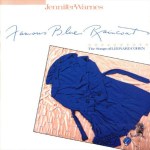
Listening in Depth to Famous Blue Raincoat

Hot Stamper Pressings of the Music of Leonard Cohen Available Now

I’m a huge fan of this FBR. It’s the only album Jennifer Warnes ever made that I would consider a Must Own recording or a Desert Island Disc. Without question this is her Masterpiece.

Key Test for Side One

Listen to the snare drum on Bird on a Wire. On most copies it sound thin and bright, not very much like a real snare. Let’s face it: most copies of this record are thin and bright, and that’s just not our sound here at Better Records. If the snare on Bird sounds solid and meaty, at the very least you have a copy that is probably not too bright, and on this album that puts it well ahead of the pack.

While you’re listening for the sound of that snare, notice the amazing drum work of Vinnie Colaiuta, session drummer extraordinaire. The guy’s work on this track — especially with the high hat — is genius.

Key Test for Side Two

Listen to the sound of the piano on Song of Bernadette. If it’s rich and full-bodied with the weight of a real piano, you might just have yourself a winner. At the very least you won’t have to suffer through the anemically thin sound of the average copy.

Side One

First We Take Manhattan

Don’t expect this song to be tonally correct. It runs the gamut from bright to too bright to excrutiatingly bright. Steve Hoffman told me that he took out something like 6 DB at 6K when he mastered it for a compilation he made, and I’m guessing that that’s the minimum that would need to come out. It’s made to be a hit single, and like so many hit single wannabes, it’s mixed brighter than we audiophiles might like.

(more…)

Listening in Depth to Romantic Warrior

Romantic Warrior is my favorite JAZZ/ROCK FUSION album of all time. As good as the music is, the sound is even better. This is the Jazz/Rock Demo Disc that stands head and shoulders above the rest. In my experience, no record of this kind is more DYNAMIC or has better BASS. Not one. Demo Disc doesn’t begin to do this kind of sound justice.

Simply put, not only is this one of the greatest musical statements of all time, it’s one of the great recording statements. Few albums in the history of the world can lay claim to this kind of POWER and ENERGY.

But the Super Sound has a purpose, a raison d’etre. This is the kind of music that requires it; better yet, DEMANDS it. In truth, the sound is not only up to the challenge of expressing the life of the music on this album, it positively ENHANCES it.

Those monster Lenny White drum rolls that run across the soundstage from wall to wall may be a recording studio trick, but they’re there to draw your attention to his amazing powers, and it works! The drums are EVERYWHERE on this album, constantly jumping out of the soundfield and taking the music into the stratosphere where it belongs.

Side One

Medieval Overture

The grandiose opening of this record serves as an important sonic checkpoint, as well as a tipoff for the pyrotechnics to come. On the better copies Corea’s multi-layered, swirling synths occupy their own space, clearly separated from each other, not blurred and inarticulate as they are on the poorer pressings.

Also notice how much attack Lenny White’s drums have, especially in the more exposed sections. The transients are breathtakingly immediate. Run-of-the-mill copies tend to flatten Mr White, making his acrobatic playing seem two-dimensional and less-than-inspired. The best copies prove that nothing could be further from the truth.

Sorceress

This groove-oriented track is a testament to RTF’s diversity, as well as the mastery of Messrs. Clarke and White as a rhythm section. This is a real test for bottom end. Even though the bass goes unbelievably deep, the best copies manage to exhibit plenty of control while still allowing you to FEEL the bass rising up through the floorboards and into your chair. There is so much deep bass at the opening of this track that at any sort of serious levels I would immediately run out of the wattage needed to sustain them. It was either back off the volume or distort like crazy. You need some serious juice to play this track, or a very efficient speaker, or both.

All the members of this All-Star cast are showcased in the improv section, highlighted by Corea’s brilliant piano solo in the middle, one of my personal favorite solos of all time. Corea is a musician’s musician. There is nothing he or his bandmates are not capable of on this recording. This is more than mere fusion. On this album the whole world of jazz can be heard.

(more…)

Listening in Depth to the White Album

Hot Stamper Pressings of The White Album Available Now

It’s exceedingly difficult to find audiophile quality sound on The White Album. The Beatles were breaking apart, often recording independently of each other, with their own favorite engineers as enablers, and George Martin nowhere to be found most of the time. They were also experimenting more and more with sound itself, which resulted in wonderful songs and interesting effects. However, these new approaches and added complexity often result in a loss of sonic “purity.”

Let’s face it, most audiophiles like simplicity: A female vocal, a solo guitar — these things are easy to reproduce and often result in pleasing sound, the kind of sound that doesn’t take a lot of expensive equipment or much effort to reproduce.

Dense mixes with wacky EQ are hard to reproduce (our famous difficulty of reproduction scale comes into play here), and the White Album is full of that sound, taking a break for songs like Blackbird and Julia.

Some of the Tubey Magic that you hear on Pepper is gone for good. (Play With a Little Help from My Friends on a seriously good Hot Stamper pressing to see what has been lost forever. Lovely Rita would probably work just as well, too.)

Side One

Looks at the lineup for side one. Is there a rock album on the planet with a better batch of songs?

Having done shootouts for the White Album by the score, we can also say with some certainty that side one is the most difficult side to find White Hot stamper sound for. It’s somewhat rare to find a side one that earns our top Triple Plus (A+++) sonic grade, even when all the other sides do. (Actually what happens more often than not is that we take the best second discs and mate them with the best first discs to make the grades consistent for the whole album. But don’t tell anybody.) (more…)

Reproducing the Phenomenal Size and Space of Time Out

More Columbia 30th Street Studio Recordings

Time Out is a jazz album that’s been a personal favorite of mine for a very long time, as well as a record I’ve been obsessed with for decades. I spent a lot of time working on my system in order to get this album to sound its best.

It taught me a lot, and for that reason it is a recording that deserves a fair amount of credit for helping me become a better listener.

Here is how we described a copy that won one of our shootouts a while back:

Spacious and transparent, this copy has the big three-dimensional soundstage that makes this record such a joy to listen to. The piano has weight and heft, the drums are big and dynamic, and everything is relaxed and sweet — in short, this copy is doing pretty much everything we want a top quality Time Out to do. 

Listen to the drums on Everybody’s Jumpin’. This album was recorded on a big sound stage and there is a HUGE room which can clearly be heard surrounding the drum kit. Add to that that some of the drums are in the left channel and some of the drums are in the right channel and you have one big drum kit — exactly the way it was intended to sound.

Size and Space

One of the qualities that we don’t talk about on the site nearly enough is the SIZE of the record’s presentation. Some copies of the album just sound small — they don’t extend all the way to the outside edges of the speakers, and they don’t seem to take up all the space from the floor to the ceiling. In addition, the sound can often be recessed, with a lack of presence and immediacy in the center.

Other copies — my notes for these copies often read “BIG and BOLD” — create a huge soundfield, with the music positively jumping out of the speakers. They’re not brighter, they’re not more aggressive, they’re not hyped-up in any way, they’re just bigger and clearer.

And most of the time those very special pressings just plain rock harder. When you hear a copy that does all that, it’s an entirely different listening experience.

More letters, reviews and commentaries for recordings made at Columbia’s 30th Street studio.

(more…)

Relax, Stare into the Middle Distance and Listen to the Players as a Group

Hot Stamper Direct-to-Discs Available Now

Reviews and Commentaries for More Direct to Disc Recordings

Many years ago we had discussed the polarity issues associated with this record:

According to the liner notes, this album has its polarity reversed. They tell you straight out to reverse the positive and negative at the speaker terminals for the best “transient response and spatial clarity.”

That out of phase quality is as plain as the nose on your face when you know what to listen for. There’s an unpleasant hardness and hollowness to the midrange, a lack of depth, and an off-putting opaque quality to the sound. The top gets dull and the bass gets weird and wonky.

With our EAR 324p phono stage, the click of a button reverses the polarity. I can’t tell you how handy it is to have such a tool at your disposal. Checking the polarity for Discovered Again couldn’t have been easier.

But get this: most side ones are NOT out of polarity. How about them apples! We could not have been more shocked. Here is the most famous reversed polarity audiophile recording in the history of the world — or maybe just the history of our world — and it turns out most copies are not reversed on side one at all.

Findings from a Few Years Back

I did not do the shootout for the album, but I wanted to check on the polarity just to hear it for myself. I must admit I had to go back and forth a number of times, using my favorite song on the album and an old Demo track from back in my earliest days in audio, the mid- to late-70s: Keep Your Eye On The Sparrow.

Harvey Mason’s super-punchy drum playing catches your attention right off the back. A tambourine comes along in the left channel at some point. Lots of bass. Rit’s guitar in the right channel and Grusin’s keyboards in the center fill out the soundstage. The ensemble is on fire.

Evaluating the sonic differences of the individual instruments in and out of polarity had me confused. A typical conundrum: Should the tambourine be smoother with more body, or brighter with more harmonic overtones? Which is right? Who can say definitively?

Experiments Provide Answers

It was only after about fifteen minutes of switching the polarity back and forth that the penny dropped.

Focussed on an individual instrument, I could hear it just fine both ways. But then I noticed that with the polarity reversed the group got vague.

The images seemed blurrier, less defined. If I relaxed and just stared into the middle distance and let the music flow, the band seemed to be more jumbled up and messy.

That was the key. The obvious change when the polarity was wrong was a loss of image specificity. Flipping the record over to side two and using my new “lens” to hear the difference with the polarity changed, it was obvious when the polarity was right or wrong.

I have experimented with polarity on scores of records.

Certain effects on certain records are unmistakable. But these effects seem to vary a great deal from title to title.

Grusin’s brilliant direct to disc recording initially had me at a loss. With a little experimentation, the improvement in the sound with the correct polarity became evident over time, as it always seems to do. Thank god I didn’t have to change speaker leads the way I used to in the old days. (more…)

Listening for Harmonically Correct Acoustic Guitars on America’s Debut

More of the Music of America

The guitars on this record are a true test of stereo fidelity. As it says below, most of the pressings of this record do not get the guitars to sound right. They often sound veiled and dull, and on a copy with a bit too much top end they will have an unnatural hi-fi-ish sparkle.

This kind of sparkle can be heard on many records Mobile Fidelity made in the ’70s and ’80s. Tea for the Tillerman, Sundown, Year of the Cat, Finger Paintings, Byrd at the Gate, Quarter Moon in a 10 Cent Town — the list of MoFis with sparkling acoustic guitars would be very long indeed, and these are just the records with prominent acoustic guitars!

Three Roses and Rainy Day

The key song on side one that we use to test is Three Roses. There are three sonically-separated individuals each playing six string acoustic guitars, and when this side is cut right the guitars sound just gorgeous: sweet, with all their harmonic structures intact. (It’s also my favorite song on side one.)

The real test on side two is the song Rainy Day. Lots of guitars, and when the close-miked descending guitar figure comes in after the first few couplets, if it’s too bright, you’re going to know it. This song is the hardest one to cut and almost never sounds right. Some copies are cut JUST RIGHT. The vocals are breathy, the guitars are full-bodied, and the overall sound is airy, open, and spacious.

On the best copies Rainy Day is Demo Disc material — they just don’t know how to make acoustic guitars sound like that anymore. You have to go back to 50-year-old records like this one to find that sound.

Simply phenomenal amounts of Tubey Magic can be heard on every strum, along with richness, body and harmonic coherency, all the things that have all but disappeared from modern recordings (and especially from modern remasterings).

Of course, many 50 year old records are beat to death, and many of them don’t sound any good anyway. It’s no mean feat to find quiet, superb pressings of albums like this, but you can be sure that Better Records is up to the task.

(more…)

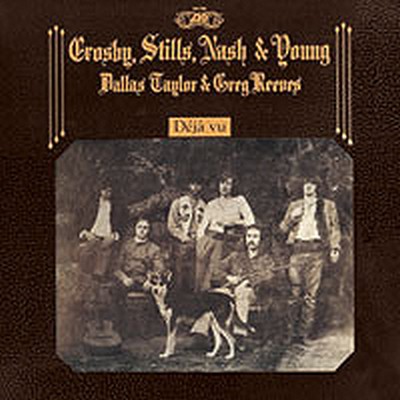
The Turn Up Your Volume Test – Almost Cut My Hair

Hot Stamper Pressings of the Music of Crosby, Stills, Nash and (Sometimes) Young

The only time Crosby, Stills, Nash & Young actually sound like a real rock and roll band is on the track Almost Cut My Hair.

According to Stephen Barncard, one of the engineers on Deja Vu, the track was actually recorded live in the studio.

Boy, it sure sounds like it. The amount of energy the band generates on this one song exceeds the energy of the entire first album put together. 

The reason this song presents such a tough test is that it has to be mastered properly in order to make you want to turn it up, not just louder, but as loud as your stereo will play.

This song is not to be used as background music whilst sipping wine and smoking cigars.

It positively cries out to be played at serious volume levels on monstrously large speakers. Nothing else will do justice to the power of the band’s one and only live performance captured on the album.

Listen to Neil in the left channel wailing away like a man possessed. Imagine what his grunged-out guitar would sound like blasting out of a stack of Marshall amps the size of a house.

Now hold that sound in your head as you turn up the volume on your preamp.

When your system starts to distort, back it off a notch and take your seat.

Deja Vu Letters

Some of our customers have written to tell us about the amazing sound they heard on our Hot Stamper pressings of Deja Vu.

“I know in one sense you’re only doing your job but who the hell else does what you do?”
“I almost fell off my listening chair.”
“I think It’s a bargain at $800. It absolutely trashes my Mofi version…”
“I had no idea that vinyl could produce this sound.”

(more…)

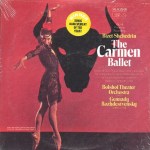
The Carmen Ballet – As Tough a Test Disc As Any We Know

Hot Stamper Pressings of the Music of Georges Bizet Available Now

If I had only one record to bring to someone’s house in order to evaluate their equipment, a killer copy of this Bizet-Shchedrin record would certainly be at the top of my list. (Here are some others.)

If you can make this record sound the way it should, your stereo is cookin’.

If you are having problems, this record will show them to you in short order.

Many copies are bright in the upper-midrange, sounding as nasally and artificial as a bad Mercury or London. Many lack weight down low. The lower strings and heavier percussion play a crucial role in balancing out the upper strings and lighter percussion, so without enough going on down low, the sound skews upwards in an artificial way.

If your copy has either of these problems don’t use it to set up or tweak anything in your system.

Use one of our Hot Stampers, the hotter the better.

The sound of the best copies is rich, full-bodied, incredibly spacious, and exceptionally extended up top. There is a prodigious amount of musical information spread across the soundstage, much of it difficult to reproduce. Musicians are banging on so many different percussive devices (often at the back of the stage, exactly where they should be) that getting each one’s sonic character to clearly come through is a challenge. And when you’ve met it, a thrill.

If you’ve done your homework with VTA, Azimuth, Anti-Skate and Tracking Weight, this is the record that will make clear just how much you’ve accomplished.

The recording has tremendous transients and dynamics. Be prepared to have trouble tracking it. In that respect it’s a prime candidate for table, cartridge and system tweaking.

If you have the kind of big system that a record like this demands, when you drop the needle on the best of our Hot Stamper pressings, you are going to hear some amazing sound.

(more…)