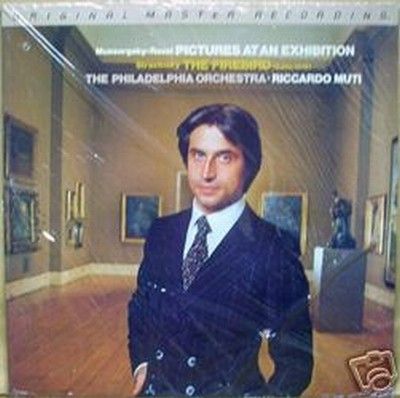
shrill-strings

These pressings suffer from shrill string tone.

Strings that are screechy or shrill are the kiss of death on classical and orchestral recordings. Any recordings, come to think of it.

MoFi’s Pictures at an Exhibition Is as Wrong as Wrong Can Be

moussmofiHot Stamper Pressings of the Music of Mussorgsky Available Now

If you like orchestral spectaculars, have we got the record for you.

It’s the same recording of the works, but the one you want is on the real EMI label and pressed on UK import vinyl, not this awful Half-Speed recut from Japan.

The record you see pictured is awful sounding, a true hall of shame pressing.

And why are the colors of the album jacket so washed out? Compare their cover to the real thing below. As we often find ourselves asking after reviewing one of these MoFi records: What were they thinking?

The MoFi mastering of Pictures at an Exhibition and The Firebird here are a bad joke played on credulous audiophiles. And yes, I bought them both back when they came out. I was as credulous as everybody else buying these so-called superior pressings.

All that phony boosted top end makes the strings sound funny and causes mischief in virtually every other part of the orchestra as well. Not surprisingly, those boosted highs are missing from the real EMIs.

These appear to be the unbearably bright strings that Stan Ricker favors — why, we have no idea.

The proof? Find me a Mobile Fidelity classical record with that little SR/2 in the dead wax that does not have bright string tone. I have yet to hear one.

The last time I played a copy of the MFSL I found the sound so hi-fi-ish I couldn’t stand to be in the room with it for more than a minute. Of course the bass is jello as well.

The EMI with the right stampers is worlds better.

(Warning: The domestic Angel regular version and the 45 are both awful.)

MoFi had a bad habit of making bright classical records. (More reviews here.) I suppose you could say they had a bad habit of making bright records in general. A few are dull, some are just right, but most of them are bright in one way or another.

(more…)

RCA Released This Awful Living Stereo with Reiner in 1958

Hot Stamper Pressings of Living Stereo Recordings Available Now

Some audiophiles buy albums with their favorite labels. For example, this pressing from the Golden Age of RCA Living Stereo might appeal to a certain kind of audiophile who treasures LSC’s on the Shaded Dog label.

More than that, he might even limit himself to 1S Indianapolis pressings.

However, many records from this era simply do not sound good, and this is one of them.

We have never heard a good sounding copy of LSC 2112, and we’ve played plenty of them over the decades we’ve been in the business of selling Golden Age classical records.

A copy came in just last week [which was many, many years ago] and I figured it was time to give it a spin and see if there was any reason to change my opinion. Hey, maybe this one had Hot Stampers! Can’t say it wouldn’t be possible. Unlikely, yes, impossible, no.

So here’s what I heard: A wide stage. A bit dry.

But then the trouble started: Shrill strings?!

That’s all she wrote.

A Johann Strauss record with shrill strings is a non-starter. All is not lost however. Decca knew how to record Strauss, and they had halls with wonderful acoustics to do it in.

(more…)

The Four Seasons Direct to Disc at 45 RPM

Hot Stamper Pressings of the Music of Antonio Vivaldi Available Now

This RCA Direct-to-Disc 45 RPM Double LP has awful sound, with exceptionally hard and shrill string tone.

This is precisely why we dislike Japanese pressings as a rule — they sound like this audiophile trash.

If you own this album, it should make a good one for testing string tone and texture. The strings on this record are awful, and they should sound awful on your stereo too.

The Big Picture from a Lifelong Audiophile

You may have seen this text in another listing, but it bears repeating.

There is nothing new under the sun, and that is especially true when it comes to bad sounding audiophile records. The world is full of them.

There has been one big change from the days when I self-identified as a freshly minted audiophile in the ’70s.

Yes, the records being marketed to audiophiles these days may have second- and third-rate sound, but at least now they have good music. That’s progress, right?

The title reviewed above is a good example of the kind of crap we newbie audiophiles used to put up with back in the old days, long before we had anything resembling a clue.

This one clearly belongs on our list of bad audiophile records.

You might be asking: What kind of audio fool was I? to buy a dumbass record like this.

It’s a fair question. Yes, I admit I was foolish enough to buy records like this and expect it to have good music, or at least good sound. Of course it had neither. Practically none of these kinds of records ever did. Sheffield and a few others made some good ones, but most Direct to Disc recordings were crap.

As clueless as I was, even back in the day I could tell that I had just thrown my money away on this lipsticked-pig in a poke.

But I was an audiophile, and like a certain Mr. Mulder, I wanted to believe. These special super-hi-fidelity records were being made for me, for special people like me, because I had expensive equipment and regular records are never going to be good enough to play on my special equipment, right?

To say I was wrong to think about audio that way is obviously an understatement. Over the course of the last forty years, I (and to be fair, my friends and my staff) have been wrong about a lots of things in the worlds of records and audio.

You can read more about many of the things we got wrong under the heading: live and learn.

The good news? Audio progress is real and anyone who goes about doing audio the right way can achieve a great deal.

(more…)

This MoFi Makes My Head Hurt

Hot Stamper Pressings of the Music of Richard Strauss Available Now

Is the painting on the cover that of a man whose head is suffering from the ridiculously shrill string tone of this MoFi?

Doubtful. Impossible actually. But that’s exactly how my head feels when I play one of these awful MoFi classical LPs.

Their rock, pop and jazz remasters were hit and miss in the old days, with some real winners hidden amongst the junk, but their classical releases that I’ve played, without exception, was a dog.

Want a good way to know you’re dealing with bad records and collector mentality?

When you find one of these records in your local used record store, it is almost guaranteed to be pristine.

Good records get played. MoFi’s classical releases, like plenty of other classical records audiophiles found attractive, got collected and spent most of their days sitting on a shelf, out to pasture so to speak.

(more…)

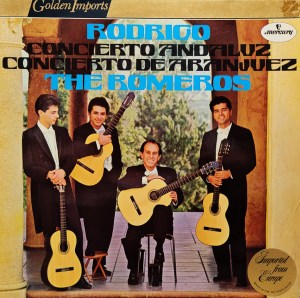
We Were Way Off the Mark with this Rodrigo Recording in 2010

More of the music of Joaquín Rodrigo (1901-1999)

In 2010 we did a shootout for this title and thought we had found a good one. We wrote:

A good side one backed with a lovely side two! We shot out a stack of these recently and side two of this copy was one of the few sides that really impressed us. The sound is transparent and full of energy. Side one is pretty good but a bit crude in the louder passages.

This is a wonderful record. The performance here by the first family of guitar is legendary. More importantly, the music is delightful and belongs in any serious classical collection.

RFR-1 stampers. What the best originals like this one give you is immediacy. The attack of the guitar is more real.

Comparing this with the Golden Import shows you that some of the transients are smoothed over on that pressing.

If you’ve got the front end that can deal with the Mercury upper midrange and transient attack, the strings will sound textured and clear, not harsh or shrill. (A badly mastered version of this record would make your ears bleed.)

More importantly, this copy captures the sounds of the guitars perfectly. I doubt if anybody could do it as well as Mercury.

Recently we did the shootout again and came up with very different findings:

Now those same stampers are tubey and weighty, but the strings are too hot (bright and shrill) and flat (lacking richness).

We can sum up the sound of these stampers — on a different copy of course, something to keep in mind — in one word:

Ouch.

Please allow us to help you avoid making the same mistakes we did:

  • More records with bright sound can be found here
  • More records with flat sound can be found here

What’s So Golden About These Imports Anyway?

And by the way, we would never even bother to reserve the studio time to play a Golden Import pressing these days. I can count on one hand the titles that actually sound good to me and it’s just not worth the labor to find the one out of fifty that has hi-fidelity sound as we currently define it.

This commentary gets at our disappointed feelings about the label.

(more…)

The RCA Later Label Pressings from the 70s Fall Short Yet Again

Hot Stamper Pressings Featuring the Violin Available Now
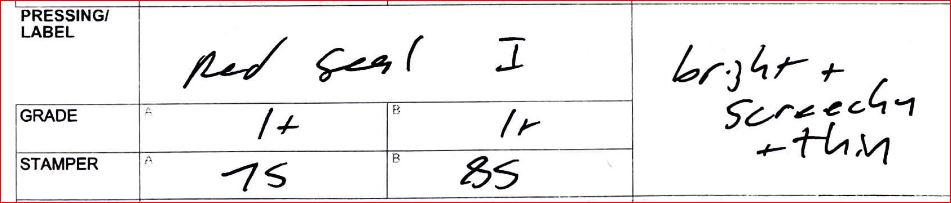
Many of the later RCA pressings we’ve played recently have left a lot to be desired.

We’re on record as telling audiophiles that it’s never a good idea to judge records by their labels, so when it came time to do a shootout for this famous Heifetz recording from 1963, LSC 2652, it was only fitting that we force ourselves to clean and play every pressing we had on the shelf, including the White Dogs and Red Seal reissues.

The White Dog did fine (2+ for the Bruch on side one, 1.5+ for the Mozart on side two).

The Red Seal had all the hallmarks of the transistory sound RCA apparently preferred in the 70s.

There are Red Seal pressings with excellent sound — some of them have won shootouts — but this one had too many similarities to the awful Classic Record classical titles produced in the 90s. You know the ones I’m talking about. They have bright, screechy string tone that no self-respecting audiophile with even passable equipment should find tolerable.

(The fact that many of them remain on the TAS list speaks volumes about the self-identified experts’ ability to distinguish a good record from a bad one. More on that subject below.)

More of the Same

Below you will find links to other records we’ve played that had the same problems as this RCA and are best avoided by audiophiles looking for high quality pressings to play.

There is no shortage of other records that we’ve run into over the years with these kinds of obvious shortcomings.

(more…)

We Review the Classic Records Pressing of SR 90212

The Classic Records pressing of the famous Mercury is a gritty, shrill piece of crap.

I used to have a less-than-revealing all-tube system back in the 90s, but even that system, limited as it was and not remotely as revealing as the one we have now would have had a hard time hiding the faults of this awful record.

I don’t know how dull and smeary a stereo would have to be in order to play a record this phony and modern sounding in order to make it listenable, but I know that it would have to be very dull and very smeary, with the kind of vintage sound that might work for Classic’s Heavy Vinyl pressings but not much else.

It’s a disgrace, and the fact that it’s on the TAS Super Disc list is even more disgraceful.

Which all adds up to an audiophile hall of shame pressing and a record perfectly suited to the stone age stereos of the past.

Argenta and Ansermet

I much prefer Ansermet’s performances on London to those of Paray on Mercury.

As of 2022 we actually prefer the famous Argenta recording for Decca that’s on the TAS List, CS 6006.

Both are excellent and clearly superior to the Paray, even on the original Mercury pressings we’ve played.


UPDATE 2024:

This recording is no longer on the TAS Super Disc list. Our favorite, the London with Argenta, is however.

We call that progress! Maybe there’s hope for the TAS List yet.


(more…)

Neither of These Tchaikovsky 5ths Made the Grade

More of the music of Peter Ilyich Tchaikovsky (1840-1893)

We’ve been playing quite a number of different pressings of Tchaikovsky’s Symphony No. 5 lately, hoping to find a 5th that would really knock us out.

Most have left us unimpressed with the quality of the sound, and in the case of this Solti on London, the performance.

London CS 6117. Solti conducts the Paris Conservatory Orchestra.

The sound is OK. It’s fairly tubey and there’s a decent amount of energy to the recording.

The problem is not the sound, the problem is that the performance is terrible. Our main listening guy said he could hardly recognize the music!

DG SLPM 138 658. Mravinsky conducting the Leningrad Phil on an early pressing from 1961.

Big energy and a great performance but the string tone is shrill and smeary.

We are very used to hearing this kind of sound on Deutsche Grammophon records. This is why you see so few of that label’s pressings on our site.

How Did We Figure All of This Out?

There are more than 2000 Hot Stamper reviews on this blog. Do you know how we learned so much about so many records?

Simple. We ran thousands and thousands of record experiments under carefully controlled conditions, and we continue to run scores of them week in and week out to this very day.

(more…)

This Mercury Is Not a Good Way to Enjoy Tchaikovsky’s 4th

More of the Music of Tchaikovsky Available Now

The pressings we’ve played of SR 90279 over the years tended to have crude and shrill sound. The string tone was bright and steely.

In our most recent shootout for the work, since we happened to have one in stock, we figured we would give the Mercury one more chance, just in case we had finally stumbled on some good stampers or that other improvements to our playback would allow the hidden virtues of the recording to be revealed. (Yes, thankfully that is still happening. So is the reverse; some records don’t do as well in shootouts as they used to, a reality every audiophile has to be on the alert for, a subject we discuss here.)

It probably lasted less than five minutes on the table.

It was simply too unpleasant to be played on the revealing modern equipment we use.

It seems that many early Mercury recordings suffer from these shortcomings. My guess would be at least half, maybe even closer to two out of three.

Waking Up

If your system is dull, dull, deadly dull, the way some audiophile systems tend to be, this record has the hyped-up, bright and aggressive sound to bring it to life in no time. (If you’re a fan of MoFi pressings from the 70s and 80s, you definitely have a much smoother top end than we do. Most of the records they made in those years are way too bright and full of the kind of phony detail that some systems need to wake them up. I should know; I had one of those systems myself, but of course I didn’t know it at the time and would have gone to the mat to deny the accusation.)

There are scores of commentaries on the site detailing the huge improvements in audio available to the discerning (and well-healed) audiophile. It’s the reason Hot Stampers can and do sound dramatically better than their Heavy Vinyl or audiophile counterparts: because your stereo is now good enough to show you the difference.

With a too-forgiving system, you will most likely continue to be fooled by bad records, just as I and all my audio buds were fooled thirty and forty years ago. Audio has improved immensely in that time. If you’re still playing Heavy Vinyl and audiophile pressings, there’s a world of sound you clearly don’t know you’re missing.

My advice is to get better equipment and spend as much time as you can learning to tweak and tune it. That will allow you to be better at recognizing bad records when you play them.

The Heavy Vinyl Route

If more vintage Mercurys had sound as bad as this one, we would happily admit that going the Heavy Vinyl route might make sense.

And there certainly are a lot of bad vintage pressings — we should know, we’ve played them by the hundreds — but the number of bad modern Heavy Vinyl pressings would give them a run for their money and then some.

Beyond this Tchaicovsky title, there are plenty of others we’ve run into over the years with too many sonic shortcomings. As a public service, here are about 60 of them, broken down by label.

(more…)

Witches’ Brew on Classic Records and How Crazy Wrong I Was, Part One

Hot Stamper Living Stereo Orchestral Titles Available Now

Well below the reproduction of the front page of our old catalog you will find the review I wrote in 2007 for the Classic Records’ Heavy Vinyl pressing of Witches’ Brew.

Clearly I did not care for it in the least. In fact, I thought it was one of the worst reissues I’d ever heard, so aggressive, boosted and unnatural it defied understanding that anyone could ever play such a record and not notice how wrong it sounded.

Now when I think about the Classic Records reissue of Witches’ Brew and its awful sound, it’s obviously a modern remastering I could not possibly have liked.

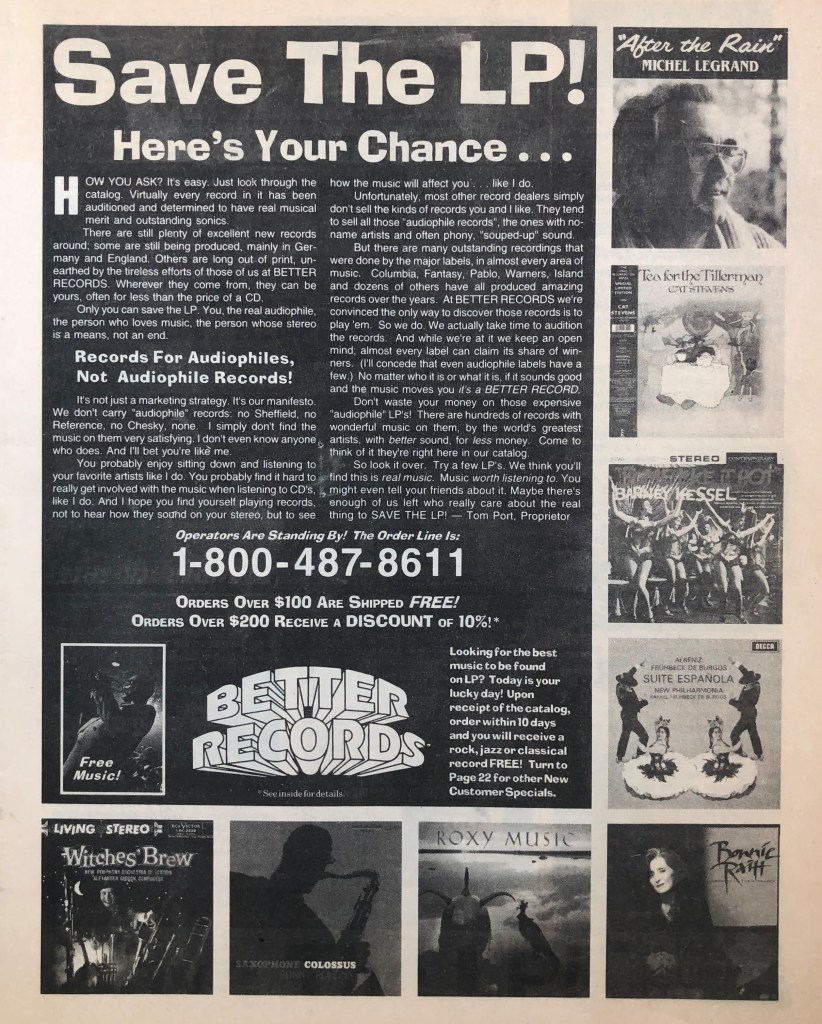
However, in preparing to move to Georgia in 2022, I found myself digging through some old catalogs from the early Nineties. Something I read in one of them chilled me to the bone.

There it was in black and white: my rave review for the Classic Records pressing of Witches’ Brew.

It’s actually on the front page of the catalog, along with at least one other record that I would be mortified to sell today: the OJC pressing of Saxophone Colossus.

(As soon as I find my review in the old catalog for Saxophone Colossus, I will post it. I can hardly believe I wrote it, but I did. I wrote all my catalogs back then. My lack of competence and the guilt associated with my lack of expertise at the time is undeniable. It obviously would be foolish and wrong of me to try to deny any of it, so I don’t.)

Below you will find a commentary from 2007 detailing the shortcomings of the Classic.

I sure had a lot of nice things to say about it in 1994.

I thought my stereo was awesome back then, but it was not nearly as awesome as I thought it was. It was better than any system I had heard in a stereo salon, audio show or friend’s house, but that has to be seen as a pretty low bar, and it may even be lower now than it was back then.

I’ve written a bit about the limitations of my 90s system here.

The Dunning-Kruger effect is real, and I clearly suffered from it.

In 1994 I had been a fairly dedicated audiophile for more than twenty years, and a strongly opiniated audiophile record dealer, one who took pride in curating his vinyl offerings right from the start of the business in 1987.

I thought I knew what I was talking about. Looking back it’s clear I had a lot to learn.

(more…)