pianotrio

Oscar Peterson / The Trio – Live From Chicago

Reviews and Commentaries for the Recordings of Oscar Peterson

xxx

  • Tonally correct from top to bottom and as transparent as any vintage recording you’ve heard, the combination of clarity and Tubey Magic here is hard to beat
  • The Trio, including Ray Brown and Ed Thigpen, are in fine form on these live recordings from the London House in Chicago; if you want to hear one of the great jazz trios at the height of their powers, this is the ticket!
  • “…[Peterson] was generally in peak form during this era. He sticks to standards on this live [album] (a good example of the Trio’s playing), stretching out ‘Sometimes I’m Happy’ creatively for over 11 minutes and uplifting such songs as ‘In the Wee Small Hours of the Morning,’ ‘Chicago’ and ‘The Night We Called It a Day.'”
  • If you’re a fan of Oscar’s, this Top Title from 1961 belongs in your collection.
  • The complete list of titles from 1961 that we’ve reviewed to date can be found here.

Peterson really puts on a great show. He’s made an awful lot of records during his career and most of them aren’t especially noteworthy. This album is clearly an exception to that rule. (If You Could See Me Now is another one.)

This pressing was a HUGE step up from the other copies we played in our recent shootout. This killer copy has the immediacy that puts you front and center at The London House for a great jazz show. Ray Brown is his usual incredible self on bass.

(more…)

Vince Guaraldi – Jazz Impressions Of Charlie Brown

More 5 Star Albums

  • This superb pressing boasts Shootout-winning Triple Plus (A+++) sound on side one and an excellent Double Plus (A++) side two
  • Guaraldi introduced the world to his unique, melodic, elegantly simple style with this very album – only a pressing this good does the timeless score justice
  • Not the quietest copy we’ve ever played, although finding one much quieter than this is simply not in the cards unless you’re willing to settle for much poorer sound quality
  • 5 stars: “The most remarkable thing, besides the high quality of Guaraldi’s whimsically swinging tunes, is that he did not compromise his art one iota for the cartoon world; indeed, he sounds even more engaged, inventive, and lighthearted in his piano work here than ever.”

On both sides, but especially on this Shootout Winning side one, the sound was jumpin’ out of the speakers. There was not a trace of smear on the piano, which is unusual in our experience, although no one ever seems to talk about smeary pianos in the audiophile world (except for us of course).

If you have full-range speakers, some qualities you may recognize in the sound of the piano on this recording are WEIGHT and WARMTH. The piano is not hard, brittle or tinkly. Instead, the best copies show you a wonderfully full-bodied, warm, rich, smooth piano, one which sounds remarkably like the ones we’ve all heard countless times in piano bars and restaurants.

In other words like a real piano, not a recorded one. This is what we look for in a good piano recording. Bad mastering can ruin the sound, and often does, along with worn out stampers and bad vinyl and five gram needles that scrape off the high frequencies.

But a few copies survive all such hazards. (Too few, hence our prices.) They manage to reproduce the full spectrum sound of the piano (and of course the wonderful performances of the musicians) on vintage vinyl, showing us the kind of sound we never expected from a ’60s Fantasy pressing such as this one.

(more…)

For Misty, Stick with the Real Japanese Pressings

More Audiophile Recordings with Audiophile Quality Sound

Hot Stamper Pressings of Jazz Recordings Featuring the Piano Available Now

This is a highly recommended Three Blind Mice LP. We don’t like most Three Blind Mice albums, or jazz played by practically anyone who is not American. (Ever played Jazz at the Pawnshop? If so, did you enjoy your nap?)

But we like the music of Yamamoto well enough to recommend some of it. Midnight Sugar might actually be his most enjoyable album of them all.

The Heavy Vinyl versions are not as good, although the 45 RPM pressing probably comes the closest to the real Japanese pressing we review here.

Anything pressed at RTI is rarely better than second rate and should be avoided if at all possible.

We almost never like records Made In Japan that were not recorded in Japan. There are of course a few exceptions.

My First Time

This was the first Three Blind Mice recording I ever heard, over 20 [now close to 40] years ago. A fellow audiophile who went on to become a true audio guru for me (George Louis) played me this recording to demonstrate his stereo.

It had to be the most dynamic piano recording I had ever heard in my life. 

Yamamoto likes to tinkle the keys very softly, and then really pound them. And the Three Blind Mice engineers were able to capture both the quiet tinkling because of the Japanese vinyl, and the full-on pounding because of the audiophile recording equipment they used. It was an ear-opening experience.

Over the course of the next year or two, I sold off my Fulton Premiers and my Audio Research Electronics, because no matter how hard I tried, I couldn’t get Misty to sound like it did at George’s house.

I realized that it takes better equipment than those companies were making back then to get the sound of that record right, and that put me on, to quote Cat Stevens, ”the road to find out.”

And it wasn’t just the equipment that had to get better, a subject we address in our commentary Revolutionary Changes in Audio. An excerpt:

When I got started in audio in the early- to mid-70s, the following important elements of the modern stereo system did not exist:

  • Stand-alone phono stages.
  • Modern cabling and power cords.
  • Vibration controlling platforms for turntables and equipment.
  • Synchronous Drive Systems for turntable motors.
  • Carbon fiber mats for massive turntable platters.
  • Highly adjustable tonearms (for VTA, etc.) with extremely delicate adjustments and precision bearings.
  • Modern record cleaning machines and fluids.
  • And there wasn’t much in the way of innovative room treatments like the Hallographs we use.

A lot of things had to change in order for us to reproduce records at the level required to do our record shootouts and be confident about our findings, and we pursued every one of them about as far as time and money allowed.

For a further discussion of these issues, please click here.

(more…)

The Oscar Peterson Trio – Put On A Happy Face

More Oscar Peterson

Reviews and Commentaries for the Music of Oscar Peterson

  • INCREDIBLE Shootout Winning Triple Plus (A+++) sound on both sides of this original Verve stereo pressing
  • The transparency of a killer analog pressing such as this has the power to transport you to the front row of a small ’60s jazz club – what a thrill!
  • These live sessions produced four LPs worth of material, with The Trio and The Sound of the Trio being the most famous of the four
  • “The Oscar Peterson Trio’s 1961 live sessions at Chicago’s London House are considered among their finest recordings… Essential Jazz Classics.”
  • If you’re a fan of Live Jazz Piano Trio recordings, this is a Verve from 1966 that belongs in your collection.
  • The complete list of titles from 1966 that we’ve reviewed to date can be found here.

(more…)

Bill Evans – At Shelly’s Manne-Hole

More Bill Evans

More Jazz Recordings Featuring the Piano

  • This superb live album makes its Hot Stamper debut here with Shootout Winning Triple Plus (A+++) sound or very close to it throughout – exceptionally quiet vinyl too
  • Both sides are Tubey Magical yet clear, with plenty of performance energy and a lovely musical quality that’s noticeably missing from many of the copies we’ve played over the years (and no doubt the Heavy Vinyl pressing)
  • 4 stars: “. . . a 1964 release that finds the entire band in classic form. . . Jazz is rarely as sensitive or as melodic as this. Another classic from Bill Evans and company.”

(more…)

Bill Evans – The Bill Evans Album

More Bill Evans

  • A superb copy of Evans’ 1971 release with Nearly Triple Plus (A++ to A+++) sound from start to finish – just shy of our Shootout Winner
  • An outstanding later recording for Bill Evans, superior to many of the albums he made around this time – it’s rich, smooth and Tubey Magical, with an especially musical quality, hence the solid grades
  • Balanced, clear and undistorted, this 30th Street recording shows just how good Columbia’s engineers were back then, even as late as 1971
  • 4 stars: “Although not as distinctive on the electric keyboard as he was on its acoustic counterpart, Evans sounds inspired by its possibilities and is heard in top creative form throughout the date.”

(more…)

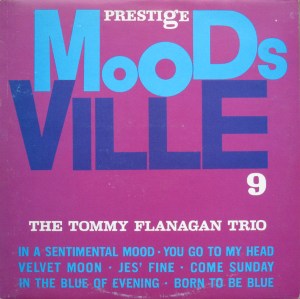
The Tommy Flanagan Trio – On Moodsville

More Piano Jazz

  • Rich, natural, transparent, spacious and musical throughout – you won’t believe how good this Mellow Jazz Classic from 1960 sounds
  • “Rudy van Gelder captured the exquisite sound in his usual manner by setting up a couple of high-fidelity microphones and letting the players and room speak for themselves. If I close my eyes, I’m in the Village Vanguard listening to him live.”
  • “With bassist Tommy Potter and drummer Roy Haynes giving the pianist fine support, the trio plays such songs as “You Go to My Head,” “Come Sunday” and “Born to Be Blue” quietly and with taste.”

(more…)

The Ramsey Lewis Trio – More Music From The Soil

  • More Music From The Soil makes its Hot Stamper debut with Shootout Winning Triple Plus (A+++) sound or close to it from first note to last on this early Argo stereo LP
  • This pressing stood head and shoulders above the pack, with the kind of big, present, full-bodied sound this top piano trio demands (which is precisely where the Modern Heavy Vinyl reissue fails so spectacularly, most notably in the areas of size and presence)
  • Hard to imagine we could find another copy with sound this good and vinyl this quiet – not many Ramsey Lewis records from this era did survived with audiophile quality playing surfaces the way this one did
  • “This is a typically enjoyable and accessible early Ramsey Lewis Trio recording. The pianist, bassist Eldee Young, and drummer Red Holt swing their way through…”

(more…)

Bill Evans – The Paris Concert, Edition Two

More Bill Evans

  • A superb original pressing with excellent Double Plus (A++) sound from start to finish and fairly quiet vinyl
  • These sides are doing most everything right – as befits a live concert, there’s an overall unprocessed quality to the sound and superb space around all three players
  • 4 1/2 stars: “[T]his could be considered Bill Evans’ final recording and serves as evidence that, rather than declining, he was showing a renewed vitality and enthusiasm in his last year.”

(more…)

Red Garland Trio – Groovy

More Red Garland

xxx.jpg

What makes this vintage piano trio album in mono so special? Allow me to quote a review from a few years back for a pair of recordings that Red Garland made with Miles Davis back in the mid-’50s: Workin’ And Steamin’.

To the Jazz Fans of the World, we here present one of the BEST sounding jazz recordings we have ever had the PRIVILEGE to place on a turntable. I cannot ever recall hearing a better sounding Rudy Van Gelder recording, and I have a theory as to why this tape is as good as it is: it’s MONO. It also sounds like it’s recorded completely LIVE in the studio, direct to one track you might say. As good a recording as Kind of Blue is, I think the best parts of this album are more immediate and more real than anything on KOB.

The size, the weight, the solidity, the clarity, the energy, the rhythmic drive – it’s all here and more. We’ve never heard the record sound better, and that’s coming from someone who’s been playing the album since the ’80s.

These guys are playing live in the studio and you can really feel their presence on every track — assuming you have a copy that sounds like this one.

Based on what I’m hearing my feeling is that most of the natural, full-bodied, smooth, sweet sound of the album is on the master tape, and that all that was needed to transfer that vintage sound correctly onto vinyl disc was simply to thread up the tape on a high quality machine and hit play.

The fact that nobody seems to be able to make an especially good sounding record these days — certainly not as good sounding as this one — tells me that in fact I’m wrong to think that such an approach would work. Somebody should have been able to figure out how to do it by now. In our experience that is simply not the case today, and has not been for many years, if not decades. (more…)