 Hot Stampers and Audio Progress Go Hand in Hand
Practically all of our audio philosophy derives from the simple act of trying to get the stereo system to play the greatest recordings of all time with the highest fidelity possible.
For my first twenty years in audio — roughly 1975 to 1995 — I made change after change in my equipment and setup to improve the sound quality of the music I loved. It’s an article of faith we me that to get anywhere in this hobby, music must do the driving.
When I started my record business in 1987, I discovered that higher fidelity playback allowed me to do a better job of evaluating the records I was selling. By the late-90s, continuing improvements to that system were helping me to find — you guessed it — Hot Stamper pressings.
“‘How much progress shall you make?’ you ask. Just as much as you try to make. Why do you wait? Wisdom comes haphazard to no man.” — Seneca
Practicing the skills you seek to develop is the only sure way to get better at what you are trying to do.
But where have you ever seen those concepts applied to improving your own critical listening skills outside of this blog?
For those who want to improve in this devilishly difficult hobby of ours, the question that needs answering is:
What are some good ways to challenge yourself as an audiophile?
Turns out there are plenty, and they’re really not that hard. Better yet, none of them will cost you a dime.
Tweaking and experimenting with room treatments is one sure way.
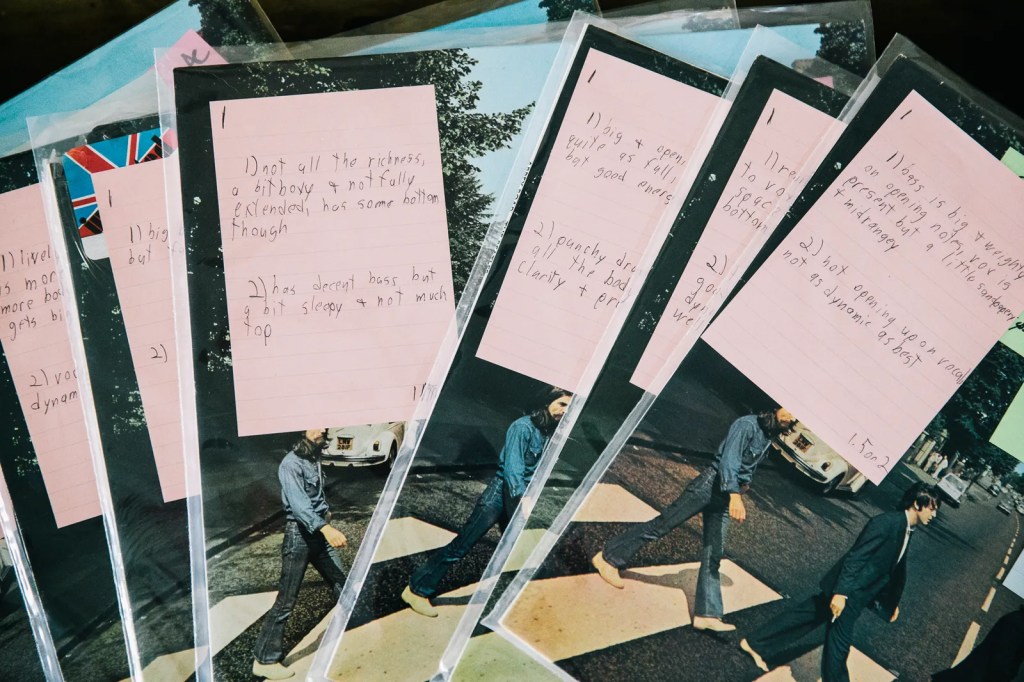
Playing five or ten copies of the same album back to back and making notes about the differences in the sound of each side or each record is another.
Adjusting the turntable sixty-six different ways and seeing what the effect is on scores of different records works too.
I did all these things for decades, and it taught me a lot. No amount of reading or advice was remotely as helpful as just getting down and messing around with anything and everything in my listening room, which naturally included thousands of records and even some CDs.
As Van Morrison so elegantly phrased it: “No guru, no method, no teacher.”
Further Reading
- Taking notes like these will help you listen more critically
- These are the records that helped me make real progress in audio
- Tuning and tweaking are essential to improving your system’s playback quality