
UPDATE 2023
This commentary was probably written in 2010 or thereabouts, since that’s the date on Fremer’s Aqualung review, which, for those with much more tolerance for audiophile BS than I am able to muster, can be found here. I’ve made a few changes to the commentary below, but most of the original text is intact.
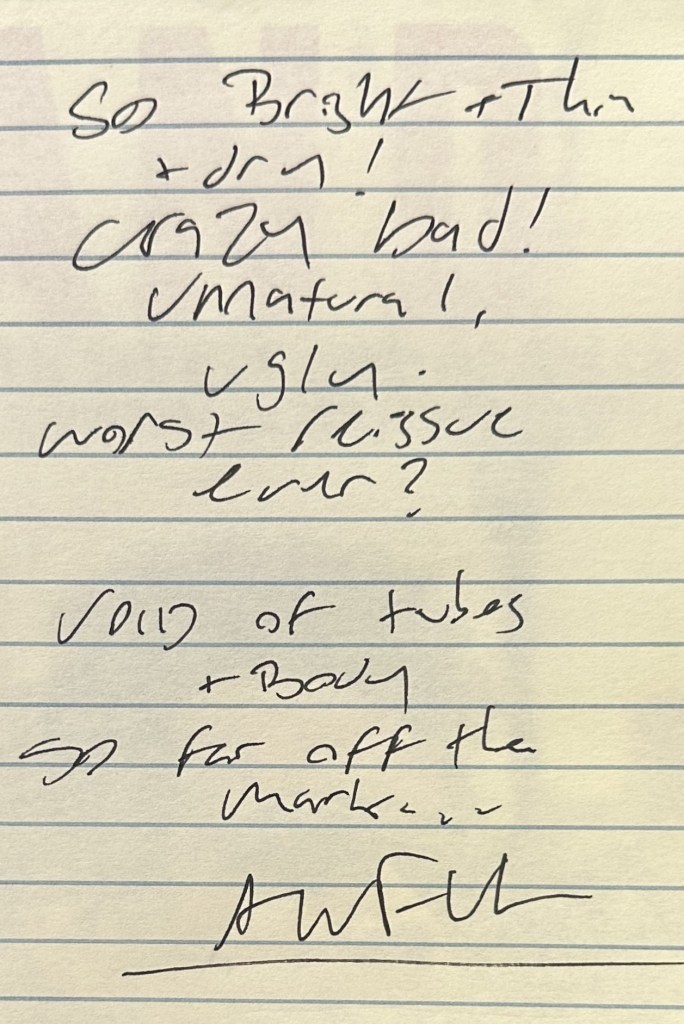
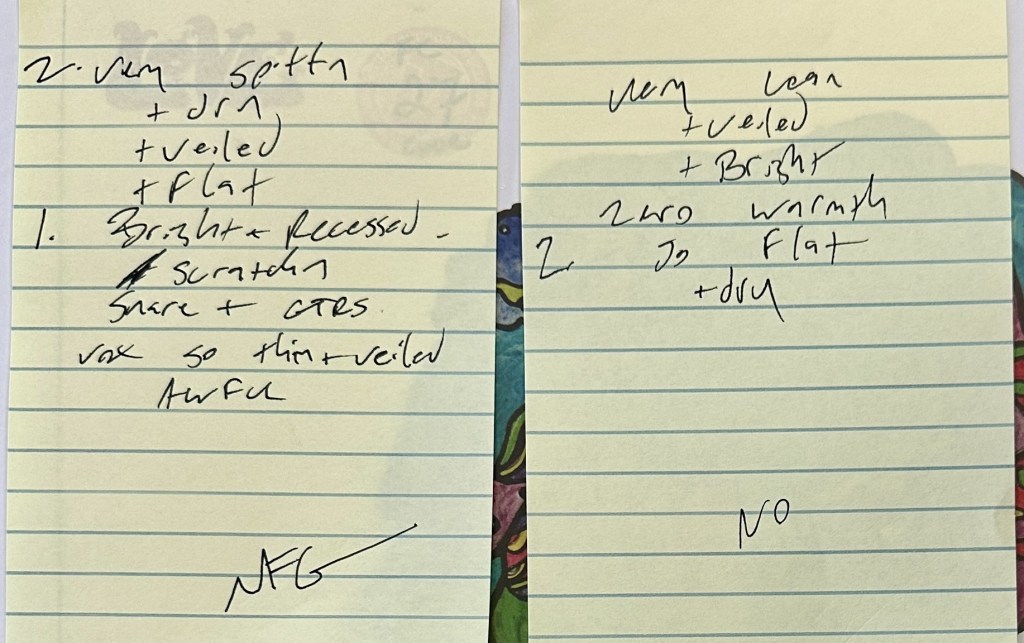
We recently put up a Hot Stamper Aqualung that just BLEW THE DOORS OFF the CLASSIC 200g pressing. Michael Fremer may think the new reissue is the ultimate pressing, but we sure don’t.
The Aqualung shootout on his site is priceless. He has so many silly things to say about it, let’s not waste any more time and get right to them.
His Shootout Begins
He says he “… compared Classic’s new 200g reissue with: 1) an original UK Chrysalis 2) an original American Chrysalis/Warner Brothers, 3) an original French Pink Label Island, 4) The Mobile Fidelity ½ speed mastered edition and 5) DCC’s 180g issue mastered by the team of Hoffman and Gray.”
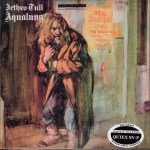
How many of each? One, right? (All the articles in front of the nouns are singular. Assuming MF is using good grammar, how many could there be?)
Mikey, that’s your first mistake.
When it comes to the domestic release, one is a wholly inadequate sample size for pressings that were pumped out by the millions and therefore mastered multiple times. Go to Discogs if you want to see just how many different stamper numbers can be found in the original Reprise pressings. Hint: it’s a lot. Some of them are known to us to be awful, some fall into the middle of the pack, and some we like. Figuring out which are which has taken us a lifetime of work and is well beyond the ability of any single person to decode for more than a few dozen records.
Maybe you got hold of a bad sounding “original American Chrysalis/Warner Brothers,” did you ever think of that? The record bins are full of them.
If you did get hold of a bad one — and all the evidence points in that direction — the time and effort you put into your shootout just went flying out the window, defenestrated as they say.
Shootouts using only a small number of pressings have very little value. Anybody who claims to know anything about records ought to know that.
This next line just floors me.
Now rather than make value judgments, let’s just compare without prejudice.
This guy may not be good for much, but he sure is good for a laugh.
Does he really expect us to believe that the comments that follow are not biased in any way, that they are The Truth, that he is able to measure “intimacy and warmth” and tell us precisely how much of each there is on any given pressing? Who in his right mind thinks like that? (At this rate he may end up wandering about a park with snot running down his nose, greasy fingers smearing shabby clothes, but let’s hope it doesn’t come to that. Help is available; perhaps Stereophile has a mental health plan under which he could be covered.)
Soon enough he goes on to give his opinion as to the merits of each of the pressings noted above. I’m sorry, did I say opinion? I meant comparisons without prejudice. Sorry, my bad.
The Big Truth
And of course he is more than welcome to make any and all the comparisons he deems fit, each from that lovely sample size of one. And if he wants to add another sample (size = 1) to the mix by playing the DCC gold CD, he’s welcome to do that too, which he did. I’m guessing that his CD player is every bit as accurate as his front end (comprising turntable/ arm/ cartridge/ phono stage/ cables), which, if he were to ascribe a percentage to the accuracy of all the pieces that make up this chain, would have to be in the range of 100% or thereabouts. Or as the late John McLaughlin might say, on a scale of one to ten: ten, meaning Metaphysically Accurate.
No colorations. No imperfections. Pure Truth, and nothing but.
(more…)
 Hot Stamper Pressings of the Music of The Who Available Now
 Robert Brook has a blog which he calls



 What is shocking is that there are audiophiles — self-identified lovers of sound, who are supposedly capable of telling a good sounding record from a hole in the ground — that defend this man’s work.
 Hot Stamper Pressings of the Music of Neil Young Available Now


 Robert Brook has a blog which he calls