1+

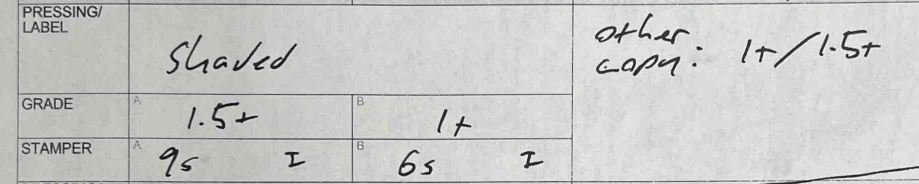
The pressings listed here earned a not-awful, but not-very-good-either sub-Hot Stamper grade of 1 plus on at least one side.

To qualify as a Hot Stamper pressing, both side must earn grades of 1.5+.

There’s a Very Good Chance We Were Wrong about Mulligan Meets Getz

More of the Music of Stan Getz /More of the Music of Gerry Mulligan

This is an album that we were probably wrong about in 2021 when the following Hot Stamper two-pak pressing went up for sale on the site. (The pressings we liked at the time are long gone by now.) Here is what we wrote back then:

Mulligan and Getz’s 1957 collaboration arrives on the site with this superb 2-pack offering Nearly Triple Plus (A++ to A+++) sound on both sides – just shy of our Shootout Winner

Full, rich, and spacious with tons of Tubey Magic and, better yet, not the least bit dry, hard or transistory

Practically impossible to find in stereo with audiophile playing surfaces – it took two different pressings to get two good sides, and they are very good indeed

The reissues we discovered in 2025 trounced the originals (in both stereo and mono) as well as the early reissues (on the Verve T Label) we played in our shootout, as you can see from the stamper sheet notes below:

Our mistaken judgment is simply the result of ignorance. In 2021 we simply had no idea just how good this recording could sound on vintage vinyl. We hadn’t done our homework properly, and because of that we came up with the wrong answer.

We only discovered the right pressings, with the right stampers, pressed in the right era, and mastered by the right guy, sometime in 2024 or so. We bought a bunch of those and in 2025 did the shootout with all kinds of copies, just to keep everybody honest.

That was the year much better sounding reissue copies that look like the one you see on the left came along. As we noted in the listing:

  • Leave it to Better Records to figure out a complicated title with a long history such as this one – originals, reissues, monos, stereos, we had to play them all to find a copy that sounds as good as this one does.
  • Full, rich, and spacious with an abundance of Tubey Magic and, better yet, not the least bit dry, hard or transistory.

Some quick notes:

Bowtie Label Stereo

  • Veiled and dry
  • Tons of reverb
  • 1.5+ at best (a good, not great Hot Stamper grade)

Our understanding is that Steve Hoffman chose to use the mono tapes as the source material for his DCC Gold CD because he felt there was too much reverb on the stereo tape. We heard too much reverb too.

What tapes our wonderful sounding reissues are made from we have no way of knowing. They do not suffer from too much reverb, that much we can tell you. The best pressings we offer sound great, and quite a bit better than any Gold CD will. However, if money is tight, the Gold CD is not a bad way to go for this music.

T Label Stereo

  • Dry, some squawk
  • 1+, what we would call passable sound

Mono Early Pressings

  • Rich but hot horns
  • 1.5+ at best

Lessons Learned

In this case, the conventional wisdom that the stereo originals would be the best sounding turned out to be incorrect.

Our lengthy commentary about conventional wisdom seeks to make the case that, although the most common record collecting approaches are more often right than wrong, there is simply no way to know what approach — original versus reissue, import versus domestic, mono versus stereo — will work the best for any given title.

(more…)

This Rudy Van Gelder Cutting of Red Clay Is Good but…

xxx

… far from the best we played, earning barely Hot Stamper grades.

And we would be remiss if we failed to point out that the proper cleaning of your records will typically improve their sound quality by at least one half plus, and more often than not one full plus.

It’s very likely that neither of the A3/B3 copies you see below would have qualified as Hot Stamper pressings without the aid of a good cleaning.

Red Clay is one of our favorite CTI albums – Red Clay (the song and the album) is Hubbard’s soul jazz Masterpiece, and it’s a record that belongs in every audiophile’s jazz collection.

Lenny White drums up a storm on this album – on this copy he is playing right in the room with you. If you’re a Hubbard fan, or perhaps a fan of early-70s soul jazz, this title from 1970 is surely a Must Own.

Although Rudy recorded and mastered the album — the only pressings that qualified for the shootout were his — it should be noted that Van Gelder in the dead wax is never a guarantee of high quality sound, on any record.

(It’s easy to criticize the bad pressings of Rudy Van Gelder’s work, but let us not lose site of the countless great ones.)

This A3/B3 pressing was not awful, or even mediocre — the reissues without VAN GELDER in the dead wax would most likely be much worse sounding — but at 1.5+ we would say it has earned good, not great Hot Stamper grades.

The only way to guarantee higher quality sound is to do a shootout with a good-sized pile of cleaned pressings and find the one with the best sound using the rigorous testing methodologies we use.

For this kind of work, top quality playback is a must.

There is of course a way to avoid doing all that work and spending all that money on piles of pressings, most of which you will eventually have no use for, and that’s to buy a Hot Stamper copy of the album from us.

(more…)

These Kelly Blue Reissues from the 70s Are a Real Mess

Hot Stamper Pressings of the Music of Wynton Kelly Available Now

Sometimes the 70s reissues of vintage jazz recordings that were made in the fifties, sometimes released with different covers similar to the one you see pictured, have excellent sound.

We know that for a fact because we’ve played some very good ones.

In the case of Kelly Blue, we felt we were obligated to play a few to make sure we were hearing as wide a range of different pressings as possible. We wanted to be sure we were hearing the best sounding pressings regardless of what era they were pressed in. (We’re very open minded that way.)

Here are our notes for the Black Label Riverside Stereo pressing with “1971” stampers:

  • Thin,
  • Dry,
  • Honky,
  • Veiled.
  • Severe stereo spread. (Hard left and right, unmusical this way, players are disconnected.)
  • Grade: 1+ on both sides

The other copy we had was even worse:

  • NFG on side one, side two never played.

The Riverside originals we’ve played in the past, like a lot of other Riverside originals from the 50s, such as those by Thelonious Monk, were uniformly terrible.

And trying to find one in audiophile playing condition is as easy as it sounds.


We’ve auditioned countless pressings like this one in the 38 years we’ve been in business — buying, cleaning and playing them by the thousands. This is how we find the best sounding vinyl pressings ever made.

Not the ones that should sound the best. The ones that actually do sound the best.

If you’re an audiophile looking for top quality sound on vintage vinyl, we’d be happy to send you the Hot Stamper pressing guaranteed to beat anything and everything you’ve heard, especially if you have any pressing marketed as suitable for an audiophile. Those, with very few exceptions, are rarely better than mediocre, and some of them are just awful, with many of the newest releases being the most awful of them all!

(more…)

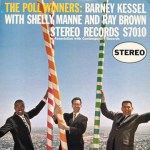
How Do the Early Pressings of The Poll Winners Sound?

Hot Stamper Pressings of Contemporary Jazz Albums Available Now

A recent Shootout Winning copy with the early stereo badge cover was described this way:

Stunning sound throughout this vintage Black Label Stereo Records pressing, with both sides earning Shootout Winning Triple Plus (A+++) grades or close to them

Roy DuNann always seems to get the real sound out of the sessions he recorded – amazingly realistic drums in a big room; Tubey Magical guitar tone; deep, note-like bass, and on and on

4 1/2 stars: “The choice of material, the interplay between the three players, and the lead work all meld together beautifully on The Poll Winners, making it a classic guitar album in a small-group setting.”

Musically, all true. Sonically, not so much. The early D1/D2 stampers on the early Black Label might be passable on side one (1+), but side two was just a mess (NFG).

Side One

Track Two

  • A bit bright and flat

Track One

  • Very clear but lacking richness, weight and depth
  • Thin, and bright up top
  • 1+

Side Two

Track One

  • Narrow stereo field
  • Weird tape hiss
  • Metallic top end
  • Very recessed and weird
  • Nope

A different Stereo Badge Cover copy sporting a Black Label won the shootout by the way. Go figure.

(more…)

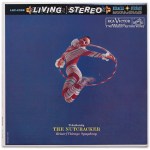
Capriccio Italien on Classic Records and How Badly I Missed the Boat

More of the Music of Peter Ilyich Tchaikovsky

More of the Music of Nikolai Rimsky-Korsakov

Years ago, around 2005 if memory serves, I played a copy of the Classic Records pressing of LSC 2323 and thought it was pretty good.

I thought it was better than the Shaded Dog copies I had compared it to, which, based on hundreds of other Classic Records titles I had auditioned, was unexpected to say the least.

Little did I know that the Shaded Dog pressings on this title are not remotely competitive with the early reissues.

The best of the Shaded Dog pressings we could find, which just happened to have a 1s side one, came in tied for last with the one 70s Red Seal pressing we thought sounded good enough to make the shootout.

(Some inside baseball: most of the Shaded Dogs and Red Seals were needle-dropped, and all but two were eliminated before the shootout. It takes time and wastes money to clean and play pressings that sound hopeless, so a quick elimination round often precedes the cleaning process.)

Back then it was tough to wrap my head around the idea that a Classic Record classical title could actually be better sounding than a Shaded Dog — it had never happened, so I knew there had to be more to the story.

Finding the time to do the serious investigation of LSC 2323 that would be necessary to get to the bottom of it was not in the cards, so I shelved the project for close to the next twenty years.

The title would have to wait until 2024 to go through a proper shooout, and when it did, naturally the Classic was part of the mix, which is the way we do things here at Better Records. Every record gets the chance to show us what it can do, to be evaluated fairly without the listener having any way to know which pressing is playing.

It turns out that side one of the Classic was passable, but side two — the side I had probably never played — was every bit as bad as most of their other classical offerings.

Side One, Second Movement (Tchaikovsky)

  • Big, but bright and compressed
  • Gets loud but opaque and hot
  • Good weight

Side One, First Movement

  • Bright and blurry bells
  • Sort of tubey but a mess
  • Grade: 1+ (passable, but no Hot Stamper)

Side Two (Rimsky-Korsakov)

  • Big but boomy and smeary
  • Brass is edgy and opaque
  • No top end or space
  • Peaks are hot and congested
  • Grade: NFG

To recap: In 2005 I was impressed with Classic’s pressing of LSC 2323. That was only twenty years ago, yet I could not have been more wrong. I thought my stereo was great — I’d owned top quality equipment since 1975 by then — thirty sodding years — so my audiophile credentials would surely dwarf those of the vast majority of forum posters who write about audiophile pressings today. How reliable should we expect their reviews to be?

(more…)
Another Unimpressive Reissue Pressing of Coltrane’s Music — What Is Going On?

Hot Stamper Pressings of the Music of John Coltrane Available Now

We had an early Blue Label Prestige mono pressing that was not as awful as the original Yellow Label mono we played, but it’s not very good either. Our grade for a record that earns one plus on both sides is passable.

Which means you could play it, maybe even enjoy it, but you would have no idea just how well Rudy Van Gelder recorded the sessions in 1958 that went into the making of the album, which as you know was not compiled for release until 1962.

As you can see from the notes above, it was crude, smeary and thick. We don’t sell records that sound like that.

I can’t say that most modern remastered records are crude, although some of them are, but a great many we’ve played are smeary, and almost all of them are thick — that is, lacking in transparency — to some degree. That last quality — a lack of transparency — may be the most irritating of all, a subject we discuss here.

(A great many records we’ve auditioned over the years are good for testing transparency. Those wanting to improve this aspect of their playback should consider making use of them.

(more…)

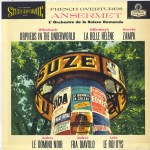
French Overtures with Ansermet Had One Awfully Good Sounding Side in 2009

Hot Stamper Pressings of the Music of Jacques Offenbach Available Now

Reviewed back in 2009 in our pre-shootout days.

This Minty London Blueback LP has a WONDERFUL Tubey Magical Super Hot Stamper side one.

I have never heard this music sound better. Of course Ansermet is exactly the right conductor for these light and colorful orchestral pieces; the performances are uniformly superb.

But as audiophiles we want to make sure the sound is what it should be, and here side one does not disappoint. The string tone is perfection. I defy anyone to find a Heavy Vinyl reissue with string tone even remotely as good. In my experience there is simply no such record.

With vintage classical records there are always trade-offs of course. Here the loudest passages suffer from some mild compressor distortion, so common on these early pressings. A small price to pay for sound this lovely I say.

The Zampa overture by Herold is probably the best sound on the album — it’s gorgeous!

Side two is not quite as good. We rated it A Plus, with real weight and energy but a bit too much compression and distorton in the loud passages to be completely satisfying.


UPDATE 2025

Nowadays we would never list a record for sale as a Hot Stamper pressing with a grade of 1+ on either side.

And, more importantly, the grades we awarded these two sides were just estimates.

We did not put this copy in a shootout with a batch of similar pressings.

We played the record, liked what we heard on side one, liked what we heard on side two a bit less, and offered it to our customers with the description of the strengths and weaknesses you read about.

We could not have begun to conduct a shootout for this early London. Back in those days we simply could not find enough copies of such a rare title to make such a thing happen.

As for the compressor distortion on side one that we heard, it’s entirely possible that with better cleaning and better playback that the distortion we thought we heard would disappear. Blaming the record is rarely the ideal approach for making progress in audio.

(more…)

Is This Really Robert Ludwig’s Doing? I Thought He Was One of the Good Guys

Hot Stamper Pressings of Rock and Pop Albums Available Now

Below is the complete shootout stamper sheet for a rock record whose name we do not plan to reveal at this time.

We could reveal it, since knowing the “right” stamper numbers appears to be of no help at all — the best stampers and the worst stampers are exactly  the same stampers! (Nothing new there.)

RL stands for Robert Ludwig and MD stands for Masterdisk.  As you can see, Robert Ludwig cut all seven of the pressings that made it to the shootout.

One of them actually won. “Robert Ludwig’s stuff cannot be beat!” might be the post on whatever audiophile forum you frequent. (If it’s Hoffman’s forum, it would more likely read “Robert Ludwig’s stuff cannot be beat except by Steve Hoffman!”)

Another pressings with those same markings came in next to last, with such mediocre-at-best sound that it would not qualify as a Hot Stamper at all. (1.5+ on both sides or better is the minimum grade for any record we sell.)

Robert Ludwig really screwed up the mastering of this title, another forum member might post.

Can they both be wrong? Of course they can. When has any information posted on a forum been reliable or free from error?

If you were to tell me you have the Robert Ludwig-mastered original pressing for this record and it sounds amazing, I would be inclined to agree with you that that is very possible. If, on the other hand, you were to tell me you have the Robert Ludwig-mastered original pressing for this record and it sounds terrible, I would say I happen to know firsthand that that’s possible too.

The most likely sound for any copy you might have is “good, not great,” because only two copies earned grades of 2+ or better on both sides. Two out of seven. (Which is disappointing because it hurts our bottom line when so few copies in a shootout will end up selling for much more than we invested in them in money and labor.)

(more…)

We Forgot How Mediocre the Originals of A Winter Romance Are

Hot Stamper Pressings of the Music of Dean Martin Available Now

We gave a couple of early pressings another chance and they blew it!

The copies we sell as Hot Stampers are the reissues from the 60s. Here is what we had to say about a copy we posted for sale recently:

With a voice that is relaxed, smooth and warm, Dino is the perfect guy to sing these songs.

The sound of this reissue is far better than any of the originals we played, which mostly weren’t very good. Which just goes to prove (once again) that in the world of vinyl, the idea that the original will have the best sound is a pernicious falsehood.

Rich, sweet, full of ambience, dead on correct tonality, and wonderfully breathy vocals – everything that we listen for in a great record is here.

To back that up with actual stamper sheet evidence, here are the grades for the two early pressings we put in our shootout. We’d heard the originals before and never liked them, but sometimes if a particular presssing is cheap and easy to find, we give it another chance.

I think we’re done with the originals now though. They’ve let us down too many times.

Who wants to hear Dean Martin’s gorgeous baritone sounding lean, dry and recessed, or, alternately, murky, nasal, grainy and veiled?

If I didn’t know better I would suspect these originals were modern reissues. This kind of crap sound is all over the Heavy Vinyl records we play, although nobody but us ever seems to notice.

The Point Is

This serves to make a very important point that is near and dear to our hearts:

(more…)

Harry Moss Cut These UK Stampers for Hey Jude – How Did He Go So Wrong?

Hot Stamper Pressings of the Music of The Beatles Available Now

Now with a couple of shootouts for both Hey Jude and the 1967-1970 compilation album under our belts, our main listening guy thinks the versions of the overlapping songs on Hey Jude are a little more fun.

He said that, all things being equal, the best pressings of Hey Jude might be a little more exciting while the best pressings of The Blue Album are a little more polite.

Here is how we described a recent shootout winning copy:

An amazing 10-song compilation from 1970 of some of the band’s biggest and best hits – “Can’t Buy Me Love,” “Paperback Writer,” “Lady Madonna,” and the iconic title track among them.

Longtime customers know that we had never been able to offer this title up until 2022 – it took us twenty years to figure out what the right pressings are, and believe me, we had to go through a lot of crap to find them.

If you know the album at all, you know how bad it sounds on the average copy, and my guess is you just gave up on the idea of finding good sound for these songs, which is more or less the way we felt too, but we finally found what we were looking for, and here it is.

However, some stampers are disappointing as you can see from this section of the stamper sheet we compiled for the shootout.

Harry T. Moss, the man with the initials HTM you see above, is the Parlophone/Apple engineer who cut many of the greatest sounding Beatles albums ever made (and plenty of not-so-great sounding ones, which is why you either need to do your own shootouts or have us do them for you).

Seems at though at least some of the work he did for the Hey Jude album is not his best. We awarded both sides a sub-Hot Stamper grade of 1+, which means the sound is passable at best, even after a good cleaning. (Without a good cleaning it would probably not even earn that one plus.)

We do not sell records with 1+ grades; you can find those on your own. The world is full of them.

Our notes for this pressing read:

  • Too midrangey and compressed
  • Heavy tape or tube saturation, side two especially

Your only other option for hearing some of this music with top quality sound is on the 1967-1970 compilation album, the Hot Stamper pressings of which have only recently been discovered.

(more…)