1+

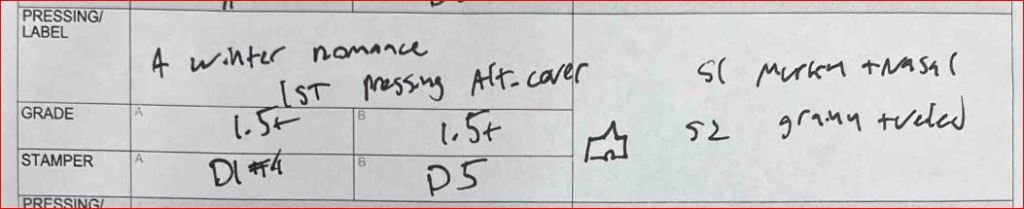
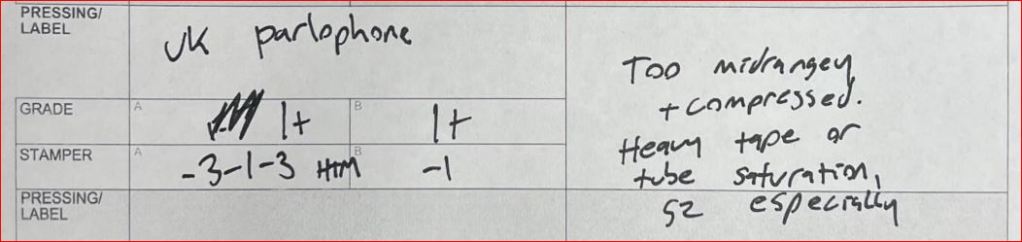
The pressings listed here earned a not-awful, but not-very-good-either sub-Hot Stamper grade of 1 plus on at least one side.

To qualify as a Hot Stamper pressing, both side must earn grades of 1.5+.

None of the Living Stereos with Reiner Conducting Was Better than Passable

Hot Stamper Pressings of Living Stereo Titles Available Now

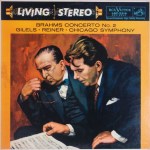
For a cover this beautifully rendered, you would think the sound of the Shaded Dog pressings of LSC 2219 would be something special.

Unfortunately, as we were preparing our shootout for the work we did not find that to be the case.

We dropped the needle on some copies and judged that the grades would be roughly in the range of 1+. Some copies might be a bit better, some might be a bit worse, but most of them would have sound that was merely passable, even after a good cleaning. (Without a good cleaning, most would probably not even earn that single plus.)

We do not sell records with 1+ grades. You should have no trouble finding those on your own. The world is full of them. They’re what most audiophiles call “good sounding records.”

Our favorite Brahms Second Piano Concerto for sound and performance is LSC 2581. It was recorded for RCA only a few years later in 1962.

The average Shaded Dog may be better than the average classical record, but that certainly doesn’t mean it has any claim to audiophile sound. We’ve played bad early RCA pressings by the hundreds. Now, with the help of this blog, we can point some of them out to the record lovers who are looking for top quality sound and don’t care that much about the label.

(more…)

The Domestic Stampers of 10cc’s Masterpiece Had Us Fooled for Years

Hot Stamper Pressings of the Music of 10cc Available Now

I haven’t run into many audiophiles who own a copy of The Original Soundtrack, or any other 10cc album for that matter.

It’s the rare person who has the the kind of system that can play a recording with such explosive dynamics.

As I have an uncontrollable habit of saying, this is the kind of record that is guaranteed to bring any audiophile stereo to its knees. 

Since that is the case, and audiophiles who build the kind of big systems in heavily-treated custom rooms to meet the challenge such recordings present are thin on the ground — very thin it seems, as I am the only one I have ever known — it stands to reason that practically no audiophiles have ever experienced the size and power of the recording as it was meant to be heard.

I thought I was doing a very good job reproducing the sound of the album, but recent research has proved that, once again, I was mistaken. Previously I had written:

The recording itself is a tour de force, the main reason I’ve been demonstrating my stereo with it for more than thirty years. The extended suite that opens side one, One Night in Paris, has ambience, three-dimensional sound effects, and incredibly dynamic multi-tracked vocals at the climax that will leave you with your jaw on the floor.

All true. But I had been playing both domestic pressings and British pressings over the course of those thirty years, and I don’t remember clearly preferring one to the other.

With our latest shootout the British pulled away from the pack in a big way, with no British pressing being beaten by any domestic competitor.

The domestic pressings ranged from very good — 2+ on both sides — to passable at best — 1+ on both sides.

I honestly used to think they were close, that they would be hard to tell apart. Those days are gone. We are operating at a whole ‘nother level, and I am glad that we are. We want to give out only the most accurate information and sell only the best sounding records.  What I had thought was true ten years ago turns out to have been off the mark.

When reality turns out to be dramatically different from what you thought it was, and you can prove it — you actually have the physical records to back up your newer, more correct understanding — that’s audio progress.

You might try proving yourself wrong more often.

Most audiophiles I have run into like having their biases confirmed, but look where that has gotten some of them — stuck in a rut. Break out of that way of thinking and you may very well find that you have broken through to another level.

Because if you don’t go out of your way to prove yourself wrong, who will?

(more…)

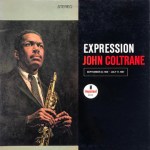
John Coltrane – Expression on the Green Label

Hot Stamper Pressings of the Music of John Coltrane Available Now

The best pressings have huge space, size and clarity, with Tubey Magical richness befitting the 1967 recording dates of these sessions at Van Gelder Studio.

That Tubey Magic is surely long gone by now, so those of you looking for this kind of sound on a modern pressing should face facts — that ship has sailed.

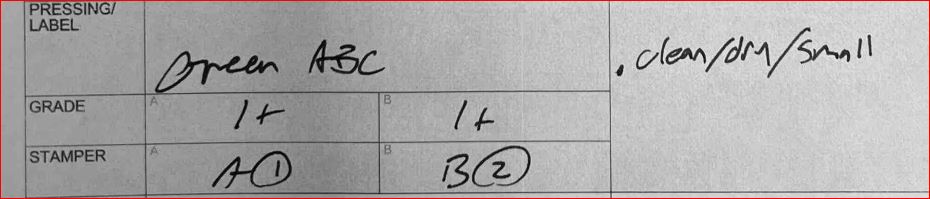
The Green Label ABC/Impulse label pressings did not retain much of the magic that we heard on the  real Impulse pressings, so best to avoid them.

They’re clean but dry and small, not big and bold like the real thing. The CD is probably better.

4 stars: “Recorded at two sessions in early 1967, Expression represents John Coltrane’s final recording sessions just months before his death. It’s remarkable that [the album] is not some world-weary harbinger of death and sickness, but an endlessly jubilant affair. Even in what must have been a time of tremendous pain and darkness, Coltrane’s single-minded quest for understanding and transcendence took him to places of new exploration and light.”


(more…)

I Robot Is a Tough Nut to Crack, Even If You Have Plenty of Early British Pressings to Play

Hot Stamper Pressings of Prog Rock Albums Available Now

Here is how we described a Hot Stamper pressing of I Robot that went up recently, our first in five years:

An early UK pressing (and the first copy to hit the site in years) with seriously good sound throughout.

Many copies tend to be overly smooth, but this one has the kind of clarity that allows the natural textures of the instruments to come through.

Transparency is key to the sound of the better copies, and that is precisely where the dubby domestic pressings fall apart.

Even many of the early British pressings fell short. Good luck finding top quality sound on this one. At the very least you are going to need a big budget — these early UK pressings are not cheap to find in audiophile playing condition.

As you can see, we weren’t kidding about those UK pressings falling short. Here’s two that did, with their stamper numbers posted for all to see.

Side two of the first copy is being held back by sound that is smeary, dry and hard.

Side one of the second copy is murky and hot (bright).

Note that these are early UK stampers, which some in-the-know audiophile collectors will tell you are clearly the best.

(more…)

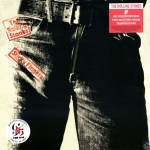
How Does the Abbey Road Half-Speed of Sticky Fingers Sound?

Hot Stamper Pressings of the Music of The Rolling Stones Available Now

A listing for an early domestic Hot Stamper pressing for Sticky Fingers will typically be introduced this way:

If you have never heard one of our Hot Stamper pressings of the album, you (probably) cannot begin to appreciate just how amazingly well-recorded an album it is.

It is truly a landmark Glyn Johns / Andy Johns / Chris Kimsey recording, as well as our favorite by the Stones, a Top 100 Title (of course) and one that earned 5 stars on Allmusic (ditto).

5 stars: “With its offhand mixture of decadence, roots music, and outright malevolence, Sticky Fingers set the tone for the rest of the decade for the Stones.”

However, we found the new Half-Speed Heavy Vinyl pressing mastered by Miles Showell at Abbey Road to be seriously lacking in “outright malevolence.” It’s so tame that even at high volume it would be unlikely to disturb the most innocuous afternoon tea in the back garden of a country estate.

Brown Sugar is:

  • It’s smaller
  • Not as weighty or lively
  • Tonally pretty close

Sway is:

  • Tonally pretty close
  • Just missing some weight and dynamics

Oh, is that all? Well then, not as bad as it could have been, right?

1.5+, which means it would qualify for our lowest Hot Stamper grade. But no record that does not earn at least that grade on both sides can make it to our site, and when we flipped the album over, side two let us down even more than side one.

Bitch is:

  • A little sandy up top

I Got the Blues is:

  • Missing the dynamics

Grade for side two: 1+. Substandard. Not good enough to sell.

Usually our notes are filled with disgust about how awful sounding the current crop of remastered pressings tends to be.

Those interested in reading such notes have plenty to choose from. Here are some from 2024 through 2025. (At some point this year the number of awful sounding Heavy Vinyl pressings we’ve reviewed will hit 200!)

But this version isn’t awful. It’s just not very good. The sound quality is middling.

The sound of other audiophile pressings of Sticky Fingers, including one mastered by the venerable Robert Ludwig, was much, much worse.

As far as audiophiles are concerned, this new release should be regarded as nothing more than a waste of money.

The Question Before the House

We’ve asked this question before, but it’s worth asking again:

Can this really be the sound audiophiles are clamoring for?

It shouldn’t be, but apparently it is.

However, it’s not as though we haven’t run into this issue hundreds and hundreds of times before. Audiophiles and the reviewers who write for them regularly rave about one Heavy Vinyl pressing after another being The Greatest of All Time, yet we have never found a single instance in which this was true for any of the modern reissues they have seen fit to crown.

Except for this one.

Three Little Words

Our explanation for the mistaken judgments audiophiles and reviewers make so consistently has never been all that complicated. As you may have read elsewhere on this blog:

More evidence, if any were needed, that the three most important words in the world of audio are compared to what?

No matter how good a particular copy of a record may sound to you, when you clean and play enough of them you will almost always find one that’s better, and often surprisingly better.

You must keep testing all the reissues you can find, and you must keep testing all the originals you can find.

Shootouts are the only way to find these kinds of very special records. That’s why you must do them.

Nothing else works. If you’re not doing shootouts (or buying the winners of shootouts from us), you simply don’t have top quality copies in your collection, except in the rare instances where you just got lucky. In the world of records luck can only take you so far. The rest of the journey requires effort.

If you would like to hear what you’ve been missing, there’s a small chance we have a Hot Stamper pressing of the album in stock.

(more…)

The MHS Recording of Chopin’s First Piano Concerto Had the Most Natural Piano of Them All

Hot Stamper Pressings of the Music of Frederic Chopin Available Now

There are some wonderful Musical Heritage Society records sitting in the bins of your local record store or Goodwill, and this one is worth picking up just to hear how well recorded the piano is.

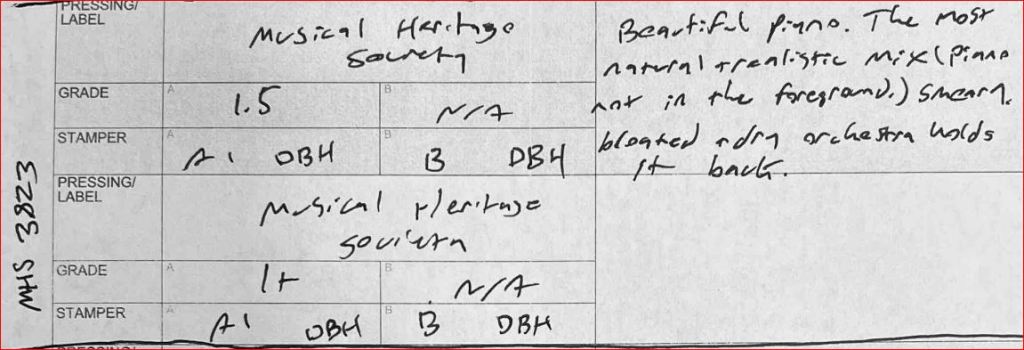
We described it this way:

Beautiful piano. The most natural and realistic mix with the piano not in the foreground.

But there is more to the recording than the sound of the piano.

Smeary, bloated and dry orchestra holds it back.

Well, at least we tried. (Note that side two was deemed not worth grading.)

Our favorite recording for performance and sound is the Living Stereo from 1961, LSC 2575, with Rubinstein at the piano and Skrowaczewski conducting the New Symphony Orchestra of London.

This is what we had to say about the sound of our Shootout Winner:

We love the huge, solid and powerful sound of the piano on this recording. This piano has weight and heft. As a result, it sounds like a real piano.

For some reason, a great many Rubinstein recordings are not capable of reproducing those seemingly all-important qualities in the sound of the piano.

Those are, as I hope everyone understands by now, the ones we don’t sell. If the piano in a piano concerto recording doesn’t sound solid and powerful, what is the point of playing such a record?

Or, to be more accurate, what is the point of an audiophile playing such a record? (Those of you who would like to avoid bad sounding vintage classical and orchestral records have come to the right place. We’ve compiled a very long list of them for precisely that purpose, and we add to it regularly.)

(more…)

Audiophiles Should Avoid These Stampers on West Side Story

Hot Stamper Pressings of Soundtrack Albums Available Now

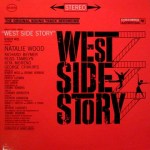
None of the 360 Label pressings we played recently were competitive with the Six Eye originals. Some sides earned 2+, but no copy on 360 earned grades of 2+ on both sides.

Stick with the early, stereo pressings in order to have any shot at top quality sound.

As you can see from the notes below for this album, one side was passable, earning our 1.5+ grade. It’s a decent sounding record I suppose, but a long, long, long way from the best.

1.5+ is four grades down from the top copy. That’s a steep dropoff as far as we’re concerned. 1.5+ only hints at how good a recording this can be on the best vintage pressings. To see more records that earned the 1.5+ grade, please click here. For those who might be interested, there’s more on our grading scale here.

Here is what a top quality pressing should sound like:

You’ll find INCREDIBLE Shootout Winning Triple Plus (A+++) grades or close to them on both sides of this original Columbia 6-Eye Stereo pressing.

Spacious, rich and smooth – only vintage analog seems capable of reproducing all three of these qualities without sacrificing resolution, staging, imaging or presence.

Tonality is the hardest thing to get right on this album, and here it is right on the money, because if it were not, it would not have won the shootout.

For those of you who like to do your own shootouts, good luck, you will need a lot of originals to find one that sounds as good as this one does.

5 stars: “The soundtrack of the West Side Story film is deservedly one of the most popular soundtrack recordings of all time, and one of the relatively few to have attained long-term popularity beyond a specialized soundtrack/theatrical musical audience.”

This album is at least five times more common in mono than it is in stereo, and finding enough clean early stereo pressings takes us years nowadays.

(more…)

Skip the A3/B2 OJC on Some Like It Hot

Hot Stamper Pressings of the Music of Barney Kessel Available Now

Some Like It Hot badly needed to be made using tubes in the mastering chain, but that didn’t happen.

It’s another case of an OJC with zero Tubey Magic. You might as well be playing the CD. I would bet money it sounds just like this record. Maybe even better.

I suppose if you have a super-tubey phono stage, preamp or amp, you might be able to supply some of the Tubey Magic missing from this pressing, but then all your correctly mastered records wouldn’t sound right, now would they?

We had two copies of the OJC and one of them did better than this one. It earned a Super Hot grade for one side. If you see this OJC pressing in your local record store, avoid these stampers. The sound isn’t awful, but it’s not very good either, especially considering how amazing the tapes must be, based on the sound of our White Hot Stamper shootout winner.

The OJC pressing of this album is much better suited to the old school audio systems of the 60s and 70s than the modern systems of today. These kinds of reissues used to sound good on those older systems, and I should know, I had an old school stereo and some of the records I used to think sounded good back in the day don’t sound too good to me anymore (although this one never did).

The OJC pressings of Some Like It Hot are thinner and brighter than even the worst of the later pressings we’ve auditioned. That is decidedly not our sound. It’s not the sound Roy DuNann was famous for, and we don’t like it either, although we have to admit that we did find the sound of many of these OJC pressings more tolerable — even enjoyable — in the past.

Our old system from the 80s and 90s was tubier, tonally darker and dramatically less revealing, which strongly worked to the advantage of leaner, brighter, less Tubey Magical titles such as this one. Pretty much everybody I knew had a system that suffered from those same afflictions.

Like most audiophiles, I thought my stereo sounded great.

And the reality is that no matter how hard I worked or how much money I spent, I would never have been able to achieve top quality sound for one simple reason: most of the critically important revolutionary advances in audio had not yet come to pass.

It would take many technological improvements and decades of effort until I would have anything like the system I do now.

(more…)

Talk About Getting the Sound Wrong – What Was Decca Thinking?

Hot Stamper Pressings of the Music of The Rolling Stones Available Now

Even though we know that the UK Decca pressings have not done well in our shootouts for more years than I care to remember, if we see one for cheap locally you know we’re going to buy it and get it another chance at the brass ring no matter how many times it’s failed in the past.

As you can see from our shootout notes, the Decca import has once again let us down.

It’s bright, with no warmth or weight. It’s not musical like the London pressings with the right stampers are.

If a certain kind of audiophile were to play this record, the kind of audiophile who might be given to simplistic conclusions based on insufficiently small sets of data — which, in our experience, pretty much covers the entire audiophile record collector community, including, if not especially, the so-called expert reviewers — the conclusion such a person might reach is that Beggars Banquet is just not very well recorded.

If Decca pressings don’t sound good, what on earth would?

Or, to put it another way, if Decca, the label that the Stones recorded this album for, can’t figure out how to make Beggars sound its best, why would we assume that any other company could?

We would, naturally, assume that Decca did the best they could with the tape and the mediocre quality of the sound you hear — 1+/1.5+ is pretty much our definition of mediocre — is all there is.

The Option that Is Almost Always Wrong

Worse — if a new Heavy Vinyl pressing of the album came out with even halfway-decent sound, then it would prove beyond a doubt that some modern mastering engineer had finally figured out how to get Beggars to sound right.

But of course it would prove no such thing.

If all you have to guide you is conventional collector wisdom, then the one thing you can be sure of is that the Decca pressing from the UK should have better sound than any other, especially any record made in the states.

But it doesn’t. It’s possible I suppose – we haven’t played every pressing ever made – but it sure is unlikely based on the evidence presented to our ears over the course of the last twenty to thirty years or so.

If you would like to hear Beggars Banquet sound right, and have the hundreds of dollars we charge for a copy that is guaranteed to sound right or your money back, click on the link. It’s rare that we have one in stock, but you never know.

(more…)

Time Further Out on Impex – You Could Do a Whole Lot Better

Hot Stamper Pressings of the Music of Dave Brubeck Available Now

The Impex pressing of this classic album was mastered by the late and formerly great George Marino at Sterling Sound. It was released in 2013. We did a big shootout for the album at the end of 2023 and somehow found a copy of the Impex to include.

(My guess is that we probably picked it up locally for cheap. We never pay good money for these pressings. We do these reviews as a public service, so keeping out costs down is baked in to the deal. Now that we’ve played it, we will trade it back to the store we bought it from for whatever they are willing to give us. We sure don’t have any use for it.)

Here it is 2025 and we are just now getting around to publishing the notes  for the Impex LP you see below.

We rarely put much effort into detailing the shortcomings of these Heavy Vinyl reissues. The people that buy them don’t care what we think, and, to be honest, probably cannot hear the sonic flaws we expose or they would long ago have given up buying such markedly inferior pressings, perhaps about the time Classic Records starting pressing their ersatz Living Stereo LPs in the mid-90s.

The fact that some of Classic’s pressing are still on the so-called TAS Super Disc list (renamed the TAS Super LP List for 2023), along with scores of other Heavy Vinyl duds, does not speak well for the magazine or its readers.

The typical audiophile record buyer can be forgiven for not finding much fault in the sound of this Impex pressing. It’s not awful the way so many of their releases are. But up against the real thing it leaves a lot to be desired, and what it lacks can be found in abundance on our admittedly-expensive Hot Stamper pressings.

In our world, the world of truly high-fidelity pressings, you get what you pay for, and if you ever feel otherwise, you get your money back, no questions asked.

With grades of one plus on both sides, the sound was not good enough to compete with even the lowliest of our Hot Stamper pressings. Those must earn a grade of 1.5+ or better to make it to our site.

The notes for side one read:

Track two

  • Wooly bass
  • Thin and hard piano
  • Not far off tonally but recessed and opaque

Track one

  • Big and lively
  • Bass is a bit much!
  • No real top
  • Compressed and thick

The notes for side two read:

Track three

  • No real weight
  • Full but hard/flat handclaps
  • Big and wide but hot

Track one

  • Tonally similar to the real thing but very opaque and stuck (in the speakers)
  • Boring
  • No space

Reminds me in some ways of a George Marino-mastered title that we spent a great deal of time evaluating a few years back, this one.

Either way, it’s not terrible, but it’s not all that good either.

Any Six-Eye and probably any 360 Columbia label pressing (but probably not your average 70s Red Label LP —  we stopped buying them years ago) will be better sounding.

Noisier for sure, but clearly better sounding.

If you own this modern reissue and want to hear just how good the album can sound, we would be honored to make that happen.

(more…)