Lee Herschberg, Engineer – Reviews and Commentaries

MoFi Sure Added Plenty of Sparkle to These Acoustic Guitars

Hot Stamper Pressing of the Music of Ry Cooder Available Now

This review is from many years ago. Hard to imagine I would not still agree with it though.

As you probably know, the MoFi of Jazz goes for big bucks nowadays — $500 and up. Is it worth it? 

You’ve got to be kidding. It’s a nice record as far as it goes, but it suffers from the same shortcomings as just about every Mobile Fidelity pressing we bother to play these days (with some obvious exceptions of course).

We have a test pressing, and knowing that the MoFi is the standard against which many audiophiles prefer to judge our Hot Stampers, we listened to it first before going about our comparison test.

Our MoFi copy is actually tonally correct, which was a bit of a surprise. (Yours of course could very well be otherwise.)

Right away we could hear exactly what people like about it, the same thing that has always impressed audiophiles about half-speed mastered records: their often outstanding transparency.

Jazz on MoFi has zero-distortion, utterly clear, spacious, see-through sound.

But listen past that and what do you hear?

Don’t those guitars seem to have that MoFi Tea-for-the-Tillerman “sparkly” quality you hate: all pluck and no body, all detail and no substance?

Nothing has any weight.

Nothing has any solidity.

Nothing has any real life.

It’s pretty, maybe, but it sure ain’t right.

It’s the kind of sound that shouts out to the world “Hey, look at me, I’m an audiophile record! See how I sound? So clear! So clean!”

Which isn’t bad for about two minutes, and then it’s positively insufferable.

(more…)

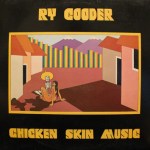
Chicken Skin Music – A Great Recording of Stringed Instruments

More of the Music of Ry Cooder

Much like our best copies of Jazz, this pressing really conveys the live-in-the-studio performance qualities of the music. This is a tight ensemble working at the top of their game, no surprise there; Ry surrounds himself with nothing but the best.

Absolutely crucial to this album is the sound of the various stringed instruments. Over the course of the two sides you’ll be treated to many different styles of guitar — electric, slack-key, Hawaiian, bottleneck, steel, and acoustic — plus mandolin, mandola, tiple, and more. You’ll need an open and spacious copy with superb transparency and clarity to fully appreciate the lovely and unusual sounds of these instruments.

Like we’ve said about Ry Cooder’s Jazz, rounding up a panoply of relatively exotic instruments for an album doesn’t make it especially noteworthy. Thankfully, it’s obvious that Ry Cooder’s up to a lot more than that. Using an ensemble of seriously talented musicians, as well as studio engineers who really understand how to capture these instruments, Cooder again succeeds in giving the audiophile public a full course spread of lovely and uncommon sounds.

What to Listen For

What typically separates the killer copies from the merely good ones are three qualities that we often look for in the records we play: transparency, speed, and lack of smear.

Transparency allows you to hear into the recording, reproducing the ambience and subtle musical cues and details that high-resolution analog is known for.

Note that most Heavy Vinyl pressings being produced these days seem to be quite Transparency Challenged. Lots of important musical information — the kind we hear on even second-rate regular pressings — is simply nowhere to be found.

Lack of smear is also important, especially on a recording with so many plucked instruments. The speed and clarity of the transients, the sense that fingers are pulling on strings, strings that are ringing with tonally correct harmonics, is what makes these Ry Cooder records so much fun to play.

The best copies really get that sound right, in the same way that the best copies of Cat Stevens’ records get the sound of stringed instruments right.

(more…)

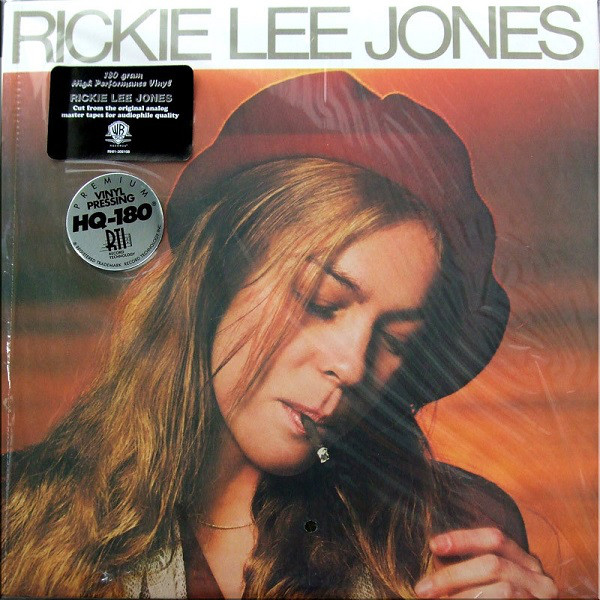
Rickie Lee Jones on Rhino Records – Not Our Idea of Good Sound, and We Hope Not Yours

Hot Stamper Pressings of the Music of Rickie Lee Jones Available Now

We were fairly unimpressed with the Rickie Lee Jones on Warners that came out a few years back [2008 in fact, time flies!].

It has that same phony modern mastering we find so unappealing on the Heavy Vinyl reissue of Blue. (We seem to be pretty much alone in not liking that one, and we’re proud to say we still don’t like it. We encourage you to play The Blue Game and maybe you’ll see why we feel the way we do.)

We liked the new Sweet Baby James Hoffman and Gray cut. We note in our review that:

Hoffman and Gray can take pride in this Sweet Baby James. It’s some of the best work I’ve heard from them to date. If more DCC and Heavy Vinyl reissues sounded like this, we wouldn’t be so critical of them. Unfortunately they don’t, and there are scores of pages of commentary on the site to back up that statement for those of you interested in the subject.

We went on to say

The amazing transparency and dynamic energy of the best originals will probably never be equaled by an audiophile pressing like this. (It hasn’t happened yet and we remain skeptical of the possibility.) Considering that this pressing is sure to beat most reissues, imports and other such like, we have no problem heartily recommending it to our customers, especially at the price.

So, What’s Wrong With Rickie Lee?

Simple. They took a somewhat artificial, hi-fi-ish, close-miked, heavy-on-the-reverb recording and made it sound even more artificial, phony and hi-fi-ish (but less-heavy-on-the-reverb; there is always a noticeable loss of resolution in these modern mastering jobs).

What were they thinking?

The best copies have warmth, richness and sweetness to balance out the more unnatural elements in the recording. Copies with these qualities are not that common, but we’ve run across plenty of them in our shootouts and proudly offered them for sale, where of course they sold quickly for lots of money. Major league audiophile appeal, this one. In its day it was heavily demo’ed in every stereo store in town, and for good reason — the sound positively jumps out of the speakers.

It’s a Trap

The average copy of this album is a sonic disaster, akin to the average copy of Famous Blue Raincoat or — gulp, even worse — Graceland. If you’re a detail freak, this Rhino pressing may be just what you are looking for. It’s got detail all right.

But all that phony detail obscures what is wrong with the sound. Overly detailed sound is a trap that is all too easy to fall into.

Plenty of recordings designed to appeal to audiophiles strike us as being phony in this way. Stan Ricker cut a lot of overly-detailed records for Mobile Fidelity in the 70s and 80s, records that may have sounded fine on the lo-rez stereos of that era (like the one I owned), but are positively painful to play on the top quality equipment that is available (but rare) today. [1]

I would hope that the audiophile community would have developed their listening skills to a level sufficient to recognize what this pressing doesn’t have — warmth, richness and sweetness — but I get the feeling I will be proved wrong yet again in that regard.

This Performance Is High?

Rhino Records has really made a mockery of the analog medium. Rhino bills their releases as pressed on “180 gram High Performance Vinyl.” However, if they are using performance to refer to sound quality, we have found the performance of their vinyl to be quite low, lower than the average copy one might stumble upon in the used record bins.

The CD versions of most of the LP titles they released early on are far better sounding than the lifeless, flat, pinched, so-called audiophile pressings they released starting around 2000. The mastering engineer for this garbage actually has the nerve to feature his name in the ads for the records. He should be run out of town, not promoted as a keeper of the faith and defender of the virtues of “vinyl.”

If this is what vinyl sounds like I would switch to CD fast enough to make your head spin.

And the amazing thing is, as bad as these records are, there are people who like them. I’ve read postings on the internet from people who say the sound on these records is just fine.

Their Grateful Dead titles sound worse than the cheapest Super Saver reissue copies I have ever heard.

The Yes Album sounds like a cassette, a mere ghost of the real thing.

(more…)

Listening in Depth to Rickie Lee Jones

Hot Stamper Pressings of the Music of Rickie Lee Jones Available Now

Presenting another entry in our extensive listening in depth series with advice on what to listen for as you critically evaluate your copy of RLJ.

Here are some albums currently on our site with similar track by track breakdowns.

On the best of the Hot Stamper copies, it becomes abundantly clear just how well the string bass was recorded — assuming you like the close-miked, maximum-presence quality they were going for.

You hear all the fingering, the wood of the body resonating — all the stuff you could never hear live unless you were ten feet from the guy.

Natural it’s not, but natural is not what most hit records are all about anyway.

Credit — or blame — belongs squarely with Lee HerschbergThere’s no question that he knew exactly what he was doing, he’s the pro’s pro, so let’s give him credit for making the sound of the record really pop.

Side One

Chuck E.’s in Love

Rickie’s biggest hit is a great test track for side one. The guitars should have some twang but not too much. The typical pressing errs in one of two ways here — either they are overly smooth and lacking texture, or they are a bit bright, giving the guitars a glary, hi-fi-ish sound.

Also listen for a big room around the finger snaps. If you don’t hear a lot of ambience around them you won’t hear it on the rest of the side either.

On Saturday Afternoons in 1963

This track should sound warm, sweet, and breathy, but will almost always be plagued by a bit of surface noise behind the quiet intro.

Night Train
Young Blood
Easy Money

This song is a great test for bass definition. No MoFi ever made will have the tight bass found on the best pressings of this record.

There’s a wonderful version of this song on Lowell George’s solo album that we love every bit as much. Check it out if you have a copy.

The Last Chance Texaco

Side Two

Danny’s All-Star Joint
Coolsville

Bar none the toughest test track for side two. Only a superb copy will get all the orchestral instruments right. Listen for texture on the strings, extension on the chimes, and lots of room around the timpani. This is another track with a quiet intro that will almost always be a bit noisy.

Weasel and the White Boys Cool

Much like Chuck E.’s In Love, you’ll want to hear just the right amount of twang on those guitars. If your copy doesn’t sound punchy and lively on this track, we suggest you contact us for a Hot Stamper pressing ASAP.

Company
After Hours (Twelve Bars Past Goodnight)


Further Reading

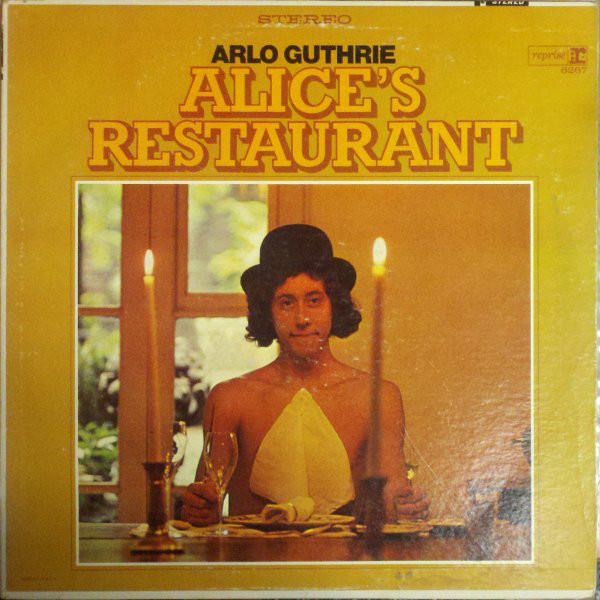
The Tri-Color Pressings Are Hard to Beat on Alice’s Restaurant

More of the Music of Arlo Guthrie

More Hot Stamper Pressings of Classic Debut Albums

This two-tone Reprise stereo pressings of Arlo Guthrie’s classic debut often do well in our shootouts, but the Tri-Color originals are a step up in class, when and if they can be found with quiet enough surfaces.

The originals win the shootouts, but they need to be mastered and pressed right, and cleaned properly, to beat the best of the second pressings.

The originals tend to have exceptionally Tubey Magical sound and it certainly doesn’t take a pair of golden ears to hear it.

The 18 minute plus title song sounds wonderful – natural, Tubey Magical, and tonally correct, as befits any top quality vintage pressing, especially one with Lee Herschberg handling the engineering duties.

As we never tire of saying:

This vintage pressing has the kind of Tubey Magical Midrange that modern records can barely BEGIN to reproduce. Folks, that sound is gone and it sure isn’t showing signs of coming back. If you love hearing INTO a recording, actually being able to “see” the performers, and feeling as if you are sitting in the studio with the band, this is the record for you. It’s what vintage all analog recordings are known for — this sound.

If you exclusively play modern repressings of vintage recordings, I can say without fear of contradiction that you have never heard this kind of sound on vinyl. Old records have it — not often, and certainly not always — but maybe one out of a hundred new records do, and those are some pretty long odds.

(more…)

Frank Sinatra & Duke Ellington – Booth? What Booth?

More of the Music of Frank Sinatra

More of the Music of Duke Ellington

Notice that, at least for most of the material, and perhaps all of it, Sinatra does not seem to be stuck in a vocal booth. He sounds like he is actually standing on the same stage as Ellington’s band.

Whether this is a recording trick — he’s in a booth but the engineer did a great job creating a sound for the booth that matched the ambience and space of the studio — or whether he is standing front and center with the band, the illusion is convincing and adds greatly to the “reality” of the performance..

Recorded one year after the remarkable Sinatra-Jobim record that we treasure here at Better Records, Sinatra takes the opportunity to work with one of the greatest bandleaders in the history of jazz, the Duke himself. We had good luck with the stereo originals on the lovely Blue and Green Reprise labels — they can be as big, rich and warm as Sinatra’s legendary Capitol recordings when you find the right pressing, and that’s really saying something.

Transparency

What typically separates the killer copies from the merely good ones are two qualities that we often look for in the records we play: transparency and lack of smear. Transparency allows you to hear into the recording, reproducing the ambience and subtle musical cues and details that high-resolution analog is known for.

(Note that most Heavy Vinyl pressings being produced these days seem to be quite Transparency Challenged. Lots of important musical information — the kind we hear on even second-rate regular pressings — is simply not to be found. That audiophiles as a whole — including those passing themselves off as the champions of analog in the audio press — fail to notice these failings does not speak well for either their equipment or their critical listening skills.)

Richness and Lack of Smear

Lack of smear is also important, especially on a recording with this many horns, where the reproduction of leading-edge transients is critical to their sound. If the sharply different characters of the various horns (trumpet, trombone, and various saxes) smear together into an amorphous blob, as if the sound were being fed through ’50s vintage tube amps (for those of you who know that sound), half the fun goes right out of the music.

Richness is important — horns need to be full-bodied if they are to sound like the real thing — but so are speed and clarity, two qualities that ensure that all the horns have the proper bite and timbre.

(more…)

Rickie Lee Jones – Good Demo Disc / Bad Test Disc

Hot Stamper Pressings of the Music of Rickie Lee Jones Available Now

RLJ’s first album is what we would consider a Good Demo Disc but a Bad Test Disc.

Meaning that this record can sound good on really crappy stereos — which explains why it is so often heard at stereo stores and at shows, where really crappy stereos are unusually plentiful.

But it’s not what the System Doctor ordered if the goal is to work out some problem or fault with the reproduction of all your other recordings. In other words, records like this can be misleading. 

Of course, all records have that quality to one degree or another, which is why you need to use a basket of recordings to make judgments about equipment.

Don’t rely on any given recording to be The Truth. None of them are.

Wait a minute. Perhaps I spoke too soon. (more…)

The Three at 45 RPM – Our Four Plus Copy from 2013

Hot Stamper Pressings of The Three Available Now

We had six (yes, six!) of these 45 RPM pressings (and five Inner City’s and a couple of Eastwind 33’s — it was a big shootout), and this side one had the most ENERGY of any of them. This is a quality no one seems to be writing about, other than us of course, but what could possibly be more important? On this record, it took the performances of the players to a level beyond all expectations.

Our lengthy commentary entitled outliers and out-of-this-world sound talk about how rare these kinds of pressings are and how to go about finding them.

We no longer give Four Pluses out as a matter of policy, but that doesn’t mean we don’t come across records that deserve them from time to time.

This album checks off a number of important boxes for us here at Better Records:

Folks, you are looking at the BEST SOUNDING RECORD we have ever played here at Better Records, and the good news for you dear reader, whether you’re a true believer, a skeptic, or fall somewhere in-between, is that it can be yours. There was a time when a record like this would go directly into my collection. If I wanted to impress someone, audiophile or otherwise, with the you-are-there illusion that only Big Speakers in a dedicated room playing a LIVE recording can create, this would be the clear choice, possibly the only choice. There is simply nothing like it on vinyl in my experience. (more…)

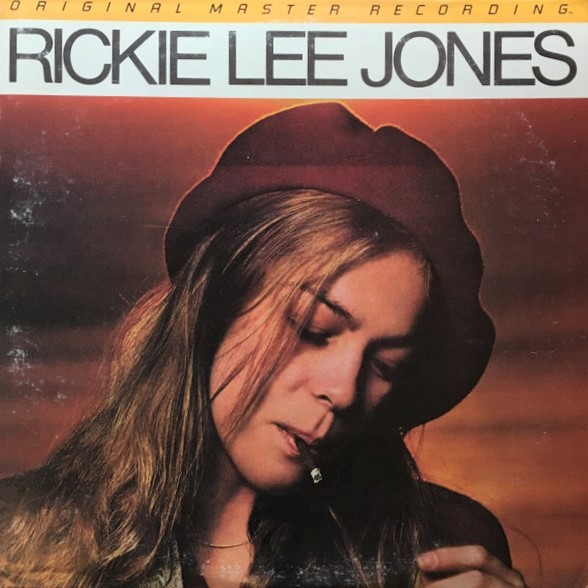
Rickie Lee Jones – MoFi Reviewed, Positively (!)

Hot Stamper Pressings of the Music of Rickie Lee Jones Available Now

Sonic Grade: B

Another MoFi LP reviewed, and this one’s pretty good for a change

The Mobile Fidelity pressing of this album can actually be pretty decent.

If you get a good one, that is. Records are records and limited editions have dramatic pressing variations just like all the other records out there in Record Land.

Audio perfection it ain’t, but all in all it’s a very enjoyable record. Its strengths are many and its faults are few. Let’s give credit where credit is due; the MoFi is dynamic, transparent, sweet, and open, and you won’t hear us saying that about very many MOFI pressings.

It belongs in their Top Ten (a list we have yet to make, for some reason we never find the time!), toward the bottom I would guess, due to its own sloppy bottom, but that’s half-speed mastering for you. Like most new audio technologies it was a giant step in the wrong direction.

We suppose you could live with the blubbery MoFi bass found on their remastered LP — most audiophiles seem more than happy to, right? — but instead, we’re happy to report that it will no longer be necessary. All our Hot Stamper copies are guaranteed to trounce it.

If That’s What It Takes – One of the All Time Great Jeff Porcaro Drum Exhibition Records

More of the Music of Michael McDonald

Hot Stamper Pressings of Blue Eyed Soul Albums Available Now

Let us not forget that this is also one of the All Time Great Jeff Porcaro Drum Exhibition Records.

His work here is pure genius. Play this album next to Katy Lied: I think you will find the comparison instructive. If That’s What It Takes and Katy Lied are the pinnacle of achievement for Jeff on the drums.

I’m proud to count Michael McDonald among my favorite recording artists. He made this Desert Island Disc and single-handedly turned the Doobie Brothers into a band I could enjoy and even respect.

This is a Must Own if you like the later Doobies and the kind of highly-polished but heartfelt and intelligent pop records that band excelled at in the ’70s.

(more…)