Top Artists – Stephen Stills

Mobile Fidelity Actually Produced a New and Improved Deja Vu in 1983

Hot Stamper Pressings of the Music of Crosby, Stills, Nash and (Sometimes) Young

A letter came to us years ago with the comment “I had no idea that vinyl could produce this sound.”

As the time I made some of the following comments in reply and have added a few new ones since then.

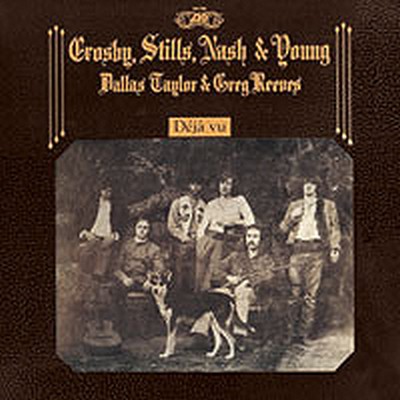
Deja Vu is indeed a very special album, one I have been obsessed with since I first became an audiophile.

I was a big Crosby, Stills and Nash fan already — the first album being life-changing to a 15 year old music lover such as myself, playing over and over on 8-track tape in the car no less — so it was only natural that I would fall in love with Deja Vu when it came out in 1970.

13 Years Go By

Time went by and then, oddly enough, my love for the music was reignited by a pressing that came out 13 years after the album’s first release, on a label you may be familiar with, Mobile Fidelity Sound Labs.

I realized instantly that Mobile Fidelity had indeed improved upon the average original’s sound.

This is not a high bar considering how awful sounding most originals are, but let us give credit where credit is due. With the volume cranked good and loud,  I often played the first track, Carry On, using the MoFi pressing to demonstrate how smooth, rich, big, powerful and dynamic my system could sound.

“The CD may be taking over the world,” I would say, because by 1983 that was exactly what was happening, “but you”ll never hear a CD that sounds like this!”

13 More Years Go By

It would take me many years, at least another 13 or so, to come across the domestic reissues that trounced the MoFi and showed me how colored, compressed, thick, blurry and recessed their pressing was.

Here is the real shocker from that time: I actually thought that the extremely hard-to-find reissue I’d discovered was so flukishly good that it could never be beaten by any other pressing!

(To be fair, my long-time audiophile buddy Robert Pincus probaby deserves the credit for finding it. He found a great many special pressings for me back when I was buying records from him, reaching all the way back to 1987.)

Which is yet another example of everything being relative. I admit I had a poor understanding of that vitally important concept at the time. I really had no idea how good a recording Deja Vu was, and I didn’t really have a way to find out because many of the most important revolutions in audio had not been incorporated into my system, or had yet to be invented.

Within the last five years or so another domestic pressing, and now most recently an import (!), have come to be seen as clearly superior to all of these.

This is the result of having never given up the search for a better Deja Vu.

Record Collecting in My World

Anticipating the release of the newest Half-Speed remastered pressing that would deliver me from the evils of the garden-variety domestic or import LP I happened to own was the dominant feature of my record collecting world in the 70s and 80s.

No one reading this blog will be surprised to learn that almost none of those “new and improved” pressings would pass the test of time. This is an idea I first came to appreciate in the 90s and one that has become more true with each passing year.

With the increasing proliferation of one Heavy Vinyl mediocrity after another, in 2007 we finally recognized we had a duty to our customers to stand athwart audio history and yell “Stop.”

(more…)

Letter of the Week – “I think It’s a bargain at $800. It absolutely trashes my Mofi version…”

Hot Stamper Pressings of the Music of Crosby, Stills, Nash and (Sometimes) Young

One of our good customers had this to say about a Hot Stamper pressing he purchased recently:

Hey Tom,   

I couldn’t believe what I was hearing on the Crosby Still, Nash & Young Deja Vu White Hot stamper A+++ on both sides and absolutely dead quiet. I think It’s a bargain at $800.00. It absolutely trashes my Mofi version into bits and pieces. I don’t even want to mention the Classic records version because it’s painful to listen to. I’m writing up this record today and the Frank Sinatra and Count Basie Live at the Sands tomorrow.

Thanks,

Naz

Naz,

The Heavy Vinyl and Half-Speed Mastered pressings of Deja Vu are, as you say, practically unlistenable once you know what that record should really sound like, and now that you have a Hot Stamper pressing, you definitely know just how good the record can sound.

Demo Disc barely begins to do it justice.

Hey, I was fooled back in the mid-’80s – I used to demonstrate my system with the MoFi Deja Vu! How screwed up is that?

Let’s just say we have made a lot of progress in audio since then. We’ve learned a great deal about record collecting too, practically all of it derived from the thousands of shootouts we’ve conducted over the last twenty years, using tens of thousands of different pressings.

Before 2016 We Were Completely Wrong About Deja Vu

More Crosby / More Stills / More Nash / More Young

There are two areas in which we would like to amend some of the previous comments we’ve made about Deja Vu.

The first has to do with early pressings. Many years ago we wrote the following:

As we noted in previous commentary, the originals are uniformly awful. 

Although that’s mostly still true — Deja Vu is a very difficult album to find with good sound no matter what stampers you have. However, we now know that there are very good sounding copies — Shootout Winning copies in fact — with early stampers.

Deja Vu is in fact a title in which one stamper always wins, and that stamper can only be found on the early pressings.

Amazingly enough, there are more than 90 others (as of 2025) that we’ve discovered with one killer set of stampers that beat all comers as well. (There are surely many more hundreds that do, we just haven’t found them all yet. Please be patient; we are working on it.)

That’s area number one. Area number two is part of this old piece of advice:

If you bought the Classic Records pressing and you can’t tell what’s wrong with it, this may not be the right hobby for you. I highly recommend you buy the Joe Gastwirt mastered CD and either play it on your system or take it to a hi-fi store in your area. It’s tonally correct and undistorted. The Classic version is neither. Now when a stupid $15 CD is correct in a way that a $40 LP is not, something is very very wrong.

The part where we said this may not be the right hobby for you if you like Classic’s godawful remastering of Deja Vu is still true, depending on what exactly you’re trying to accomplish in the hobby.

If you’re not too picky about sound quality and just want to play new records, perhaps because old records are hard to find and often noisy, then fine, the Classic should get that job done for you.

We of course want nothing to do with it because we want exceptionally good sounding vinyl, and the Classic is definitely not very good sounding no matter how many nice things audiophile reviewers may have said about it.

No, the problem we see above is that we were recommending the currently available CD.

Yes, it’s mostly tonally correct and not distorted, but it has a bad a case of dead-as-a-doornail sound.

It’s as awful sounding as any remastered CD I have ever heard.

There is no top, there is no space, there is no life, there is no immediacy, there is no Tubey Magic — in short there is almost nothing left of what makes the best copies of Deja Vu so good.

We’ve known this for about five ten years, apologies for not getting around to correcting the record.

(more…)

Letter of the Week – “Definitely a very and unexpected high quality.”

Hot Stamper Pressings of the Music of Stephen Stills Available Now

One of our good customers had this to say about Hot Stampers he purchased recently:

Hey Tom, 

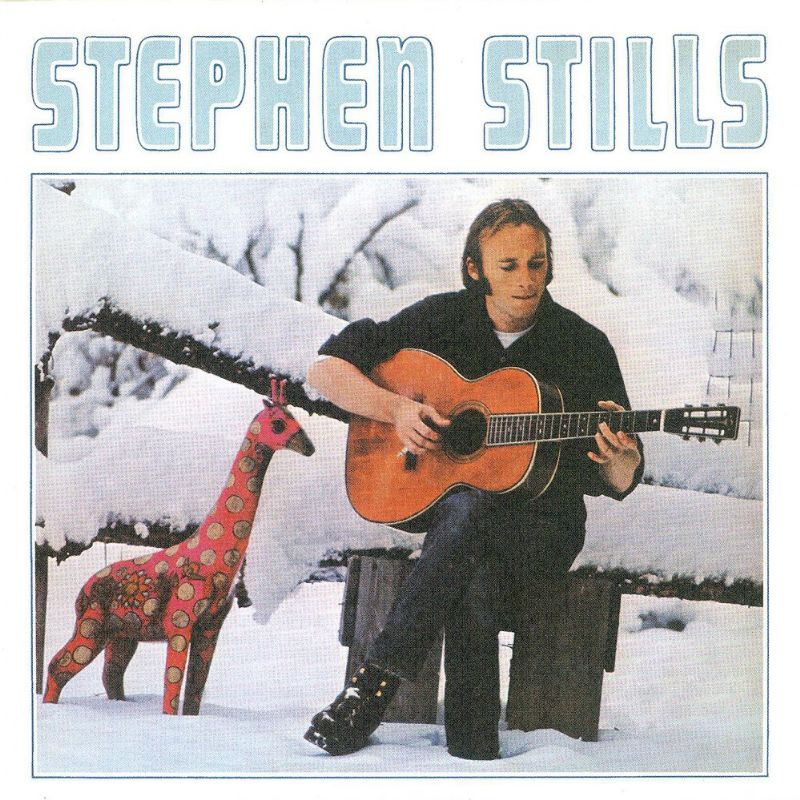
Received the LPs today from Stephen Stills and Santana. Definitely a very and unexpected high quality.

I grew up with these LPs. Unfortunately these can no longer be played because of the tobacco of the joints that were left behind.

Our store sells and promotes analog. We sell turntables such as SME, REED, Dohmann and Techdas, etc. http://www.rhapsody.nl

I will definitely promote you to our customers.

Harry

Thanks, Harry, for writing.

These are some great albums, they would sound killer on good equipment and these are the kinds of records that need to be played in stereo showrooms, not the audiophile crap that one hears so much.

(more…)

Detail on Crosby, Stills and Nash – Holy Grail or Audio Trap?

Hot Stamper Pressings of the Music of Crosby, Stills, Nash and (Sometimes) Young

Detail may be the Holy Grail to some audiophiles, but listening for the details in a recording can be a trap we too easily fall into unless we are on our guard.

Tonal balance is the key.

Without correct tonal balance, no judgments about the details of the recording have any real value. 

A case in point: As good as the Classic Heavy Vinyl pressing is, the guitar at the opening of Helplessly Hoping tells you everything you need to know about what’s missing. The guitar on the better Hot Stamper domestic copies has a transparency and harmonic integrity that cannot be found on Classic’s version.

The Classic Records pressing gets the tonal balance right, but their guitar lacks the subtlety and harmonic resolution of the real thing.

I’m laboring here to avoid the word “detail,” since many audiophiles like bright, phony sounding records because of all their wonderful detail. Patricia Barber’s albums come to mind, along with scores of audiophile pressings. 

The MoFi guys and the CD guys are constantly falling into the trap of being impressed by the phony detail in some recordings.

The solution is to get the sound tonally balanced first, then see how much detail you have left.

Detail is not the end-all and be-all of audio. Those who think it is have systems that are sure to fall apart at louder levels. If the sound of your system on your best pressings doesn’t get better as it gets louder, you are failing one of the most important tests in all of audio, the turn up your volume test.

(more…)

Buffalo Springfield – These PR Stampers Are NFG and Then Some

Hot Stamper Pressings of Country and Country Rock Available Now

Note to customers: We rarely have Hot Stamper pressings of the music of Buffalo Springfield available on the site, so albums with Stephen Stills or Neil Young performing are about the best we can do for the fans of this groundbreaking band at present.

We regret we must go many years between shootouts for this band’s albums, two of which are personal favorites and have been since they were released, 1968’s (Again) and 1969’s (Last Time Around).


We love the album but not when it sounds like this!

Want to find your own killer copy?

Consider taking our moderately helpful advice concerning the pressings that tend to win our shootouts.

(more…)

Listening for a Bit Too Much Tubey Magic Down Low on Buffalo Springfield

Hot Stamper Pressings of Personal Favorites Available Now

Note to customers: We rarely have Hot Stamper pressings of Buffalo Springfield available on the site, so albums with Stephen Stills or Neil Young playing on them are about the best we can do these days. We regret we must go many years between shootouts for this seminal band’s albums, two of which are personal favorites of mine and have been since they were first released, 1968’s (Again) and 1969’s (Last Time Around) Thank god my older stepbrother had good taste in music. I doubt that many 14-year-olds were playing Buffalo Springfield albums, but I was, even though most of the time it was on 8-track tape.


On even the best copies I regret to say there’s a bit too much Tubey Magic in the bass. Tubbiness and bloat were par for the course. This may explain why so many copies have rolled off bass; the engineer cut the bass because he heard how tubby it was and figured no bass is better than bad bass. 

Which is just not true. Cutting the bass leans out and “modernizes” the sound, making the voices sound thinner and dryer. Less rich. This pretty much ruins everything on this album, just the way it ruins everything in many of the modern recordings I hear.

Having your bass under control on the playback side isn’t easy — in fact it’s probably the hardest thing to achieve in audio — but it can be done, and with good bass control the slightly wooly bass is just a part of the sound you learn to accept.

It doesn’t actually interfere much with your enjoyment of the music, mostly because all the other instruments and voices sounds so magical.


The post-it notes you see are very old, probably from the early 2000s.

Until we got our cleaning system sorted in 2007, shootouts for any of this band’s first three albums were going to be tough sledding, if not downright impossible.

In this commentary we describe what needed to change in order to make Buffalo Springfield shootouts a reality.


Want to find your own killer copy?

Consider taking our moderately helpful advice concerning the pressings that tend to win our shootouts. This album sounds its best:

(more…)

Buffalo Springfield – Self-Titled

More Buffalo Springfield

More Country and Country Rock

  • Boasting two seriously good Double Plus (A++) sides or close to them, this early Atco pressing was giving us the sound we were looking for on Buffalo Springfield’s debut LP
  • True, side one earned a minimal Hot Stamper grade of 1.5+, but we still guarantee that it will beat the pants off any Heavy Vinyl reissue, because every one of those that we played was ridiculously opaque, muddy and thick enough to have us crying “uncle” after five minutes
  • We rarely have this title in stock, mostly because it is purely a matter of luck when we’ve managed to chance upon enough clean copies of the commonly-abused album to get a shootout going
  • Problems in the vinyl are sometimes the nature of the beast with these early pressings, but once you hear just how superb sounding this copy is, you might be inclined, as we were, to stop counting ticks and pops and just be swept away by the music
  • 4 stars: “… this debut sounds pretty great, featuring some of their most melodic and accomplished songwriting and harmonies, delivered with a hard-rocking punch… The entire album bursts with thrilling guitar and vocal interplay, with a bright exuberance that would tone down considerably by their second record.”

For whatever reason, all the mastering engineers who cut this first album rarely managed to put any real top or bottom on the record. Why I can’t imagine. Highs and lows are on the tape; the best pressings prove it.

Listen for Tubey Magic, richness, bottom end, presence and freedom from distortion. The more copies you have tried in the past, the more astonishing the sound of this copy will be to you. (more…)

Helplessly Hoping to Get the VTA Right

Hot Stamper Pressings of the Music of Crosby, Stills, Nash and (Sometimes) Young

This listing from 2005 (!) contains commentary about VTA adjustment using the track Helplessly Hoping from a Hot Stamper pressing of CSN’s So Far. It would not be long before we went with the much more accurate and revealing 17D (first the 17D3, then the 17DX), which took us to another level, as documented here.

Helplessly Hoping is a wonderful song that has a lot of energy in the midrange and upper midrange which is difficult to get right. Just today (4/25/05) I was playing around with VTA, having recently installed a new Dynavector DV-20x on my playgrading table (a real sweetheart, by the way), and this song showed me EXACTLY how to get the VTA right.

VTA is all about balance.

The reason this song is so good for adjusting VTA is that the guitar at the opening is a little smooth and the harmony vocals that come in after the intro can be a little bright. Finding the balance between these two elements is key to getting the VTA adjusted properly.

When the arm is too far down in the back, the guitar at the opening will lose its transparency and become dull and thick. Too high in the back and the vocals sound thin and shrill, especially when the boys all really push their harmony. The slightest change in VTA will noticeably affect that balance and allow you to tune it in just right.

To be successful, however, there are also other conditions that need to be met. The system has to be sounding right, which in my world means good electricity, so make sure you do this in the evening or on a weekend when the electricity is better.

That’s the easy part. The hard part is that you need a good pressing that includes this song, and those don’t grow on trees.

The vast majority of CSN’s first album and the vast majority of So Far’s are junk.

Trying to get junk pressings to sound right is impossible, because they weren’t mastered right in the first place.

But if you’re one of the lucky few who has a good pressing of Helplessly Hoping, try tweaking your VTA adjustment and see if you aren’t able to dial it in even better than before.

(more…)

Super Session Is the Poster Boy for Gritty, Spitty Vocals

Hot Stamper Pressings of the Music of Al Kooper Available Now

Man’s Temptation, track 3 on side one, has got some seriously bright EQ happening (reminiscent of the first BS&T album, Child Is Father to the Man), so if that song even sounds tolerable in the midrange you are doing better than expected.

Bright, gritty, spitty, edgy, harsh, upper-midrangy vocals can be a real problem on this album.

The Red Labels tend to have more problems of this kind, but plenty of original 360 pressings are gritty and bright too. Let’s face it, if the vocals are wrong, the music on this album — like any rock and pop album — pretty much falls apart.

Most copies are far too bright and phony sounding to turn up loud; the distortion and grit are just too much at higher volumes.

On the better copies, the ones with more correct tonality and an overall freedom from distortion, you can crank the volume and let Super Session rock.

Testing with Super Session

This record, along with the others linked below, is good for testing the following qualities.

  1. Grit and grain
  2. Midrange tonality
  3. Sibilance (it’s a bitch) 
  4. Upper midrange brightness

Playing so many records day in and day out means that we wear out our Dynavector 17DX cartridges often, three or four times a year.

Which requires us to regularly mount a new cartridge in our Triplanar arm.

Once a new cartridge is broken in (50 hours minimum), we then proceed to carry out the fine setup work required to get it sounding its best. We do that by adjusting the VTA, azimuth and tracking weight for maximum fidelity using recordings we have been playing for decades and think we know well.

(more…)