TAS List Commentaries

Commentaries about records on the TAS Super Disc list.

We Happily Admit the Originals of Time Out Are (Potentially) the Best Sounding

More of the Music of Dave Brubeck

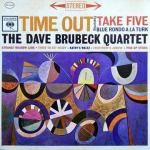
This time around [2014] no other copy of Time Out could touch our good Six Eye Stereo pressings. They were simply in a league of their own.

If you’ve been with us for a long time you may remember that this was not always the case. We used to really like some 360s as I recall, as well as the original mono pressing. This time around, not so much. 

This time around most everything is different. Allow us to explain.

1. Our stereo is different; we’ve made quite a number of changes to it since our last big shootout for Time Out a few years back. We are strong proponents of making audio progress.

2. We’re different; we have better (I would hope) listening skills. In fact I’m sure we listen for different qualities in a recording than we might have years ago.

3. Even more importantly, we don’t have the same pile of pressings we had years ago. They’re gone, replaced by a new batch. This new batch had some killer original pressings, some good 360s, and not much to speak of on the later labels. 

With a different batch we might have found a great sounding 360 pressing; we have to believe they exist, and we certainly can’t say that our best copy here could not have been bettered in some way. That would be foolish; anything can be bettered.

The next time we run this experiment, the results could be different.

[Update from 2021: we have run the experiment a number of times in the five years since this commentary was written, and the best Six Eye in the shootout has not been beaten yet. Yet.]

For us, in 2014 (and probably through 2015), this is it.

This is the right sound.

(more…)

Blue on Heavy Vinyl – We Broke Through in 2007

Hot Stamper Pressing of the Music of Joni Mitchell Available Now

Thoughts on the so-called definitive vinyl version

Yet another milestone event in the history of Better Records.

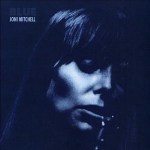
In 2007 a customer took issue with our decision to reject the sale of the newly remastered Heavy Vinyl pressing of Blue, the one put out by Rhino and mastered by Steve Hoffman and Kevin Gray.

We actually used to give the record away for free with every purchase of a Hot Stamper Blue, making it easy for our customers to hear for themselves just how superior sounding our Hot Stamper pressings were.


UPDATE 2024

With every purchase of a Hot Stamper Led Zeppelin II, we give our customers the Page-remastered version for free so that they can hear for themselves why our pressing costs well over $1000 and Jimmy’s a small fraction of that figure, sometimes as small as one hundredth!


We did this partly out of necessity. I had foolishly taken the advice of a Mr. Robert Pincus (the discoverer of Hot Stampers let us never forget) that the new version was indeed all it was cracked up to be and proceeded to put in an advance order for twenty copies to sell to our audiophile customers.

We were still selling Heavy Vinyl in 2007, but it would not be long before we decided to end the practice. Within a few years we were only selling records that we had cleaned and played and could guarantee both their superior sound quality and audiophile-quality playing surfaces.

So we had about twenty copies of Blue we did not think qualified as “better records” and decided to just give them away.

After spending quite a number of hours evaluating the new version, I got fairly worked up over the disappointing sound, worked up enough to write a very long commentary about the album, which I entitled Blue, The Game.

Rather than detailing the shortcomings of the new pressing, in this particular commentary, the first of its kind, I decided to take a different tack.

I implored the reader to do his own shootout for the album and tell me what he heard on the various pressings he might have at hand to work with. (Nothing much came of it of course, and not too surprisingly. Shootouts are hard and the vast majority of audiophiles are averse to them in our experience, hence the sorry state of audiophile records and the systems that fail to reveal their shortcomings — but that’s a horse that gets flogged regularly enough on this site. Enough is enough.)

Tom, 

I find it curious you are not carrying the new Joni Mitchell Blue vinyl issue. Even to the point of saying you can do better… for 25 bucks? After clicking on the LP cover and reading the comments from over the years it makes me wonder what your agenda really is. I paid $250 for a wonderful WLP and this Rhino issue smokes it, even as good as it is. I even have a CD cut from this mastering session off the analog FLAT, not Dolby tapes and this vinyl even beats it…. of course just my opinion.

I have listened on $100,000 systems, all the way down to portable units, solid state and tube and there is no denying this is the definitive vinyl version….. and again for 25.00. What a bargain.

Maybe all you did was look at that Rhino sticker and think back to the Grateful Dead records they did a few years ago (horrible) and just assumed this wasn’t up to Better Records standards.

Thanks for reading. I enjoy your e mails and store….

Tom

Tom,

We don’t review records based on their labels or stickers. And of course we never assume anything about the sound of a record. We talk about this stuff all the time. Here’s a relevant quote:

My approach to reviewing records is pure skepticism: a record sounds good if it sounds good, regardless of how it was made, who made it, or why. I’ve heard lots of expensive so-called audiophile equipment do a pretty poor job of making music over the years, the owners of which had an armful of reasons for why the sound should be truly awe-inspiring. But it just wasn’t. Most fancy gold faceplates are nothing but lipstick on a pig in my opinion.

I once heard Blue poorly reproduced at a friend’s house, and this is probably the best explanation for this letter writer’s inability to understand our position on Blue.

And paying $250 for a White Label Demo that apparently doesn’t sound good is the height of audiophile collector foolishness.

That money should have gone for better equipment or room treatments or tweaks, something, anything, to make this guy’s stereo and room work better than they apparently do.

Actually this brings up a good point. If I had to choose one record that separates the men from the boys, the stereos that really work from the artificial, restricted audiophile systems you might read about in the magazines or hear in a showroom or at an audio show, Blue would be a darn good choice.

(more…)

Le Cid on Klavier – Now With Added Smile Curve

Presenting Yet Another Pressing Perfectly Suited to the Stereos of the Past

This hi-fi-ish Doug Sax/ Acoustic Sounds butchering of Fremaux’s performance from 1971 is insufferable. These Klavier pressings of EMI recordings are nothing but Audiophile Bullshit.

Can this possibly be the sound that EMI engineer Stuart Eltham was after?

Back in the day, audiophiles in droves bought this pressing from all the major mail order audiophile record dealers (you know who I’m talking about), apparently not noticing the overblown bass and spark-spark-sparkling top end. 

Perhaps the same audiophiles who think that Mobile Fidelity makes good sounding records? It would not surprise me. Same odd-tasting wine, different bottle.

The Smile Curve

If you’ve spent any time on this site, you should know by now that many audiophile records sound worse than the typical CD. The typical CD does not have an equalization curve resembling a smile. The classic smile curve starts up high on the left, gets low in the middle, and rises again at the end, resulting in boosted bass, boosted top end, and a sucked out midrange — the Mobile Fidelity formula in a nutshell.

If your system needs boosted bass and highs, perhaps because your speakers are too small, well, I suppose you could try this Klavier pressing.

Here’s a better idea.

Fix your f-ing stereo so you won’t need phony audiophile records like this one to make it sound good.

Either of the two records you see below will be dramatically better sounding than the Klavier Heavy Vinyl. The best pressings of this one win all the shootouts, but the Greensleeves Budget reissue pressing can also sound very good, with the better pressings earning a grade of 2+ or thereabouts.

(more…)

The Fox Touch Is Not As Good As We Thought, Sorry!

Hot Stamper Pressings of the Music of J.S. Bach Available Now

The review reproduced below was written in 2010. More recently (2015 or so) I have played copies of these Crystal Clear organ recordings and been much less impressed.

The ambience is a fraction of what it should be, and the reason I know that is that the vintage organ recordings we play these days have dramatically more size and space than these audiophile pressings do. (We wrote about it here.)

A classic case of live and learn.

As we like to say, all these audiophile records sound great sitting on the shelf. When you finally pull one out to play it, you may find that it doesn’t sound the nearly as good as you remember, and that’s a good thing.

It’s a sign you are making progress in this hobby.

Ten years from now, if during that time you’ve worked hard on your stereo system, room, electricity and all the rest, your Heavy Vinyl pressings will also have plenty of flaws you never knew were there.

Our customers know what I am talking about. Some have even written us letters about it.

Linked here are some other records that are good for testing orchestral depth, size and space.


Our old review — way off the mark it seems!

White Hot on both sides, a DEMO DISC quality organ Direct to Disc recording.

Full, rich, spacious, big and transparent, with no smear.

The size and power of a huge church organ captured in glorious direct to disc analog.

We’ve never been fans of Crystal Clear, but even we must admit this recording is Hard To Fault.

Are we changing our tune about Audiophile records? Not in the least; we love the ones that sound right.

The fact that so few of them do is not our fault. 

The methods used to make a given record are of no interest whatsoever to us. We clean and play the pressings that we have on hand and judge the sound and music according to a single standard that we set for all such recordings. Organ records, in this case, get judged against other organ records. If you’ve been an audiophile for forty years as I have, you’ve heard plenty of organ records.

Practically every audiophile label on the planet produced at least one, and most made more than one. Some of the major labels made them by the dozen in the ’50s and ’60s, and many of those can sound quite wonderful.

Who made this one, how they made it or why they made it the way they did is none of our concern, nor in our mind should it be of any concern to you. The music, the sound and the surfaces are what are important in a record, nothing else.

Richter was making recordings of this caliber for London in the ’50s. Clearly the direct to disc process is not revelatory when it comes to organ records (or any other records for that matter), but finding vintage Londons with quiet vinyl that sound as good as this disc does is neither easy nor cheap these days, so we are happy to offer our Bach loving customers a chance to hear these classic works sounding as good as they can outside of a church or concert hall.

(more…)

Listening in Depth to The Fantasy Film World

More of the Music of Bernard Herrmann

Reviews and Commentaries for the Music of Bernard Herrmann

Music like this taxes the limits of LP playback itself, with deep organ notes (listen for the famous Decca rumble accompanying the organ if you have the deep bass reproduction to hear it); incredible dynamics from every area of the stage; masses of strings playing at the top of their registers with abandon; huge drums; powerful brass effects everywhere — every sound an orchestra can produce is found on this record, and then some.

You will hear plenty of sounds that defy description, that’s for sure. Some of the time I can’t even imagine what instrument could possibly make such a sound!

TRACK LISTING

Side One

Journey to the Center of the Earth

All those lovely harps! You can practically feel the cool air of the cave as you descend into the blackness.

The Seventh Voyage of Sinbad

Side one boasts some wonderful material from Jason and the Argonauts, including the fight with the skeletons that we all remember from our Saturday matinee movie days. Who else could have orchestrated such a film?

Side Two

The Day the Earth Stood Still

Astonishingly powerful deep bass and drum sounds!

Fahrenheit 451

One of our key tests for side two is the string tone on the Fire Engine sequence here. The best copies had wonderfully textured and tonally correct strings, with just the right amount of sheen — not glossy, not gritty, not blurry, but just right.

Any orchestral recording without good string tone is a lost cause. (Almost all Classic Records fail miserably in this regard. They may be on the TAS List but that sure doesn’t mean they sound any good!)

(more…)

Rozsa / Ben Hur

Hot Stamper Pressings on Decca & London Available Now

This TAS List Super Hot Stamper pressing of one of the greatest and most famous Orchestral Blockbuster Soundtracks ever recorded more than lives up to our expectations for Decca Phase 4. This is Phase 4 done RIGHT.

As with all the best Herrmann releases, the huge size and scope you hear is the sound of orchestral music recorded in glorious ANALOG!

The sound is so clear, spacious and three-dimensional that you will feel as if your speakers have disappeared before your very eyes.

The layering of depth is really something to hear on this copy, with choirs of brass instruments located precisely in space, some further back, some off to the side of the soundstage. And what a soundstage it is, so wide and deep. Transparency – a quality you find on both sides of this copy — is what makes this all sound so REAL.

Side One

So big and rich! This is why audiophiles love these records! A little more extension up top and you would have yourself a nearly flawless record. (The harps and bells aren’t quite as clear as they should be.)

Side Two

Again, a little more extension up top would have helped. Listen to how the trumpets just JUMP out of the soundfield! What a record!

Opacity Vs. Transparency

Note that we have been especially anti-heavy vinyl in our recent commentaries for their consistently opaque character, the opposite of what is necessary in order to hear into the music, deep into the soundstage, to see and hear ALL the instruments, even the ones at the back.

Try that with any Classic Record or Speakers Corner pressing. It’s records like this that show you precisely what you have been missing all these years if you have been collecting and playing releases from those labels and the others like them. (more…)

Casino Royale Can Be Amazing on the Right Copy, If You’ve Got the System For It…

Hot Stamper Pressings of the Music of Burt Bacharach Available Now

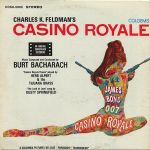
This is a record that has its share of problems, but if you’ve got the system for it (huge, heavily tweaked, fast, free from obvious colorations and capable of tremendous resolution), the best pressings are sure to impress.

Having heard the best sounding pressings I now understand why this has been such a highly regarded long-term resident of the TAS Superdisc List. The best copies are SUPERDISCS… while the average copy of this album is anything but. Who could take such harsh, grainy, thin, veiled, compressed sound seriously? What was Harry Pearson smokin’?

I can honestly and truthfully say that until we discovered the Hot Stampers for this album, I never thought this record deserved the praise Harry heaped upon it. Now I do. I once was blind but now I see, or something like that.

And by the way, does his copy sound as good as this one? Let’s face it: the late Harry Pearson was simply not the kind of guy who would sit down with five or ten copies and shoot them out.

When you listen to the average pressing of Casino Royale, you get the feeling that you’re hearing a standard-issue, boxy, lightweight, blary ’60s soundtrack. Perhaps you hear some promise in the recording, but it’s a promise that’s unfulfilled by the record on your turntable. This copy will completely redefine what you know about the sound of this music.

The space is big and the sound relatively rich (although the sound does vary quite a bit from track to track). The vocals have notably less hardness than most and the orchestra is not as brash as it can be on so many of the copies we audition. Huge amounts of Tubey Magic as well, which is key to the best sounding copies, and critical to The Look of Love.

The sound needs weight, warmth and tubes or you might as well be playing a CD.

(more…)

Bach / Suites for Solo Cello on the Later Label – Live and Learn

Hot Stamper Pressings of Mercury Recordings Available Now

The discussion here is for a later label copy we reviewed in 2010. These days the later Oval labels for records like this do not sound good to us and we no longer put them in shootouts. This record would likely not qualify as a Hot Stamper pressing these days.


Excellent cello reproduction on side one, where you get Bach’s entire Suite No. 2 for Unaccompanied Cello.  Hear how wonderful a cello can sound when recorded and mastered for maximum effect, live in your listening room.

The cutting is super low distortion on this later label copy as well. This copy will show you why these Starker Mercury records are so highly prized.

The sound of Starker’s cello here is humongous — it’ll fill up your room, wall-to-wall and floor-to-ceiling. 

It’s also tonally correct from top to bottom, a quality we heard on none of the Mercury Heavy Vinyl reissues we played. They have some of the worst sound we had heard from Speakers Corner up to that time.

This is very much in keeping with the overly rich, overly smooth sound of the Heavy Vinyl records being made today. We despise that sound and want nothing to do with it.

Speakers Corner and the TAS List

Three Mercury recordings of Starker’s on Speakers Corner vinyl are currently on the TAS List, SR 90303, SR 90392 and SR 3-9016. I suppose we could order the first two up, audition them and list their many sonic shortcomings, since we do have nice copies of both albums in the backroom, just not enough to do a shootout. [We have since done shootouts for both.]

NOTE: The 3 LP Box Set is probably never going to go through a shootout. At $1000 and up for an original set, the price we would have to charge for the best of them would be outrageously high.

But there are so many other good pressings to play, why go out of way to play another second- or third-rate Heavy Vinyl pressing?

Another Link

By the way, we have a new link for audiophile pressings that are tonally correct but are wrong in other ways, as they usually are. You can assume that our Hot Stamper pressings are tonally correct for the most part, as correct tonality is fairly key to high quality sound. Not essential, but important nevertheless.

Starker’s records are legendary for their sound, not to mention Starker’s way with this music. If anybody can make Bach’s solo cello pieces capture your interest, Starker can.

Julie Is Her Name – Listen for Barney Kessel’s Guitar Tone

On the first track of side one, focus on how rich the bottom end is on Barney Kessel’s guitar. The Tubey Magic on this side is off the charts. Some copies can be dry, but that is clearly not a problem on the best pressings.

Now compare the sound of that guitar — just the guitar, nothing else — you hear on a good original pressing to the sound of the same guitar on the awful Boxcar Heavy Remaster.

We think there is a very good chance you will be quite shocked.

Unsurprisingly, everything else is worse on the Boxcar record as well. It has no reason to exist. The CD is likely better.

So Natural

The naturalness of the presentation puts this album right at the top of best sounding female vocal albums of all time.

To take nothing away from her performance, which got better with every copy we played. Julie’s rendition of Cry Me a River may be definitive.

If only Ella Fitzgerald on Clap Hands got this kind of sound! As good as the best copies of that album are, this record takes the concept of intimate female vocals to an entirely new level. (more…)