Pressings with Weak Sound or Music

These vintage records didn’t sound very good to us. Additionally, some made the list because the music or performances were not to our liking.

As to their sound quality, some of them are bad recordings, but some are no doubt just bad pressings of good recordings. Either way, audiophiles should avoid them.

Bad sounding Heavy Vinyl and Half-Speed mastered pressings can be found in their own sections.

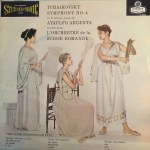
This Tchaikovsky 4th with Argenta Didn’t Make the Grade

Hot Stamper Pressings of the Music of Tchaikovsky Available Now

This vintage London Blueback pressing of CS 6048 was released in 1958.

(1958 just happens to be one of the best years for analog recording, as evidenced by this amazing group of albums, all recorded or released in that year.)

CS 6048 seemed to have a lot going for it so we thought we would get one in and give it a spin.

For starters, just take a look at that cover!

Roy Wallace was the engineer and many of his recordings are superb. (As of this posting there are fifteen available on our site.)

Recorded in Geneva’s world-renowned Victoria Hall with L’Orchestre De La Suisse Romande performing, many of of the best sounding records we’ve ever played boast these three elements.

Unfortunately, this London has a case of the “old record” sound we find on far too many vintage pressings, even those with credentials as promising as this one.

All the right people worked on it. How did it all go so wrong?

Who the hell knows?

The world is full of old records that just sound like old records. We’ve suffered through them by the tens of thousands in the 38 years we’ve been in the business of selling premium vinyl to audiophiles.

Our website, as well as this blog, are devoted to helping audiophiles find pressings that don’t sound anything like the millions of run-of-the-mill — and sometimes just awful, as was the case here — LPs that were stamped out over the last seven decades or so.

Even a million dollar stereo can’t make the average record sound good, and the more accurate and revealing the system, the more limited and lifeless the average record will show itself to be.

(more…)

Looking For a Top Quality Jazz Record? Skip the OJC of Screamin’ the Blues

Hot Stamper Pressings of Excellent Jazz Recordings Available Now

If you see this OJC pressing in your local record store, best to skip it.

The sound is dry and bright. It’s passable, but it’s certainly not very good, and even the CD might be better, assuming you are willing to go through a number of discs until you find one that is mastered properly, assuming that there ever was such a thing.

Finding good sounding pressings of classic albums has never been easy. Here are some tips that may help you make more progress.

Original Jazz Classics

Some OJC pressings are great — including even some of the new ones. Some are awful. And the only way to judge them fairly is to judge them individually, which requires actually playing a large enough sample.

Since virtually no record collectors or audiophiles like doing that, they make faulty judgments – OJC’s are cheap reissues sourced from digital tapes, run for the hills! – based on their lack of rigor, among other things, when comparing pressings.

(more…)

Don’t Waste Your Money on this RCA from 1961

Hot Stamper Pressings of Living Stereo Recordings Available Now

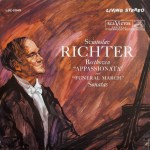
These Beethoven “Appassionata” And “Funeral March” sonata recordings have never impressed us sonically.

On the Shaded Dog pressings of LSC 2545 that we’ve auditioned, the piano is too thin.

Who likes a thin sounding piano?

If you have big speakers that can move air with authority, the kind needed to reproduce the size and power of a concert piano, then check out some of the titles we’ve found to have especially weighty piano reproduction.

The sound is not awful — you could certainly do worse — but we do not see the value in this title considering it will be neither cheap nor quiet.

We say pass.

Lewis Layton is clearly one of our favorite engineers, but this album does not seem to be up to his usual standards, or ours.


There are quite a number of other vintage classical releases that we’ve run into over the years with noticeable shortcomings.

For fans of vintage Living Stereo pressings, here are some to avoid.

Some audiophiles may be impressed by the average Shaded Dog pressing, but I can assure you that we here at Better Records are decidedly not of that persuasion.

Something in the range of five to ten per cent of the major label Golden Age recordings we play will eventually make it to the site. The vast majority just don’t sound all that good to us. (Many have second- and third-rate performances and those get tossed without ever making it to a shootout.)

(more…)

Skip the Original OJC of West Coast Sound (C3507)

Hot Stamper Pressings of Contemporary Jazz Albums Available Now

UPDATE 2025

A new shootout for this title gave us a better understanding of the OJC relative to the other pressings we were playing. We came across one fairly good sounding OJC pressing out of the three we played, one that earned grades of 2+/1.5+, so if you have an OJC, play it and see whether it is one of the good ones or, as is most likely the case, one of the bad ones.

Side two is the side to play to hear what we are on about. The grades ranged from decent, 1.5+, to just awful, NFG.


The sound of the early OJC pressings of West Coast Sound that we played recently were not to our liking.

They are brighter and thinner than even the worst of the real Contemporary pressings.

That is decidedly not our sound.

We have to admit that we used to find the sound of many of these OJC pressings much more tolerable in the past.

More than tolerable. Enjoyable. Recommendable. Saleable even.

Nothing to be ashamed of, that was many years ago. As you may already know, live and learn is our motto. Getting it wrong is a feature, not a bug, of collecting if your goal is to find the best sounding pressings of the music you love.

(If you have some other goal, this may not be the right blog for you. Definitely steer clear of this website. The prices there are ridiculous!)

It’s true: Our old system from the 80s and 90s was tubier, tonally darker and dramatically less revealing, which strongly worked to the advantage of leaner, brighter, less Tubey Magical titles such as this one.

That was thirty or more years ago. Pretty much every dynamic speaker system I ran into had that sound. And I was never a fan of screens or horns. Like most audiophiles, I thought my stereo sounded great. It sure sounded right to me at the time.

And the reality is that no matter how hard I worked or how much money I spent, I would never have been able to achieve substantially better sound for one simple reason: most of the critically important revolutions in audio had not yet come to pass. It would take many technological improvements and decades of effort until I would have anything like the system I do now.

The Riddle of the Vastly Different Sides Has Been Solved

Hot Stamper Pressings of Recordings Featuring the Violin

About ten or fifteen years ago we came across a puzzling Shaded Dog pressing of the Bruch / Vieuxtemps recording from 1962 with Heifetz, LSC 2603.

We were surprised at the time how much worse one side sounded than the other. That had rarely if ever happened back in those early Living Stereo shootout days.

We sold the record as a one-sided disc with one complete performance in top quality sound, The Scottish Fantasy. Obviously the Vieuxtemps / Concerto No. 5 wasn’t worth playing; the sound was sub-par, a pale shadow of the sound of the other side of the record. You can read all about it here.

Well, we ran into those stampers again, or at the very least we ran into a copy with the same bad stampers for side one, 5s. Something sure went wrong somewhere, as you can see from our notes below.

At the time we described this curious pressing this way:

The violin is captured beautifully on side two. More importantly there is a lovely lyricism in Heifetz’s playing which suits Bruch’s Romantic work perfectly. I know of no better performance.

The performance of the Vieuxtemps Concerto No. 5 is also wonderful, but the sound is not. Want proof that two sides of the same record can have vastly different sound? Here it is. Note how oversized the violin on side one is, how smeary the orchestra, how little texture there is to anything in the soundfield. This side one is no Hot Stamper.

All true, and now that we know that 5s etched stampers are responsible for the bad sound and not just some pressing anomaly, we can all sleep peacefully once again.

(more…)

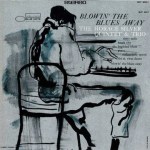
A Hopelessly Bad Capitol Reissue of Blowin’ the Blues Away from 1985

Hot Stamper Pressings Engineered by Rudy Van Gelder Available Now

Clearly this is a Must Own album from Horace Silver.

During our most recent shootout we ran into an early pressing that blew our minds.

Finding early pressings of Blue Note titles in audiophile playing condition is both difficult and expensive. Perhaps there is some other pressing worth a try?

Not that we know of, but we admit we have played none of the Heavy Vinyl reissues flooding the market these days. If you want to go that way, more power to you. Just don’t make the mistake of buying the 80s reissue that Capitol put out.

As you can see from our notes, it’s terrible — so thin, flat and dry.

It has the kind of sound we refer to as “modern,” and we do not mean that as a compliment.

CAUTION: Two of the pressings we played in our shootout were noisy, with a defective right channel. Both were mastered by Rudy Van Gelder. Unlike many of the other Blue Note titles we do, Rudy was still cutting pressings all the way into the White B Label era of the early 80s.

If you buy any of these later pressings, make sure you have the right to return them. The sellers who grade their records visually will not be able to recognize the invisible defects their pressings may suffer from and are unlikely to want to take them back.

Horace Silver Is The Man

If you don’t know the man’s music, this is a good place to start. It’s yet another triumph for engineering maestro Rudy Van Gelder – he refined a “live-in-the-studio” jazz sound that’s still fresh today, even after 65 years.

The really good RVG pressings (often on the later labels) sound shockingly close to live music — uncompressed, present, full of energy, with the instruments clearly located on a wide and often deep soundstage, surrounded by the natural space and cool air of his New Jersey studio.

As our stereo has improved, and we’ve found better pressings and learned how to clean them better, his “you-are-there” live jazz sound has come to impress us more and more.

(more…)

Don’t Waste Your Money on these Mozart Symphonies

More of the Music of Wolfgang Amadeus Mozart

Neither the sound nor the performance of this 1958 Mercury are impressive.

1959 just happens to be one of the all time great years for recording in analog.

If you have any doubt, check out this amazing group of albums, all recorded or released that year.

This Mercury might be passable on an old school system, but it was too unpleasant to be played on the high quality modern equipment we use.

There are quite a number of others that we’ve run into over the years with similar shortcomings. Here they are, broken down by label.

  • London/Decca records with weak sound or performances
  • Mercury records with weak sound or performances
  • RCA records with weak sound or performances

Have You Noticed…

If you’re a fan of Mercury Living Presence records — and what right-thinking audiophile wouldn’t be? — have you noticed that many of them, this one for example, don’t sound very good?

If you’re an audiophile with good equipment, you should have.

But did you? Or did you buy into the hype surrounding these rare pressings and just ignore the problems with the sound?

(more…)

The Early London Pressings Of Schubert’s 9th Are Awful

Hot Stamper Classical and Orchestral Imports on Decca & London

There are plenty of Deccas and Londons that we’ve cleaned and played over the years that were disappointing, and some of them can be found here.

What was most striking about this shootout was how poorly the original London Bluebacks (CS 6061) fared when going head to head with the best vintage reissues. In fact, they were so obviously inferior I doubt we would have even needed another pressing to know that they could not possibly be considered Hot Stampers.

The two we had were crude, flat, full of harmonic distortion, and both had clearly restricted frequency extremes.

In other words, it just sounded like an old record, and not a very good one at that. The world is full of them.

But I remember liking the Blueback pressings I played ten or twenty years ago.

Did I have better copies, or was my system not capable of showing me the shortcomings I so clearly heard this time around? Since this is a question that cannot be answered with any certainty, we’ll have to leave it there.

Our favorite performance of the work is this one with Krips and the LSO, but on a much later reissue pressing produced by Decca in the 70s. Imagine that!

(more…)

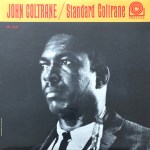
Could This Be the Sound Audiophiles Complain About with RVG’s Mastering?

Hot Stamper Pressings of the Music of John Coltrane Available Now

A rare and expensive early mono pressing that we put into our most recent shootout was dreadful sounding.

Our main listening guy owns the record and made the note you see below, saying that his personal copy is every bit as bad.

The sound of the original was painfully midrangy and crude. It was not the worst of all the pressings we played, but it was nevertheless pretty bad, sounding nothing like our shootout winners.

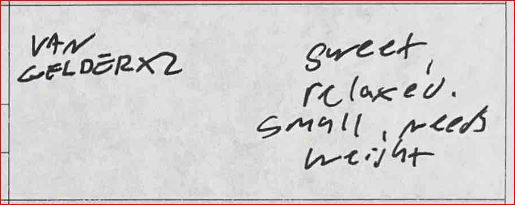
We had a pressing on an early Prestige label in stereo, also mastered by Rudy Van Gelder, that was reasonably good sounding, earning grades of 1.5+ to 2+. It was sweet and relaxed, but relatively small and lacked the weight of the best.

For this music, we’ve found the best sound on the better Two-Fer pressings and the right OJC.

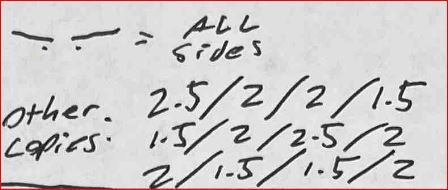
That Two-Fer budget reissue pressing, remastered by David Turner in 1972, can do very well in a shootout, but it can also fall far short of the mark on some sides, as you can see from the grades for these three other copies.

If you have the Two-Fer, how does yours sound compared to the four we auditioned (a shootout we were doing for the third or fourth time I might add), and how could you possibly know such a thing without a great many more copies at hand to clean and play?

(more…)

Blary Brass Ruins Another Mercury – This Time It’s Pictures at an Exhibition

Hot Stamper Pressings of the Music of Modest Mussorgsky Available Now

The sound of the pressings we’ve played over the years has always been awful.

On SR 90217, the brass is just too sour and blary. To our knowledge, no copies of the album do not suffer from these problems.  They may exist — who can say they don’t? — but we’ve yet to play one and have no intention of seeking them out, not when there are other superior performances with top quality sound.

The performance is awful, too.

When the horns have clarity, correct tonality, plenty of space around them and a solid, full-bodied sound, probably every other instrument in the soundscape will too.

One minute into side one we knew that this Mercury had failed the brass test.

It was simply much too unpleasant to be played on modern high quality equipment.

The less revealing systems some audiophiles seem to favor can make the shortcomings of a recording such as this more tolerable, but we’ve worked very hard for many decades to make sure our system is as truthful and unforgiving as possible.

We knew right from the get-go this Mercury was not going to make the grade. Here are some others that we’ve found seriously wanting. We’ve also compiled a list of more than 40 of the worst sounding Heavy Vinyl pressings of orchestral and classical music, and it can be found here.

(more…)