Testing Midrange Tonality

The records linked here are good for testing midrange tonality.

Putting Your System to the (Violin and Piano) Test

Hot Stamper Pressings with Jascha Heifetz Performing

Do you want a recording that is going to put your system to the test? Well this is that record! The violin is REAL. As you compare equipment or tweak your system, you will hear the sound of that violin change and it should be obvious when it gets better and when it gets worse. 

The piano is also very well recorded.

If you lose some body to the piano you’re probably going in the wrong direction.

But since that direction would make the violin almost unbearable sounding, I’m going to guess that would be easily recognized as a mistake.

The balance between those two instruments on this recording is perfection, so if you get this record right, you’re making progress of the most important kind: toward musical naturalness.

Otherwise this violin, at least on the Kreutzer Sonata, is going to tear your head off.

Our previous Hot Stamper review follows.

The Beethoven, which takes up side one, is recorded in a fairly dry acoustic. The sound of the violin is very immediate. It’s quite a showpiece for Heifetz.

I much prefer the Bach on side two, however, which is recorded within a more natural hall acoustic. Sir Malcom Sargent conducts and Eric Freidman plays the second violin in this concerto, which is also his debut for RCA, according to the liner notes.

This piece was recorded in England and to me it has the rich, sweet, glorious sound of Living Stereo at its best.

(more…)

Detail on Crosby, Stills and Nash – Holy Grail or Audio Trap?

Hot Stamper Pressings of the Music of Crosby, Stills, Nash and (Sometimes) Young

Detail may be the Holy Grail to some audiophiles, but listening for the details in a recording can be a trap we too easily fall into unless we are on our guard.

Tonal balance is the key.

Without correct tonal balance, no judgments about the details of the recording have any real value. 

A case in point: As good as the Classic Heavy Vinyl pressing is, the guitar at the opening of Helplessly Hoping tells you everything you need to know about what’s missing. The guitar on the better Hot Stamper domestic copies has a transparency and harmonic integrity that cannot be found on Classic’s version.

The Classic Records pressing gets the tonal balance right, but their guitar lacks the subtlety and harmonic resolution of the real thing.

I’m laboring here to avoid the word “detail,” since many audiophiles like bright, phony sounding records because of all their wonderful detail. Patricia Barber’s albums come to mind, along with scores of audiophile pressings. 

The MoFi guys and the CD guys are constantly falling into the trap of being impressed by the phony detail in some recordings.

The solution is to get the sound tonally balanced first, then see how much detail you have left.

Detail is not the end-all and be-all of audio. Those who think it is have systems that are sure to fall apart at louder levels. If the sound of your system on your best pressings doesn’t get better as it gets louder, you are failing one of the most important tests in all of audio, the turn up your volume test.

(more…)

Belafonte at Carnegie Hall – Key Tracks for Side One

Hot Stamper Pressings of Pop and Jazz Vocal Albums Available Now

Harry Pearson brought this record to the attention of audiophiles with his TAS list a long time ago, and rightfully so: it’s an amazing recording.

We happen to love the music too, which makes it one of the most recommendable records we have ever offered. If you can find a better combination of demo disc sound, with music worth the hassle and expense of reproducing it properly, more power to you. We sure can’t.

Because this is a live recording, because it has lots of natural instruments as well as a vocal, because it was recorded in the Golden Age by one of the greatest labels of all time, RCA, by Bob Simpson no less — for this and many other reasons, it has to be considered one of the most amazing recordings in the history of the world.

That said, it is our contention (and the basis of our business model) that the brilliant quality of the recording can only be appreciated if you have the pressing that captured the sound that the engineers recorded. In other words, a Hot Stamper.

From an audiophile point of view, you get to hear live musicians and all the energy they bring to this music, all on the stage at the same time: strings, brass, percussionists, and Harry Belafonte front and center. Tube mics (and not too many of them), a tube tape recorder, RCA’s superb engineering and all-tube mastering chain ensure that the “breath of life” is captured intact.

I know of no better live popular vocal recording on the planet.

Side One

Introduction
Darlin’ Cora
Sylvie 

This is a wonderful song, sung by Belafonte with virtually no accompaniment. His voice should be rich and full-bodied with plenty of presence. In other words, he should sound like a living, breathing person.

Cotton Fields 

The liner notes say this song was introduced in the previous year in Las Vegas. Before I read that I noted that the uptempo arrangement had a jazzy feel to it. The walking bass is well up in the mix and the piano and a few of the other instruments in the song are well behind — it’s pretty much Belafonte and bass. The bass is deep and very note-like.

This is of course a big system record. Do not expect good results from small speakers.

But what makes this one of the best Demo Quality tracks on the album is Belafonte’s amazingly energetic performance. He really sells this song.

As I was listening to the dynamics on the best pressings, it made me think about all the compressed-to-death vocals that are so much a part of the recording style of the modern era. Nobody gets loud anymore.

Belafonte did back in 1959, and not too many followed him.

(more…)

These Are the Kinds of Things You Say When You Haven’t Actually Played the Record

Hot Stamper Pressings of the Music of Van Morrison Available Now

From the brain trust at Music Direct.

[Italics added by yours truly.]

Van Morrison’s Moondance is that rare rock album where the band has buffed the arrangements to pure perfection.

And now, you can experience it on the finest-sounding pressing that’s ever been made courtesy of this 180g LP, remastered at Acoustech from the original analog tapes by Kevin Gray and Steve Hoffman.

Practically every audiophile press outlet in the world has sung its praises. Moondance has never had such power.

The power to make me wonder how anyone in his right mind would release a record that sounds this bad, that power?

Then there’s this guy, 51nocaster:

As for Moondance, the reissue is very good, but I still prefer the original. Steve Hoffman was involved in mastering the Moondance reissue and like some of the DCC reissues, he seems to favor the lower mids over the upper mids.

As a rule that’s true about DCC records, his awful Creedence records being the best examples, but boy, that’s not what I heard on my copy. Just the opposite. Morrison’s voice on the new reissue has no lower mids. It’s all mids and upper mids.

I suspect a download on ITunes would be more tonally correct in the midrange.

In summary, please count us as one of the outlets not singing this record’s praises, which is why you can find it in our audiophile hall of shame, along with others that — in our opinion — qualify as some of the worst sounding records ever made.

(more…)

So Long So Wrong – Still So Wrong in the Vocal Department

Hot Stamper Pressings of Jazz and Pop Vocals Available Now

Most audiophiles have a soft spot for female vocals. It’s a sound that a high end stereo — practically any high end stereo — reproduces well.

But why do some audiophiles listen to the artificial-sounding junk that Patricia Barber and Diana Krall put out on album after album?

Their recordings are drenched in digital reverb. Who is his right mind likes the sound of digital reverb?

Rickie Lee Jones may not be my favorite female vocal of all time, but at least you can make the case for it as a Well Recorded Album. It’s worlds better than anything either of the above-mentioned artists have ever done.

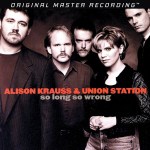
The MoFi pressing of Alison Krauss (5276) is a disaster in the vocal department too.

Audiophiles for some reason never seem to notice how bad she sounds on that record. Can’t make sense of it. Any of the good Sergio Mendes records will show you female vocals that are hard to beat. Our best Hot Stampers bring the exquisite vocal harmonies of Lani Hall (aka Mrs. Herb Alpert) and Janis Hansen (and others) right into your living room.

Why bother with trash like this Mobile Fidelity?

(more…)

Listening in Depth to Famous Blue Raincoat

Hot Stamper Pressings of the Music of Leonard Cohen Available Now

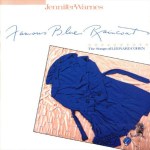
I’m a huge fan of this FBR. It’s the only album Jennifer Warnes ever made that I would consider a Must Own recording or a Desert Island Disc. Without question this is her Masterpiece.

Key Test for Side One

Listen to the snare drum on Bird on a Wire. On most copies it sound thin and bright, not very much like a real snare. Let’s face it: most copies of this record are thin and bright, and that’s just not our sound here at Better Records. If the snare on Bird sounds solid and meaty, at the very least you have a copy that is probably not too bright, and on this album that puts it well ahead of the pack.

While you’re listening for the sound of that snare, notice the amazing drum work of Vinnie Colaiuta, session drummer extraordinaire. The guy’s work on this track — especially with the high hat — is genius.

Key Test for Side Two

Listen to the sound of the piano on Song of Bernadette. If it’s rich and full-bodied with the weight of a real piano, you might just have yourself a winner. At the very least you won’t have to suffer through the anemically thin sound of the average copy.

Side One

First We Take Manhattan

Don’t expect this song to be tonally correct. It runs the gamut from bright to too bright to excrutiatingly bright. Steve Hoffman told me that he took out something like 6 DB at 6K when he mastered it for a compilation he made, and I’m guessing that that’s the minimum that would need to come out. It’s made to be a hit single, and like so many hit single wannabes, it’s mixed brighter than we audiophiles might like.

(more…)

Which Side Lacked Space, and How Did You Figure That Out?

Hot Stamper Pressings of the Music of Linda Ronstadt Available Now

Big, rich, smooth, and sweet, how did George Massenburg pull off this kind of analog sound in 1987?

We don’t know, but we do know good sound when we hear it, and we heard remarkably good sound on this copy.

The first track on side one was big and rich, with vocals that were breathy and present, just the way we like ’em.

The third track was every bit as good, with sound that was rich and weighty. The vocals wer so present and open, sweet and silky. This is exactly what you want on this album.

And the way we know that is we played a bunch of copies and nothing could beat it. This side one took top honors for having sound we described above.

Side two is another matter. We came across a side two that was slightly better than the side one you see here.

How did that kind of thing happen, you ask?

Well, when we played the two best copies back to back, side one of this copy came out on top, earning a grade of 3+, but the side two of another pressing showed us there was even more space in the recording than we noticed the first time around.

We knew side two was “at least 2+,” the crossed-out text you see in the notes.

With another copy earning a better grade, 3 pluses, we felt the right grade for this side two was 2.5+.

(more…)

Listening in Depth to A Hard Day’s Night

More of the Music of The Beatles

Play it against your MoFi or Heavy Vinyl pressing and you will quickly see why those lifeless LPs bore us to tears. Who in his right mind would want to suffer through a boring Beatles record?

Drop the needle on any song on the first side to see why we went crazy over a recent Shootout Winner on side one. The emotional quality of the boys’ performances really comes through on this copy.

They aren’t just singing — they’re really beltin’ it out. Can you imagine what that sounds like on the title track? We didn’t have to imagine it, we heard it!

Side One

A Hard Day’s Night
I Should Have Known Better
If I Fell

This is a wonderful example of The Beatles’ harmonies at their best. Toward the end of the song, during one of their harmonic excursions, you can hear John’s voice drop out when something apparently catches in his throat, and I could swear that you can hear Paul McCartney react to it with a little laugh.

If their voices sound warm, sweet, and transparent on this track, at the very least you have a contender, and possibly a winner. Not many pressings are going to bring out all the timbral qualities of their voices.

I’m Happy Just to Dance With You
And I Love Her
Tell Me Why
Can’t Buy Me Love

Always starts with a bit of grit and grain, but usually sounds better by the second verse.
(more…)

Leonard Cohen Sure Sounds Better than He Used to

Hot Stamper Pressings of the Music of Leonard Cohen Available Now

Insanely good Shootout Winning Triple Plus (A+++) sound on both sides AND fairly quiet vinyl – the best copy to ever hit the site bar none.

Unbeatable richness and freedom from artificiality in the midrange allowed this one to tower over the rest of the field.

As you can see from the notes, both sides of our most recent White Hot stamper shootout winning copy were doing everything right. We marvelled at these specific qualities in the sound:

Side One

Track one

    • Rich vocals
    • Jumps out
    • Much bigger and fuller and more natural

Track two

    • Big and rich and breathy
    • Very open chorus

Side Two

Track three

    • Big, breathy and transparent and rich
    • Vocals are right up front and dynamic

Track one

    • Sweet and tubey
    • Big bass

Midrange presence is one of the most important qualities of any rock or pop recording we might be evaluating, and for a Leonard Cohen album it is absolutely essential.

You want Cohen to be front and center, neither recessed in space nor behind a veil.

The notes for track three on side two say it all:

Vocals are right up front and dynamic

That is what gets this music to sound the way it is supposed to. You can be very sure that no Heavy Vinyl remastered pressing is going to put Leonard Cohen front and center. They practically never do. (Here is an especially offensive remaster with a bad case of recessed vocals. Funny how none of the audiophile reviewers noticed. What does that say about the quality of their playback, or the standards to which they hold their records?)

DIY Advice

To aid you in doing your own evaluations, here is a list of records that we’ve found to be good for testing midrange presence.

This is exactly why we do shootouts. If you really want to be able to recognize subtle (and not so subtle!) differences between pressings, you must learn to do them too.

And make sure to take notes about what you are hearing, good and bad.

We love Cohen’s albums here at Better Records. No, they’re not audiophile spectaculars, but much like the best Dylan recordings, when they work the sound fits the music perfectly.


UPDATE 2025

In previous listings we had noted:

The vocals are right up front and fairly dry, throwing the words and phrasing into high relief.

But we would no longer agree with the vocals being dry. On the best copies they are rich, full-bodied and tubey.

What does that say about the quality of our playback? How about: It’s better now than it used to be!

(more…)

On Sweetnighter, Watch Out for Sourness, Slowness and Smear

Hot Stamper Pressings of the Music of Weather Report

What surprised us most about the dozen or so copies that we played years ago for a shootout was how wrong most copies of this album sound. They’re SOUR in the midrange. On this kind of music, a sour midrange is the kiss of death.

Those copies that aren’t sour are frequently just plain dull. On a recording like this, so full of percussion — which, to be honest, it’s a record that LIVES OR DIES on the quality of its percussion — dullness is devastating.

And so is slowness. If you have old school tube equipment — great for vintage RVG recordings but way too slow to keep up with this fast-paced and percussion-heavy music — this record is not going to do what it desperately wants to do: get your feet tappin’.

Smear is also another thing to watch out for — smear kills what’s good about this record. The percussion transients lose their snap and the harmonics get lost. The less smeary sides really bring out the funky magic of the recording.

(more…)