Testing Midrange Tonality

The records linked here are good for testing midrange tonality.

If Only I Could Remember My Name – Hand Claps Are Key

Hot Stamper Pressings of the Music of David Crosby Available Now

Note how Crosby’s voice is “chesty” on the better sounding copies. Some make him sound like he’s all mouth and no diaphragm. When his voice is full-bodied and solid, that’s when he sounds more like a real person and less like a pop recording of a person.

All credit must go to Stephen Barncard.

Harry Pearson put this record on his TAS List of Super Discs, not exactly a tough call if you ask us. Who can’t hear that this is an amazing sounding recording? 

Listening Test

One of our key test tracks for side one is Cowboy Movie, and one thing that separated the best pressings from the lesser ones was the sound of the hand claps. It’s a dense mix and they are not easy to hear, but on the best copies there is audible echo and ambience around them, with a richer “flesh on flesh” quality to their sound.

Not many pressings had it, and the ones that did tended to do most other things well also.

Which is what makes it a good test! (more…)

Some Girls Need (Needs?) Fullness

Hot Stamper Pressing of the Music of The Rolling Stones Available Now

In the commentary for a recent Hot Stamper pressing, we described the sound we were looking for on the Stones’ brilliant 1978 album, Some Girls:

One of the keys to getting this album to sound right is fullness. Many copies lack weight to the bottom end, which robs this funky music of its very foundation. Other copies suffer from lean, thin-sounding vocals — do you think that’s the sound Mick Jagger (or engineer Chris Kimsey) was going for?

Some of the qualities we found in short supply on the average copy were warmth, richness, sweetness and ambience — you know, all that Analog Stuff we know and love.

Most copies are too thin and grainy for serious audiophile listening, but this one is a different story. It’s not easy to find great sound for The Stones, so take this one home for a spin if you want to hear this band bring these songs to life in your very own listening room.

Not many copies have this kind of clarity and transparency, or this kind of big, well-defined bottom end.

The sound of the hi-hat is natural and clear on this pressing, as are the vocals, which means that the tonality in the midrange is correct, and what could be more important than a good midrange? It’s where the music is.

Not only is it hard to find great copies of this album, it ain’t easy to play ’em either, which is why this recording ranks high on our difficulty of reproduction scale.

You’re going to need a hi-res, super low distortion front end with careful adjustment of your arm in every area — VTA, tracking weight, azimuth and anti-skate — in order to play this album properly.

If you’ve got the goods, you’re gonna love the way our Hot Stamper pressings sound.

Play it with a budget cart/table/arm and you’re likely to hear much less magic than we did.

(more…)

Helplessly Hoping to Get the VTA Right

Hot Stamper Pressings of the Music of Crosby, Stills, Nash and (Sometimes) Young

This listing from 2005 (!) contains commentary about VTA adjustment using the track Helplessly Hoping from a Hot Stamper pressing of CSN’s So Far. It would not be long before we went with the much more accurate and revealing 17D (first the 17D3, then the 17DX), which took us to another level, as documented here.

Helplessly Hoping is a wonderful song that has a lot of energy in the midrange and upper midrange which is difficult to get right. Just today (4/25/05) I was playing around with VTA, having recently installed a new Dynavector DV-20x on my playgrading table (a real sweetheart, by the way), and this song showed me EXACTLY how to get the VTA right.

VTA is all about balance.

The reason this song is so good for adjusting VTA is that the guitar at the opening is a little smooth and the harmony vocals that come in after the intro can be a little bright. Finding the balance between these two elements is key to getting the VTA adjusted properly.

When the arm is too far down in the back, the guitar at the opening will lose its transparency and become dull and thick. Too high in the back and the vocals sound thin and shrill, especially when the boys all really push their harmony. The slightest change in VTA will noticeably affect that balance and allow you to tune it in just right.

To be successful, however, there are also other conditions that need to be met. The system has to be sounding right, which in my world means good electricity, so make sure you do this in the evening or on a weekend when the electricity is better.

That’s the easy part. The hard part is that you need a good pressing that includes this song, and those don’t grow on trees.

The vast majority of CSN’s first album and the vast majority of So Far’s are junk.

Trying to get junk pressings to sound right is impossible, because they weren’t mastered right in the first place.

But if you’re one of the lucky few who has a good pressing of Helplessly Hoping, try tweaking your VTA adjustment and see if you aren’t able to dial it in even better than before.

(more…)

What to Listen For on What Were Once Vices Are Now Habits

Hot Stamper Pressings of the Music of The Doobie Brothers Available Now

This mass-produced stuff is pretty lame most of the time. Actually, that’s not really fair; the specialty audiophile limited edition pressings of most records are even worse, so the production numbers really don’t have much to do with the final product, now do they? They made millions of copies of this album, and heavy vinyl pressings are made in the thousands, but which would you rather play? I’ll take good old thin vinyl from the 70s over that heavy stuff any day of the week.

But I digress. Most copies — like most modern heavy vinyl pressings — simply lack energy. They’re flat and compressed and no matter how loud you turn them up the band never seems to be all that enthusiastic about the songs they’re playing.

Ah, but the good pressings show you a band that’s on fire, playing and singing their hearts out. Such are the vagaries of record production. Who can explain it or even understand it? All we know is what the finished product sounds like. The rest is guesswork, entertaining for idle minds and forum posters but of little value to those of us who take records seriously and want to hear the music we love with the best sound we can find. (More on guessing and speculating here.)

Watch Out For

Tipped up top end, plain and simple.

A little extra top and the guitars sparkle and Johnston’s voice gets a little hi-fi-ish. On the most ridiculously tipped-up copies, you could easily mistake such a pressing for a MoFi Half-Speed mastered LP.

That sparkle used to thrill me forty years ago. Now it makes me roll our eyes — what the hell were they thinking, boosting the hell out of the top end like that?

And why can’t so many audiophiles today, still in thrall to that sound, recognize how unnatural it is and was?

The short answer: vintage audio equipment needs that extra kick.

Most audiophiles have not taken sufficient advantage of the revolutions in audio of the last twenty or so years and so must find records that give them the boost their deficient audio systems need.

Those of us — and that includes many of you or you wouldn’t be spending all your money on Hot Stampers — have systems that find dramatically more information in the grooves of our records than we ever dreamed was there.

We then get that information to go through our electronics and come out of our speakers with far more energy and far less distortion than we could in the past.

Lee Herschberg, Engineer Extraordinaire

One of the top guys at Warners, Lee Herschberg recorded What Once Were Vices… (along with Donn Landee, who recorded their previous album and would take over the engineering duties on subsequent releases) as well as the first Doobie Brothers album.

You’ll also find his name in the credits for many of the best releases by Ry CooderRandy NewmanGordon Lightfoot, and Frank Sinatra, albums we know to have outstanding sound (potentially anyway; if you’re on this site you know very well that you have to have an outstanding pressing to hear outstanding sound).

And of course we would be remiss if we didn’t mention the album most audiophiles know all too well, Rickie Lee Jones’ debut. Herschberg’s pop and rock engineering credits run for pages. Won the Grammy for Strangers in the Night in fact.

(more…)

Super Session Is the Poster Boy for Gritty, Spitty Vocals

Hot Stamper Pressings of the Music of Al Kooper Available Now

Man’s Temptation, track 3 on side one, has got some seriously bright EQ happening (reminiscent of the first BS&T album, Child Is Father to the Man), so if that song even sounds tolerable in the midrange you are doing better than expected.

Bright, gritty, spitty, edgy, harsh, upper-midrangy vocals can be a real problem on this album.

The Red Labels tend to have more problems of this kind, but plenty of original 360 pressings are gritty and bright too. Let’s face it, if the vocals are wrong, the music on this album — like any rock and pop album — pretty much falls apart.

Most copies are far too bright and phony sounding to turn up loud; the distortion and grit are just too much at higher volumes.

On the better copies, the ones with more correct tonality and an overall freedom from distortion, you can crank the volume and let Super Session rock.

Testing with Super Session

This record, along with the others linked below, is good for testing the following qualities.

  1. Grit and grain
  2. Midrange tonality
  3. Sibilance (it’s a bitch) 
  4. Upper midrange brightness

Playing so many records day in and day out means that we wear out our Dynavector 17DX cartridges often, three or four times a year.

Which requires us to regularly mount a new cartridge in our Triplanar arm.

Once a new cartridge is broken in (50 hours minimum), we then proceed to carry out the fine setup work required to get it sounding its best. We do that by adjusting the VTA, azimuth and tracking weight for maximum fidelity using recordings we have been playing for decades and think we know well.

(more…)

Harry Sometimes Has Honky Vocals

Hot Stamper Pressings of the Music of Harry Nilsson Available Now

The average copy suffers, most notably, from a honky quality in the vocals. It seems to be an EQ problem, since it affects a very large percentage of copies with earlier stampers and not as many of the later pressings. [Not sure if this true anymore.]

The later copies have problems of their own, though, so you can’t just assume that the copies with high numbers will sound better — they don’t always, and the earlier ones can sound amazing when you’re lucky. It just goes to show that (all together now) you can’t know anything about the sound of a record without playing it, and to take it a step further, you can’t really know much about the sound of an album without cleaning and critically listening to multiple copies.

But that’s a lot of hard work, and who has the time? (Other than us.)

This record, along with the others linked below, is good for testing the following qualities:

(more…)

Workin’ And Steamin’ – We Were Dead Wrong about the Originals

davismiles

Hot Stamper Pressings of the Music of Miles Davis Available Now

This review is for a pressing we put up around 2010.

Up to that time we had never played a clean, early pressing, and when we finally were able to put some in our shootout, one of them had sound that was out of this world.

In the commentary below we discuss what we think the early pressings probably sound like. Now, having heard how good the best of them can sound, we admit we clearly needed to do more research and development.

The record pictured above can have superb sound, much better than any modern Heavy Vinyl reissue you care to name.

However, the right properly-cleaned early pressings have the potential to take the sound of this music to the next level, a level we had no idea could exist until that right record came our way.

(more…)

What to Listen For and More on Ruben and the Jets

More of the Music of Frank Zappa

Is the thought bubble on the cover the real story behind the album?

Is this the Mothers of Invention recording under a different name in a last ditch attempt to get their cruddy music on the radio?

Amazing sound for this record of greasy love songs and cretin simplicity to offer to audiophiles and music lovers alike from all corners of the world. We absolutely LOVE this album here at Better Records, or at least that portion of Better Records that remembers it from high school still loves it (which would narrow it down to a subset of just me I guess, but who’s counting?). Anyway, it’s a classic of twisted Doo-Wop that belongs in your collection. At least we think you should give it a chance anyway; hearing it sound this good might just make a believer out of you.

Tubey Magic Is Key

Many copies are just too thin and edgy to be as fun and enjoyable as we have every right to expect from this kind of purposely un-hip, un-cool, goofy retro-pop. We were gratified to find that the top finishers had a healthy dose of the Tubey Magical richness found on the best analog recordings from the latter half of the 60s (1968 in this case).

This is a very good recording indeed, judged, as is only fair, solely by the best of the pressings we’ve heard. In other words, the bad pressings sound like crap, but that’s no reflection on the quality of the master tape.

As with most Zappa records, an extended top end is devilishly hard to come by. (In that respect, it is good for testing.)

That said, on a primarily vocal album such as this one, the midrange is where the music lives or dies.

The copies that were rich and full-bodied, with natural vocal reproduction, tended to score the highest grades in our shootout.

Copies that failed to convey the energy and exuberance of the singers and musicians — their love of this music that time had forgotten even by 1968 — as you may well imagine scored relatively poorly. This music is supposed to be fun, and really not a whole lot else, so the copies that aren’t fun scored sub-Hot Stamper grades. (Lifelessness is of course our main beef with Heavy Vinyl these days. When we play one of these new thick LPs the sound is often so blase that I feel that the longer it plays, the more the air is being sucked out of the room.)

On Dark Side of the Moon, “Breathe” Is a Good Check for Midrange Tonality

Hot Stamper Pressings of the Music of Pink Floyd Available Now

Breathe is my favorite test track for side one for any version of Dark Side Of The Moon, Half-Speed or otherwise. When the voices come in about halfway through the song, you can tell that most copies are too bright simply by listening to the vocals on this track. The cymbals might sound wonderful; lots of other instruments might sound wonderful; and there might be plenty of ambience, detail and transparency.

But all of that counts for nothing if the voices don’t sound right.

And far too many copies have the voices sounding bright, aggressive, grainy and transitory. (This is unfortunately the case with the 180 gram 30th anniversary edition. That pressing will wake up a sleepy stereo, but my stereo hasn’t been sleepy enough to play that recut for a very long time, and I hope you can say the same.)

The discussion below may shed light on some of the issues involved in the remastering of Dark Side.

Of course, most audiophiles are still under the misapprehension that Mobile Fidelity, with their strict ‘quality control’, which they spend hundreds of words explaining on their inner sleeves, eliminates pressing variations of these kinds.

Isn’t that the reason for Limited Edition Audiophile Records in the first place? The whole idea is to take the guesswork out of buying the Best Sounding Copy money can buy.

But it just doesn’t work that way. I hate to be the bearer of bad news, but our entire website is based on the proposition that nothing of the sort is true. If paying more money for an audiophile pressing guaranteed the buyer better sound, 99% of what we do around here would be a waste of time.

(more…)

Tubey Magic Like You Won’t Believe

More of The Most Tubey Magical Rock Recordings of All Time

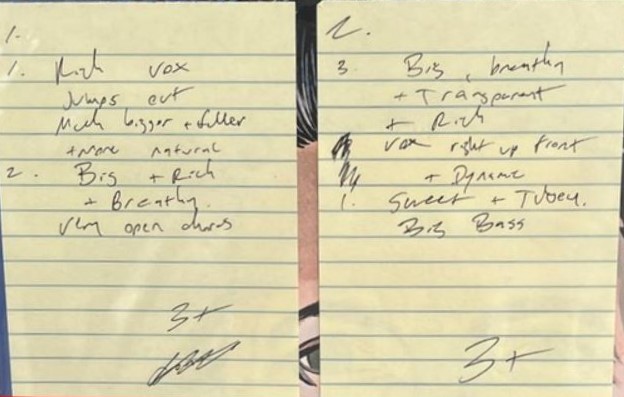
Here is how we described our recent White Hot Stamper shootout winner:

Manna returns to the site after a twenty-eight month hiatus and, man, was it worth with the wait, with KILLER Shootout Winning Triple Plus (A+++) grades on both sides of this original Elektra pressing

Here are just a few of the things we had to say about this amazing copy in our notes: “tubey and spacious”…”huge and rich and 3D”…”really jumping [out of the speakers]”…”vox so silky and rich”

Tubier, more transparent, more dynamic, with that “jumpin’ out of the speakers” quality that only the real thing (an old record) can have

To back up everything we say, here are the notes for that cannot-be-beat pressing. The exclamation marks are typically reserved for the hottest of the hot copies, and here we would have to say they are more than deserved — the sound of this copy was amazing.

I fell in love with the sound of Bread’s recordings 25 years ago. My system has gone through dozens and dozens of changes and — hopefully — improvements since then, and never have Bread’s album failed to reflect the positive effects of whatever had been done.

Other reviews with post-its can be found here. More note taking advice here.

This original Elektra pressing has amazingly sweet and rich 1971 ANALOG sound on both sides. That big bottom end and the volume of space that surrounds all the instruments and singers are the purest and most delightful form of Audiophile Candy we know.

The acoustic guitars? To die for. Talk about Tubey Magical Analog, this copy will show you just what’s missing from modern remastered records (and modern music generally). Whatever became of that sound?

This record put Bread’s heavily Beatles-inflected Pure Pop back on the charts after their the single from their previous album, On The Waters, made it to Number One, that song of course being Make It With You. “If”, the big hit off this album, went to number five, but we like it every bit as much as that earlier chart topper. Both represent the perfect melding of consummate songcraft and pure emotion.

We used to think that only the Best of Bread album could get those two songs to sound as luscious and Tubey Magical as they do when they’re playing in our heads, but it seems we were wrong — they’re positively amazing on the best copies of Manna, and this is a VERY good copy indeed.

Analog Heaven

In many ways this recording is state-of-the-art. Listening to the Tubey Magical acoustic guitars on the best copies brings back memories of my first encounter with an original Pink Label Tea for the Tillerman. Rich, sweet, full-bodied, effortlessly dynamic — that sound knocked me out twenty-odd years ago, and here it is again.

Of course I’m a sucker for this kind of well-crafted pop. If you are too then this will no doubt become a treasured demo disc in your home as well.

Pay close attention to the sound of the drums. We really like the way famous session player Mike Botts’ kit is recorded, not to mention his Hal-Blaine-like — which means god-like — drumming skills.

(more…)