*Record Breakthroughs

A Killer Can’t Buy a Thrill (and Some Lessons We Learned)

Hot Stamper Pressings of the Music of Steely Dan Available Now

During our shootouts, when we drop the needle on a copy and don’t hear that “Hot Stamper” sound, we toss that one and move on to the next. The difference between a truly Hot Stamper and most copies is so obvious that we rarely waste time on the pressings that clearly don’t have any real magic in their grooves.

Like we’ve said after some of our other Steely Dan Hot Stamper shootouts, you would never imagine how good this album can sound after playing the average copy, which is grainy, compressed and dead as the proverbial doornail. It’s positively criminal the way this well-recorded music sounds on the typical LP.

And how can you possibly be expected to appreciate the music when you can’t hear it right? The reason we audiophiles go through the trouble of owning and tweaking our temperamental equipment is we know how hard it is to appreciate good music through bad sound. Bad sound is a barrier to understanding and enjoyment, to us audiophiles anyway.

We Was Wrong About the Sound

Years ago – starting with our first shootout in 2007 for the album as a matter of fact – we had put this warning in our listings:

One thing to note: this isn’t Aja, Pretzel Logic or Gaucho (their three best sounding recordings). We doubt you’ll be using a copy of Can’t Buy A Thrill to demo your stereo.

We happily admit now that we got Can’t Buy a Thrill wrong. It’s actually a very good sounding record – rich, smooth, natural, with an especially unprocessed quality.

In that sense it is superior to most of their catalog; better than Countdown to Ecstasy, Katy Lied, Royal Scam and maybe even Gaucho (which is a bit too artificial and glossy for our tastes, although it might make owners of less revealing equipment or those who find that kind of sound more appealing positively swoon).

You could easily use Can’t Buy a Thrill to demo your stereo, depending on what you were trying to demonstrate. A realistic, solidly-weighted piano comes to mind — there are many songs with an exceptionally well recorded piano on the album.

Mistakes Were No Longer Made

We used to think it sounded flat, cardboardy, veiled and compressed. It’s actually none of those things on the best copies. The reason we didn’t find those problems during our most recent shootouts is that we must have improved our playback. Precisely how I don’t really know.

Maybe the main improvements happened just last week with the cartridge being dialed in better. Or maybe it was that in combination with the few new room tweaks. Or maybe those changes built upon other changes that had happened earlier; there’s really no way to know. 

(more…)

Our Search for Shootout Winning Sound on Modern Vinyl Finally Pays Off

Our (Incomplete) List of Potentially Very Good Sounding OJC Pressings

It has finally come to pass. A modern pressing has won a shootout.

Having auditioned more than a dozen modern (post-2000) OJC pressings and having had them fall far short of the mark again and again — when they weren’t just plain awful — we have now discovered one that can win a shootout.

As you imagine, this came as quite a shock.

We weren’t sure precisely which of the many OJC pressings our shootout winner was until we looked up the stamper numbers on Discogs. To our surprise, it had clearly been made sometime in the the 21st century.

That Never Happens

This has never happened before. No record made since 2000 has ever won a shootout against a vintage pressing of the same title.

Modern records range from awful to very good, but one quality they have never had is the ability to be the best of the best.

Now one has.

(more…)

Listen to Winwood’s Left Hand on “Glad”

More of the Music of Steve Winwood

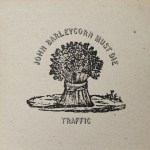
Many years ago, perhaps in 2015, while playing an especially transparent copy of John Barleycorn, we learned something new about the album. Although it was a title I had been playing since it came out all the way back in 1970, apparently things had changed.

This pressing made it clear — really, for the first time — exactly what Winwood was doing with his left hand on the piano during the song Glad.

There are two musical figures that one can focus on: one involving the lower notes, which tend to be blurry, obscured and murky on most pressings, and two, the right-handed higher notes, which are typically much more clear and audible in the mix.

Only the very best copies let us “see” the bass notes of the piano so clearly and correctly. Next time you’re in the mood to compare different pressings of Barleycorn, pay special attention to the lower notes of the piano on Glad. It is our contention, backed by mountains of evidence, that no two copies of the album will get that piano to sound the same. (It will also help if you have large dynamic speakers with which to do the test.)

Lately we have been writing quite a bit about how pianos are good for testing your system, room, tweaks, electricity and all the rest, not to mention turntable setup and adjustment.

  • We like our pianos to sound natural (however one chooses to define the term).
  • We like them to be solidly weighted.
  • We like them to be free of smear, a quality that is rarely mentioned in the audiophile record reviews we read.

(more…)

We Were Way Off the Mark with Stand Up in 2006

Hot Stamper Pressings of Jethro Tull Albums Available Now

Years ago we wrote:

This Island Pink Label Original British pressing has ABSOLUTELY AMAZING SOUND! We mention that there was a Sunray pressing that may have been even better, but I didn’t have this copy in hand to compare the Sunray to, so I can’t be sure that pressing was any better.

This one sounds as good as any I’ve ever heard. 

It’s amazingly dynamic and powerful, yet full of tubey magic. I played almost ten different pressings of this record today (11/08/06): every domestic label variation and a handful of imports. This copy is clearly the best of the batch.

A textbook case of live and learn.

My stereo was dramatically less revealing back then and also I did not know how to clean records properly. Those two facts, combined with the underdeveloped or yet-to-be-developed listening skills that go with them, allowed me to arrive at the wrong conclusion.

In 2006 we simply had not done our homework well enough. I had been an audiophile for at least 31 years by then, and a legitimate audiophile record dealer for 19.

Sure, by 2006 my staff and I had auditioned plenty of the pressings that we thought were the most likely to sound good: the original and later domestic pressings, the early and later British LPs: in other words, the usual suspects.

The result? We were roughly in the same position as the vast majority of audiophiles. We had auditioned a sizable number pressings of the album and thought we knew enough about the sound of the album to pick a clear winner. We thought the best pink label Island pressings had the goods that no other copies could or would have.

But of course, like most audiophiles who judge records with an insufficiently large sample size, we turned out to be completely wrong.

Logic hadn’t worked. None of the originals would end up winning another shootout once we’d discovered the right reissues.

But in 2006, we hadn’t stumbled upon the best pressings because we hadn’t put enough effort into the only approach that actually works.

What approach is that? It’s trial and error. Trial and error would eventually put us on the path to success. We had simply not conducted enough trials and made enough errors by 2006 to find out what we know now.

We needed a breakthrough, and we hadn’t gotten it yet.

(more…)

Clarity Was Never the Point

Hot Stamper Pressings of Live Recordings Available Now

Some audiophiles spend their time listening for details in their favorite recordings. I should know; I was as guilty as anyone of that behavior.

But is that where the music is – in the details? Lots of details come out when one copy is brighter than another.

Brighter ain’t necessarily better. Most of the time it’s just brighter

Listening for the details in a recording can be a trap, one that is very easy to fall into if you are not careful or don’t know where these kinds of pitfalls lie.

801 Live isn’t about clarity. It’s about the sound of a rock concert.

It’s about the raw power of one of the most phenomenal rhythm sections ever captured in performance on analog tape.

That’s what makes it a good test disc. When you play the hardest rocking tracks, the harder they rock, the better.

Next time you try out some audiophile wire or a new tweak, play this record to make sure you haven’t lost the essential energy, weight and power of the sound. This album doesn’t care about your love of detail. It wants you to feel the energy of the band pulling out all the stops. If the new wire or the new tweak can’t get that right, it’s not right and it’s got to go.

(more…)

Magical Mystery Tour – Our Beyond White Hot Copy from 2007

Hot Stamper Pressings of the Music of The Beatles Available Now

Looking back, 2007 seems to have been a milestone year for us here at Better Records, although we certainly did not know that at the time.

Later that same year we swore off Heavy Vinyl for good (prompted by the mediocre sound of the Rhino pressing of Blue) and committed ourselves to doing record shootouts of vintage pressings full time. (Please excuse the overuse of capitals.)


Our Commentary from 2007

The best sounding Magical Mystery Tour ever! Hot Stamper copies of this album are a regular feature on this site, but we’ve NEVER heard one like this — on EITHER side.

We had no choice but to award this album the very rare grade of A++++ (Four Pluses!) on both sides.

Our lengthy commentary entitled  entitled outliers and out-of-this-world sound talks about how rare these kinds of pressings are and how to go about finding them.

We no longer give Four Pluses out as a matter of policy, but that doesn’t mean we don’t come across records that deserve them from time to time.

(more…)

Out of Polarity Stampers for Bang-Baaroom Revealed

Reviews and Commentaries for the Music of Dick Schory

Presenting another one of the many pressings we’ve discovered with reversed polarity on some copies.

An amazing discovery from Better Records. Many copies of this album are have their polarity reversed on side two (the side with Buck Dance, one of the better tracks on that side and a great track for testing).

We had two 4s copies of the album and both of them had side two out of polarity.  


UPDATE

7s on side two is out of polarity too.

Just played one today. There’s practically no real top end extension until you reverse the polarity.

(more…)

Our 2016 Unplugged Shootout Winner Just Sounded More Like Live Music

Hot Stamper Pressings of the Music of Paul McCartney Available Now

Back in 2016 we had this to say about a copy of the album we had just played:

This copy will put you front and center for the single greatest Paul McCartney recorded concert of all time.

In the final round of shootouts on both sides, this copy showed itself as clearly superior in terms of transparency and three-dimensionality, as well as having the most rock solid bottom end. To sum it up, my notes read “so real,” which is exactly what makes this copy THE one to have. This is Paul and his mates LIVE in your listening room like you have never heard them before.

This copy gave us the feeling that we were right there in the audience for the taping of this amazing performance. It made other copies sound like records — good records, but records nonetheless. This one has the IMMEDIACY of a live show, one which just happened to be fronted by one of the greatest performers in the history of popular music, Sir Paul McCartney.

We shootout this album about once a year, which means that many changes will have occurred to the stereo in the meantime. One of the qualities that we noticed this time around was how much like live music this album can be when the pressings have one specific quality — tons of bass.

Live music, especially live music heard in a club, tends to have plenty of bass. It’s the sonic quality that’s by far the most difficult to recreate in the home.

When a record manages to capture that kind of “live” low end energy, it really helps make the connection between the sound of live music and the sound coming out of your speakers.

(more…)

Parallel Lines – We Broke Through in 2016

Hot Stamper Pressings of the Music of Blondie Available Now

Can this kind of music get any better? This album is a MASTERPIECE of Pure Pop, ranking right up there with The Cars first album. I can’t think of many albums from the era with the perfect blend of writing, production and musicianship Blondie achieved with Parallel Lines.

As expected, if you clean and play enough copies of a standard domestic major label album like this one, sooner or later you will stumble upon The One, and boy did we ever.

This side two had OFF THE CHARTS with presence, breathy vocals, and punchy drums. It was positively swimming in studio ambience, with every instrument occupying its own space in the mix and surrounded by air.

There was not a trace of grain, just the silky sweet highs we’ve come to expect from analog done right. 

Gone is the compressed muck of the MOFI (and most domestic pressings, to be fair). In its place is the kind of clarity, transparency and pure ROCK AND ROLL POWER previous pressings only hinted at. I became a giant fan of this album the moment I heard it back in 1978, but the sound always left much to be desired.

So many copies were thick and compressed; the music was cookin’ but the sound seemed to be holding it back.

But there are good sounding pressings, and now we know which ones they are.

What We Think We Know about Scheherazade

More of the music of Rimsky-Korsakov (1844-1908)

Our Favorite Performance of Scheherazade – Ansermet with the Suisse Romande

This post was written in 2014 or so. It’s the story of the breakthrough pressing we discovered that year.

I attended the Dec. 2013 performance of the work at the Disney Hall. Pictured is Mr de Burgos conducting. It was a thrill like no other. (Well, maybe The Planets.)

“Guest conductor Rafael Frühbeck de Burgos’s attention to detail delivers the razzle dazzle and also discovers renewed radiance in ‘Scheherazade.'”

We did a monster shootout for this music in 2014, one we had been planning for more than two years. On hand were quite a few copies of the Reiner on RCA; the Ansermet on London (CS 6212, his second stereo recording, from 1961, not the earlier and noticeably poorer sounding recording from in 1959); the Ormandy on Columbia, and a few others we felt had shown potential.

The only recordings that held up all the way through — the fourth movement being THE Ball Breaker of all time, for both the engineers and musicians — were those by Reiner and Ansermet. This was disappointing considering how much time and money we spent finding, cleaning and playing those ten or so other pressings.

Here it is a year later and we’re capitalizing on what we learned from the first big go around, which is simply this: the Ansermet recording on Decca/London can not only hold its own with the Reiner on RCA, but beat it in virtually any area. The presentation and the sound itself are both more relaxed and natural, even when compared to the best RCA pressings.

The emotional content of the first three movements (all of side one) under Ansermet’s direction are clearly superior. The roller coaster excitement Reiner and the CSO bring to the fourth movement cannot be faulted, or equaled. In every other way Ansermet’s performance is the one for me.

Both Sides

Superb! Big brass, so full-bodied and dynamic, yet clear and not thick or overly tubey. Lots of space as is usually the case with Ansermet’s recordings from this era.

Both sides here are BIG, with the space and depth of the wonderful Victoria Hall that the L’Orchestre De La Suisse Romande perform in. As a rule, the classic ’50s and ’60s recordings of Ansermet and the Suisse Romande are as big and rich as any you’ve heard. On the finest pressings (known around these parts as Hot Stampers) they seem to be the ideal blend of clarity and richness, with depth and spaciousness that will put to shame 98% of the classical recordings ever made.

The solo violin is present and so real you will have a hard time believing it.

This copy is huge in every dimension, just as all the best ones always are, with maximum amounts of height, width, and depth. The transparency is also superb — you really hear into this one in the way that only the best Golden Age recordings allow.

(more…)