
Hot Stamper Pressings Featuring the Violin
Classic remastered this title in the 90s — of course they did, it’s clearly one of the better Heifetz recordings.
As expected, Classic’s remastered pressing of the Sibelius Violin Concerto (LSC 2435) was awful, as bad as LSC 1903, 1992, 2129 and others too numerous to list.
(There is one Classic violin concerto record that is actually better than every RCA Living Stereo we have ever played — which amounts to scores of them since we have done shootouts for them all — and one of these days you will be able to read about it right here on this very blog!)
The Classic is both aggressive and lacking in texture at the same time, the worst of both worlds.
Bernie’s cutting system is what I would call Low Resolution — the harmonics and subtleties you would expect to hear are simply not there. He brightens the tonal balance, causing screechy strings whenever they get loud.
The world is full of these kinds of third-rate records. They make up the bulk record collectors’ collections as well as the ones audiophiles have sitting on their shelves.
Old School
The Classic is clearly better suited to the old school duller, less-revealing audio systems of the 60s and 70s rather than the modern systems in use today by audiophiles who have done the work.
These reissues used to sound good on those older systems, and I should know, I used to have an old school stereo, and some of the records I thought sounded good in the dark days of the 80s and 90s don’t sound too good to me anymore (although this one never did,. I regret to say I did sell them, but in my defense let me add that I never recommended them when they were coming out by the dozens all through the 90s).
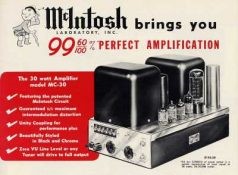 Even as late as the 90s and early 2000s, our old system was tubier, tonally darker and dramatically less revealing, which strongly worked to the advantage of leaner, brighter, less Tubey Magical titles such as this one.
Yes, I actually owned the ridiculously slow and colored Mac 30s you see here inaddition to the EAR 834p phono stage, which added more of the same kind of colorations.
Other audiophiles I knew had a system which suffered from similar afflictions.
Like most audiophiles, I thought my stereo sounded great.
And the reality is that no matter how hard I worked or how much money I spent, I would never have been able to achieve top quality sound for one simple reason: most of the critically important revolutionary advances in audio had not yet come to pass.
It would take many technological improvements and decades of effort until we here at Better Records would have anything like the system we do now.
We play mediocre-to-bad sounding pressings so that you don’t have to, a public service from your record-loving friends at Better Records.
We have an audiophile record hall of shame for records that were marketed to audiophiles with claims of superior sound. If you’ve spent much time on this blog, you know that these records are some of the worst sounding pressings we have ever had the misfortune to play.
We routinely put them in our Hot Stamper shootouts, head to head with the vintage records we offer. We are often more than a little surprised at just how bad an “audiophile record” can sound and still be considered an “audiophile record.”
If you own any of these so-called audiophile pressings, let us send you one of our Hot Stamper LPs so that you can hear it for yourself in your own home, on your own system. Every one of our records is guaranteed to be the best sounding copy of the album you have ever heard or you get your money back.
Further Reading