Japanese LPs – Reviews, Commentaries, etc.

Getz Au Go Go – Live and Learn

Hot Stamper Pressings of Bossa Nova Albums Available Now

A classic case of We Was Wrong.

Many years ago we had written these silly lines in a review:

Of course, you would never know this is a good recording by playing the average domestic copy. This Japanese LP is one of the few pressings that can show you that this wonderful smoky night club jazz LP really can have Demo Disc sound.

Ridiculous, right? Well, at the time we believed it. Now our understanding is quite a bit more sophisticated, in the sense that the Japanese pressing is clearly better than many originals, but certainly not all of them.

More importantly, there are amazing sounding domestic reissues of the album that we’ve auditioned over the last ten years or so that really blew our minds and helped to set an even higher standard for the sound of Getz Au Go Go.

Our old story:

Way back in 2005 I discussed this very subject when listing a sealed copy:

There are pressing variations for this title on Japanese vinyl, and there’s no way to know what this one sounds like but all of them are better than any other pressing I know of. As I played the open copy we have listed on the site (1/12/05) I couldn’t help but marvel at the quality of the sound.

These days we would crack open a sealed one, clean it up and shoot it out with any others we could lay our hands on, because finding a copy with sound like this is a positive THRILL.

I’m no fan of Japanese pressings as readers of this Web site know very well, but the Japanese sure got this one right!

The domestic copies of this album are mediocre at best — there’s simply no real top end to be found on any Verve pressing I have ever heard.

The top end is precisely where the magic is! Astrud Gilberto’s breathy voice needs high frequencies to sound breathy.

Gary Burton’s vibes need high frequencies to emerge from the mix, otherwise you can hardly hear them.

And Stan Getz’s sax shouldn’t sound like it’s being played under a blanket.

The only version of this album that allows you to hear all the players right is a Japanese pressing, and then only when you get a good one.

That was our understanding in 2005, after being seriously into audio and records for 30 years, as a professional audiophile record dealer for 18 of them. Clearly we had a lot to learn, and we were on the road to learning it, having embarked on our first real Hot Stamper shootout just the year before. (We had been doing them less formally since the ’90s of course. It was only in 2004 that we were able to do them with the requisite scientific protocols in place.)

In 2005, we simply did not have the cleaning system or the playback system capable of showing us what was wrong with the sound of the Japanese pressing we were so impressed by at the time.

(more…)

Are You a Soundphile? I Used to Be One

More of the music of Joseph Haydn (1732-1809)

About 30 years ago I got hold of a Japanese pressing of Marriner conducting The Toy Symphony and was blown away by the quality of the sound. When listing the record for sale, I raved:

“DEMO QUALITY SOUND! This is the best sounding Toy Symphony you will ever hear!”

Now we know definitely that this is clearly not true.

We did the shootout in 2022 and found out that the best of the original EMI pressings are quite a bit better, a classic case of live and learn.

I believe I had at least one or two UK EMI pressings to play against the Japanese ones, but all the details of how I came to this conclusion — a proto-shootout, carried out long before I knew how to do a real one — are lost to the mists of time.

My stereo was dramatically less revealing back then, I had not learned how to clean records properly, and those two facts, combined with the underdeveloped listening skills that go with them, helped me to arrive at the wrong conclusion.

No, the Japanese pressing, specifically targeted to audiophiles, or “soundphiles” if you like, is not superior to a properly mastered and pressed UK LP.

If you have more than a handful of Japanese pressings in your collection, you can be sure that there is still plenty of room for improvement in your audio system.

(more…)

Letter of the Week – “…never heard the details in the guitars and cymbals and keyboards like this.”

Pink Floyd Hot Stamper Pressings Available Now

One of our best customers, Roger, received his $150 Hot Stamper [those were the days!] ’Wish You Were Here’ and went straight to work comparing it with the various other pressings he owned: two different CBS Half Speeds. The not-so-shocking results are presented in detail below.

Hi Tom,

I received your Pink Floyd ‘Wish You Were Here’ Hot Stamper and compared it to my CBS Half-Speed (I found a bunch of these Half-Speeds in a bargain bin years ago and did a shootout to select the best one) and the pressing that I considered the best, the Japanese Mastersound Half-Speed, for which I paid dearly.

Drum roll, please while Vanna hands me the sealed envelope………… and the winner is: Surprise — the Hot Stamper!

And it wasn’t even close.

Once I heard the center-of-the-earth bass on the Hot Stamper ‘Shine On You Crazy Diamond’, it was all over. I was amazed at how bright the CBS was, transparent yes, but bright and no bass and no body to the saxophones and voices. The Mastersound was better-balanced in that the highs were tamed, but no real dynamics and the bass was flabby.

I have heard this record hundreds of times, but never heard the details in the guitars and cymbals and keyboards like this.

And did I mention the huge, huge soundstage with a wall of sound like that of other Pink Floyd records? Nice job as usual.

Roger,

Thanks for verifying the accuracy of our Hot Stamper claims once again. The decent sounding Half Speed Mastered records, CBS and otherwise, can be counted pretty easily on one’s fingers. We could debunk them all day long if we wanted to (and had ten times the staff). It doesn’t take long to hear how anemic the sound is compared to The Real Thing, the real thing being, of course, a vintage pressing.

The copy you bought was rated A Plus on both sides, two full sonic grades below the best, so you can imagine how good those copies sound. But since neither you nor I are made out of money, for $150 you now own a copy that will trounce anything you throw at it, especially if what you throw at it is an audiophile pressing.

Those moribund LPs belong on Ebay where all the Technics turntable owners of the world can find them in order to complete their — let’s be honest — silly and ultimately pointless audiophile collections.

Modern equipment shows half-speed foolishness for what it is. You heard it, we heard it, and slowly but surely we are spreading the word to the rest of the audiophile community.

Thanks again. It’s a big job and we need all the help we can get.

(more…)

The Three at 45 RPM – Our Four Plus Copy from 2013

Hot Stamper Pressings of The Three Available Now

We had six (yes, six!) of these 45 RPM pressings (and five Inner City’s and a couple of Eastwind 33’s — it was a big shootout), and this side one had the most ENERGY of any of them. This is a quality no one seems to be writing about, other than us of course, but what could possibly be more important? On this record, it took the performances of the players to a level beyond all expectations.

Our lengthy commentary entitled outliers and out-of-this-world sound talk about how rare these kinds of pressings are and how to go about finding them.

We no longer give Four Pluses out as a matter of policy, but that doesn’t mean we don’t come across records that deserve them from time to time.

This album checks off a number of important boxes for us here at Better Records:

Folks, you are looking at the BEST SOUNDING RECORD we have ever played here at Better Records, and the good news for you dear reader, whether you’re a true believer, a skeptic, or fall somewhere in-between, is that it can be yours. There was a time when a record like this would go directly into my collection. If I wanted to impress someone, audiophile or otherwise, with the you-are-there illusion that only Big Speakers in a dedicated room playing a LIVE recording can create, this would be the clear choice, possibly the only choice. There is simply nothing like it on vinyl in my experience. (more…)

Guilty – Bab’s Best

More of the Music of Barbra Streisand

This ain’t no zombie audiophile BS, the kind of sleep-inducing, reverb-drenched trash that passes for “female vocals” in bad audio showrooms around the globe. (Paging Diana Krall.) This is Barbra and The Bee Gees at the peak of their Pop Powers. It just doesn’t get any better.

This is THE BEST ALBUM Babs ever made, and you can take that to the bank. It’s also one of the best sounding, if not THE best sounding of her later Monster Pop Productions. Can’t say for sure as I haven’t played all that many. Her first album is a true Demo Disc as well, but that one’s all about the Tubey Magical ’60s Columbia era, the Golden Age of Natural Sound, a world away from Guilty and its layers and layers of tracks. Having said that, there are multi-tracks and then there are multi-tracks.

The engineers and producers here pull it off brilliantly.

If you don’t feel something deep inside when playing this record, open up a vein and let some of that ice water that passes for blood in your system run out.

It’s From WHERE?

This very copy was on the site for a long time. Nobody wanted to buy it even though it was quite cheap, and there’s a good reason nobody wanted to buy it: it’s a Japanese pressing.

That’s right, it’s one of those typically awful Japanese pressings that we criticize endlessly on the site, the purest form of audiophle BS vinyl in the history of the world. We played side one and heard the kind of sound that did not exactly float our boats. (Before it was cleaned it really sounded bad.)

But when we filpped it over we were positively KNOCKED OUT by the sound and decided it had to be part of our shootout. While evaluating the record the listening panel (mostly me) had no idea which pressing was playing. When the Side Two A Triple Plus Gold Star was awarded to this much-maligned Japanese pressing we were FLABBERGASTED.

(more…)

If You Are At All Serious About Audio, You Cop to Your Mistakes

Hot Stamper Pressings of the Music of Steely Dan Available Now

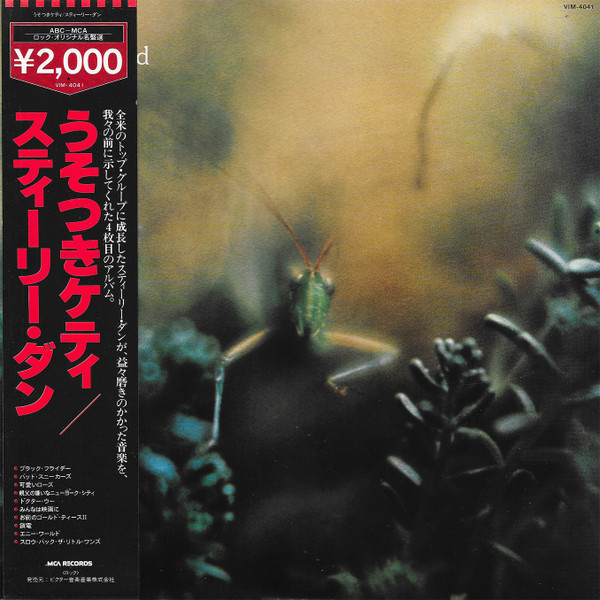
And to think I used to swear by this pressing of Katy Lied — specifically the 2000 Yen reissue, not the 1500 Yen original, which sounded dull, more like the average domestic original I was trying to better.

This one is brighter and cleaner, but at the cost of more distortion, more congestion and, now that I have a better understanding of records and their variations, an incorrect tonal balance. The Japanese tried to fix the smooth sound of the dubbed tape they were given and, in so doing, ruined what was good about the sound. 

Another example of just how wrong one can be — one, in this case, being me circa 1995.

Let’s Talk About Us

We happily admit to our mistakes because we know that all this audio stuff and especially the search for Hot Stampers is a matter of trial and error.

We do the trials; we run the experiments,

That’s the only way to avoid the kinds of errors most audiophiles make in their quest to find the best sounding pressings of their favorite albums,.

Being skeptical of every claim you have not tested for yourself is key to getting good results from this kind of work.

Of course, being human we can’t help but make our share of mistakes. More than our share; we’ve made them by the hundreds.

The difference is that we learn from them. We report the facts to the best of our ability for every shootout we do.

Every record gets a chance to show us what it’s made of, regardless of where it was made, who made it or why they made it. 

If we used to like it and now we don’t, that’s what you will read in our commentary. Our obligation is to only one person: you, the listener. (Even better: you, the customer. Buy something already and see what you have been missing.)

On every shootout we do now, if the notes are more than six months old, we toss them out. They mean nothing. Things have changed, radically, and that’s the way it should be.

With each passing year you should be hearing more of everything on your favorite LPs.

That’s the thrill of this hobby — those silly old records just keep getting better. I wish someone could figure out how to make digital get better. They’ve had forty years and it still leaves me wanting more. You too, I’m guessing.

(more…)

Beethoven’s ‘Appassionata’ – A Superb Direct to Disc Recording

More of the music of Ludwig van Beethoven (1770-1827)

More Direct-to-Disc Recordings

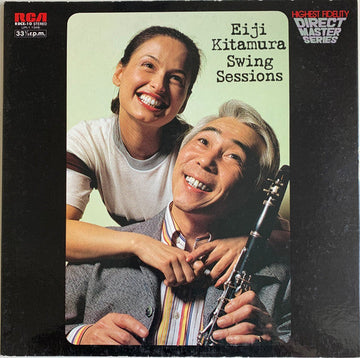
A famous resident of the TAS list, this album offers excellent music, performed with feeling, and recorded properly, the best of all possible worlds for us audiophiles.

A friend of mine tells me that Kamiya plays this piece exactly the way Horowitz did, and that’s probably a good thing. Good luck finding a Horowitz recording that sounds like this. Or plays this quietly.

You will have a hard time finding a better recording of the piano than this. It’s one of the all time great Direct-to-Discs.


Further Reading

Who’s Next – An Overview

More of the Music of The Who

The following was written in the early 2000s. Some of the commentary has been added or modified.


Who’s Next has been remastered for audiophiles many, many times, more often than not quite badly in our opinion.

To be fair, we should point out that our opinion has changed quite a few times over the course of the last twenty years.

This then is our story.

MCA MASTERPHILE

Back in the days when I was foolishly in the thrall of half-speed mastered audiophile pressings, I thought that the MCA Masterphile was king. That was probably the mid to late ’80s.

BRITISH TRACK LABEL ORIGINALS

By the early 90s I had discovered how good the Black Label Original British Track pressings could be and started preferring those. A bit murky but Tubey Magical, full and rich, precisely the way a good British Rock recording (Faces, Jethro Tull) should be.

JAPANESE AND GERMAN

Of course by then I had played numerous Japanese and German pressings, none of which sounded right to my ears, then or now. The Japanese did what they like to do to most of the records they master, from whatever dub tapes are sent to them: they brighten up the sound.

When I had much darker, less-revealing system, the Japanese pressing did better than most of the other pressings I played.

But it was wrong, and the better my stereo got the more wrong it sounded. This process comes under the general heading of audio progress 

MCA HEAVY VINYL

In 1995 the MCA Heavy Vinyl version came out, mastered by Kevin Gray. I quite liked it at the time but no longer do; it’s brightened up, opaque, airless and much of the fine detail of the recording is missing, all due to the crude cutting system Kevin employed at the time. It’s also notoriously badly pressed, resulting in stitches in the vinyl that are audible on practically every copy. (more…)

Does It Seem to You That This Guy Knows Much About Dark Side of the Moon?

Hot Stamper Pressings of the Music of Pink Floyd Available Now

It doesn’t to me, but I admit to some bias when it comes to DSOTM. I must have played more than a hundred different pressings over the last forty-odd years.

Year after year I was sure I understood exactly which copies had the best sound, and again and again I was proved wrong. (To be clear, I proved myself wrong. Shootouts have a way of doing that kind of dirty work.)

We only found out what the best sounding versions were about five or six years ago [make that ten]. We did that by doing shootout after shootout with every version we could lay our hands on, starting around 2005. We even did a shootout for two different Mobile Fidelity pressings many years ago, which we think makes for some good reading to this day.

It’s especially good reading for those who don’t appreciate how dramatic pressing variations can be for even quality controlled limited editions. The comparison of the two MoFi’s centers around the idea that midrange tonality is by far the most important quality to listen for on Dark Side, and that, surprisingly to some audiophiles, but obviously not to us, there are MoFi pressings with a correct midrange and there are some without.

Is this fellow listening for midrange tonality? If you watch the video and he says he is, then you can let me know!  And if not, you can ask him in the comments why he wasn’t. Maybe he just likes the chiming clocks and the deep bass of the heartbeat.

Some audiophiles have been known to ignore fundamentals such as a proper midrange when comparing records.

And picking six random copies of six different pressings is not exactly approaching the problem scientifically either of course. It is a clear violation of the first cornerstone of Hot Stamper shootouts, which clearly states the following, accent on the must:

  1. You must have a sufficient number of copies to play in order to find at least one “hot” one.

Impressive Records? Not Really

Most of the versions of DSOTM that this individual is reviewing have never impressed us sonically. They are the pressings that most audiophiles have probably heard about and read about in the magazines and on forums. If you know practically nothing about the album going in, these might be the six pressings you would consider playing against each other in a shootout. To be charitable, I suppose you could call it a good start.

Our reviewer seems to be the type who puts a great deal of faith in so-called audiophile pressings — the Japanese Pro-Use Series, the UHQR — the kinds of records that sound more and more artificial and/or mediocre to us with each passing year.

If your stereo is not showing you what’s wrong with these kinds of records, you have your work cut out for you. This is especially true of some of the Ultra High Quality Records put out my Mobile Fidelity in the early ’80s, like this one.

Our Take on DSOTM Pressings

The domestic pressings we have auditioned over the years have never made it into a real shootout. They have always sounded far too flat and veiled to be taken seriously. There are some very good sounding Pink Floyd pressings on domestic vinyl — Wish You Were Here and The Wall can both sound amazing on domestic vinyl — but Dark Side is not one of them in our experience.

(more…)

Compromised Recordings Versus Purist Recordings – If It’s About the Music, the Choice Is Clear

More Entries from Tom’s Audiophile Notebook

That guy you see pictured to the left has spent much of the last forty years wandering around used record stores looking for better records (ahem). Before that he wandered around stores selling new records because he didn’t know how good old used records could be.

Here are some of the things he’s learned since he started collecting at the age of ten sixty years ago. (First purchase: She Loves You on 45. It’s still in the collection, although it cracked long ago and is no longer playable.)

This commentary was written circa 2006. The Hot Stamper world was very different then. A few dozen had been done since 2004, and probably not nearly as well as we thought at the time, truth be told.


A while back one of our good customers wrote to tell us how much he liked his Century Direct to Disc recording of the Glenn Miller big band, one of the few really amazing sounding direct discs that contains music actually worth listening to. Which brought me to the subject of Hot Stampers. 

Hot Stamper pressings are almost always going to be studio multi-track recordings, not direct to discs of live performances.

They will invariably suffer many compromises compared to the purist approach of an audiophile label trying to eliminate sources of distortion in the pursuit of the highest fidelity.

But when they do that, they almost always fail. How many Direct Discs sound like that Glenn Miller? A dozen at most. The vast majority are just plain awful. I know, I’ve played practically every one ever made. For more than a decade I made a living selling them.

Thankfully that is no longer the case, although we do have a handful of direct discs that we still do shootouts for, such as The Three, Glenn Miller, Straight from the Heart and the odd Sheffield.

Compromised Recordings

What we do play is those very special, albeit compromised, mass-produced pressings. The right Londons and Shaded Dogs. Columbia and Contemporary jazz. Brewer and Shipley. Sergio Mendes. The Beatles. The Doobie Brothers for Pete’s sake!

Why? Because those pressings actually communicate the music. They allow you to forget about the recording and just listen. You can’t do that very often with the CD of the album. You can’t even do it with most of the vinyl pressings you run into. You certainly can’t do it with the vast majority of 180 gram LPs being made today, not in our experience anyway.

You have to have the right pressing. That’s what a Hot Stamper is: more than anything else, it’s the right pressing.

It’s the one that really lets the music come through, regardless of whatever compromises were made along the way.

(more…)