HV Dstr

Here you will find some of the Heavy Vinyl disasters we’ve played, numbering 194 as of March, 2025, with surely more to come.

Bachelor No. 2 – MoFi Reviewed

More Rock and Pop Personal Favorites

An Audiophile Hall of Shame pressing and another Mobile Fidelity LP incompetently mastered for the benefit of those given to falling for easy answers and quick fixes.

I had not actually played the LP when I reviewed the MoFi CD, noting that the CD sounded great and that I expected the vinyl to be even better. In 2006 I should have known better but apparently I did not.

Mea culpa.

Boy, was I ever wrong. The vinyl has a bad case of sucked-out half-speed midsIt’s far too polite and lifeless to be taken seriously.

Is it the worst version of the album ever made? Since every CD I own sounds better, that would seem to be the case.

The comments about the music of course still apply — it’s brilliant — but I recommend the Gold or regular CD over this audiophile Heavy Vinyl pressing.

I used to consider this Mann’s One True Masterpiece. It’s actually her co-masterpiece, taking its place alongside the amazing I’m With Stupid, which is more of the rocker side of Mann. This is her Burt Bacharach side, prettier, sweeter and more melodic. Both are brilliant.

Aimee Mann is one of a handful of artists from the ’90s who actually makes music that can hold its own against the best popular recordings of the last forty years. There are few albums that I prize more highly or that have provided me with more musical satisfaction than those by Aimee Mann.

If you don’t know her music try one or both of the above-mentioned titles. Modern pop music just doesn’t get any better.   (more…)

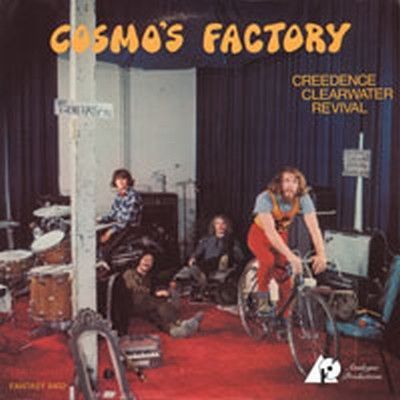
Why Would Anyone Want to Take All the Fun Out of CCR’s Music? Part Two

More of the Music of Creedence Clearwater Revival

This commentary is at least ten years old. Still holds up though!

The last time I played one of Chad’s CCR pressings, which I confess was close to a decade ago, it had all the bad qualities of the Bonnie Raitt disc on DCC, a sound that I’ve grown to dislike more with each passing year.

But what the new AP version really gets wrong is the guitar sound.

Creedence’s music lives or dies by its grungy guitars, and the AP pressing is as wrong as they come.


Latest Findings as of 2022

This commentary used to end this way:

The fat, smeary, overly-smooth guitars you hear on the record, lacking any semblance of the grungy energy that are the true hallmarks of this band’s recordings, probably means that some audiophile mastering engineer got hold of the tapes and tried to “fix” what he didn’t like about the sound.

You know, the sound that is all over the radio to this very day. Something was apparently wrong with it. So now that it’s been fixed, everything that’s good about CCR’s recordings is missing, and everything that has replaced those sonic elements has made the sound worse.

Nice job! Keep up the good work. Chad is proud of ya, no doubt about it.

It has now become clear that the various mastering engineers Chad hires are not the ones trying to fix what they don’t like about the sound. Chad is El Jefe, the one telling them what to fix and rejecting their work until these remastered albums sound the way he wants them to sound.

There is no use complaining about the awful work Doug Sax, Steve Hoffman, Kevin Gray, George Marino or anyone else did when hired to master for Analogue Productions. Their task was to please Chad. He is the customer, he is the one paying their fees, and he is the one getting the sound he wants.

He apparently thinks he is saving the world from bad sound, but we sure don’t see it that way. Just the opposite in fact.

If Chad wanted better sounding records — records that are more lively, more tonally accurate, less bloated down low and less smoothed-over up top — veteran engineers such as the gentlemen named above would surely have been able to master these titles more correctly than the evidence provided by the records would lead you to believe.

But Chad, like many other audiophiles, is a My-Fi guy, not a Hi-Fi guy, and he likes the sound he likes, regardless of what is on the master tapes or what other pressings — mastered by a number of different engineers, often over the course of many decades — might sound like.

He wants the sound he wants, and their job is to give it to him.

Bernie Grundman, the man in charge of remastering Aja, is finding out that his way is not going to work for Chad. If it takes seven test pressings before Aja has the sound Chad likes, then he will just have to keep working it until Chad hears “his Aja” sounding the way it should.

When it finally comes out, I have no doubt that it will be very different from any pressing of Aja you or I have ever heard. It won’t sound much like the early pressings that Bernie Grundman mastered for ABC in 1977, which are of course the ones we sell. Unless I miss my guess, it will be very different from the master tape. (Something I freely admit I have no way of ever knowing.)

It will sound the way Chad likes music to sound. He paid a small fortune for the privilege of making Steely Dan sound the way he wants them to sound. Now that the die is cast, those of us with good stereos and basic critical listening skills can go pound sand. The mid-fi guys are being pandered to — in the audiophile world, that’s where the Heavy Vinyl money is — and expecting anything else from this atrocious label means you haven’t been listening very carefully to the records they’ve been releasing for more than 30 years.

Will I Like the New Steely Dan Remasters?

If you think this pressing of Tea for the Tillerman sounds good, it’s a near certainty you will want to be the first on your block to collect all the newly remastered Steely Dan Heavy Vinyls.

The same goes for this pressing of Stand Up. If this is the sound you are looking for, you can be sure Chad will give it to you, good and hard (apologies to H.L. Mencken).

Do these records sound fine to you? You’re happy with them, are you?

Then you have much to look forward to with the release of the complete Steely Dan LP collection!

These Analogue Productions releases will no doubt share many of the sonic characteristics of the above-mentioned titles.

How could they not? They are guaranteed to sound the way Chad wants them to sound. Chad is the customer, and the customer is always right.

If you’re Bernie Grundman, it might take you six or seven runs at it until you find that indescribable and elusive “Chad” sound, but you will have to keep at it until you do, assuming you want to get paid.

Our review for the first of the series that we’ve had the chance to play is in, and here it is.

Could it have been worse? Absolutely. Is it really very good? No, it’s not.

Considering his dismal track record, it’s probably as good sounding a record as Chad is able to make.

To paraphrase Cormac McCarthy:

It’s a mess of a record, ain’t it, Tom?

If it ain’t, it’ll do till a mess gets here.

(more…)

A Night at the Opera – A DCC Disaster

Hot Stamper Pressings of the Music of Queen Available Now

Sonic Grade: F

This DCC pressing is a disaster, one of the worst releases that Kevin Gray and Steve Hoffman ever mastered.

Murky, opaque and compressed: yes, we can agree it has never been an especially good sounding record on anything but the most difficult to find UK pressings [and we know exactly which ones those are now, which only makes this record sound even worse in comparison], but does it deserve this kind of mastering disrespect?

Isn’t the idea to try and FIX what is wrong, rather than to make it worse?

Whether made by DCC or any other label, starting at some point in the mid-90s many audiophile pressings started to have a shortcoming that we find insufferable these days — they are just too damn smooth.

At collector prices no less. Don’t waste your money.

Is it the worst version of the album ever made?

That’s hard to say. But it is the worst sounding version of the album we’ve ever played, and that should be good enough for any audiophile contemplating spending money on this kind of trash. Our advice: don’t do it.

(more…)

Chad Has Served Poor Jethro Tull Most Barbarously

Hot Stamper Pressings of the Music of Jethro Tull Available Now

With a nod to our old friend, John Barleycorn.

We were finally able to get our hands on Analogue Productions’ newly remastered Stand Up, an album we know well, having played the British copies from every era by the score. Our notes for the sound can be seen below.

If ever a record deserved a “no” grade, as in “not acceptable,” this new 45 RPM pressing mastered by Kevin Gray deserves such a grade, because it’s just awful. (This link will take you to a great many more records best avoided by audiophiles in search of better sound. Although we’ve only linked to about 75 pressings here on the blog, it should be noted that the world is full of bad sounding records.)

But let’s put that grade in context. The last time a good sounding version of Stand Up was released, as far as we can tell, was 1989, and that version was the Mobile Fidelity Gold CD. I bought mine soon after it came out. I wasn’t even planning on buying a CD player when the Compact Disc was first invented, but then Mobile Fidelity played a dirty trick on me. Instead of releasing Loggins and Messina’s first album on vinyl, they put it out exclusively on CD as part of their Silver MFCD series.
As a die-hard MoFi fan, that sealed the deal: now I had to buy a CD player. I picked up a cheap Magnavox player, the 1040. I think it ran me less than $100, and played my new Sittin’ In CD, which, as I recall, sounded pretty good. (One of my other early CD purchases was Tumbleweed Connection, the regular label release, and it was dreadful.)

I still own Stand Up on Gold CD, and I still find it superb in every way. (Many of the MFSL Gold CDs from this era are excellent and worth seeking out.)

It sounds nothing like this new vinyl release, and that’s a good thing.

On vinyl, Stand Up has rarely been given the care it deserved. The last version of Stand Up to have sound we would want to listen to was pressed in the UK in the early ’70s. That was close to fifty years ago.

We sold some domestic pressings of the album back in the early 2000s, describing them at the time as made from dub tapes with all the shortcomings that entails, but mastered very well from dub tapes. The best domestic pressings are rich, smooth, tonally correct and natural sounding. They’re too dubby to sell as Hot Stampers, but they are not bad records. Some later Chrysalis pressings are big and open, but often they are too thin and bass-shy for the music to work. We’ve never taken them seriously.

It wasn’t long before we’d eliminated everything but the early UK pressings for our shootouts, and we quickly discovered that the earliest of the UK pressings on the older Island label were not good at all. We wrote about the problem with some originals more than ten years ago.

What was surprising about the shootouts we had done in past years was how disappointing most of the early British pressings we played were. They were flat, lacked energy and just didn’t rock the way they should have.

We learned the hard way that most British Pink label pressings aren’t especially rich, that some are small and recessed, and some are just so smeary, thick and opaque that they frustrate the hell out of you as you’re trying to hear what any of the musicians other than Ian Anderson is doing.

So when a reviewer comes along and says something positive about the new pressing compared to some unidentified original, we appreciate the problem that is at the root of his mistaken judgments:

Here’s the deal: if the goal was to duplicate the original pink label Island sound, this reissue misses that, which is good because this new double 45 reissue is far superior to the original in every possible way.

The tape was in great shape, that’s for sure. Clarity, transparency, high frequency extension and especially transient precision are all far superior to the original. Bass is honest, not hyped up and the mastering delivers full dynamics that are somewhat (but only slightly), compressed on the original. Ian Anderson’s vocals are naturally present as if you are on the other side of the microphone. Most importantly, the overall timbral balance sounds honest and correct. But especially great is the transient clarity on top and bottom.

If you’re fortunate to have an original pink label Island, at first you might think the sound is somewhat “laid back”, but that’s only because the mids and upper mids are not hyped up as they are on the original. That adds some excitement, but it clouds the picture and greatly obscures detail.

If you scroll down to our notes, you will see what we thought of the “laid back” sound this reviewer talks about. (Keep in mind that we first read the above review mere moments ago.)

We think “smaller, thick and stuck in the speakers” may be someone’s idea of “laid back,” but, just so there is no misunderstanding, it’s our idea of “awful.”

None of these are good things. Our Hot Stamper pressings are never small, thick or stuck in the speakers. They’re the records with the opposite of that sound. Our records are big, transparent and open. That’s why we can charge so much money for them and have people scooping them up from our Wednesday mailer the moment they become available.

They deliver the big, bold sound that the brilliant engineer for the album, Andy Johns, was known for. Laid back was not in his vocabulary.

Here is more of what we heard on side one.

Jeffrey Goes to Leicester Square

“Transients are sharp but body is dull. Kinda phony.”

Phony sound is the key here. Messing with the EQ in the mastering benefits some aspects of the sound at the expense of others.

Nothing new there. Audiophile pressings with wacky EQ are the norm. I would be surprised if any common Reprise pressing from back in the day wouldn’t sound more “right,” more tonally correct, more seamless. I’ve played quite a few and I don’t recall ever hearing one sound “phony.”

On side two we played the first two tracks.

(more…)
In Through The Out Door – Another Classic Records Bomb

More of the Music of Led Zeppelin

Reviews and Commentaries for the Music of Led Zeppelin

Sonic Grade: F

After finishing our first shootout for this album in August of 2007, our faces were sure red. We used to think the Classic version was pretty decent, but the best originals SLAUGHTER it! We had never done a shootout for this album before that. We didn’t feel up to the challenge, because most pressings tend to be miserable — gritty, grainy, hard sounding, with congested mids, dull, and so on.

The best pressings of this album sound AMAZING, but they are few and far between. The test is an easy one — a copy that makes you want to turn up the volume is likely a winner. The Classic does not pass that test.

We threw one on and just couldn’t deal with the edgy vocals and upper midrange boost. As far as we’re concerned, there’s no substitute for The Real Thing.

As hard as it may be to find great sounding copies of this album, it’s positively impossible to sit through Classic’s version.


I used to think the Classic Records pressing was a decent enough record.

Then my stereo got a lot better, which I write about under the heading Progress in Audio.

Eventually it became obvious to me what was wrong with practically all of the Heavy Vinyl pressings that were put out by that label.

The good ones can be found in this group, along with other Heavy Vinyl pressings we liked or used to like.

The bad ones can be found in this group.

And those in the middle end up in this group.

Audio and record collecting (they go hand in hand) are hard. If you think either one is easy you are very likely not doing it right,, but what makes our twin hobbies compelling enough to keep us involved over the course of a lifetime is one simple fact, which is this: Although we know so little at the start, and we have so much to learn, the journey itself into the world of music and sound turns out to be both addictive and a great deal of fun.

Every listing in this section is about knowing now what I didn’t know then, and there is enough of that material to fill its own blog if I would simply take the time to write it all down.

Every album shootout we do is a chance to learn something new about records. When you do them all day, every day, you learn things that no one else could possibly know who hasn’t done the work of comparing thousands of pressings with thousands of other pressings.

The Law of large numbers[ tells us that in the world of records, more is better. We’ve taken that law and turned it into a business.

It’s the only way to find Better Records.

Not the records that you think are better.

No, truly better records are the records that proved themselves to be better empirically. We employ rigorous scientific methodologies that we have laid out in detail for anyone to read and follow.

Being willing to make lots of mistakes is part of our secret, and we admit to making a lot of them

(more…)

On LSC 2222, How Does the Classic Records Heavy Vinyl Compare?

Hot Stamper Pressings of the Music of Claude Debussy Available Now

In 2005 we played an excellent original pressing of Debussy’s Iberia (LSC 2222) and compared it to the Classic Records reissue. We wrote:


This is a wonderful sounding Shaded Dog pressing. Side two is especially dynamic.

This has long been considered one of the Living Stereo triumphs. The spaciousness and tonal correctness are legendary.  However, this copy does not have the prodigious bass of some that I’ve heard.

The Classic reissue has plenty of deep bass, but it’s shrill and hard and altogether unpleasant, so the better bass comes at a steep price.

For better sounding recordings of Iberia, we know of two and they can be found by clicking here.

(more…)

The Hunter – A Cisco Disaster

More of the Music of Jennifer Warnes

More Reviews and Commentaries for Audiophile BS LPs

Sonic Grade: F

An Audiophile Hall of Shame pressing from Cisco/Impex/Boxstar.

Some of the worst sound I have ever heard in my life. An absolute disgrace, both sonically and musically. 

If you like your Heavily-Processed Big Production Pop [1] to sound as unnatural as possible, this is the album for you.

Not one instrument sounds remotely like it should, and that is surely an insult to audiophiles of every stripe.

The problem was that so many self-identified audiophiles did not seem bothered by the execrable sound, certainly not the way we were.

Oh, but it’s on vinyl! That solves all the problems with the recording, doesn’t it?

Yes, the CD was bad, but the vinyl was no better. I had them both and couldn’t tolerate the sound of either of them.


[1] Note that some of our favorite records are on this list. Yes, they are heavily-processed, “unnatural” recordings, but the engineers, producers and artists who worked on these albums were attempting to create a unique sound for the music they were making, not recreate one, and in many cases the results of their efforts are some of the most powerful and enjoyable albums we’ve ever played.


The only album we like by Ms Warnes is Famous Blue Raincoat

It is her Masterpiece, a Core Collection record, and a clear case of One and Done.

When you have a good copy of Famous Blue Raincoat, you have all the Jennifer Warnes you will ever need.

(more…)

The First Classic Record We Ever Played – Thus Spake Zarathustra

Hot Stamper Pressings of Living Stereo Titles Available Now

Way back in 1994, long before we had anything like the system we do now, we were finding fault with the “Classic Records Sound.”

With each passing year — 28 and counting — we like that sound less.  Some Classic Records pressings may be on Harry’s TAS list — disgraceful but true — but that certainly has no bearing on whether or not they are very good records. 

I had a chance to play LSC 1806 (pictured above) not long ago and I was dumbfounded at how bright, shrill and aggressive it was.

I still remember playing my first Classic Records title, their first release, which would probably have been in 1994. The deep bass of the organ at the start of Also Sprach Zarathustra, the horns and the tympani blasting out from a dead silent background, put a lump in my throat. Had they actually managed to remaster these old recordings so well that the vintage pressings I was selling for such high prices would soon be worthless? I really do remember having that thought race through my mind.

But then the strings came in, shrieking and as bright as the worst Angel or DG pressing I’d ever heard. It was as if somebody had turned the treble control up on my preamp two or three clicks, into ear-bleeding territory. All my equipment at the time was vintage and tube, and even though my system erred on the dark side tonally, the first Classic release was clearly off the charts too bright and transistory, with none of the lovely texture and sheen that RCA was famous for in the early days of Living Stereo.

I knew right then that my vintage record business was safe.

Here is our review from the ’90s, written shortly after the release of Classic’s first three titles. (With minor additions and changes for clarity and context.)

Hall of Shame Pressings, Every One

I’m reminded of the nonsense I read in TAS and elsewhere in the mid-’90s regarding the reputed superiority of the Classic Records Living Stereo reissues. After playing their first three titles: 1806, 1817 and 2222 (if memory serves), I could find no resemblance between the reviews I read and the actual sound of the records I played. The sound was, in a word, awful.

To this day I consider them to be the single worst reissue series in history.


UPDATE 2025

Analogue Productions now holds that crown, surely. Still going strong, producing one crap pressing for the mid-fi collector market after another, there is simply no recording they won’t see fit to ruin.


When Harry Pearson (of all people! — this is the guy who started the Living Stereo craze by putting these forgotten old records on the TAS list in the first place) gave a rave review to LSC 1806, I had to stand up (in print anyway) and say that the emperor clearly had removed all his clothes, if he ever had any to begin with.

This got me kicked out of TAS by the way, as Harry does not take criticism well. I make a lot of enemies in this business with my commentary and reviews, but I see no way to avoid the fallout for calling a spade a spade.

Is anybody insane enough to stand up for LSC 1806 today? Considering that there is a die-hard contingent of people who still think Mobile Fidelity is the greatest label of all time, there may well be “audiophiles” with crude audio equipment or poorly developed critical listening skills, or both (probably both, as the two go hand in hand), that still find the sound of the shrill, screechy strings of the Classic pressing somehow pleasing to the ear. Hey, anything is possible.

As I’ve said again and again, the better a stereo gets, the more obvious the differences between good vintage pressings and most current reissues become. Modest front ends and mediocre playback systems can disguise these differences and mislead the amateur audiophile.

And the “professional” too. We’ve all had the experience of going back to play a record from years ago that we remember as being amazing, only to find it amazingly bad.

The Japanese Led Zeppelin series from the 90s comes immediately to mind. How could my system have been so dull that those bright pressings actually fooled me into thinking they sounded good all those years ago? I’ve done a few Mea Culpas over the years, and that’s one of the bigger ones.

Remember when Chesky Records were all the rage? Does anybody in his right mind play that shit anymore?

A short anecdote: A good customer called me up one night many years ago. He had just finished playing the Chesky pressing of Spain, and had pulled out his Shaded Dog original to compare. The sound of his Shaded Dog pressing was so much better that he took his Chesky and, with great satisfaction, ceremoniously dropped it in the trash can, noting, “Of course I could have sold it or traded it away, but nobody should have to listen to sound like that.”

Another anecdote: when Chesky first got started in the remastering business, a friend picked up their pressing of LSC 2150, Prokofiev’s Lt. Kije with Reiner. He played it for me when I came over to hear his system, and he and I were both shocked that his ’70s Red Seal pressing was better in every way.

We wanted to know: What kind of audiophile label can’t even go head to head with a cheap reissue put out twenty years after the initial release just to keep the bins stocked and satisfy the needs of the low-budget classical record buyer?

The answer: Plenty of them, and definitely Chesky. Playing most Classic Records classical titles is a painful experience these days. I do not recommend it to anyone with good equipment. If you love the Living Stereo sound and cannot afford vintage pressings, consider playing the CDs RCA remastered. The one I know well is clearly better than Classic’s and AP’s LPs.

(more…)

Spirit’s Third Album, Clear – Another Useless Sundazed Heavy Vinyl LP

Reviews and Commentaries for the Music of Spirit

Hot Stamper Pressings of Psychedelic Rock Recordings Available Now

Sonic Grade: F

Although it’s been many years since I last played it, I’m fairly confidant that the Sundazed only hints at the real sound of the best copies. Most Sundazed records would end up in our Audiophile Hall of Shame if we ever bothered to audition them.

Being in the “record business,” such as it is, I’ve played my share and more of awful sounding Heavy Vinyl.

Even back in the (embarrassing) days when we were selling them we carried only about one out of ten that were in print. A big portion of the nine we didn’t stock were just awful as I recall.

(more…)

Live At The Village Gate on Audio Fidelity Heavy Vinyl

Hot Stamper Pressings of Jazz Albums Available Now

An Audiophile Hall of Shame pressing. It’s yet another Disastrous Heavy Vinyl release with godawful sound.

What a murky mess. Hard to imagine you couldn’t find a common domestic pressing that wouldn’t sound better.

I mention throughout this blog that, starting in the ’90s, the records put out by Cisco, DCC, S&P and finally Audio Fidelity had to fight their way through Kevin Gray’s opaque, airless, low-resolution cutting system. We discuss that subject in some depth here.

Compressedthickdullopaque, and almost completely lacking in ambience, this record has all the hallmarks of a Modern Heavy Vinyl Reissue pressed at RTI.

The average ’70s pressing on the Atlantic Red and Green label will kill this audiophile piece of junk, and it’s unlikely to cost you more than ten bucks. Whatever you do, don’t waste your money on this incompetently remastered reissue.


For 35 years we’ve been helping music loving audiophiles the world over avoid bad sounding records.

To see the records with bad sound or bad music we’ve reviewed that weren’t marketed to audiophiles, click here.

It’s yet another public service from Better Records, the home of the best sounding records ever pressed. Our records sound better than any others you’ve heard or you get your money back.

(more…)