Vocals, Male – Reviews and Commentaries

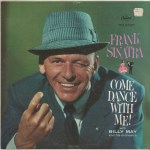
Sinatra At The Sands through Dahlquist DQ-10’s – My Neophyte Audiophile Mind Is Blown

Hot Stamper Pressings of the Music of Frank Sinatra Available Now

Back in the early 70s this was actually the album that first introduced me to honest-to-goodness “audiophile” sound.  

I was at my local stereo store listening to speakers one day, and the salesman made a comment that the speakers we were listening to (the old Infinity Monitors with the Walsh tweeter) sounded “boxy.”

I confessed to him that I didn’t actually know what that meant or what it would sound like if it weren’t boxy. 

So he hooked up a pair of Dahlquist DQ-10s and put Sinatra at the Sands on. I was amazed at how the sound just floated in the room, free from the speakers, presenting an image that was as wide and deep as the showroom we were in. That speaker may have many flaws, but boxiness is definitely not one of them.

This description is pretty close to what I thought I heard all those years ago:

The presence and immediacy here are staggering. Turn it up and Frank is right between your speakers, putting on the performance of a lifetime. Very few records out there offer the kind of realistic, lifelike sound you get from this pressing.

This vintage stereo LP also has the MIDRANGE MAGIC that’s missing from the later reissues. As good as some of them can be, this one is dramatically more real sounding. It gives you the sense that Frank Sinatra is right in front of you.

He’s no longer a recording — he’s a living, breathing person. We call that “the breath of life,” and this record has it in spades. His voice is so rich, sweet, and free of any artificiality, you immediately find yourself lost in the music, because there’s no “sound” to distract you.

Or so I thought at the time.

(more…)

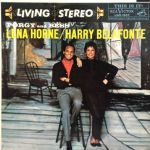
On Porgy and Bess, Stick with the Early Pressings on the Black Label

Hot Stamper Pressings of the Music of Harry Belafonte Available Now

A Living Stereo knockout! We sometimes forget to spend time with records like this when there are so many Zeppelin and Floyd records waiting to be played (and a lot more customers waiting to get hold of them to add to their collection).

We’ve always enjoyed Belafonte At Carnegie Hall, but when we’ve dug further into his catalog we’ve been left cold more often than not. However, when we finally got around to dropping the needle on a few of these many years ago we were very impressed by the music and blown away by the sound on the better pressings.

Just make sure that you avoid the orange label reissues.

They are dry, gritty and spitty. The notes below show a side one earning a single plus (1+) not-quite-Hot Stamper grade. We discuss its faults on the far right, and the other orange label pressing we played was even worse, earning a grade of NFG.

(more…)

Another 30th Street Studio Knockout – This One’s from Tony Bennett

Hot Stamper Pressings of the Music of Tony Bennett Available Now

UPDATE 2018

This review was written many years ago, circa 2010 I would guess, right about the time we first started doing shootouts for the album. (Here is what we have to say about I Left My Heart in San Francisco these days, suspiciously similar to what we had to say in 2010. As the song says, ‘”The fundamental things apply…”)


Everything that’s good about All Tube vocal recordings from the 50s and 60s is precisely what’s good about the sound of this record.

The huge studio the music was recorded in is captured faithfully on this pressing. The height, width and depth of the staging are extraordinary, a true Demo Disc in that regard.

We are not big soundstage guys here at Better Records, but we can’t deny the appeal of the space to be found on a record that sounds as good as this one does.

Transparency and Tubey Magic are key to the sound of the orchestra and you will find both in abundance on these two sides.

(Other records that are good for testing those two qualities can be found here and here.)

Albums such as this live and die by the quality of their vocal reproduction. On this record Mr. Tony Bennett himself will appear to be standing right in your listening room, along with the 38 other musicians from the session. (Actually, come to think of it, they’re probably sitting.)

On the best pressings, the space of your stereo room will seem to expand in all directions to accommodate them — an illusion of course, but nevertheless a remarkably convincing one.

(more…)

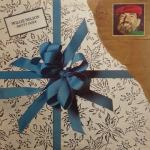
Pretty Paper – An Undiscovered Vocal Classic

Imagine the sound of a Hot Stamper Stardust, but instead of pop standards you hear Willie, his voice still in its prime, singing Christmas songs, all of them backed by tasteful and understated arrangements. That’s what you get on the best vintage pressings of Pretty Paper.

Released just a year after the must-own Stardust in 1979, many of the same musicians are featured, as well as the same producer, the amazing Booker T..

And the most shocking thing of all is just how good the sound is.

Next to Stardust I’d have to say this is the best sound Willie ever had. It’s so rich, smooth and natural — in other words, analog sounding — that it puts to shame what has come to be expected from pop recordings over the course of the last thirty years.

Yes, records used to actually sound like this, as hard as that may be to believe after playing so many dismal sounding modern recordings, modern reissues and what passes for audiophile “product.”

A good pressing of this album is one of the best reasons I can think of to own a high quality turntable these days. I find it hard to imagine that the CD would sound remotely as good.

Note that this record sounds even better when played at realistic “live” sound levels, the result no doubt of having no trace of phony top end boost and very little processing throughout, unlike — you guessed it — much of the vinyl product being produced today.

And of course all digital releases, which should go without saying to anyone reading this commentary. Many if not most pressings of the legendary Stardust album have at least some phony top added to the sound.

The good ones — meaning the Hot Stamper pressings — are the ones that sound more like this: natural up top as well as natural throughout the midrange.

“Natural” is a tough term to pin down, but we expect that if you tune and tweak long enough, you will end up with sound that is clearly more natural.

(more…)

What Willie and Nat Can Teach Us about Heavy Vinyl

Hot Stamper Pressings of the Music of Willie Nelson Available Now

This letter came to us many years ago. Updates have been added as of 2024.

One of our good customers had this to say about some Hot Stampers he had purchased:

Hello team,

I’ve been a little distracted here, I got married over the weekend! So, haven’t done as much listening over the past couple of weeks. However, I did have a chance to listen to Stardust and Love Is The Thing. They were both different than their Classic Records and Analogue Productions counterparts. Willie sounded a little smoother, more organic, and more integrated.

The strings on Love Is The Thing were very different, more pronounced and emotional, but Nat’s voice, and the sound overall, sounded a little strident, maybe “too” hot.

I’d like to send them both back to you, and if you have a chance to send back the discs I sent to you I’d very much appreciate it. All told, the two big sets of Better Records are really incredible, and only serve to make my want list grow. Here’s to you and the next set!

Doug,

We now have the update for those two titles.

I, along with the two other guys in our listening panels, sat down to play the Heavy Vinyl you sent us, and the long and short of it is that we were astonished that records that sound as bad as those two actually were approved for release.

Nat is wrong six ways from Sunday, and Willie is not so much wrong as just not very good.

Nat: “F,” one of the worst heavy vinyl disasters of all time, and Willie: “D” sound, more like a CD than a record. There are many pressings of this album that are not good, but this version is probably worse than most of them, hence the D grade.

The old Classic pressing is probably better, and it would earn about a C grade. [I honestly do not remember exactly what pressing Douglas sent us. All I remember is that it was on Heavy Vinyl.]

I suspect the CDs of both these pressings are much better sounding than this vinyl.

The DCC gold is definitely better by a long shot, and the plain old Willie CD is probably a step up as well. 


A Further Update

(more…)

Porgy and Bess – “This is a serious step up! Crazy good.”

More of the Music of Harry Belafonte

A Living Stereo knockout. We often forget to spend time with records like this when there are Zeppelin and Floyd records to play. We’ve always enjoyed Belafonte At Carnegie Hall, but when we’ve dug further into the man’s catalog we’ve been left cold more often than not.

However, when we finally got around to dropping the needle on a few of these we were very impressed by the music and completely blown away by the sound on the best pressings.

Our Shootout Winner showed us everything we could ever want in this kind of recording and more. More, in this case, was a side two that was a step up over our best side one. We used to give records with a side two like this one a grade of A++++, but we stopped doing that years ago. (We discuss the subject of outliers down below.)

The notes for side one read:

Track One

Big, dynamic and rich vocals. Very full and rich.

Track Four

Good bass, rich and note-like.

Vocals are silky and present and hi-rez.

The notes for side two read:

Track Two

Dynamic, three-deimensional vocals.

Frequencies extend high and low.

Sweet and breathy flutes and vocals. Tubey.

Track One

So sweet and rich, can’t complain.

This is a serious step up! Crazy good.


If you want to hear a record with sound like that, focus your attention on the pressings made in 1959 – that’s where that sound can be found, and you will have a hard time finding it on any record made in the last 50 years, no matter what anybody may tell you.

If someone disagrees with that assessment, have them play you the record that beats this one, something they will have a devil of a time managing to do.

1959 Tubes?

You just can’t beat ’em.

(more…)

Our First Shootout for The Voice from 2007

More of the Music of Frank Sinatra

By 2007 we were doing regular shootouts for albums such as Sinatra’s The Voice (1955) whenever we had the stock, and of course we naturally would throw the Classic Records pressing in the mix to see how it compared to the real thing.

I was selling the Classic when it was in print back in 1999 although it had never impressed me much at the time. It was a “good enough” record for $30 back then.

We used to tolerate the differences between good vintage pressings and Classic Records reissues, but by 2007 the sound of many of these remastered titles was just too second- and third-rate to ignore, when they weren’t just awful as in the case of most of their orchestral titles.

By 2007 we had much better equipment, a better sounding room due to the room treatments we had purchased, and others we had developed, better cleaning technologies with our discovery of the Enzyme Record Cleaning System, and probably a lot of other things to go with them.

Looking back, 2007 seems to have been a milestone year for us here at Better Records, although we certainly did not know it at the time.

Our review from 2007 follows.

This is a Six Eye Mono Original Columbia pressing. These originals have the Tubey Magical Midrange that is missing from the Classic Records heavy vinyl pressing.

In our experience these Six Eye Mono Original Columbia pressings are the only ones with any hope of having the Midrange Magic that is fundamental to the sound of Frank’s early Columbia LPs — and is clearly missing from the Classic Records heavy vinyl pressing. The Classic is clean and clear and tonally correct like a CD. Without the warmth and sweetness of analog and, in this case, tube mastering, the sound just isn’t “the real Frank”.

(more…)

Frank Sinatra – The Ideal Audiophile Pressing

Hot Stamper Pressings of the Music of Frank Sinatra Available Now

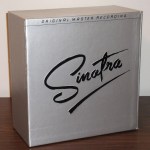
Mobile Fidelity may have made the perfect record for you.

This, of course, depends on who you are. More precisely, it depends on whether you care about having better sound, and whether you know how to go about acquiring pressings with better sound.

As for the MoFi you see pictured, our audition notes checked off some of its strengths, which boil down to these: it’s quiet, it’s tonally correct, and on the equipment most audiophiles will probably use to play it back, it does not seem to be especially veiled, opaque or compressed compared to many of its fellow audiophile pressings.

If you’re the kind of audiophile who doesn’t want to do the work required to find a top quality vintage pressing on his own, or buy one from us, this is actually a very good sounding record and a good way for you to go.

In that sense it is the ideal pressing for most audiophiles. If you want to know if you fit into the category of “most audiophiles,” here is one way to find out:

Ask yourself these three questions:

  1. Do you want the expense and hassle of finding a nice original stereo copy?
  2. Do you want to invest in proper record cleaning equipment to restore the glorious sound of the original’s 50-plus year old vinyl?
  3. Do you want to spend the time (decades) and money (many tens of thousands of dollars) to build and tweak a top quality analog playback system?

If you don’t want to do these things, you are not alone.

In fact, you are clearly in the majority, part of that enormously tall, fat bulge right in the middle of the bell curve. As the quintessential audiophile record lover, a big part of the mass of the mass-market, Mobile Fidelity has made the perfect record for you.

Without a better pressing to play against it, you will have no reason to suspect that anything is wrong with it.

More precisely, you will have no way to know that anything is wrong with it.

(more…)

Frank Sinatra – All The Way

More Frank Sinatra

More Pop and Jazz Vocal Recordings

  • Seriously good sound throughout this vintage Stereo Capitol pressing, with solid Double Plus (A++) grades or close to them from start to finish
  • We all owe a debt of gratitude to the recording and mastering engineers from the era (50s and 60s) for the glorious sound they managed to achieve, a sound unequalled to this day
  • Side one is wonderfully big, rich and full-bodied, with the kind of Tubey Magic that allows Sinatra’s remarkably breathy baritone to work its magic on every phrase, and side two is not far behind in all those areas
  • This group of singles and B-sides was recorded from 1957 to 1960 – it contain some of Sinatra’s better known songs arranged by Nelson Riddle
  • As you can well imagine, finding clean 60s Sinatra records like this one, in stereo no less, is no walk in the park but marks in the vinyl are sometimes the nature of the beast with these early pressings – there simply is no way around them if the superior sound of vintage analog is important to you

Having done this for so long, we understand and appreciate that rich, full, solid, Tubey Magical sound is key to the presentation of this primarily vocal music. We rate these qualities higher than others we might be listening for (e.g., bass definition, soundstage, depth, etc.). The music is not so much about the details in the recording, but rather in trying to recreate a solid, palpable, real Frank Sinatra singing live in your listening room. The better copies have an uncanny way of doing just that.

Copies with rich lower mids and nice extension up top (to keep the strings from becoming shrill) did the best in our shootout, assuming they weren’t veiled or smeary of course. So many things can go wrong on a record! We know, we heard them all.

(more…)

Bennett and Basie – We Was Wrong about Strike Up The Band

More of the Music of Tony Bennett

More of the Music of Count Basie

Years ago we thought the Emus reissues were the best sounding pressings of this album, but we was wrong and we don’t mind admitting it. We live and learn just like anybody else who plays different pressings of their favorite albums in search of the best sounding versions.

We don’t know it all and we’ve never claimed to. Having done shootouts for thousands upon thousands of titles, we’re bound to make mistakes from time to time. What could be more predictable?

Our erroneous comment from years back went a little something like this:

The originals we have played are uniformly horrible sounding compared to these wonderful reissues – the tonality here is Right On The Money.

The originals tend to be harsh and shrill, and on a big band record like this one, that is simply not a sound that can be tolerated, much less enjoyed.

But the right originals do not have those problems, and those are the ones we offer our customers, along with the better pressings on Emus.

Findings Overturned

We’re so used to the conventional wisdom being wrong, and having our own previous findings overturned by new ones, that in listing after listing we take the time to point out just how wrong we were. (And of course why we think we are correct now.)

A common misperception among those visiting the site is that we think we know it all. Nothing could be further from the truth.

We learn something new about records with practically every shootout.

(more…)