Composers

Stravinsky – Les Noces / Symphony Of Psalms / Ansermet

More of the Music of Igor Stravinsky

  • Stravinsky’s Les Noces / Symphony of Psalms appears on the site for only the second time ever, here with bold, dynamic, and Tubey Magical Nearly Triple Plus (A++ to A+++) sound throughout this early London pressing – just shy of our Shootout Winner
  • These sides are doing practically everything right – they’re rich, clear, undistorted, open, spacious, and have depth and transparency to rival the best recordings you may have heard
  • The sonics here have the power to transport you completely, with solid imaging and a real sense of space, qualities that allow us to forget we are in our listening rooms and not in a concert hall

(more…)

Better Front Ends Actually Reduce Surface Noise

Hot Stamper Pressings of the Music of Tchaikovsky Available Now

This record has no marks that play appreciably, but that RCA vinyl is up to its old tricks again.

Mint Minus Minus with constant light surface noise underneath the music in the quieter sections is the rule. The first half inch of side two is where you will notice it the most.

We are of the opinion that good sound and good music allow you to pretty much ignore surfaces such as these (scratches being another thing entirely of course). 

Better Front Ends

I would make the further point that the better your front end is, the less likely you are to have a problem with vinyl like this, which is the opposite of what many audiophiles perceive to be the case. In other words, some of the cheaper tables and carts seem to make the surface noise more objectionable, not less. (They also tend to collapse completely under the weight of a mighty recordings.)

On the other hand, some pricey cartridges — the Benz line comes to mind — are consistently noisier than those by Dynavector, Lyra and others, in our experience anyway.

Vintage Vinyl

As long as vintage vinyl is the only vinyl with sound worth pursuing, as is surely the case these days and will be the case for the forseeable future — we have ample evidence to support this statement for this who are interested in that lamentable reality — a quiet cartridge and a very high quality arm are essential to your being able to recognize good records and reproduce them properly.

Our Dynavector 17Dx gets down deep into the groove, where vintage used records have the least number of problems created by their previous owners.

And we run it nude for even better sound. I discovered this possibility more than a decade ago — so long ago that I cannot remember where I came by the information — but the sound was immediately so much better that all questions were answered moments after dropping the needle.

Not a lot of things are obvious, but that sure was.

(more…)

Don’t Waste Your Money on this Schubert Recording with Munch from 1962

Hot Stamper Pressings of Living Stereo Recordings Available Now

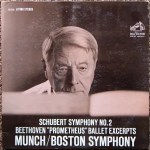
Some audiophiles buy albums based on their labels. For example, this Shaded Dog pressing from the Golden Age of RCA Living Stereo might appeal to a certain kind of audiophile who treasures original LSC pressings.

More than that, he might limit himself to the most sought-after 1S Indianapolis pressings. Hooray! What could be better?

However, many records from this era simply do not sound good, and this is one of them. We have never heard a good sounding copy of LSC 2522, and we’ve played plenty of them over the decades that we’ve been selling Golden Age Classical records.

Are You a Fan?

If you’re a fan of Living Stereo pressings, have you noticed that many of them – this one for example – don’t sound very good?

If you’re an audiophile with good equipment, you should have. But did you? Or did you buy into the hype surrounding these rare LSC pressings and just ignore the problems with the sound?

When vintage RCA Living Stereo records don’t sound good to us, we put them on this list and they go into our hall of shame. We don’t make excuses for them. We call a spade a spade. The same goes for records being made today.

Some audiophiles buy albums based on their labels. For example, this Shaded Dog pressing from the Golden Age of RCA Living Stereo might appeal to a certain kind of audiophile who treasures LSCs on the original label.

More than that, he might limit himself to the most sought-after 1S Indianapolis pressings. Hooray! What could be better?

However, many records from this era simply do not sound good, and this is one of them. We have never heard a good sounding copy of LSC 2522, and we’ve played plenty of them over the decades that we’ve been auditioning Golden Age classical records for sale.

This Shaded Dog might be passable on an old school system, but it was too unpleasant to be played on the high quality modern equipment we use.

There are quite a number of other records that we’ve run into over the years with similar shortcomings. Here are some of them, a very small fraction of what we’ve played, broken down by label.

  • London/Decca records with weak sound or performances
  • Mercury records with weak sound or performances
  • RCA records with weak sound or performances, including many on the coveted Shaded Dog label

(more…)

Dvorak / Violin Concerto – A Killer Philips Recording

More of the Music of Antonin Dvorak

  • Stunning sound throughout this Philips import pressing of Dvorak’s Classical Masterpieces, with a Shootout Winning Triple Plus (A+++) side one mated to a solid Double Plus (A++) side two – exceptionally quiet vinyl too
  • The orchestral passages are rich and sweet, the violin present, its harmonics gloriously intact
  • We audiophiles are fortunate indeed that a violinist of Accardo’s skill and taste recorded this piece for Philips at a time when their recording technology was still capable of capturing the sound of his violin in rich, warm, sweet, clear analog
  • A superb performance from Salvatore Accardo, not only competitive with the best we have heard, but superior – we know of none better
  • These links will take you to some of the orchestral “sleeper” recordings we’ve discovered with Demo Disc sound

Yes, it was still possible to record classical music properly in 1980, though not many labels managed to pull it off. (Londons from this era are especially opaque and airless. We find them as irritating and frustrating as most of the Heavy Vinyl releases being foisted on the audiophile public today.)

This is still analog, with the better copies displaying much of the Tubey Magic of 50s and 60s vinyl without as much compressor distortion (the Achilles’ heel of so many of the great recordings from the Golden Era).

Accardo is an accomplished performer of the works of Paganini, but those recordings are on DG and we would not expect them to be of acceptable audio quality for our customers. We will investigate further of course, as Paganini’s works for violin are some of the most sublime in the repertoire.

(more…)

Our Favorite Night on Bald Mountain

Hot Stamper Pressings of the Music of Mussorgsky Available Now

If you like Orchestral Spectaculars, have we got the record for you!

What you want this record for is the best performance of Night On Bald Mountain ever recorded.

Fiedler plays it with a kind of pull-out-all-the-stops abandonment that no other conductor has on a modern recording, not to my knowledge anyway. It’s supposed to be a wild witches’ frenzy, and this is the only performance I know of that allows you to experience the full measure of diabolic revelry playing in your mind’s eye.

This is one of those “sleeper” albums that, as record collectors, you might stumble across from time to time, especially if you’re the kind of person who does nothing but play records all day. You will simply be amazed at the performance and the sound on this copy.

The Sound

Lively, set in a huge hall, with big orchestral sound, and more energy than you will find on 99 out of 100 classical LPs. So present, with an extended top end and transparency that allows you to “see” to the back of the hall.

Huge low brass, the kind you hear on Ansermet’s recording from the Victoria Hall. What a sound!

It gets loud and it stays clean doing it. Not many records can make that claim.

This pressing clearly has DEMONSTRATION QUALITY SOUND — not in every way, but in some important ways. The ENERGY of both the sound and the performances of these barnburning showpieces is truly awesome. Fiedler brings this music to LIFE like no other conductor we have heard.

This pressing boasts relatively rich, sweet strings, especially for a Deutsche Grammophon LP. Both sides really get quiet in places, a sure sign that all the dynamics of the master tape were protected in the mastering of this copy, and the reason it is so hard to find a copy that plays better than Mint Minus Minus. (more…)

Mussorgsky & Ravel – Pictures at an Exhibition

More of the Music of Modest Mussorgsky

  • With two seriously good Double Plus (A++) sides, this British EMI import pressing is doing just about everything right – exceptionally quiet vinyl too
  • Our favorite performance by far, with big, bold and powerful sonics like no other recording we know
  • The brass clarity, the dynamics, the deep bass and the sheer power of the orchestra are almost hard to believe
  • No vintage recording of these works compares with Muti’s – and Stravinsky’s Firebird Suite is an extra special added bonus on side two
  • There are about 150 orchestral recordings we’ve awarded the honor of offering the best performances with the highest quality sound, and this record certainly deserve a place on that list.
  • If you like orchestral spectaculars, have we got amazing sounding records for you

This EMI import pressing gives you the complete Pictures at an Exhibition with a top performance and superb sonics.

As this is my All Time Favorite performance of Pictures, this record naturally comes very highly recommended. Pictures is a piece of music that has been recorded countless times, and I’ve played scores of different recordings, but the only one that truly satisfies is this one, Muti’s 1979 recording with the Philadelphia Orchestra. Much like Previn and the LSO’s performance of The Planets, he finds the music in the work that no one else seems to.

A Must Own Classical Record

This orchestral spectacular should be part of any serious Classical Collection. Other Must Own classical recordings can be found here.

For his 1979 review of the Mussorgsky, Robert Layton in the GRAMOPHONE writes of Muti and The Philadelphia Orchestra :

…what orchestral playing they offer us. The lower strings in ‘Samuel Goldenberg and Schmuyle’ have an extraordinary richness, body and presence, and “Baba Yaga”, which opens the second side, has an unsurpassed virtuosity and attack as well as being of demonstration standard as a recording. The glorious body of tone, the richly glowing colours, the sheer homogeneity of the strings and perfection of the ensemble is a constant source of pleasure.

Of the performance of Stravinsky’s Firebird, Layton writes:

…Muti’s reading is second to none and the orchestral playing is altogether breathtaking. The recording is amazingly lifelike and truthful.

(more…)

VICS 1069 – In 2004 We Mistaked Finlandia on VICS for a Demo Disc

Hot Stamper Pressings of the Music of Sibelius Available Now

UPDATE 2024

We played a 4S/1S copy of this record, VICS 1069, and thought it sounded terrible.

It was flat and bright with splashy cymbals and crude brass.

Even if we assume the copy we played many years ago could have been much better than this latest pressing — which is doubtful but certainly possible — there is no reason to pursue this version of the album when there are known top quality pressings of this very same performance on Decca.


Our Old Review

DEMO QUALITY SOUND and quiet surfaces too.

I don’t know when I’ve heard this album with better sound. This one may be better than the best Shaded Dog for all I know — it’s that good.

You’ll notice that there is a copy of this very same record on the website for $1.99. That one sounds dull. I don’t think you’ll be able to find a better sounding copy of this record than the pressing we are selling here, because it really is an exceptionally good sounding record. If it weren’t, it would be more like $1.99.

(more…)

Herrmann – The Mysterious Film World of Bernard Herrmann

More of the Music of Bernard Herrmann

  • This vintage pressing of the National Phil’s performance of selections from three of Herrmann’s classic “phantasmagorical” film scores boasts solid Double Plus (A++) grades from first note to last
  • A superb recording with a huge three-dimensional stage, open, clear, extended up top and down low — the sound on this pressing is nothing short of amazing
  • 4 stars: “The sound glitters, some of the brightest and richest audio of its period (attested to by the album’s being part of Decca/London Phase 4 Stereo), and the performances have a dignity and intensity that makes the music — drawn from the key parts of Herrmann’s scores for the Ray Harryhausen-created fantasy films The Three Worlds of GulliverMysterious Island, and Jason and the Argonauts — seem even more serious and profound than it originally did.”
  • If like us you’re a fan of blockbuster orchestral recordings, this is a killer album from 1975 that belongs in your collection.

Side one boasts some wonderful material from Mysterious Island and Jason and the Argonauts. Who else but Herrmann could have orchestrated such phantasmagorical goings on?

The Three Worlds Of Gulliver Suite takes up all of side two. The complete score from which the suite is taken can be found on the original Herrmann album The Three Worlds of Gulliver, a long-time and extremely rare member of the TAS Super Disc List.

This vintage London Phase 4 Stereo pressing has the kind of Tubey Magical Midrange that modern records can barely BEGIN to reproduce. Folks, that sound is gone and it sure isn’t showing signs of coming back. If you love hearing INTO a recording, actually being able to “see” the performers, and feeling as if you are sitting in the studio with the band, this is the record for you. It’s what vintage all analog recordings are known for —this sound.

If you exclusively play modern repressings of vintage recordings, I can say without fear of contradiction that you have never heard this kind of sound on vinyl. Old records have it — not often, and certainly not always — but maybe one out of a hundred new records do, and those are some pretty long odds. (more…)

Capriccio Italien on Classic Records and How Badly I Missed the Boat

More of the Music of Peter Ilyich Tchaikovsky

More of the Music of Nikolai Rimsky-Korsakov

Years ago, around 2005 if memory serves, I played a copy of the Classic Records pressing of LSC 2323 and thought it was pretty good.

I thought it was better than the Shaded Dog copies I had compared it to, which, based on hundreds of other Classic Records titles I had auditioned, was unexpected to say the least.

Little did I know that the Shaded Dog pressings on this title are not remotely competitive with the early reissues.

The best of the Shaded Dog pressings we could find, which just happened to have a 1s side one, came in tied for last with the one 70s Red Seal pressing we thought sounded good enough to make the shootout.

(Some inside baseball: most of the Shaded Dogs and Red Seals were needle-dropped, and all but two were eliminated before the shootout. It takes time and wastes money to clean and play pressings that sound hopeless, so a quick elimination round often precedes the cleaning process.)

Back then it was tough to wrap my head around the idea that a Classic Record classical title could actually be better sounding than a Shaded Dog — it had never happened, so I knew there had to be more to the story.

Finding the time to do the serious investigation of LSC 2323 that would be necessary to get to the bottom of it was not in the cards, so I shelved the project for close to the next twenty years.

The title would have to wait until 2024 to go through a proper shooout, and when it did, naturally the Classic was part of the mix, which is the way we do things here at Better Records. Every record gets the chance to show us what it can do, to be evaluated fairly without the listener having any way to know which pressing is playing.

It turns out that side one of the Classic was passable, but side two — the side I had probably never played — was every bit as bad as most of their other classical offerings.

Side One, Second Movement (Tchaikovsky)

  • Big, but bright and compressed
  • Gets loud but opaque and hot
  • Good weight

Side One, First Movement

  • Bright and blurry bells
  • Sort of tubey but a mess
  • Grade: 1+ (passable, but no Hot Stamper)

Side Two (Rimsky-Korsakov)

  • Big but boomy and smeary
  • Brass is edgy and opaque
  • No top end or space
  • Peaks are hot and congested
  • Grade: NFG

To recap: In 2005 I was impressed with Classic’s pressing of LSC 2323. That was only twenty years ago, yet I could not have been more wrong. I thought my stereo was great — I’d owned top quality equipment since 1975 by then — thirty sodding years — so my audiophile credentials would surely dwarf those of the vast majority of forum posters who write about audiophile pressings today. How reliable should we expect their reviews to be?

(more…)

Don’t Waste Your Money on this Famous and Pricey RCA from 1960

Hot Stamper Pressings of Living Stereo Recordings Available Now

The most recent copy we’ve played of LSC 2405 left us feeling underwhelmed. We expected more from such a famous and typically pricey TAS-Listed Living Stereo record.

In the past we’ve auditioned the Victrola and the Decca SPA reissue, and both seemed to be reasonably good but not quite good enough to offer our customers. We were still looking for a better Fifth Symphony, and paid top dollar for this copy hoping it would be the one to make a shootout possible.

Unfortunately, that was not the case. The sound of this copy was rich but opaque. We would call it no better than passable. It might be a good sounding record on a different pressing, but we doubt it could be a great one, and we really don’t want to spend the kind of money it would take to prove ourselves wrong on that account.

As the best of the RCA pressings demonstrate beyond all doubt, 1960 was a great year for classical and orchestral recordings.

What the modern mastering engineers of today do to such wonderful recordings is another thing altogether. Bernie Grundman remastered this one in the 90s for Classic Records, and we can describe the work he did for them in just four words.

To sum it all up, LSC 2405 is unlikely to sound very good on high quality modern equipment. If your system leans more towards the old school approach — vintage tubes, vintage tables, horn speakers, that sort of thing — then the lack of transparency won’t be nearly as bothersome as it is to us.

This is because most of the revolutions in audio of the last two or three decades allow us to hear how much more transparent most vintage pressings are compared to those that came later, especially those made since the advent of the Heavy Vinyl LP in the 90s.

The dramatically better playback quality of today can show you just how much better the right vintage pressings are than even the best of those being made these days. As readers of this blog know all too well, the worst are astonishingly bad.

Some audiophiles may be impressed by the average Shaded Dog pressing, but I can assure you that we here at Better Records are decidedly not of that persuasion. We’ve played too many that had more than their share of shortcomings. The list of vintage classical pressings that audiophiles should avoid is a long one.

Something in the range of five to ten per cent of the major label Golden Age recordings we play will eventually make it to the site. The vast majority just don’t sound all that good to us. Many have second- and third-rate performances and those get tossed without ever making it to a shootout.

(more…)