Testing Grit and Grain

We’ve found that the titles linked heremake good test records.

When comparing pressings of these titles, the copies that are tonally correct and highly resolving, yet have the least amount of grit and grain, are likely to be the best sounding overall.

Are All MoFis Created Equal? A Pair of Pink Floyd LPs Proved They Aren’t

Hot Stamper Pressings of the Music of Pink Floyd Available Now

[This commentary was written about twenty years ago.]

Many audiophiles are operating under the misapprehension that Mobile Fidelity managed to eliminate pressing variations of the kind we discuss endlessly on the site.

That is simply not the case, and it’s child’s play to demonstrate how misguided this way of thinking is, assuming you have the following four things: good cleaning fluids and a machine, multiple copies of the same record, a reasonably revealing stereo, and two working ears.

With all four the reality of pressing variations for ALL pressings is both obvious and incontrovertible.

The discussion below of a Hot Stamper pair of Dark Sides from long ago may shed light on some of the issues involved.

Remember Classic Records Comparison Packages?

This is our first Hot Stamper Comparison Package.

For those who remember the 45 RPM/ 33 RPM Classic Records comparison packages, this is somewhat in the same vein. Of course, we don’t know that they kept the EQ the same for the 45 versions compared to the 33s of the albums included in the package, so the comparison is suspect at best.

You’re not really comparing apples to apples unless you keep the EQ exactly the same. I rather doubt they did, because on Simon and Garfunkel the sound was noticeably worse at 45 than it was at 33. This is the main reason we don’t carry the 45 versions of Classic’s records: they are a lot more money, and who knows if they’re even any better?

[This one sure wasn’t better. This guy liked it, but he is rarely right about any of this record and equipment stuff, as I hope everyone knows by now.]

(more…)

This Carmen Ballet Is a Great Test Disc for Shrill, Gritty Strings

Hot Stamper Pressings of the Music of Georges Bizet Available Now

UPDATE 2025:

I’ve added some tubes-versus-transistors commentary at the bottom of this posting.


This Angel Melodiya pressing of Bizet’s Carmen, rearranged by Soviet composer Rodion Shchedrin for strings and 47 percussion instruments, has two incredible sides. Demo Quality Sound barely begins to do it justice. If you have the system to play it, this copy is a KNOCKOUT.

But boy is it a difficult record to reproduce. You better have everything working right when you play this one — it’s guaranteed to bring practically any audiophile system to its knees.

Speed, resolving power and freedom from distortion are what this record needs to sound its best.

Is your system up to it? There’s only one way to find out.

And if you have any peaky audiophile wire in your system, the kind that is full of detail but calls attention to itself, you are in big trouble with a record like this.

More than anything, this is a record that rewards your system’s neutrality.

Testing

This is a superb Demonstration Disc, but it is also an excellent Test Disc. The sound of the best copies is rich, full-bodied, incredibly spacious, and exceptionally extended up top. There is a prodigious amount of musical information spread across the soundstage, much of it difficult to reproduce.

Musicians are banging on so many different percussion instruments (often at the far back of the stage, or, even better, far back and left or right) that getting each one’s sonic character to clearly come through is a challenge — and when you’ve met it, a thrill. If you’ve done your homework, this is the kind of record that can show you what you’ve accomplished.

On the best copies the strings have wonderful texture and sheen. If your system isn’t up to it (or you have a copy with a problem in this area), the strings might sound a little shrill and possibly gritty as well, but I’m here to tell you that the sound on the best copies is just fine with respect to string tone and timbre. You will need to look elsewhere for the problem.

(more…)

Listening in Depth to Country Life

Hot Stamper Pressings of the Music of Roxy Music Available Now

The domestic, German, Japanese and Dutch pressings are not remotely competitive with the Brits on this album (which is not true for all Roxy’s albums but clearly true for this one, Siren being the obvious exception to the rule).

Now for those of you who are not big Roxy Music fans and don’t know this music, this album may take a bit of getting used to. We assure you it will be well worth your while. We think it’s brilliant.

And if you do consider yourself a fan of Art Rock, every Roxy album should be on your shelf, right up there with your Bowie, Pink Floyd, Supertramp, Eno, Peter Gabriel, 10cc and too many others to list. (Most are personal favorites of mine, albums I have played hundreds of times over the last 40 years and plan to keep playing until my ears give out.)

Side One

The Thrill of It All
Three and Nine

On the best copies this track is the very definition of Tubey Magical richness and smoothness.

All I Want Is You

A little thinner and brighter than the other tracks on this side as a rule.

Out of the Blue

The best guitar solo ever played on the violin. Go Eddie!

If It Takes All Night

Side Two

Bitter Sweet

The best copies have monstrous bass on this track, along with huge amounts of space. Again, the Tubey Magic can be off the charts here.

Triptych
Casanova

The vocals on this track will always spit to some degree. The cleanest, most tonally correct sibilance is what you are looking for on this track. That, and amazing rock energy!

A Really Good Time
Prairie Rose


Want to find your own top quality copy?

Consider taking our moderately helpful advice concerning the pressings that tend to win our shootouts.

(more…)

Save the Life of My Child Is One Tough Test

Hot Stamper Pressings of the Music of Simon and Garfunkel Available Now

The big production songs on Bookends have a tendency to get congested on even the best pressings, which is not uncommon for four track recordings from the 60s.

Those of you with properly set up high-dollar front ends should have less of a problem than those of you without them. $3000 cartridges can usually deal with this kind of complex information better than $300 ones.

But not always. Expensive does not always mean better, since painstaking and exacting setup is so essential to proper playback.

Save the Life of My Child — A Tough Test

I used to think this track would never sound good enough to use as an evaluation track. It’s a huge production that I had heretofore found all but impossible to get to sound right on even the best original copies of the album. Even as recently as ten years ago I had basically given up on reproducing it right.

Thankfully things have changed. Nowadays, with carefully cleaned top copies at our disposal and a system that is really cooking, virtually all of the harmonic distortion in the big chorus near the opening has disappeared. It takes a very special pressing and a very special stereo to play this song. That’s precisely what makes it a good test!

America — Another Tough Test

America is another one of the toughest tracks to get right. The big ending with its powerful orchestral elements is positively stunning on the rare copies that have little or no congestion in the loudest passages.

On virtually every copy you will ever hear the voices on this track are a little sibilant. Modern records are made with what is known as a de-essing limiter. This limiter recognizes sibilance and keeps it under control, because once the cutter head sees that kind of high frequency information, which is already boosted for the RIAA curve, it will try to cut it onto the record and the result will be this kind of spitty distortion.

(more…)

Listening in Depth to Famous Blue Raincoat

Hot Stamper Pressings of the Music of Leonard Cohen Available Now

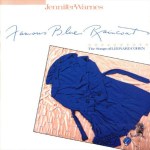
I’m a huge fan of this FBR. It’s the only album Jennifer Warnes ever made that I would consider a Must Own recording or a Desert Island Disc. Without question this is her Masterpiece.

Key Test for Side One

Listen to the snare drum on Bird on a Wire. On most copies it sound thin and bright, not very much like a real snare. Let’s face it: most copies of this record are thin and bright, and that’s just not our sound here at Better Records. If the snare on Bird sounds solid and meaty, at the very least you have a copy that is probably not too bright, and on this album that puts it well ahead of the pack.

While you’re listening for the sound of that snare, notice the amazing drum work of Vinnie Colaiuta, session drummer extraordinaire. The guy’s work on this track — especially with the high hat — is genius.

Key Test for Side Two

Listen to the sound of the piano on Song of Bernadette. If it’s rich and full-bodied with the weight of a real piano, you might just have yourself a winner. At the very least you won’t have to suffer through the anemically thin sound of the average copy.

Side One

First We Take Manhattan

Don’t expect this song to be tonally correct. It runs the gamut from bright to too bright to excrutiatingly bright. Steve Hoffman told me that he took out something like 6 DB at 6K when he mastered it for a compilation he made, and I’m guessing that that’s the minimum that would need to come out. It’s made to be a hit single, and like so many hit single wannabes, it’s mixed brighter than we audiophiles might like.

(more…)

Listening in Depth to A Hard Day’s Night

More of the Music of The Beatles

Play it against your MoFi or Heavy Vinyl pressing and you will quickly see why those lifeless LPs bore us to tears. Who in his right mind would want to suffer through a boring Beatles record?

Drop the needle on any song on the first side to see why we went crazy over a recent Shootout Winner on side one. The emotional quality of the boys’ performances really comes through on this copy.

They aren’t just singing — they’re really beltin’ it out. Can you imagine what that sounds like on the title track? We didn’t have to imagine it, we heard it!

Side One

A Hard Day’s Night
I Should Have Known Better
If I Fell

This is a wonderful example of The Beatles’ harmonies at their best. Toward the end of the song, during one of their harmonic excursions, you can hear John’s voice drop out when something apparently catches in his throat, and I could swear that you can hear Paul McCartney react to it with a little laugh.

If their voices sound warm, sweet, and transparent on this track, at the very least you have a contender, and possibly a winner. Not many pressings are going to bring out all the timbral qualities of their voices.

I’m Happy Just to Dance With You
And I Love Her
Tell Me Why
Can’t Buy Me Love

Always starts with a bit of grit and grain, but usually sounds better by the second verse.
(more…)

Some Girls Need (Needs?) Fullness

Hot Stamper Pressing of the Music of The Rolling Stones Available Now

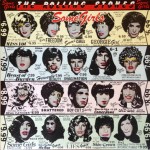
In the commentary for a recent Hot Stamper pressing, we described the sound we were looking for on the Stones’ brilliant 1978 album, Some Girls:

One of the keys to getting this album to sound right is fullness. Many copies lack weight to the bottom end, which robs this funky music of its very foundation. Other copies suffer from lean, thin-sounding vocals — do you think that’s the sound Mick Jagger (or engineer Chris Kimsey) was going for?

Some of the qualities we found in short supply on the average copy were warmth, richness, sweetness and ambience — you know, all that Analog Stuff we know and love.

Most copies are too thin and grainy for serious audiophile listening, but this one is a different story. It’s not easy to find great sound for The Stones, so take this one home for a spin if you want to hear this band bring these songs to life in your very own listening room.

Not many copies have this kind of clarity and transparency, or this kind of big, well-defined bottom end.

The sound of the hi-hat is natural and clear on this pressing, as are the vocals, which means that the tonality in the midrange is correct, and what could be more important than a good midrange? It’s where the music is.

Not only is it hard to find great copies of this album, it ain’t easy to play ’em either, which is why this recording ranks high on our difficulty of reproduction scale.

You’re going to need a hi-res, super low distortion front end with careful adjustment of your arm in every area — VTA, tracking weight, azimuth and anti-skate — in order to play this album properly.

If you’ve got the goods, you’re gonna love the way our Hot Stamper pressings sound.

Play it with a budget cart/table/arm and you’re likely to hear much less magic than we did.

(more…)

Dream Weaver – A Good Test Record for Gritty, Grainy Sound

More Records that Are Good for Testing Grit and Grain

Most pressings of this album tend to err in one of two ways: either they’re a little bright and get hard and gritty in the upper mids, or they’re wrong in the opposite direction, with sound that is smeary and dull.

Our best copies get the balance right — plenty of texture on the keyboards and drums, with vocals that still have presence and breathiness — and not too much grit.

An all-keyboard pop record like this was a rarity at the time. The only other instruments besides drums (and one track with guitar) are keyboards. Every song is layered with multi-tracked clavinets, organs, and Moogs — it was a remarkable feat in 1975 to create an album with nothing but keys.

Listen to the title track, the most dynamic song on the record, and you will hear just how well all of those stacked keyboards and synths work together. (Steve Winwood’s Back in the High Life borrowed a page or two from Gary’s solo debut here.)


  • If you’re a Gary Wright fan, or perhaps a fan of mid-’70s synth-pop, this title, a personal favorite of mine from 1975, is surely a Must Own.
  • In our opinion, Dream Weaver is his best sounding album, and probably the only Gary Wright record you’ll ever need. Click on this link to see more titles we like to call one and done.
  • The sound may be too heavily processed for some, making it fairly difficult to reproduce, but the best sounding pressings, played at good, loud levels on big dynamic speakers in a large, heavily-treated room, are a fun listen. They sound just fine to us.
  • 1975 was a good year for music on vinyl — here are some excellent pressings of well-recorded albums available for purchase now.

(more…)

Good Horns, Probably Good Everything

Hot Stamper Pressings of the Music of Eric Clapton Available Now

This is not your usual Clapton album, and that’s a good thing, because most Clapton albums are full of filler. Not so here — almost every song is good, and many are superb.

The sound of the horn arrangements that back almost every song on the album are key to understanding the pressing and mastering quality on any given copy.

Blary, smeary, leading-edge-challenged horns are the kiss of death on this album, as are grainy, gritty, transistory ones.

When the horns have clarity, correct tonality, plenty of space around them and a solid, full-bodied sound, probably every other instrument in the soundscape will too.

Other records with brass instruments that are good for testing can be found here.


Want to find your own top quality copy?

Consider taking our moderately helpful advice concerning the pressings that consistently win our Hot Stamper shootouts.

This record has been sounding its best for many years, in shootout after shootout, this way:

(more…)

Super Session Is the Poster Boy for Gritty, Spitty Vocals

Hot Stamper Pressings of the Music of Al Kooper Available Now

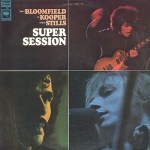
Man’s Temptation, track 3 on side one, has got some seriously bright EQ happening (reminiscent of the first BS&T album, Child Is Father to the Man), so if that song even sounds tolerable in the midrange you are doing better than expected.

Bright, gritty, spitty, edgy, harsh, upper-midrangy vocals can be a real problem on this album.

The Red Labels tend to have more problems of this kind, but plenty of original 360 pressings are gritty and bright too. Let’s face it, if the vocals are wrong, the music on this album — like any rock and pop album — pretty much falls apart.

Most copies are far too bright and phony sounding to turn up loud; the distortion and grit are just too much at higher volumes.

On the better copies, the ones with more correct tonality and an overall freedom from distortion, you can crank the volume and let Super Session rock.

Testing with Super Session

This record, along with the others linked below, is good for testing the following qualities.

  1. Grit and grain
  2. Midrange tonality
  3. Sibilance (it’s a bitch) 
  4. Upper midrange brightness

Playing so many records day in and day out means that we wear out our Dynavector 17DX cartridges often, three or four times a year.

Which requires us to regularly mount a new cartridge in our Triplanar arm.

Once a new cartridge is broken in (50 hours minimum), we then proceed to carry out the fine setup work required to get it sounding its best. We do that by adjusting the VTA, azimuth and tracking weight for maximum fidelity using recordings we have been playing for decades and think we know well.

(more…)