Month: September 2025

Letter of the Week – “I am blown away with the White Album you sent.”

Hot Stamper Pressings of The White Album Available Now

One of our good customers had this to say about some a Hot Stamper pressing of The White Album he purchased quite a while back:

Hey Tom, 

I am completely stunned. I am blown away with the White Album you sent. It is as if I am there in the studio. The music has so much more shading, tone, and phrasing that gives it much more meaning and enjoyment — which has been lost on me for 40 years.

I can now hear it and I get it. Wow! You guys never cease to amaze with what you find. Thanks as usual.

Mike H.

Mike,

Glad you liked our Hot Stamper pressing of The White Album. It’s amazing how good it sounds once you know which pressings are the good ones and which ones should be avoided.

Hint: it’s the originals that are to be avoided, but don’t tell that to the average record collecting audiophile. They will think you have lost your mind.

(more…)

Grateful Dead – Blues For Allah

More of the Music of The Grateful Dead

  • A killer sounding copy of this Grateful Dead classic (only the second to hit the site in years) with Shootout Winning Triple Plus (A+++) sound or close to it on both sides – exceptionally quiet vinyl too
  • Probably the last essential Dead album – this pressing has especially silky, sweet vocals, good presence and energy, punchy bass and a spacious soundfield
  • Marks in the vinyl are sometimes the nature of the beast with these vintage LPs – there simply is no way around them if the superior sound of vintage analog is important to you
  • 4 1/2 stars: “The Dead went into a state of latent activity that lasted until the spring of [1975] when the band reconvened to record Blues for Allah… Obviously, the time off had done the band worlds of good, as Blues for Allah — more than any past or future studio album — captures the Dead at their most natural and inspired.”

This fun and funky mid-’70s Grateful Dead LP has two excellent sides. This album features the extended workout of “Help On The Way” into “Slipknot” into “Franklin’s Tower” — a fan favorite which remained a staple of Dead shows into the ’90s. On an energetic and tubey magical copy like this one, it’s a trip!

Shakedown Street and Terrapin Station have their moments but are certainly not as consistent as this album. (more…)

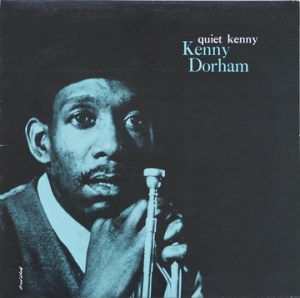
Kenny Dorham – Quiet Kenny

Hot Stamper Blue Note Albums Available Now

  • You’ll find STUNNING Shootout Winning Triple Plus (A+++) sound throughout this New Jazz recording pressed on fairly quiet OJC vinyl
  • We had 12 copies in our shootout, all OJCs from different eras — 1986, 2009 and 2020, so if you want to do your own shootout for this wonderful title, you definitely have your work cut out for you.
  • And may I point out that only one copy earned 3/3 grades, with the next best copy 2/3, and one at 2.5/2.5 — most pressings of this album fall far short of the sound of this Top Shelf pressing
  • It’s tubier, more transparent, more dynamic, with plenty of that “jumpin’ out of the speakers” quality that you won’t find on the average pressing
  • We guarantee there is dramatically more richness, fullness and presence on this copy than anything you have ever heard, and that’s especially true if you made the mistake of buying whatever godawful Heavy Vinyl pressing is currently on the market (which you can find discussed later on in the body of this listing)
  • 4 1/2 stars: “Cool and understated might be better watchwords for what the ultra-melodic Dorham achieves on this undeniably well crafted set of standards and originals that is close to containing his best work overall during a far too brief career.”

(more…)

Living and Learning Is How the Game Is Played

Hot Stamper Pressings of the Music of Elton John Available Now

A classic case of live and learn.

Scroll down to read more about what we learned from a big shootout we did many years ago for the Self-Titled album.

To illustrate how the game is played, we’ve copied some of the previous commentary into this listing to clarify how our understanding had changed from 2004 to roughly 2010, which is when all the comments you see below were written.

Live and Learn, Part One

These domestic original pressings have the very same stamper numbers as the British pressings. It appears that the metalwork was produced in England and shipped to America for pressing on domestic vinyl. What’s strange is that the American pressings are consistently brighter than the British pressings. Why this should be is a mystery, but I have a theory to explain it. The British stampers are used to make British LPs on that lovely see-through purple vinyl, and I’m guessing that that compound is a little smoother sounding than the vinyl that Uni uses. Either that or there is some other way that Uni produces their records so that they end up being brighter, even using the exact same stampers as the British ones.”

Partly true.

We have five British copies in stock, and the reason they don’t sound as good probably has less to do with British vinyl and more to do with the fact that the British ones we have are not the stampers we like the best. The domestic pressings with our favorite stampers have more highs and better highs and just plain sound better to us now.

Notice how I completely contradict myself below, yet both listings were up on the site all this time and nobody, especially me, seems to have noticed.

Live and Learn, Part Two

These original British pressings, with the lovely see-through purple vinyl, are the only good sounding versions of this album that I have ever heard. As you can imagine they are extremely difficult to come by in clean condition.

What is there to say about such a bald-faced turnabout?

Simple. We make our judgments based on the records we have on hand to play. When better pressings come along, or our equipment has improved to the point where we can appreciate other pressings, we will happily and unhesitatingly report what we hear.

The Best Version?

(more…)

The Three – Liner Notes and a Rave Review

Hot Stamper Pressings of The Three Available Now

Excerpts from the Liner Notes

On a windy and unusually cold night in Los Angeles, each of the three musicians arrived before the session start time of 10 PM on November 28, 1975. At exactly 10 PM, The Doobie Brothers session that was going on since morning ended. Two assistants immediately started setting up for the session. The Steinway concert grand piano, delivered the previous day, was wheeled in to the center of the room and got tuned. Shelly Manne’s drum kit was assembled in a makeshift “booth.” Microphones were set up, checked and positions adjusted.

Initially, Telefunken microphones were positioned on the piano, but later were replaced by two Neumann U87s. The piano lid was opened to the concert position and microphones were centered relative to the keys and placed a foot (30 centimeters) inward from the hammer and a foot (30 centimeters) away from the strings. One mic was pointed toward the bottom notes and the other pointed toward the top.

To record Ray Brown’s bass, a Shure SM56 and a Sony 38A were pointed at the bridge of the bass, two inches above it. The Shure was used to capture the attack and the Sony mic was used to capture the rich low tones.

Seven microphones were used to capture the sounds of the drum set. Two U87’s were placed overhead, roughly 16-inches above the cymbals facing down. The bottom quarter of the kick drum was dampened with a blanket on the outside and was mic’ed with a Shure SM56. SM56’s were also used for toms and bass toms. Sony 38A was used on the snare and Sennheiser’s Syncrhon on the high-hat.

Each mic was placed 2 inches away from the instruments in a close mic set up. Mr. Itoh got involved with fine tuning mic positioning for tone, stereo placement and balance. Meanwhile, final adjustments were being made on the cutting machine set up.

Within the hour, the set up was done and all preparations were completed. The musicians finished warming up and were ready for Take One. The usual banter subsided and everyone put on their “game face.” Even Ray Brown, who usually cracked jokes in a loud voice, looked serious as he turned his attention to Mr. Itoh, waiting for his cue. As soon as he was notified through the intercom that the cutting needle was put down, Mr. Itoh gave the signal with his hand, and the recording started. In 16 minutes, three tracks were recorded in rapid succession.

Relieved that the initial take was over, the musicians joined the producer and engineer in the control room to listen back from the 2-track tape that was used as back up. With the initial tension gone, all three excitedly made comments and evaluated their own performance and the sounds they got. The thumbs-up was given by the cutting engineer for take one and the musicians went back to the live room for the next take. This process was repeated until 4 AM the following morning, resulting in a total of three takes per track.

(more…)
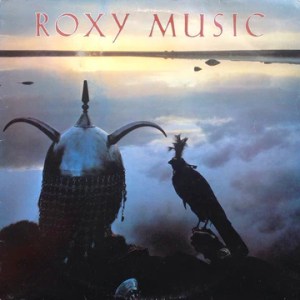
Roxy Music – Avalon

More of the Music of Roxy Music

  • An Avalon like you’ve never heard, with superb Double Plus (A++) sound throughout this vintage UK pressing – fairly quiet vinyl too
  • Copies that are exceptionally transparent, with three-dimensional depth and a wide soundstage, present this music the way it was meant to be heard
  • Credit Rhett Davies with creating the sonic space to allow the singers, instruments and subtle studio effects to be balanced and integrated from front to back, side to side and top to bottom
  • The sound may be a bit too heavily processed for some, but we find that on the best copies that sound really works for this music, some of the best ever produced by the band
  • 5 stars: “Ferry was never this romantic or seductive, either with Roxy or as a solo artist, and Avalon shimmers with elegance in both its music and its lyrics.”
  • These are the stampers that always win our shootouts, and when you hear them you will know why – the sound is big, rich and clear like no other
  • We’ve discovered a number of titles in which one stamper always wins, and here are some others

Records like Avalon get people (often known as audiophiles) to spend wads and wads of money in pursuit of expensive analog equipment good enough to bring this wonderful music to life in their very own listening rooms.

The album rewards a stereo with many of the qualities that audiophiles prize most highly when selecting equipment — spaciousness, transparency, clarity, detail, depth, soundstaging, speed, high frequency extension and the like.

The mix is as dense as any we know. Only the best copies have the ability to show you everything that’s on the tape. Credit must go to the amazingly talented Rhett Davies for creating the space to put so many instruments and sounds in.

We would add to that list presence and energy, along with warmth, fullness, and lack of smear on the transients. Whomp and rock and roll power do not seem to play much part in separating the best from the rest, although it’s nice when the bottom end is big and solid.

(more…)

VICS 1069 – In 2004 We Mistaked Finlandia on VICS for a Demo Disc

Hot Stamper Pressings of the Music of Sibelius Available Now

UPDATE 2024

We played a 4S/1S copy of this record, VICS 1069, and thought it sounded terrible.

It was flat and bright with splashy cymbals and crude brass.

Even if we assume the copy we played many years ago could have been much better than this latest pressing — which is doubtful but certainly possible — there is no reason to pursue this version of the album when there are known top quality pressings of this very same performance on Decca.


Our Old Review

DEMO QUALITY SOUND and quiet surfaces too.

I don’t know when I’ve heard this album with better sound. This one may be better than the best Shaded Dog for all I know — it’s that good.

You’ll notice that there is a copy of this very same record on the website for $1.99. That one sounds dull. I don’t think you’ll be able to find a better sounding copy of this record than the pressing we are selling here, because it really is an exceptionally good sounding record. If it weren’t, it would be more like $1.99.

(more…)

The Dutch Pressings Can Sound Good, Sure, But Great? Not a Chance

Hot Stamper Pressings of British Blues Rock Albums Available Now

Below you will see part of a stamper sheet that was generated for a shootout we did recently.

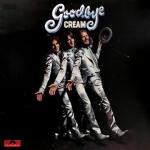
Please note that the album you see pictured — Cream’s Goodbye — is not the one we are discussing here. What it has in common with the mystery record we are writing about is both albums were made by British rock bands, both were recorded in England, and both sound their best on the pressings that were made in the UK.

For years we would buy any and all copies of this album on the early Polydor label as long as they looked original and had TML in the dead wax. The band was British, the production was British, but for some reason all the early pressings were mastered by The Mastering Lab right here in the states. Apparently somebody involved in the production thought they could do the best job, and they were probably right.

(The Mastering Lab was one of the great mastering houses in the 70s and 80s. There is no one alive today who can make a record remotely as good sounding as the ones they produced by the thousands in those days. If you know of any, please contact me at tom@better-records.com.)

Woops

Then we noticed that some of the Red Polydor pressings said “Made in Holland” on the label. We also noticed that the Holland pressings were never the winners of our shootouts.

It’s not as if they weren’t very good sounding pressings. They could earn grades of 2+ on both sides, as two of the seven copies shown below did, but most of the time their grades were a bit lower than those, and never as good as the best Brits.

Our appreciation of these facts, facts that had been staring us in the face for a decade or more, was lacking. We didn’t connect dots that were so obvious it was hard to miss them. Why I have no idea.

Eventually, after more shootouts had shown us again and again the limitations of the Dutch pressings, the penny dropped and we finally saw the labels for what they were: a clue to what pressings could win and what pressings couldn’t. Mind you: Every record still had to go through a shootout, and the person hearing and evaluating the record had no idea which of the two countries it might have been made in. But now we knew to pay a premium for the Brit-pressed records and only buy the Dutch at the right price.

Why did we keep at it until we had if figured out? Because we get paid to.

(more…)

Herrmann – The Mysterious Film World of Bernard Herrmann

More of the Music of Bernard Herrmann

  • This vintage pressing of the National Phil’s performance of selections from three of Herrmann’s classic “phantasmagorical” film scores boasts solid Double Plus (A++) grades from first note to last
  • A superb recording with a huge three-dimensional stage, open, clear, extended up top and down low — the sound on this pressing is nothing short of amazing
  • 4 stars: “The sound glitters, some of the brightest and richest audio of its period (attested to by the album’s being part of Decca/London Phase 4 Stereo), and the performances have a dignity and intensity that makes the music — drawn from the key parts of Herrmann’s scores for the Ray Harryhausen-created fantasy films The Three Worlds of GulliverMysterious Island, and Jason and the Argonauts — seem even more serious and profound than it originally did.”
  • If like us you’re a fan of blockbuster orchestral recordings, this is a killer album from 1975 that belongs in your collection.

Side one boasts some wonderful material from Mysterious Island and Jason and the Argonauts. Who else but Herrmann could have orchestrated such phantasmagorical goings on?

The Three Worlds Of Gulliver Suite takes up all of side two. The complete score from which the suite is taken can be found on the original Herrmann album The Three Worlds of Gulliver, a long-time and extremely rare member of the TAS Super Disc List.

This vintage London Phase 4 Stereo pressing has the kind of Tubey Magical Midrange that modern records can barely BEGIN to reproduce. Folks, that sound is gone and it sure isn’t showing signs of coming back. If you love hearing INTO a recording, actually being able to “see” the performers, and feeling as if you are sitting in the studio with the band, this is the record for you. It’s what vintage all analog recordings are known for —this sound.

If you exclusively play modern repressings of vintage recordings, I can say without fear of contradiction that you have never heard this kind of sound on vinyl. Old records have it — not often, and certainly not always — but maybe one out of a hundred new records do, and those are some pretty long odds. (more…)

The Strings on this Album Are a Tough Test

jobimthecomposerHot Stamper Pressings of the Music of Antonio Carlos Jobim Available Now

Credit engineer Phil Ramone for correctly capturing the sound of every instrument here: the guitars, piano, flutes, strings, drums, percussion instruments — everything has the natural timbre of the real thing.

I used to think this recording erred on the bright side, but not the Hot Stamper copies. They are tonally right on the money.

When the balance lacks lower midrange, the sound can get lean, which causes the strings to seem brighter than they really are, a not uncommon problem with some of the pressings we heard.

We had quite a batch of these to play, including imports, originals, reissues (all stereo), and one lone mono, which was so ridiculously bad sounding we tossed it right out of the competition and into the trade pile.

For those of you playing along at home, we are not going to be much help to you here in finding your own Hot Stampers. Every version had strengths and weaknesses and all are represented in the three listings we are putting up today.

The sound of this side one blew our minds — no other copy could touch it. So open and airy, yet with real weight to the piano and a clear and strong bass line, this copy did EVERYTHING right.

The strings are very much part of the ensemble on this album, and getting good string tone, with just the right rosiny texture, the least amount of smear, freedom from shrillness or hardness — this is not easy to do. 

Side two was quite good at A+ to A++, but we found other copies that bested it, including one Triple Plus that was in a league of its own. Even so, this copy on side two would be hard to beat without a number of carefully cleaned pressings to choose from. 

Here are some records we’ve discovered that are good for testing string tone and texture.

Here are some records we’ve discovered that are good for testing midrange tonality.

(more…)