Month: July 2022

Clair de Lune – Compare and Contrast Sides One and Two

More of the Music of Claude Debussy

This Shaded Dog LP has DEMONSTRATION QUALITY SOUND, if what you’re demonstrating is not a Hi-Fi spectacular, but rather a sublime presentation of an exceptionally sweet and natural string section in an orchestra, presented here on analog disc pressed more than sixty years ago.  

I can’t imagine a more beautiful record, both in terms of the program and the sound. This record is a wonderful example of what the Decca recording engineers were able to capture on tape, and the RCA mastering engineers were able to master from that tape.

Even though the album was recorded by Decca, it’s a superb example of Living Stereo Tubey Magic at its best. There will never be a reissue of this record that even remotely captures the space, transparency, sweetness and richness of the sound here.

Side Two

A++ to A+++ or better! Without more copies in hand it’s hard to know how good the sound can get, but we found it Hard To Fault (HTF).

This side has more extension up top and down low and more texture to the strings.

Side One

A++, although it starts out a bit weaker than that and only really gets good a few minutes into the side. (We hear this effect fairly often on the records we play. Noticing things like this is what we do for a living.)

There is some smear and it is slightly opaque as well.

You will hear what we mean when you flip it over and those two problems disappear.

(more…)

The Freewheelin’ Bob Dylan – We Preferred the Mono in 2016

Hot Stamper Pressings of the Music of Bob Dylan Available Now

Back in 2016 we liked the Mono pressings of this album best. We wrote:

We greatly prefer the best Mono pressings to the best stereo copies, but they are very hard to come by.

This is our favorite of the early Dylan albums for both music and sound. We’re picking up both mono and stereo copies when we see them clean (which is rare) but the best mono copies truly take this music to a whole new level.

Now we like them both, and we like the stereo pressings maybe even a bit better.

Live and learn we say!

This record has been sounding its best for many years, in shootout after shootout, this way:

Andrew Gold – Self-Titled

More Andrew Gold

Asylum – A Label We Love

  • These sides are dripping with Analog magic — transparent, sweet and rich from beginning to end and the bass is especially meaty and well-defined
  • Those of you who have tried our Hot Stampers of JT will know exactly what to expect; Garay LOVES BASS and so do we
  • “An abundance of riches can be heard in Andrew Gold’s first solo album. There are great Beatlesque melodies here, as well as heartfelt love songs that are Gold’s specialties. Playing nearly all of the instruments himself makes this a truly “solo” effort.” 
  • We’ve recently compiled a list of records we think every audiophile should get to know, along the lines of “the 1001 records you need to hear before you die,” with an accent on the joy some our favorite lesser-known audiophile-quality recordings can bring to your life.
  • Andrew Gold’s debut is a good example of a record most audiophiles haven’t heard, but the more open-minded among you might really benefit from giving it a chance, the way I did all the way back in 1975

(more…)

If You Are At All Serious About Audio, You Cop to Your Mistakes

Hot Stamper Pressings of the Music of Steely Dan Available Now

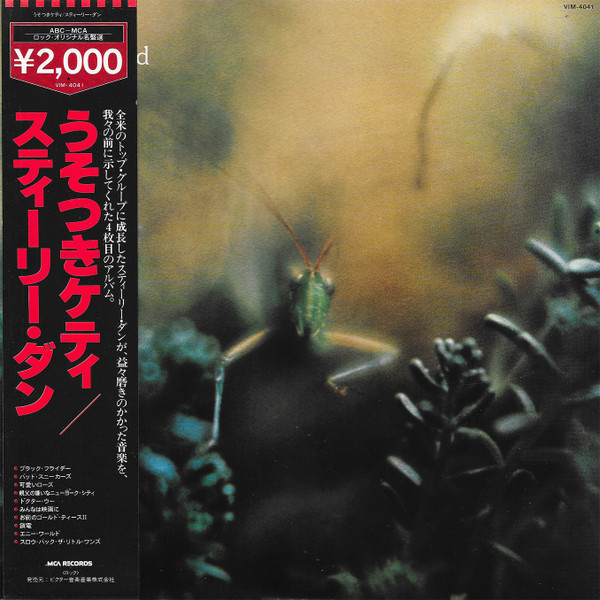
And to think I used to swear by this pressing of Katy Lied — specifically the 2000 Yen reissue, not the 1500 Yen original, which sounded dull, more like the average domestic original I was trying to better.

This one is brighter and cleaner, but at the cost of more distortion, more congestion and, now that I have a better understanding of records and their variations, an incorrect tonal balance. The Japanese tried to fix the smooth sound of the dubbed tape they were given and, in so doing, ruined what was good about the sound. 

Another example of just how wrong one can be — one, in this case, being me circa 1995.

Let’s Talk About Us

We happily admit to our mistakes because we know that all this audio stuff and especially the search for Hot Stampers is a matter of trial and error.

We do the trials; we run the experiments,

That’s the only way to avoid the kinds of errors most audiophiles make in their quest to find the best sounding pressings of their favorite albums,.

Being skeptical of every claim you have not tested for yourself is key to getting good results from this kind of work.

Of course, being human we can’t help but make our share of mistakes. More than our share; we’ve made them by the hundreds.

The difference is that we learn from them. We report the facts to the best of our ability for every shootout we do.

Every record gets a chance to show us what it’s made of, regardless of where it was made, who made it or why they made it. 

If we used to like it and now we don’t, that’s what you will read in our commentary. Our obligation is to only one person: you, the listener. (Even better: you, the customer. Buy something already and see what you have been missing.)

On every shootout we do now, if the notes are more than six months old, we toss them out. They mean nothing. Things have changed, radically, and that’s the way it should be.

With each passing year you should be hearing more of everything on your favorite LPs.

That’s the thrill of this hobby — those silly old records just keep getting better. I wish someone could figure out how to make digital get better. They’ve had forty years and it still leaves me wanting more. You too, I’m guessing.

(more…)

How Do the Butterfly and Small Red E Pressings Sound on Strange Days?

Hot Stamper Pressings of the Music of The Doors Available Now

The Butterfly and Small Red E labels are so contemptibly thin and harsh they are not worth the vinyl they were pressed on.

You would be much better off with the DCC Gold CD than any of the reissue vinyl we’ve played.

The fact of the matter is that good digital beats bad analog any day.


This a Must Own Record, a 1967 recording with unbelievable RAW POWER. Most audiophiles very likely have no idea how well recorded this album is, simply because most pressings don’t do a very good job of translating the energy and life of the master tape onto the vinyl of the day.

The second Doors album is without a doubt one of the punchiest, liveliest, most POWERFUL recordings in the entire Doors catalog, right up there with their debut.

I’m guessing this statement does not comport with your own experience, and there’s a good reason for that: not many copies of the album provide evidence of any of the above qualities. Most pressings are opaque, flat, thin, veiled, compressed and lifeless. They sound exactly the way so many old rock records sound: like any old rock record.

Botnick Knocks It Out of the Park

But this album is engineered by Bruce Botnick. The right pressings give you the kind of low-end punch and midrange presence you hear on Love’s first album (when you play the right gold label originals). Botnick engineered them both, and what’s even more amazing is that The Doors second is in many ways an even better recording than Love’s!

Very tubey from start to finish, the energy captured on these Hot Stampers has to be heard to be believed. Not to mention the fact that the live-in-the-studio musicians are swimming in natural ambience, with instruments leaking from one mic to another, and most of them bouncing back and forth off the studio walls to boot.

But the thing that caught us most by surprise is how much LIFE there is in the performances on the better Hot Stamper copies. Morrison pulled out all the stops on songs like Love Me Two Times and the last track on the album, When the Music’s Over. Unless you have a very special pressing there is almost no chance you will ever hear him with this kind of raw power.

Top 100? If we could find more than a sporadic few clean, good sounding copies each year it would surely make the list, joining the other two of the band’s first four albums on there now.

The Fleetwood Mac You Don’t Know – Future Games

More of the Music of Fleetwood Mac

Danny Kirwan is the guy who really takes control on Future Games, the band’s 1971 release. Some of the best songs this band ever did are here, many of them written by Kirwan.

The opening track on side one, Woman Of A Thousand Years, and the opening track on side two, Sands Of Time, are both his and set the tone for the whole side, which is folky, ethereal and extended. The best of these pop songs don’t seem to follow any of the standard pop conventions of verse verse chorus. They seem to wander on a journey of discovery. In that way they remind me a little bit of 20th century French classical music, or some of the longer tracks from Neil Young’s Zuma.

Any Fleetwood Mac greatest hits collection would be a joke without those tracks. They are of course missing from most of the compilations I am familiar with. Sadly, few people miss them because few people have ever even heard them.

This period Fleetwood Mac, from Kiln House through Mystery to Me (both are records I would take to my Desert Island) has always been my favorite of the band. I grew up on this stuff, and I can tell you from personal experience, having played a dozen (or more, I lose track there are so many) copies of Future Games practically all day at some pretty serious levels that it is a positive THRILL to hear it sound as good as it does on the best pressings.

Obsession Is the Best Predictor of Audio Evolution

Hot Stamper Pressings of the Music of Ambrosia Available Now

Ambrosia‘s debut is an album we admit to being obsessed with.

It is our contention that to reach the most advanced levels of audio, you have to do two things.

First, you must become obsessed with getting your favorite albums to sound their best, and,

Second, you must then turn your obsession with those albums into concrete action.

What kind of action?

Finding better sounding pressings and improving your stereo and room.

We wrote about it here. An excerpt:

As a budding audiophile, I went out of my way to acquire any piece of equipment that could make these records from the ’70s (the decade of my formative music-buying years) sound better than the gear I was then using. It’s the challenging recordings by Crosby, Stills, Nash and Young, as well as scores of other pop and rock artists like them, that drove my pursuit of higher quality audio, starting all the way back in high school.

(more…)

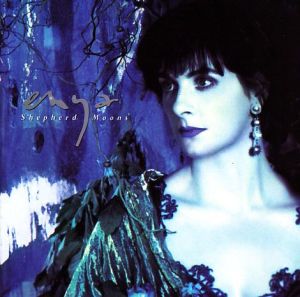
Enya – Shepherd Moons

More Enya

  • A tough record to find in audiophile playing condition these days – the import vinyl was never all that quiet even back in 1991 when I was selling these as brand new
  • The sound here is airy, open, spacious, and transparent – this may not be our favorite music in the world, but it’s hard to argue with sonics like this
  • Tonally correct, clear and present – here’s a copy that can put a living, breathing Enya right between your speakers
  • 4 1/2 stars: “Shepherd Moons does have one key factor that’s also carried over from Watermark — it’s quite good listening…Enya shows herself to still have it, to grand effect.”

The vinyl on these pressings from the ’90s often had problems like these. I was selling them as brand new imports at the time and they often came with noise issues of one kind or another. (more…)

The D4/D5 Stereo Pressings Are Just Awful on My Fair Lady

Hot Stamper Pressings Featuring Shelly Manne Available Now

In our experience, the Black Label stereo originals with D4/D5 stampers are terrible sounding.

With those stampers, My Fair Lady is undoubtedly a hall of shame pressing, as well as another early pressing we’ve reviewed and found wanting.

Both sides graded “No,” our not-especially-technical term for a record that sounds really bad.

Notes for Side One:

Track one is bright and unnatural up top. Track two is not very musical.

Notes for Side Two:

Track one is very weird sounding, thin and small.

(Obviously there was no need to play a second track.)

As you may have read elsewhere on the site, some Contemporary label originals are very poorly mastered, which should put paid to the idea that Hot Stampers are only, or even usually, original pressings.

In our most recent shootout, the second-best sounding pressing was on the early Black Label. We would love to give out the stampers for that one, but we don’t do that.

(more…)

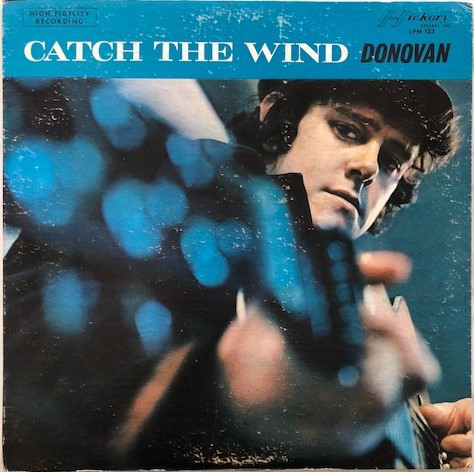
Donovan / Catch The Wind – Superb in Mono (and Pretty Good in Reprocessed Stereo)

Reviews and Commentaries for the Music of Donovan

The sound when summed to mono is natural, with a correct top end. This is some of the best of the early, folky Donovan from 1965.

We were less than impressed with the sound of this electronically reprocessed album in stereo, but were very pleasantly surprised when we hit the mono button on our EAR phono stage. The weird, phasey top end disappeared almost completely on side two, and Donovan’s voice and guitar sounded pretty darn right to us by the second track (the first track on side two is a mess).

If you do not have a mono switch on your phono stage or preamp, this is probably not the right record for you.

We see a few mono and stereo copies of the album in our travels about town but Donovan records from 1965 have a marked tendency to be scratched if not absolutely trashed.

Finding one that plays this quietly was completely unexpected. It might have been better in mono, but these days we have to be grateful for any early Donovan album on vinyl, especially one that sounds this good on side two.

(more…)