 Hot Stamper Pressings of Recordings by Decca Available Now
The record you see pictured is not the record we are discussing in this posting. The stamper numbers you see below belong to a different album.
We’ve lately been giving out much more stamper information than we used to, but for now we are keeping this title close to the vest.
We happen to know the best stampers for this album, but somehow a copy with the “bad” stampers ended up in our shootout. It did about as badly as they usually do.
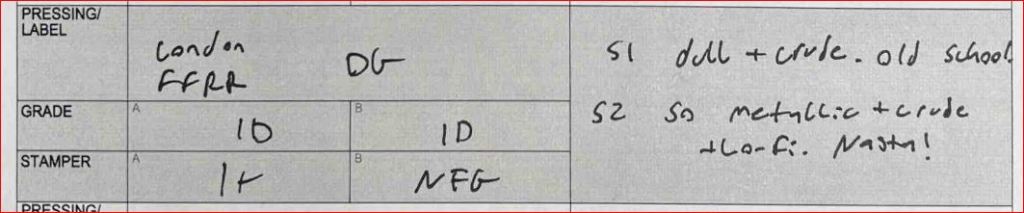
Of course, the person sitting in the listening chair had no idea that a copy with the worst stampers was playing. The jackets and labels of this pressing are identical to the copies with the good stampers.
He simply heard what the recording actually sounds like when it’s mastered badly and registered his complaints.
Side One
- Dull and crude. Old school.
- 1+
Side Two
- So metallic and crude and lo-fi. Nasty!
- NFG
Apparently Mr. D, real name: Jack Law, did a piss-poor job mastering this album. Another engineer would come along sooner or later and master the record right, so right that it became one of our favorite Demo Discs for sound and performance.
How did this pig’s ear eventually manage to become a silk purse?
Simple. It was always a great recording, it just needed to be mastered right, and whoever got the job to remaster it knocked it out of the park the first time through.
This title makes a point near and dear to our hearts: that the idea (and operational premise of most record collectors) that the originals have superior sound is just a load of bunk.
If you want better sounding records, take our advice and open your mind to the idea that some reissues have the potential to sound better than even the best original pressings. (To be clear, “potential” is doing a lot of work in the sentence above. More on that subject here.)
These specific reissues, for starters, and there are hundreds more on the blog you can read about here.
Of course this is nothing but bad news for the average audiophile record collector, who simply does not have the time or money to go through the hassle and expense of buying, cleaning and playing every pressing he can get his hands on.
But good news for us, because we do.
Two important points to keep in mind:
One: skeptical thinking is essential if you are to make any progress, whether in audio or record collecting.
Two: Pay no attention to the so-called experts.
It has been our experience going all the way back to 1995 that they rarely know what they are talking about.
Their stock in trade is conventional wisdom, and rarely do they offer much in the way of experimental evidence to back up what judgments they’ve made or the conclusions they’ve arrived at.
That’s assuming they can even be bothered to approach the subject of pressing variations scientifically. Due to their failure to follow rigorous protocols in their shootouts, the result is always malpractice to some degree.
If it somehow makes sense for record-collecting audiophiles to buy these modern pressings, how do you explain the hopelessly bad sound of the more than 300 we’ve auditioned over the last 30 years, as well as the failing grades given to those we’ve played more recently? These records are simply no good, regardless of what the charlatans in the audiophile press would have you believe.
Our records may be expensive, but they deliver on their promise of exceptional sound quality, a fact we think counts for something in the world of faux-audiophile records we live in.
Further Reading