turn-up-your-volume-test

Being able to play some records at good loud levels is key to properly evaluating their sound.

It is far and away the toughest test we know of.

If you want to hear the difference between a Hot Stamper pressing and any other pressing, play the two of them good and loud and see which one sounds right.

The better sounding pressing will almost always be the Hot Stamper.

Listening in Depth to Heavy Weather

Hot Stamper Pressings of the Music of Weather Report Available Now

Heavy Weather has some of the biggest, boldest sound we’ve ever heard.

It’s clearly a big speaker Jazz Demo Disc. Play this one as loud as you can. The louder you play it, the better it will sound.

The commentary below contains track-by-track advice on what to listen for when auditioning the album.

Side One

Birdland

Not an easy track to get right; there’s so much upper midrange and high frequency information to deal with. If the synthesizers and horns are too much, the effect is exciting but won’t wear well. Too much 6k is the problem on most copies, along with not enough above 10. That is a deadly combination.

A Remark You Made

Such an original composition. This is the band at their unconventional, uncommercial best.

(more…)

What to Listen For on Breakfast in America

What follows is some advice on what to listen for.

If you are interested in digging deeper, our listening in depth commentaries have extensive track breakdowns for some of the better-known albums for which we’ve done multiple shootouts.

What to listen for, you ask?

Number One

Too many instruments and voices jammed into too little space in the upper midrange. When the tonality is shifted-up, even slightly, or there is too much compression, there will be too many elements — voices, guitars, drums — vying for space in the upper part of the midrange, causing congestion and a loss of clarity.

With the more solid sounding copies, the lower mids are full and rich; above them, the next “level up” so to speak, there’s plenty of space in which to fit all the instruments and voices comfortably, not piling them one on top of another as is often the case. Consequently, the upper midrange area does not get overloaded and overwhelmed with musical information.

(more…)

Folks, This Is Why We Love Vintage Analog

Hot Stamper Pressings of the Music of Emerson, Lake and Palmer Available Now

This is ANALOG at its Tubey Magical finest. You ain’t never gonna play a CD that sounds like this as long as you live. I don’t mean to rain on anyone’s parade, but digital media are evidently incapable of reproducing this kind of sound. There are nice sounding CDs in the world but there aren’t any that sound like this, not in my experience anyway.

If you are thinking that someday a better digital system is going to come along in order to save you the trouble and expense of having to find and acquire these expensive original pressings, think again.

This is the kind of record that shows you what’s wrong with your BEST sounding CDs. (Best not to talk about the average one in your collection, or mine. The less said the better.)

This is the kind of record that somebody might hear in a stereo store and realize that the digital road he’s been going down for so many years is nothing but a sonic dead end.

The organ captured here by Eddie Offord (of Yes engineering fame — we’re his biggest fans) and then transferred so well onto our Hot Stamper pressings (that’s partly what makes them Hot Stampers, right?) will rattle the foundation of your house. This music really needs that kind of megawatt reproduction to make sense.

It’s big bombastic Prog Rock that wants desperately to rock your world.

At moderate levels it just sounds overblown and silly.

At loud levels it actually will rock your world.

(more…)

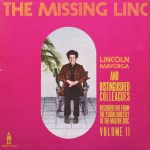
Lincoln and Doug Produced The Audiophile Sgt. Pepper of Its Day

Hot Stamper Pressings of the Music of Lincoln Mayorga Available Now

When I was selling audio equipment back in the 70s (Audio Research, Fulton speakers), The Missing Linc this was a favorite Demo Disc in our store.

With a big speaker like the Fulton J, the bass drum at the end of track two would shake the walls. At the time I had never heard a record with bass that went remotely that deep. (The album came out in 1972. I’m guessing I probably first heard a copy in ’75 or ’76 when I bought my Fultons, which would have been sometime in my early twenties.)

Every bit as amazing to me was the string quartet on side 2. You could actually hear the musicians breathing and turning the pages on their music stands, just as if you were actually in their “living presence.” No recording I had ever owned allowed me to hear that level of natural detail.

This is one of the albums that made me realize how good audio in the home could be.

(more…)

Listening in Depth to Emerson, Lake & Palmer

Hot Stamper Pressings of the Music of Emerson, Lake and Palmer Available Now

If you’ve got the system to play this one loud enough, with the low end weight and energy it requires, you are in for a treat with Emerson, Lake and Palmer’s debut.

The organ that opens side two will rattle the foundation of your house if you’re not careful. This music really needs that kind of megawatt reproduction to make sense. This is bombastic prog that wants desperately to rock your world. At moderate levels it just sounds overblown and silly. At loud levels, it actually will rock your world.

To play this record right, you should have, at a minimum:

  • Big dynamic speakers, and they should be pulled out well into the room to create a three-dimensional presentation, in this case of a live rock concert. If the speakers are too big for the room, or stuck in the corners, you haven’t got a chance with a recording as powerful as this one.
  • A large room. (Our new studio has a 12 foot ceiling, a big help with a blockbuster recording such as this one.)
  • Strong walls with no windows, and, if possible, a concrete floor to keep the bass from leaving the room.
  • Seating for a single listener far from any boundary, especially the back wall (a common problem with small-ish rooms).
  • Extensive room treatments to deal with the loud levels this music requires.
  • Enough amplifier power driving speakers with big enough woofers to move all the air in the listening room with authority.
  • And, finally, high quality electricity, a heavily tweaked front end and all the rest of the audio stuff we discuss endlessly on this blog.

Without all of these things, it’s hard for us to imagine anyone could hear this record sound the way the artists and engineers wanted it to. Playing a record like this in a small room at moderate levels practically guarantees that the listener will not be able to hear what makes the best copies of this album so special.

(more…)

Turned Up Good and Loud, Carnavalito Is Glorious

Records that Must Be Turned Up Good and Loud to Sound Their Best

UPDATE 2024

The commentary about Carnavalito you see below was written in 2016. With the 12 foot high ceiling in our new, bigger and quite a bit more spacious studio, I’ll bet this album sounds even more mind-blowing than it did back then.

Ken Perry mastered all the best early pressings — accept no substitutes.

Here in 2024 we’ve just done the shootout again, our first since 2016.

Sky Islands is not an easy record to find as it didn’t sell particularly well, but those of you who treasure the music of Weather Report or Return to Forever or The Mahavishnu Orchestra the way we do here at Better Record (or, to be clear, some of us do) will find much to like here.

Finding customers for music most audiophiles have never heard of, let alone heard, has always been the trick with well recorded, mostly unknown releases such as Sky Islands.

Which means that this is a woefully underrated album that should be more popular with audiophiles.

It’s also one of those difficult-to-reproduce records that I credit with helping me make real progress in audio (along with a great many others.).


Carnavalito is a track that really comes alive when you crank up the volume. I played it full blast on two different occasions for audiophile friends of mine just to show them what happens when a big speaker system meets a recording with absolutely amazing audiophile quality sound — big and bold, wall to wall and then some!

(more…)

The Turn Up Your Volume Test – Blood Sweat and Tears

Hot Stamper Pressings of the Music of Blood, Sweat and Tears Available Now

UPDATE 2025

This commentary was written about twenty years ago, back in the days when I could find clean 360 Label pressings of this album actually sitting in the bins of used record stores. The picture at the bottom says it all — I think we had more than forty copies to work through for our first shootout, pressings of the album that I had been buying (many from Robert Pincus, he was the B,S&T expert back then) since the late-80s. Blood, Sweat and Tears and I go way back.

You may notice that we rarely write about the album these days, and that’s simply because we are not able to find clean, early label pressings to play anymore. (The Red Label pressings can be good but they don’t come close to winning shootouts. Without at least some potential Shootout Winning copies, it makes no sense to do the shootout. The winners are the ones that pay for the losers, naturally, with some profit left over if things go as planned.)

Speaking of which: Our last shootout was quite a few years ago. If we somehow managed to luck into a few copies locally, it’s possible we could do the shootout tomorrow, but buying this title on Discogs and Ebay has been a nightmare, with upwards of 90% of the copies we buy ending up marked return to sender.

The cost in labor (and frustration) we incurred to pursue the album long ago forced us to move on, after plenty of swearing and licking of wounds of course. How is it that record sellers can be so oblivious to the scratches and wear on their consistently noisy vinyl offerings is beyond me.

For those of you who can’t devote the resources to finding a good copy on the Columbia 360 Label, the Gold CD put out long ago by Mobile Fidelity is excellent and well worth whatever you have to pay for it. And I mean that sincerely.


Our Old Commentary

In my opinion this is the BEST SOUNDING rock record ever made. I may be biased because I like the music so much, but played on a Big Speaker System a Hot Stamper pressing is nothing less than ASTOUNDING, the ultimate Demo Disc. It has the power of LIVE MUSIC.

You don’t find that on a record too often, practically never in fact. I put this record at the top of The Best Sounding Rock Records of All Time link (seen on the left) and said it was in a class of its own for good reason — IT IS IN A CLASS OF ITS OWN.

As I’ve noted before, this record is a milestone in the history of popular music. Not only is it The Most Successful Fusion of Rock and Jazz Ever. It’s also One of the Finest Recordings of Popular Music Ever.

The sound is nothing short of amazing. Just the drums alone are enough to win awards: the kick drum has real kick, the snare may actually be the best rock snare ever recorded, the cymbals shimmer like real cymbals; almost everything is right with this record. Especially the music.

Good Demo Disc, Good Test Disc Too

This is the kind of record that doesn’t fall into the good Demo Disc, bad test disc trap. It’s both a good Demo Disc and a good test disc; not too many records can make that claim. (Especially the kinds of records audiophiles tend to like.)

The good copies of this album sound good on almost any system. But the better systems reveal qualities to this recording that you are very unlikely to have ever heard on another record. That’s the Demo side.

On the test side, no matter what level your system is at, any change you make will be instantly obvious on this recording, for good or bad. Nothing can fool it. It’s too tough a test, the toughest I know of bar none. For this record to sound right, truly right, every aspect of its reproduction has to be at the highest level. Any shortcoming will be glaringly obvious. The record may still sound good, but it won’t really sound right. (Knowing what “right” means in this context makes all the difference in the world of course.)

One reason the turn up your volume test is such a great test — the louder the problem, the harder it is to ignore.

(more…)

First Question: “How loud do you play your records?”

More Records that Can Only Sound Their Best Turned Up Good and Loud

Our good customer, Conrad, wrote us about his experience with a Stevie Ray Vaughan album a while back.

You can find the bulk of his letter here.

I wanted to make a point about one of his observations. (Emphasis added.)

“There seems to be a threshold level for this record at which it sounds congested below, but which it comes alive above (and how).”

Conrad,

You hit the nail on the head with your newfound appreciation of the sound of the two sides at louder levels.

We don’t know what our records sound like at moderate levels.

This is true for the electric blues albums of Stevie Ray Vaughan, but just as true for rock, jazz and even classical.

We don’t play them at moderate levels, and we don’t want to hear them at moderate levels.

There are at least two very good reasons for our position:

The first one is the most obvious — we don’t think music played at unrealistically low levels is very enjoyable.

And two, lower levels interefere with our ability to properly judge the sound of the pressings we play in our shootouts.

Playing records quietly too often obscures their faults.

It also reduces their energy, as well as whatever dynamic contrasts they might have, their ability to play clean in the loudest climaxes or choruses, and on and on down the list.

(more…)

Lincoln Mayorga and Distinguished Colleagues Implore You to Turn Up Your Volume

Hot Stamper Pressings of Direct-to-Disc Recordings Available Now

S9 is hands down one of the best examples of a recording that only really comes to life when you have your volume up good and loud.

One obvious reason that our turn up your volume test makes a good test is that the louder the problem, the harder it is to ignore.

There’s not much ambience to be found in their somewhat dead sounding studio, and very little high frequency boost to any instrument in the mix, which means at moderate levels this record sounds flat and lifeless.

(You could say it has that in common with most Heavy Vinyl pressings these days, assuming you wanted to take a cheap shot at those records, which, to be honest, I don’t mind doing. They suck; why pretend otherwise?)

But turn it up and man, the sound really starts jumpin’ out of the speakers, without becoming phony or hyped-up. In fact, it actually sounds more NATURAL and REAL at louder levels.  

A Quick and Easy Test

Play the record at normal levels and pick out any instrument — snare, toms, sax, bass — anything you like.

Now turn it up a notch and see if the timbre of that instrument isn’t more correct.

Add another click of volume and listen again.

I think you will see that with each increase in volume, the tonality of each instrument you hear becomes more accurate. The insturments are sounding more real than they did at lower levels.

This record would sound right at something very close to, if not actual, LIVE levels, assuming you have the system and the room that can manage it. (more…)

Chicago and The Hottest Sounding Vinyl – Are You a Thrillseeker Too?

We admit to being thrillseekers here at Better Records, and make no apologies for it.

The better the system and the hotter the stamper, the bigger the thrill.

I want to hear the music I love playing louder and sounding better, with more energy and excitement, and the reason I spent an ungodly number of hours over the last 40+ 50+ years working on my stereo is that the kind of sound that can give me thrills doesn’t happen by accident.

You have to work your ass off to get it.

And spend a lot of money.

And search for those pressings that have the sound you are looking for.

And be very lucky.

I don’t play records to sip wine and smoke cigars. I play records to feel something.

Whether the music is rock, jazz or classical, I want to feel the power of the music just as you would feel it at the live event.

(more…)