10-2020

The Turn Up Your Volume Test – Home Plate

More of the Music of Bonnie Raitt

This is a classic case of a record that really starts to work when the levels are up. It’s so free from distortion and phony processing it wants to be played loud, and that’s the level this music works at. It’s the level it was no doubt mixed at, and that mix sounds pretty flat at moderate levels. If you want to hear the real rockin’ Bonnie Raitt you gots to turn it up!

Like a lot of the best recordings from the mid-’70s, the production and recording quality are clean and clear, and we mean that in a good way. There is very little processing to the sound of anything here; drums sound like drums, guitars like guitars, and Bonnie sings without the aid of autotuning –– because she can sing on-key, and beautifully. Her vocals kill on every song. (Her dad had a pretty good set of pipes too.)

Her Best Material

What sets this album apart from others made around this period is the strength of the material. Every song on side one would fit nicely on a greatest hits album, they’re that good. The reason side one has always been a personal favorite is that it ends with the best track on the album, maybe the best song Bonnie ever sang, the excruciatingly heartfelt ballad, My First Night Alone Without You. If that one doesn’t hit you hard, something somewhere is very wrong. 


More Hot Stamper Commentary from 2008

This original WB Palm Tree label LP has THE BEST SIDE ONE we have ever heard here at Better Records. “A Triple Plus” sound means you’re probably hearing the album better than they did when they played back the master tape in the control room. (Studio monitors being what they are.) Since this is one of my three favorite Bonnie Raitt albums — the others being Sweet Forgiveness and Nine Lives — and quite possibly the best sounding album she ever made, it goes without saying that this is THE Must Own Bonnie Raitt Hot Stamper Pressing of All Time.

Nine Lives? Luck of the Draw?

What about the Capitol albums she recorded with Don Was?

Man, they sure don’t sound like this! That stuff is way too digital, overly-processed and modern sounding for my taste, not to mention my delicate hearing.

The first two she did for Capitol are fine albums in their own right, but she was already out of gas by the time she got accepted by the record buying public and the Grammy Award committee.

That was 1989; this album is from 1975 when she still had her groove on. You may gain a lot of wisdom as you age from thirty-six to fifty, but you don’t gain a lot of rock and roll energy (or any other kind, for that matter).

The Big Sound

This a big production, with horns and strings and lots of wonderful sounding instruments thrown into the mix such as tubas, mandolins and autoharps to name just a few. Getting all these sounds onto the vinyl of the day is a tough challenge, but some copies had the goods, and this is one of them.

The Supertramp You Don’t Know – Even In The Quietest Moments

Hot Stamper Pressings of the Music of Supertramp Available Now

After discovering killer Hot Stampers for this Forgotten Classic we feel the album can hold its own with any of Supertramp’s classic ’70s releases, from Crime of the Century all the way through to Breakfast in America.

Our White Hot stamper pressings showed us some of the best Supertramp sound we have ever heard on any of their albums, which is saying a lot. Supertramp is one of the most well-recorded bands in the history of pop music. GEOFF EMERICK took over most of the recording duties after the band decided to work with a different engineer for this, their 1977 album.

KEN SCOTT recorded the two albums that came before this one, Crime and Crisis, and as has been well documented on this very site, he knocked the two of them out of the park.

As I’m sure you know, both famously engineered The Beatles.

What we didn’t know, not until 2015 anyway, was how amazingly well recorded this album was.

In 2005 we noted that we had basically given up on ever finding a good sounding copy of Even in the Quietest Moments. It’s now ten years later. Having gone gone through more copies than we care to remember we think we’ve got EITQM’s ticket. We think we know which stampers have the potential to sound good as well as the ones to avoid. Finding the right stampers has been a positive boon.

Once we discovered the right stampers we were in a much better position to hear just how well recorded the album is. Now we know beyond all doubt that this recording — the first without Ken Scott producing and engineering for this iteration of the band — is of the highest quality, in league with the best.

Until recently we would never have made such a bold statement. Now it’s nothing less than obvious.

(more…)

You Too Can Get an Old Buffalo Springfield Record to Sound This Good

More of the Music of Buffalo Springfield

This commentary is from 2005 or thereabouts.

Not long ago we found a White Hot Stamper pressing of Last Time Around that really blew our minds. We were surprised to hear some of the breathiest, silkiest vocals we’ve ever heard on ANY Buffalo Springfield album, with startling presence and immediacy to boot! Side two had BY FAR the most energy and life of any side of any copy we’ve ever played. Man, does it ROCK.

Even as recently as 2010 we would not have expected to find that kind of sound on a vintage ’60s pop/rock album. We know better now.

When you get hold of the right copy and know how to clean it and play it right, these vintage pressings (well, the White Hot ones anyway) are a damn sight better than the vast majority of audiophiles think they are. How is such apparently never-before-possible sound being heard now, 45 years after the record came out? Our answer can be found below. 

The kind of MIDRANGE MAGIC found on this pressing let us hear into the music in a way we (and you too I’m guessing) never imagined was possible.

Most copies have no bass, no real top, and are compressed so badly they sound more like cardboard than vinyl. But not this copy — it breaks the mold, revealing to the world (well, our world anyway, the world at Better Records) that those badly recorded Buffalo Springfield records from the ’60s weren’t so badly recorded after all. (more…)

Love for Three Oranges Suite on Classic Records Heavy Vinyl

More of the music of Sergei Prokofiev (1891-1953)

Reviews and Commentaries for the Music of Sergei Prokofiev

The standard Classic Records failings are as obvious and as irritating on this remaster as they are on practically all of the others.

A lack of ambience. Smeary and hard strings. A lack of Tubey Magic. Overall veiled and recessed presentation.

The Bottom line: This is not a good sounding record.

It should go without saying that the real Mercury pressing is none of these things.

It has long been our judgment that Classic Records made very few good records. Why should this one be any different?

These Mercury releases apparently fooled a lot of audiophiles though.  Allow me to quote a writer with his own website devoted to explaining and judging classical recordings of all kinds. His initials are A.S. for those of you who have been to his site.

Classic Records Reissues (both 33 and 45 RPM) – These are, by far, the best sounding Mercury pressings. Unfortunately, only six records were ever released by Classic. Three of them (Ravel, Prokofiev and Stravinsky) are among the very finest sounding records ever made by anyone. Every audiophile (with a turntable) should have these “big three.”

Obviously we could not disagree more. I’ve played all six of the Classic Mercurys. The Ravel and Prokofiev titles are actually even worse than the Stravinsky we reviewed here on the blog.

(more…)

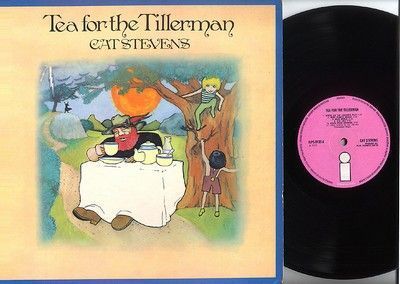
Tea For The Tillerman – Live and Learn, Circa 2006

Hot Stamper Pressings of the Music of Cat Stevens Available Now

A blast from the past, this time from 2006.

I have to admit that I was dead wrong when I said that the best copies of this album were the Brown Label A&M pressings. I see now how I made this error.

We played four pink label copies and our best A&M LP is only better than three of them.

But it sure isn’t better than this one! I’ve heard a good dozen or so Pink Labels and this is the first one that ever blew my mind. I thought I knew this record, but this copy changes everything.


The above statements may have been true for 2006 but they are not true anymore.

The early Island pressings win every shootout and no domestic pressing has in years.

It’s simply the result of better cleaning technologies and better playback, something we refer to often on this blog as the revolutionary changes in audio we’ve partaken of over the last twenty or so years.


Our White Hot Stamper Commentary from 2006 follows:

This White Hot Pink Label Original British pressing is the ALL TIME CHAMPION Tea For The Tillerman. After a somewhat frustrating daylong search where nearly all of the best sounding copies were also the noisiest, we dropped the needle on this copy, and immediately something became clear. The sound we were hearing on this relatively quiet vinyl was ALMOST TOO GOOD TO BE TRUE.

You may remember one of the comments we made about the Hot Stamper Bookends in which we said we felt as though we had threaded up the master tape and hit play — that’s how unbelievably correct and REAL the sound was. Well, we spoke too soon. THIS record is the record that sounds like you’ve threaded up the master tape. I’ve been playing this album for more than thirty years and I can tell you I have never heard ANYTHING like it.

(more…)

First Get Good Sound – Then You Can Recognize and Acquire Good Records

Advice to Help You Make More Audio Progress

You know why this guy has a wall full of records?

Because it’s easy to be a record collector — you just collect records.

To get your stereo and room to sound right, and recognize when they do sound right, or at least better than before, that is much, much harder. It literally takes a lifetime of effort.

I’ve been at it for forty-five fifty years. I still work at it and try to learn new things every day.


UPDATE 2022

Or at least I did. I retired in 2022 and left the running of the business to my dedicated, hard working and exceptionally talented staff.


Until you get your stereo, room and ears working, collecting good sounding records is all but impossible.

You will very likely waste a fortune on “collectible audiophile records.”

The kind with collector value and not much else.

These are precisely the opposite of Hot Stamper pressings.  Practically all of the value of a Hot Stamper is tied up in its wonderful music and superior sound quality, which is where we think it should be.

(more…)

Sometimes the Most Fundamental Questions in Audio Are Simply Overlooked

Hot Stamper Pressings that Sound Their Best on Big Speakers at Loud Levels

This post was written circa 2005.

This commentary is about two things — knowing the kind of music you like, and getting the kind of sound you want.

If you believe what you read on the various sites where audiophiles freely dispense advice about everything under the sun regarding music, recordings and equipment, you are asking for trouble and you are surely going to get it.

You will encounter an endless supply of half-truths, untruths and just plain nonsense, more often than not defended tooth and nail by those with impressive typing skills but not much enthusiasm for the tedium of tweaking and critical listening

big_speakersWhat kind of equipment are these people using?

How deep is their experience in audio?

Truth be told, I was pretty misguided myself during the first ten (or twenty, gulp) years I spent in audio, reading the magazines, (I still have my Stereophiles and Absolute Sounds from the 70s in boxes in the garage), traipsing from stereo store to stereo store, trying to figure out what constituted Good Sound so that I could manage to get my own equipment to produce something closer to the best of what I was hearing.

Questions

I sympathize with those who have trouble making sense of this hobby. It can be very confusing, especially to the neophyte. It takes a long time (with plenty of effort and money expended along the way) to be able to answer some of the most fundamental (and most often overlooked) questions in audio:

1.) What kind of music do you like?

2.) What aspects of sound quality are the most important to you?

Armed with answers to the above two, the next question to be asked is:

3.) What equipment will best be able to give you the sound you want on the music you like, within the limits of your budget, room, WFA (Wife Acceptance Factor), etc.

If you haven’t been doing this audio stuff for at least ten years, you probably don’t know the answers to those last two questions. In other words, you still have a lot to learn.

I may not have all the answers, but after being in audio for more than thirty years [now close to 50], about half of that full-time (full-time being sixty to seventy-plus hours a week), I can say without embarrassment that I have some of them.

And for the most part I got them the old-fashioned way: I earned them.

Do You Like Rock Music?

Then make sure you buy speakers that can play rock music.

Don’t buy screens, panels or little boxes. With subs or without, don’t buy them.

(more…)