turn-up-your-volume-test

Being able to play some records at good loud levels is key to properly evaluating their sound.

It is far and away the toughest test we know of.

If you want to hear the difference between a Hot Stamper pressing and any other pressing, play the two of them good and loud and see which one sounds right.

The better sounding pressing will almost always be the Hot Stamper.

Carlos Santana Knows: The Louder His Guitar Gets, the Better It Sounds

Hot Stamper Pressings of the Music of Santana Available Now

Abraxas is yet another in the long list of recordings that really comes alive when you turn up your volume.

For me, a big speaker guy with a penchant for giving the old volume knob an extra click or two, it just doesn’t get any better than Abraxas.

This is a true Demo Disc in the world of rock records. It’s also one of those recordings that demands to be played LOUD. If you’ve got the the big room, big speakers, and plenty of power to drive them, you can have a LIVE ROCK AND ROLL CONCERT in your very own home.

When Santana lets loose with some of those legendary monster power chords — which incidentally do get good and loud in the mix, unlike most rock records which suffer from compression and “safe” mixes — I like to say that there is no stereo system on the planet that can play loud enough for me. (Horns maybe, but I don’t like the sound of horns, so the point is moot.)

You may have heard me say this before, but it’s important to make something clear about this music. 

It doesn’t even make sense at moderate listening levels. 

Normal listening levels suck the life right out of it. You can tell by the way it was recorded — this music is designed to be played back at LOUD levels, and anything less does a disservice to the musicians, not to mention the listener, you.

(more…)

Waiting For Columbus – We Broke Through in 2017

Hot Stamper Pressings of the Music of Little Feat Available Now

Way back in 2009 we had this to say about a Hot Stamper pressing we listed:

This German import pressing of Waiting for Columbus is much better sounding than the typical Mastering Lab-mastered copy.

This German pressing is similar to one that came from my own personal collection, accidentally discovered way back in the early ’80s as I recall. It KILLED my domestic original, and got some things right that even my treasured Mobile Fidelity pressing couldn’t. We have been meaning to do a shootout for this album for at least the last five years, but kept running into the fact that in a head to head shootout the right MoFi pressing — sloppy bass and all — was hard to beat.

This is no longer the case, courtesy of that same old laundry list you have no doubt seen on the site countless times: better equipment, tweaks, record cleaning, room treatments, et cetera, et cetera. Now the shortcomings of the MoFi are clear for all to see, and the strengths of the best non-Half-Speed mastered pressings are too, which simply means that playing the MoFi now is an excruciating experience.

All I can hear is what it does wrong.

I was so much happier with it when I didn’t know better.

That same laundry list of improvements continued to pay big dividends, and right around 2017 or so the best original domestic Mastering Lab copies started to sound much more right to us than the German ones. 

(more…)

How Wide and Tall Is Your Copy of Little Queen? Compared to What?

Hot Stamper Pressings of the Music of Heart Available Now

Little Queen is yet another recording that only truly comes alive when you turn up your volume.

On the right system, this is a classic rock Demo Disc to beat practically anything you could ever throw at it.

Love Alive and Barracuda on this copy will deliver the full rock and roll power your system is capable of.

If you’ve got The Big Sound, this is the record that will show you just how big it is.

You get huge meaty guitars, big bass, a smooth top end, full-bodied vocals, powerful rock energy and dynamics, loads of richness and incredible transparency.

Wide and Tall

A key quality we look for in Hot Stamper copies of Little Queen is wide and tall presentation.

What exactly does that mean you ask? The best copies, the ones that really jump out of the speakers, tend to present some (usually high frequency) information higher and more forward than others. This is not hard to miss.

When you’re playing ten or fifteen copies of the same side of the same album and suddenly a cymbal crashes higher and more clearly than the others did in the part of the track you are testing, you can’t help but notice it. Wow! How did that get there?

Once you hear it you start to listen for it, and sure enough the next copy won’t do it, nor will the next. Maybe the one after that gets about halfway there: the cymbal crashes are higher than most, but not as high as the one that really showed you how high is up.

This is why we do shootouts, and why you must do them too, if owning the highest quality pressings is important to you.

Progress in Audio

And of course it all ties in with our revolutionary changes in audio commentary. If you’ve been making steady improvements to your system, or have better cleaning technologies, or better room treatments, or cleaner electricity, maybe ALL the Little Queen pressings do it now. They might ALL do something they never did before, and in fact they SHOULD be doing most things better now. 

Our last shootout was a while back. Since then many, many parts of the chain have undergone improvement. During this shootout we heard things in the recording we’d never heard before. This is the point of all this audio fooling around. It pays off, if you do it right. You have musical information waiting to be unlocked in your favorite recordings. It isn’t going to free itself. You have to do the work to set it free. Do it our way or do it some other way, but do it. You, more than anyone else, will be the one to get the benefit.

Problems Noted More Recently

(more…)

Carlos Santana Knows: Louder Is Better

santasanta_1401s

Hot Stamper Pressings of the Music of Santana Available Now

UPDATE 2026

The commentary below refers to an experience I had playing the album on my Legacy Whisper speakers in the late-90s. I moved into a house in the early 2000s and it took me until about 2005 to get the sound back to the level I had achieved in the 90s. Fortunately for me, my employees and all our Hot Stamper fans, by the mid-2000s we were really cookin’, with dramatic improvements to the sound occurring at a furious clip.


This album needs to be played loud. I mean really loud. Years ago I used to demonstrate how important it was to have the level up good and high on the song Waiting.

Back in the mid-90s, I had somehow lucked into my first shockingly good Hot Stamper copy.

As a demonstration of what the Legacy Whisper system and its 8 fifteen inch woofer/midrange drivers could do, I would play the first minute or so of the track at a pretty good level. There’s lots of ambience, there’s a couple of guys who shout things out from way back in the studio, there’s a substantial amount of deep bass, and the whole recording has a natural smooth quality to it, which is precisely what allows you to play it at loud volumes.

Then I would turn it up a notch, say about 2-3 DB. I would announce to my friends that this is probably louder than you will ever play this record, but listen to what happens when you do. The soundstage gets wider and deeper, all those guys that shout can be heard more clearly, you start to really feel that deep bass, and when the song gets going, it really gets going. The energy of the music would jump to another level.

Then I would turn it up another 3 DB or so. At this point I would say that “this is how loud it should be played.” All the effects I mentioned earlier would become even more pronounced — wider, deeper, more clear, more powerful. The record was actually starting to sound like live music in my living room.

But of course, I was showing off a system that few could afford and that nobody in his right mind would put out in the middle of his living room. You would need a custom sound room, and a big one at that, to fit such a massive speaker and be able to turn it up.

(more…)

Lincoln Mayorga Volume 3 – Listen for Strained and Blary Brass

Hot Stamper Pressings of Direct-to-Disc Recordings Available Now

Most copies of this album are slightly thin and slightly bright.

They give the impression of being clear and clean, but some of the louder brass passages start to get strained and blary, or glary if you like.

The good copies are rich and full.  The sound is balanced from top to bottom.

The sound is smooth, which allows you to play the album all the way through at good loud levels without fatigue.

On the best pressings, the trumpets, trombones, tubas, tambourines, and drums all have the true tonality and the vibrancy of the real thing. The reason this record was such a big hit in its day is because the recording engineers were able to capture that sound better than anybody else around [not really, but that’s what it seemed like at the time].

That’s also the reason this is a Must Own record today — the sound and the music hold up.

Just listen to that amazing brass choir on Oh Lord, I’m On My Way. It just doesn’t get any better than that. If ever there was a Demo Disc for Brass, this is one!

I used to think the Tower label copies were not as good — that the later pressings were pressed better. Now I know that it doesn’t matter what era the pressing is from: the tonal balance is the key to the best sound.

(more…)

My Aim Is True Can Really Rock – If You Have the Speaker System to Play It

Hot Stamper Pressings of Elvis’s Albums Available Now

Yet another in the long list of recordings that really comes alive when you Turn Up Your Volume.

There is a line in the Hot Stamper commentary on the site concerning driving punk rock bass. Man, this record lives or dies by your ability to reproduce the powerful bottom end that propels this music.

Pardon me for cueing up a broken record again, and with all due respect to the things they do well — they must do something well, right? People keep buying them — small speakers and screens are not going to cut it on My Aim Is True.

This is precisely the kind of album they don’t do well with.

’70s-era JBLs, the ones with the 15 inch woofers, as awful as they may be in most respects, do a better job with an album like this than the average audiophile speaker system being sold today.

Two six or seven inch woofers, even three six or seven inch woofers, is not what anybody had in mind when they pictured the playback system for My Aim Is True — and they were right about that.

We’re talking about one of the best records in the history of rock and roll. It will never sound dated. It will never go out of style. It will reward repeated listening from now until you lose your hearing.

In that respect it’s like all the best records both you and I own: they are timeless, priceless treasures. 

Dynamic Vocals Like Thelma Houston’s Require Really Big Speakers

houstivego

Hot Stamper Pressings of Direct-to-Disc Recordings Available Now

Unlike most Direct to Disc recordings, this album actually contains real music worth listening to — but only when the pressing lets the energy of the musicians through, accompanied, of course, by fidelity to the sound of their instruments.

Brass without bite is boring.

Drummers who drum too delicately will put you to sleep.

But the focus of this commentary is on dynamic vocals.

To Know You Is to Love You has the potential to come right at you in a shockingly powerful way. This lady can sing as loud as the best of all the greats.

It sounds like there is virtually no compression on Ms Houston’s vocals whatsoever. There has to be a limiter of some kind, but when she starts to really belt it out, you will not believe how powerfully she can sing. Might just give you goosebumps.

Don’t Misunderstand on side two has an equally dynamic vocal. It’s probably my favorite track on the album.

The loudest choruses of Got to Get You into My Life / I’ve Got the Music in Me are a tough test for any system as well.

This could easily be the most dynamic vocal album you have ever heard. It’s right up there at the top for us too.

(more…)

The Turn Up Your Volume Test – Home Plate

More of the Music of Bonnie Raitt

This is a classic case of a record that really starts to work when the levels are up. It’s so free from distortion and phony processing it wants to be played loud, and that’s the level this music works at. It’s the level it was no doubt mixed at, and that mix sounds pretty flat at moderate levels. If you want to hear the real rockin’ Bonnie Raitt you gots to turn it up!

Like a lot of the best recordings from the mid-’70s, the production and recording quality are clean and clear, and we mean that in a good way. There is very little processing to the sound of anything here; drums sound like drums, guitars like guitars, and Bonnie sings without the aid of autotuning –– because she can sing on-key, and beautifully. Her vocals kill on every song. (Her dad had a pretty good set of pipes too.)

Her Best Material

What sets this album apart from others made around this period is the strength of the material. Every song on side one would fit nicely on a greatest hits album, they’re that good. The reason side one has always been a personal favorite is that it ends with the best track on the album, maybe the best song Bonnie ever sang, the excruciatingly heartfelt ballad, My First Night Alone Without You. If that one doesn’t hit you hard, something somewhere is very wrong. 


More Hot Stamper Commentary from 2008

This original WB Palm Tree label LP has THE BEST SIDE ONE we have ever heard here at Better Records. “A Triple Plus” sound means you’re probably hearing the album better than they did when they played back the master tape in the control room. (Studio monitors being what they are.) Since this is one of my three favorite Bonnie Raitt albums — the others being Sweet Forgiveness and Nine Lives — and quite possibly the best sounding album she ever made, it goes without saying that this is THE Must Own Bonnie Raitt Hot Stamper Pressing of All Time.

Nine Lives? Luck of the Draw?

What about the Capitol albums she recorded with Don Was?

Man, they sure don’t sound like this! That stuff is way too digital, overly-processed and modern sounding for my taste, not to mention my delicate hearing.

The first two she did for Capitol are fine albums in their own right, but she was already out of gas by the time she got accepted by the record buying public and the Grammy Award committee.

That was 1989; this album is from 1975 when she still had her groove on. You may gain a lot of wisdom as you age from thirty-six to fifty, but you don’t gain a lot of rock and roll energy (or any other kind, for that matter).

The Big Sound

This a big production, with horns and strings and lots of wonderful sounding instruments thrown into the mix such as tubas, mandolins and autoharps to name just a few. Getting all these sounds onto the vinyl of the day is a tough challenge, but some copies had the goods, and this is one of them.

Salvation Is a Tough Test on Honky Chateau

Hot Stamper Pressings of the Music of Elton John Available Now

We award the Four Plus A++++ grade so rarely that we don’t have a graphic for it in our system to use in the grading scale. So the side two here shows up on the chart as A+++, but when you hear this copy you will know why we gave it a fourth plus.


UPDATE 2020

We no longer give out grades of Four Pluses as a matter of policy, but that doesn’t mean we don’t come across records that deserve them from time to time.


When I hear a record with a side this phenomenally good, with the stereo tuned-up and tweaked within an inch of its life to reproduce the album at the highest level I can manage, I will sometimes sit my wife down and play her a track or two. I did it for a Four Plus Deja Vu earlier this year [2016] as a matter of fact, playing Country Girl: Whiskey Boot Hill on side two, with that crazy HUGE organ blasting out of the right speaker — what a thrill!

For this record I played her Salvation, with one huge chorus following another, like powerful waves crashing on the shore, until Elton takes a deep breath and belts out the final, biggest chorus, hitting his peak an octave higher and taking the song to an emotional level neither one of us had ever experienced with it before.

We followed it up with the lovely Mona Lisas and Mad Hatters, and that was about as much Elton John live in my listening room at practically concert hall levels we could take in one sitting.

(more…)

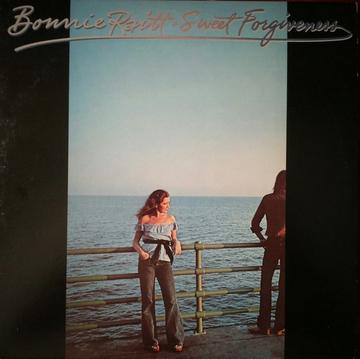
Sweet Forgiveness in 2022 – One of Her Two Best


The three most consistent and enjoyable albums from her Warner Brothers period are this and Home Plate (the album that preceded this one). Nine Lives is a favorite too but the sound is problematic and nobody knows the album so we simply cannot make the case for a shootout of it.

All are Must-Owns if you’re a Bonnie Raitt fan.

Sweet Forgiveness is probably her most consistent album, and quite possibly her masterpiece. It strikes me as being the truest reflection of Bonnie Raitt’s musical talents.

Her Capitol period albums, as good as they are, don’t have this kind of heart and they certainly don’t have this kind of energy.

Like a lot of the best recordings from the mid-70s, the production and recording quality are clean and clear, and we mean that in a good way.

There is very little processing to the sound of anything here; drums sound like drums, guitars like guitars, and Bonnie sings without the aid of autotuning — because she can sing on-key, and beautifully. Her vocals kill on every song. (Her dad had a pretty good set of pipes too.)

Turn Up Your Volume

This is a classic case of a record that really comes alive when the levels are up. It’s so free from distortion and phony processing it wants to be played loud, and that’s the level this music works at. It’s the level it was no doubt mixed at, and that mix sounds pretty flat at moderate levels. If you want to hear the real rockin’ Bonnie Raitt you gots to turns it up!

The vocal dynamics here are some of the best I have ever heard. We’re not used to hearing singers get loud on pop records. Normally the compressors prevent that from happening, and even most copies of this record do not have the dynamics that this one does. You will need a high-quality front end to track this LP, that I can assure you.

And the last quarter inch or so of side one might possibly have some distortion on the vocal peaks, as well as track three on side two, which also gets quite loud. These may not actually be groove damage; sometimes the cutting engineer is at fault and sometimes the cutting equipment may not be up to the job of putting so much energy into those slower spinning inner grooves.  We much prefer lively records to compressed ones, and sometimes overcutting is the price you have to pay.