stan-ricker-all

Stan Ricker’s Fingers Are All Over these Paintings

Hot Stamper Pressings of Jazz Guitar Recordings Available Now

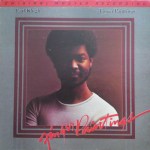
We have been planning on doing a shootout for this Earl Klugh’s 1977 Blue Note release, Finger Paintings, for more than a year, and over that time we were fortunate enough to pick up a MoFi pressing of the album locally for the very reasonable price of ten bucks. (The price tag on the jacket is visible at the bottom of this post.)

The notes for our 2025 Shootout Winner included phrases such as “huge, weighty and punchy, ” along with “natural, rich and sweet.” Most copies may not have those qualities, but the best ones sure do.

Contrast that with the Mobile Fidelity pressing that Stan Ricker mastered in 1980. It was one of their biggest early sellers, and one that they no doubt felt had such good sound that it would be sure to sell at triple the price of the regular Mobile Fidelity pressing!

WTF you say? Yes, it would be released in 1981 in a box (not a box set!) as a Numbered, Limited Edition, Ultra High Quality Record (UHQR) at the retail price of $50. $178 in 2026 dollars, if you can believe that records used to cost that kind of dough (cough).

OK, that’s all well and good, but this is supposed to be a blog for audiophiles, so forget all that history stuff and just tell us what the record sounds like.

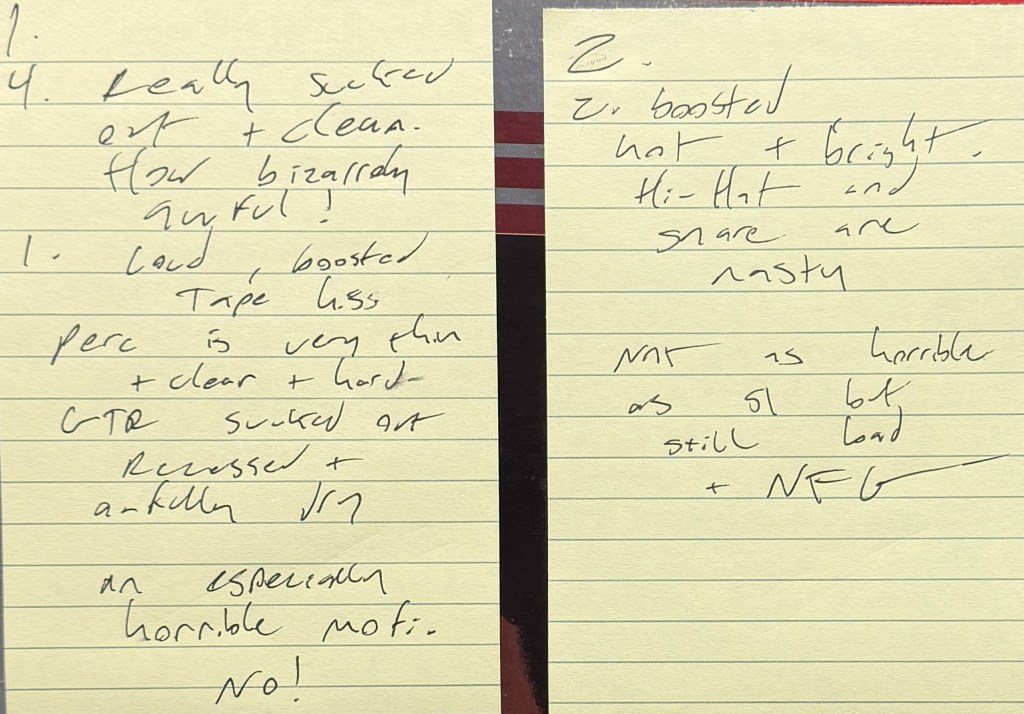
Fair enough. After having played a big batch of standard issue pressings and getting to know the sound of the record well, feast your eyes on the notes we took.

This MoFi may actually set a new standard for screwing up a perfectly good sounding record. (I was going to say tape but I have never heard the tape and have no idea what it sounds like. John Golden (JG) at Kendun cut the originals. Maybe he was able to somehow make a silk purse out of a sow’s ear. The possibility exists.)

Side One

Track Four

  • Really sucked out and clean
  • How bizarrely awful!

(more…)

MoFi Mastering Variations – Will the Real Sgt. Pepper Please Stand Up?

Hot Stamper Pressings of the Music of The Beatles Available Now

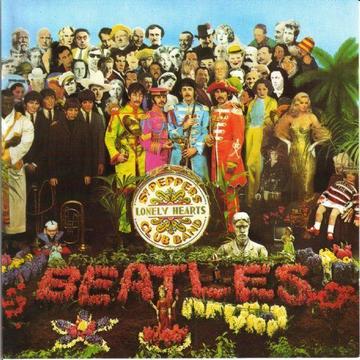
Sgt. Pepper can be a pretty good sounding MoFi when it’s mastered by the right guy.

Say what?

Yes, dear reader, this album was mastered by two different engineers at Mobile Fidelity, and one of them, based on experiments we carried out years ago, did a much better job than the other.

This copy, which is far more rare by the way, has the better mastering — much less top end boost was added. As an aside, I used to like the other version better, but as I’ve gotten older and wiser, I realize that this pressing is superior, being noticeably less phony sounding.

It sounds much more like a good Parlophone and less like the typical Mobile Fidelity album.

(more…)

Crosby, Stills and Nash – Daylight Again

More of the Music of Crosby, Stills and Nash

  • With excellent Double Plus (A++) grades on both sides, this vintage copy is doing just about everything right
  • This is the embodiment of the classic CSN sound we love – rich, full-bodied, warm, punchy, dynamic and clear
  • Steven Barncard, one of our favorite recording engineers, no doubt deserves most of the credit
  • AllMusic on “Wasted On The Way” and “Southern Cross”: “Both were extracted as singles and became among the best-known tracks not only on Daylight Again, but also in the post-60s CSN canon.”

(more…)

Does Year of the Cat on Mobile Fidelity Have Audiophile Sound?

Hot Stamper Pressings of the Music of Al Stewart Available Now

Our answer, judging by the copy we played not long ago, would be solidly in the negative. The final grade we awarded both sides was No, our way of saying the record is Not Good.

Below is a description for what a top copy of the album sounds like, based on our most recent shootout:

Incredible sound throughout this vintage Janus pressing of Stewart’s 1976 Masterpiece. With engineering by Alan Parsons, the top pressings are every bit the audiophile Demo Discs you remember. The best sides have sweet vocals, huge amounts of space, breathtaking transparency, and so much more.

Tubey Magical acoustic guitar reproduction is superb on the better copies of this recording. Simply phenomenal amounts of Tubey Magic can be heard on every strum, along with richness, body and harmonic coherency that have all but disappeared from modern recordings (and especially from modern remasterings).

But if you own the wrong Mobile Fidelity pressing — this one was reissued in 1981, the original came out in 1978, so there may be some other pressings that sound better than this one — you would never know how good sounding the album can be. We put a copy we had laying around in a shootout recently and the results were, not to put too fine a point on it, pretty painful.

As the notes make clear, the Mobile Fidelity pressing, with the stampers you see on the sheet above, is:

(more…)

Classic Records Had an Epiphany in 2007 – UHQRs Actually DO Sound Good

More Records Perfectly Suited to the Stone Age Stereos of the Past

Don’t believe your ears!

Listen to Mike Hobson. After all, he’s the expert, right?

This commentary was written in 2007 and we admit it may be a bit long in the tooth for the brave new world of Heavy Vinyl we currently find ourselves in. Classic Records has been gone for a while now and when that blessed day came we were finally able to say good riddance to their bad records.


Mike Hobson thinks he knows why his pressings often don’t sound good and/or are noisy. We’ll let him explain it. If you want the whole story (which goes on for days) you can find it on the Classic Records website, assuming it’s still active. While you’re there, remember the sound.

One day, while out for a run, I had an epiphany and rushed home to dig out a JVC pressing from the 1980’s pressed for Herb Belkin’s Mobile Fidelity. The Mobile Fidelity UHQR pressings were always revered as sounding better than the standard weight pressings from JVC [citation needed, big time] – but why I thought? To find out, I cut a UHQR pressing in half and guess what I found? First, it weighed 195 grams and IT WAS A FLAT PROFILE! I cut a 120g JVC pressing in half and found that it had the conventional profile that, with small variations, seems to be a record industry standard and is convex in it’s [sic] profile – NOT FLAT.

So, that is why the UHQR JVC pressings sounded better than their standard profile pressings and further confirmation of why our Flat Profile pressings sound better than 180g conversional pressings! [italics added]

This is a classic (no pun intended) case of begging the question, asserting the very thing that Mr. Hobson is trying to prove.

There was no need to saw up a record. Mofi actually explained in the booklet for every UHQR how its shape differed from a conventional disc.

(more…)

This Beethoven Ninth Started Out with Two Strikes Against It

Hot Stamper Pressings of the Music of Beethoven Available Now

MoFi took the shortcomings of a mediocre-at-best Decca recording from 1972 and made them even worse by means of their ridiculously misguided mastering decisions and wacky cutting system.

They should not have chosen this performance of the Ninth Symphony in the first place, and they certainly should not have added the treble they chose to add, which they did to this title and to every classical recording they remastered without regard to whether or not the recording needed brightening. None that I know of did. Try telling that to the brain trust running MoFi.

(They hired this guy to do their one-step digitally remastered pressings and from the get-go he’s been giving audiophiles the most ridiculously phony sounding records that collectors with way too much money can buy.)

The Decca recording of the Ninth from 1972 is opaque, lacks size and space, and comes off as a bit flat and dry.

Like practically every later Decca pressing we play, it’s passable at best.

Londons and Deccas from this era (1972 in this case) rarely sound very good to us.

Here is what we specifically don’t like about their sound.

If you want to know what’s wrong with the Mobile Fidelity pressing, take the above faults and add some others to them.

Start with an overall brighter EQ, add a 10k boost for extra sparkly strings, the kind that MoFi has always been smitten with, and finish with the tubby bass caused by the half-speed mastering process itself.

Voila! You are now in the presence of the kind of mid-fi trash that may have fooled some audiophiles way back when but now sounds as wrong as the records this ridiculous label is still making today.

Here are some other pressings with bright string tone that are best avoided by audiophiles looking for top quality sound.

1981 Was a Long Time Ago

Old school audio systems are notorious for being dark, dull and lacking in transparency. They might need bright records in order to sound good, but high quality modern systems do not.

If these two MoFi pressings sounds right to you, you are very likely living with one of those old school systems and it is long past time to get rid of it.

(more…)

Driving My Car into a Ditch

Hot Stamper Pressings of the Music of The Beatles Available Now

Mobile Fidelity made a mess of Drive My Car on their Half-Speed mastered release of Rubber Soul in 1982.

Perhaps it’s more accurate to say Stan Ricker, MoFi’s go-to mastering engineer, did.

He equalized out far too much upper midrange and top end.

What fuels the energy of the song are the cow bell, the drums and other percussion. Instead of a scalpel, Mobile Fidelity took a hatchet to this slightly bright track, leaving a dull, lifeless, boring mess.

Some Parlophone copies may be a little bright and lack bass, but at least they manage to convey the musical momentum of the song.

Even the purple label Capitol reissues can be quite good. A bit harsher and spittier, yes, but in spite of these shortcomings they communicate the music, which ought to count for something.

As much as I might like some of the MoFi Beatles records [not so much anymore], and even what MoFi did with some of the other tracks on Rubber Soul, they sure sucked the life out of Drive My Car.

We all remember how much fun that song was when it would come on the radio. Playing it on a very high quality stereo should make it more fun, not less.

If you’ve got a Rubber Soul with a Drive My Car that’s no fun, it’s time to get another one.

By The Way

The best $250 — to the penny! — I ever spent on records is the price I paid for my brand new, still-in-the-shipping-carton MoFi Beatles Box. I ordered it in 1982 when I first learned of it, and it finally came the next year. I already owned all The Beatles albums MoFi had done to date, including the UHQR of Sgt. Pepper, which, like a fool, I got rid of once the set came out.

(more…)
The Fantasy Film World of… “Did MoFi bother to listen to this before they ruined it?”

Hot Stamper Pressings of the Music of Bernard Herrmann Available Now

Sonic Grade: F

Obviously our customers know by now that a Hot Stamper London or Decca pressing is going to be far better than the Anadisq that MoFi cut in the mid-90s.

How much better?

Words fail me.

Their record was a complete disaster. Perhaps some of the MoFi collectors didn’t notice because they had nothing to compare it to. 

God forbid they would ever lower themselves to buy as common a pressing as a London. Had they done so, what they would have heard is huge amounts of musical information that is simply nowhere to be found on the MoFi.

There is a place on this album, I failed to note exactly where, in which a group of tubas play a descending scale that is somewhat buried in the mix. On the London, they can clearly be heard and recognized as tubas. On the MoFi, I don’t think they can be heard except as some general group of low notes, and anyone thinking that they were tubas would be guessing, the sound is that murky, muddy, and ill-defined.

Robert Pincus once left a Post-It note stuck to the MoFi jacket of a copy he was playgrading for me that summed up our thoughts on the quality of their mastering to a “t”:

“Did MoFi bother to listen to this before they ruined it?”

It’s positively shameful. This music is so good. On top of that, it’s custom made for audiophiles. Audiophiles are the ones who can appreciate the new colors Herrmann created, using what a wise man once called the single greatest instrument ever invented: the symphony orchestra.

If this Mobile Fidelity LP isn’t the perfect example of a pass/not-yet record, I can’t imagine what would be. To find a more poorly remastered record, you would really have to work at it.

(more…)

MoFi’s Pictures at an Exhibition Is as Wrong as Wrong Can Be

moussmofiHot Stamper Pressings of the Music of Mussorgsky Available Now

If you like orchestral spectaculars, have we got the record for you.

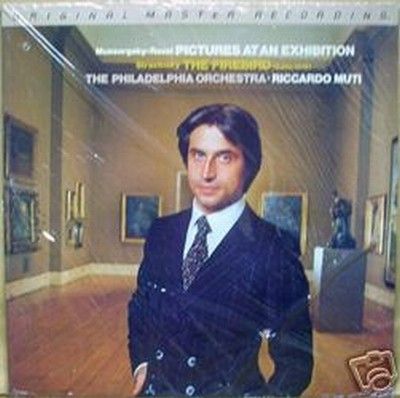
It’s the same recording of the works, but the one you want is on the real EMI label and pressed on UK import vinyl, not this awful Half-Speed recut from Japan.

The record you see pictured is awful sounding, a true hall of shame pressing.

And why are the colors of the album jacket so washed out? Compare their cover to the real thing below. As we often find ourselves asking after reviewing one of these MoFi records: What were they thinking?

The MoFi mastering of Pictures at an Exhibition and The Firebird here are a bad joke played on credulous audiophiles. And yes, I bought them both back when they came out. I was as credulous as everybody else buying these so-called superior pressings.

All that phony boosted top end makes the strings sound funny and causes mischief in virtually every other part of the orchestra as well. Not surprisingly, those boosted highs are missing from the real EMIs.

These appear to be the unbearably bright strings that Stan Ricker favors — why, we have no idea.

The proof? Find me a Mobile Fidelity classical record with that little SR/2 in the dead wax that does not have bright string tone. I have yet to hear one.

The last time I played a copy of the MFSL I found the sound so hi-fi-ish I couldn’t stand to be in the room with it for more than a minute. Of course the bass is jello as well.

The EMI with the right stampers is worlds better.

(Warning: The domestic Angel regular version and the 45 are both awful.)

MoFi had a bad habit of making bright classical records. (More reviews here.) I suppose you could say they had a bad habit of making bright records in general. A few are dull, some are just right, but most of them are bright in one way or another.

(more…)

Touch – A Great Test for Tweeters

More of the Music of John Klemmer

Mobile Fidelity, maker of some of the worst sounding records in the history of the medium, is the KING on this title. We know of no better pressing than the right version of the MoFi. (There are three different stampers for the MoFi, and only one of them ever wins shootouts.)

Klemmer says pure emotion is what inspired the album’s creation. Whatever he tapped into to find the source of that inspiration he really hit pay dirt with Touch. It’s the heaviest smooth jazz ever recorded. Musically and sonically, this is the pinnacle of Klemmer’s smooth jazz body of work. I know of none better. (If you want to hear him play more straight-ahead jazz try Straight from the Heart on Nautilus Direct to Disc.)

High Frequency Testing

MoFi was famous for demonstrating on an actual scope that the standard domestic ABC pressing had nothing above about 8 or 10 thousand cycles up top, which is why they all sound insufferably dull and dead. Some MoFi copies have no real top end either, which is the reason to we do these shootouts — to find the copies that are actually mastered and pressed right, not just the ones that should have been.

There’s plenty of information above 15K I would guess on this record — all those delicate percussion instruments ring so sweetly, the highs have to be extending way up there. (This album would probably make a good test to see how well your tweeters work, as well as for turntable setup. The right tracking weight and VTA are crucial to getting all the harmonics of a record like this right.) (more…)