stan-ricker-all

Touch – A Great Test for Tweeters

Hot Stamper Pressings of Well Recorded Jazz Albums In Stock Now

Mobile Fidelity, maker of some of the worst sounding records in the history of the medium, is the KING on this title. We know of no better pressing than the right version of the MoFi. (There are three different stampers for the MoFi, and only one of them ever wins shootouts.)

Klemmer says pure emotion is what inspired the album’s creation. Whatever he tapped into to find the source of that inspiration he really hit pay dirt with Touch. It’s the heaviest smooth jazz ever recorded. Musically and sonically, this is the pinnacle of Klemmer’s smooth jazz body of work. I know of none better. (If you want to hear him play more straight-ahead jazz try Straight from the Heart on Nautilus Direct to Disc.)

High Frequency Testing

MoFi was famous for demonstrating on an actual scope that the standard domestic ABC pressing had nothing above about 8 or 10 thousand cycles up top, which is why they all sound insufferably dull and dead. Some MoFi copies have no real top end either, which is the reason to we do these shootouts — to find the copies that are actually mastered and pressed right, not just the ones that should have been.

(more…)

Electric Light Orchestra – Out Of The Blue

More Electric Light Orchestra

More of our favorite Art Rock Records

  • These early Jet pressings of ELO’s seventh studio album boast solid Double Plus (A++) grades or BETTER from start to finish
  • Side three was sonically very close to our Shootout Winner – you will be shocked at how big and powerful the sound is
  • All four sides are notably smoother and richer than most of what we played, with much less of the grit and congestion that plagues the average copy
  • “Out of the Blue was of a piece with its predecessor, A New World Record, as the most lavishly produced album in the group’s history… [It] was massively popular and did become the centerpiece of a huge worldwide tour for the group which earned them status as a major live attraction for a time.”
  • If you’re an ELO fan, this classic double album from 1977 is surely a Must Own
  • If you are new to the music of ELO and want to learn more about our pick for their best album, click here

SR Over 2

The record is actually mastered by none other than Mr. MoFi himself, Stan Ricker, at Half-Speed if you can imagine that.

Yes, the bass isn’t as tight as it would have been using real time mastering, and there is the kind of “fake richness” to the low end that you hear on many audiophile records (and practically nowhere else), but Jeff Lynne likes some artificiality in the sound of his albums, so whatever Stan Ricker brought to the table it seems Mr. Lynne was fine with it, otherwise we assume he would have had it mastered by somebody else.

Does the album need the deeper, more articulate bass it would have if someone else had mastered it using a real-time cutter? It doesn’t seem so to us. Note-like bass with its fundamental frequencies intact is always a nice thing to have on a recording, but can anyone say this music would be noticeably better for it with better bass? Again, Mr. Lynne must not have found the bass wanting enough to have the album recut by some other mastering house. Could it be a matter of trade-offs? No matter which side you are on, it’s all just speculation. You always have the option of listening to the album on CD and seeing if the bass is better there. That would be the only practical test that I can imagine having any value. And to do that test you have to play the CD, something nobody really wants to do, right?

(more…)

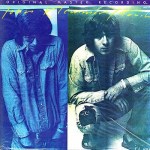
John Klemmer – Touch

  • With solid Double Plus (A++) grades on both sides, this copy of the best MoFi title to ever hit the site will be very hard to beat – exceptionally quiet vinyl too
  • Musically and sonically this is the pinnacle of Klemmer’s smooth jazz – we know of none better
  • The best sounding Smooth – But Real – Jazz Album ever made, and the only vintage MoFi we know of that deserves a place in your collection
  • “This is music straight from the heart, smooth but with a few twists and turns to make it interesting. But there are no cliche blues licks, none of the crap that players in this genre try to foist upon as ‘hip.’ Indeed, Klemmer has more in common with the late 60’s mantra playing of Coltrane or Sanders than those other guys (whose names will not be mentioned.)”
  • We’ve recently compiled a list of records we think every audiophile should get to know better, along the lines of “the 1001 records you need to hear before you die,” but with the accent on the joy amazing audiophile-quality recordings like this one can bring to your life.
  • Touch is a good example of a record many audiophiles may not know well but might benefit from getting to know better
  • If you’re looking for the best sounding jazz from the 70s and 80s, you might want to check out these titles

Touch is probably the best sounding record Mobile Fidelity ever made, and the only record of theirs I know of that can’t be beaten by a standard real-time mastered pressing.

We’re talking Demo Disc quality sound here. The spaciousness of the studio and the three-dimensional placement of the myriad percussion instruments and bells within its walls make this something of an audiophile spectacular of a different kind — dreamy and intensely emotional.

Shocking as it may be, Mobile Fidelity, maker of some of the worst sounding records in the history of audio, is truly the king on this title.

Klemmer says pure emotion is what inspired the album’s creation. Whatever he tapped into to find the source of that inspiration, he really hit paydirt with Touch. It’s the heaviest smooth jazz ever recorded. Musically and sonically, this is the pinnacle of Klemmer’s smooth jazz body of work. I know of none better. (If you want to hear him play more straight-ahead jazz, try Straight from the Heart on Nautilus Direct to Disc.) (more…)

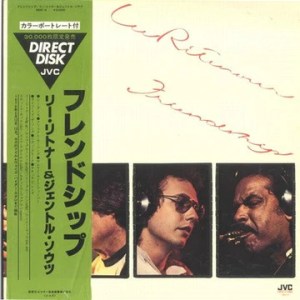
Lee Ritenour – Friendship

More Lee Ritenour

More Audiophile Recordings

  • Superb sound throughout this original Direct-to-Disc Japanese import pressing, with both sides earning Double Plus (A++) grades – fairly quiet vinyl too
  • Full-bodied and warm, exactly the way you want your vintage analog to sound – the guitar is surprisingly real here
  • Both of these sides are Tubey Magical, lively and funky, with the kind of rich, solid sound that will fill your listening room from wall to wall
  • “The third of three Lee Ritenour sets originally cut for Japanese JVC matches the studio guitarist with … Ernie Watts (on tenor and soprano), both Dave and Don Grusin on keyboards, electric bassist Abraham Laboriel, drummer Steve Gadd and percussionist Steve Forman.”
  • Friendship is without a doubt this group’s best sounding album, and, to our way of thinking, their only essential one

This is one of my all time favorite audiophile discs. It’s actually real music.

The song “Woody Creek” is wonderful and reason enough to own this excellent album. The guitar of Lee Ritenour and the saxophone of Ernie Watts double up during a substantial portion of this song and the effect is just amazing.

Special kudos should go to Ernie Watts on sax, who blows some mean lines. But everybody is good on this album, especially the leader, Lee Ritenour. I saw these guys live and they put on a great show.

By the way, looking in the dead wax I see this record was cut by none other than Stan Ricker of Mobile Fidelity fame himself!

(more…)

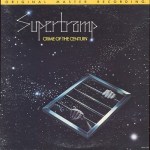
Dreamer Tells You What You Need to Know About this MoFi

Hot Stamper Pressings of the Music of Supertramp Available Now

This commentary was written about 2000, when the Speakers Corner pressing had just come out. We liked it back then, but I doubt we would care much for it now.

Listen to the vocals at the end of Dreamer.

If they are too bright, the bells at the end of the song sound super-extended and harmonically clear and clean.

But at what price? Now the vocals are too bright. Which is more important, good vocals or good bells?

There has to be balance. This is something audiophiles — and audiophile labels, who should obviously know better — seem to have difficulty appreciating.

We used to get these MoFis in on a regular basis, and they usually sound as phony and wrong as can be. They’re the perfect example of a hyped-up audiophile record that appeals to people with lifeless stereos, the kind that need amped-up records to get them to come to life.

I’ve been telling people for years that the MoFi was junk, and that they should get rid of their copy and replace it with a tonally correct version, easily done since there is a very good sounding Speakers Corner 180g reissue currently in print which does not suffer from the ridiculously boosted top end and bloated bass that characterizes the typical MoFi COTC pressing.

Brighter and more detailed is rarely better. Most of the time it’s just brighter. Not many Half-Speed mastered audiophile records are dull. They’re bright because the audiophiles who bought them preferred that sound. I did too, a couple of decades ago [make that four decades ago].

Hopefully we’ve all learned our lesson by now, expensive and embarrassing as such lessons so often turn out to be.

If your system is dull, dull, deadly dull, the way many of our older systems tended to be, this record has the hyped-up sound to bring it to life in a hurry.

There are scores of commentaries on the site about the huge improvements in audio available to the discerning (and well-healed) audiophile. It’s the reason Hot Stampers can and do sound dramatically better than their Heavy Vinyl or audiophile counterparts: because your stereo is good enough to show you the difference.

(more…)

Virgil Fox – The Fox Touch Volume 2

Hot Stamper Pressings of Direct-to-Disc Recordings

Played against the best Golden Age organ recordings, these Crystal Clear titles are noticeably lacking in ambience.

The best pressings, assuming one would do a shootout for them, might be expected to earn a sonic grade of B- or so.

Volume 1 is a TAS List record. But seeing as they were all recorded at the same time, this one might sound every bit as good. Then again, it might not. 

By the way, did you know Stan Ricker cut this record live direct to disc? He did a pretty good job, too.

(more…)

The Nightfly on MoFi – More of the Same Old Same Old

Hot Stamper Pressings of the Music of Donald Fagen Available Now

More MoFi phony EQ on the top right around 10k and sloppy bass.

You should be able to do a whole lot better and you sure won’t have to work very hard to do it.

Robert Ludwig is the man who knows how to cut this album, not Stan Ricker.

The properly pressed, properly cleaned Robert Ludwig-mastered copies are right in a way that the typical Half-Speed mastered or Heavy Vinyl pressing rarely is. The more critically one listens, the more obvious this distinction becomes.

The real thing just can’t be beat, and you can be pretty sure that the real thing is an old record.

If you are buying these audiophile pressings, take the advice of some of our customers and stop throwing your money away on Heavy Vinyl and Half-Speed mastered LPs.

(more…)

“Tour de Force” – Analogue Productions Reviewed

Hot Stamper Pressings of Bossa Nova Recordings Available Now

Sonic Grade: F

Acoustic Sounds had Stan Ricker remaster this record a number of years ago, and of course they (he) ruined it. A twinkly top end and flabby bass were just two of the major shortcomings of their version. Nothing surprising there, as Stan Ricker is famous for his “smile” curve, boosting both ends of the audio spectrum, whether they need boosting or not. (They rarely do).

When you add too much top end to a guitar album and ruin the sound of the guitar, what exactly are you left with?

Please note that not a single title from the Analog Revival series is any good, to the best of my knowledge, and every last one of them should be avoided if high quality sound is important to you.

The same is true for all the 180 gram jazz titles on Analogue Productions that were mastered by Doug Sax, as you may have read elsewhere on the site. Those records received rave reviews in the audiophile press when they came out, but you won’t find too many audiophile reviewers sticking up for them now, as they are, without exception, murky, compressed disasters of the worst kind.

I guess these reviewers eventually acquired equipment accurate enough to notice how bad those pressings are, which goes to show there is hope for practically anyone.

(more…)

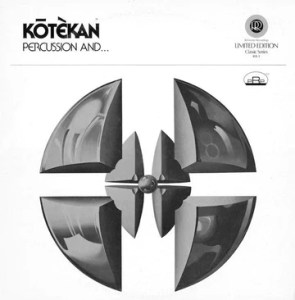
Kōtèkan – Percussion And…

More Percussion Recordings of Interest

  • You’ll find STUNNING Shootout Winning Triple Plus (A+++) grades or close to them on both sides of this original Reference LP
  • So transparent, dynamic and REAL, this copy raises the bar for the sound of percussive music on vinyl
  • Includes an extraordinary interpretation of Ravel’s La Flute Enchantee that must be heard to be believed
  • “… heady, explosive, weird, bizarre and brilliant playing…” – S.F. Chronicle

This Reference LP, mastered by Stan Ricker, might just be the best sounding record this sorry excuse for an audiophile label ever made.

Any label that would release Audiophile BS records such as this one and this one has a lot of explaining to do.

I hadn’t played this Kōtèkan title in probably twenty years, but I remembered it sure sounded good to me back in the day, so we decided to get some in and do a shootout for them. This copy was an impressive reminder of just how good the recording can be.

(more…)

1812 Overture on Telarc

More of the music of Peter Ilyich Tchaikovsky (1840-1893)

Reviews and Commentaries for Recordings of the 1812 Overture

Sonic Grade: D

If you want an amazingly dynamic 1812 with huge amounts of deep bass reproduced for the cannon, you can’t do much better than this (or its UHQR brother). 

But if you want rich, sweet and tonally correct brass and strings, you had best look elsewhere. I’ve never liked the sound of this record and I’m guessing if I heard a copy today I would like it even less. 

Who in his right mind thinks live classical music actually sounds like this?

Telarc makes clean, modern sounding records. To these ears they sound pretty much like CDs.

If that’s your sound you can save yourself a lot of money avoiding vintage Golden Age recordings, especially the ones we sell. They’re much more expensive and rarely as quiet, but — again, to these ears — the colors and textures of real instruments seems to come to life in their grooves, and in practically no others.

We include in this modern group analog labels such as Reference, Sheffield, Chesky, Athena and the like. Having heard hundreds of amazing vintage pressings, at this stage of the game I find it hard to take any of them seriously.

Twenty years ago, maybe. But twenty years is a long time, especially in the world of audio.

We started a list of records that suffer from a lack of Tubey Magic like this one, and it can be found here.

(more…)