piano-test

Pianos are very good for testing your system, room, tweaks, electricity and all the rest, not to mention turntable setup and adjustment.

Recordings that get the piano to sound neither thin nor smeary usually do well in our shootouts. It’s one of the most important instruments we listen for.

The more full-bodied, powerful and clear the piano sounds, the higher the grades will be for the pressing under review, all other things being equal.

Listening in Depth to Fragile

yes__fragi_depth_1392743863Hot Stamper Pressings of the Music of Yes Available Now

Eddie Offord took charge of Yes’s engineering starting with Time and a Word (1970) and we are very glad that he did.

Although his masterpiece is surely ELP’s first album, both The Yes Album and Fragile are so amazingly well recorded they clearly belong at the top of any list of All Time Great Sounding Rock Albums.

Side One

Roundabout

You can tell by the sound of the opening guitar whether you have a copy that is tonally correct, has its ambience intact, as well as the proper leading edge transients to the strings plucks. Most of the reissues will sound either thin and edgy, or dull and blunted. On the best copies, that guitar will just sound out of this world.

Cans and Brahms
We Have Heaven
South Side of the Sky

What really separates the amazing copies from the merely good copies is the WEIGHT of the sound. The lower midrange is key in this regard. When you hear the piano on this track, it should have tremendous body and sustain to the notes. If the piano comes across at all anemic, the sound will be unbearably harsh.

Side Two

Five Per Cent for Nothing
Long Distance Runaround

This is one of the best sounding Yes tracks of all time. Jon Anderson’s voice is so present; he sounds as if he’s standing right between the speakers.

Fish (Schindleria Praematurus)
Mood for a Day

The top pressings exhibit amazing transparency and sweetness on this track. We would rate this one of the best rock acoustic guitar recordings on the planet. I’ve recently come to realize that this is actually a key track for side two. The guitar can sound midrangy and hard; too fat; blunted; and I’m sure lots of other ways.

And I’m talking about ONLY the best early pressings (the four digit ones). None of the later pressings sound any good to me at all.

This is where the surface noise will be most audible. After playing a number of copies, I noticed that there was always surface noise on this track, but not necessarily others. And then it dawned on me: the surface noise has to be spread evenly throughout the record; it’s on this track that you can actually hear it. The other tracks tend to be loud and little surface noise will ever be audible.

Heart of the Sunrise

My second favorite track on the album. All those aggressive guitar parts can be very irritating if you do not have a copy that’s cut properly, which in this case means smooth and full-bodied. Any thinness or edginess will be all but unbearable on this track.

Listening in Depth to It’s Like You Never Left

More of the Music of Dave Mason

The first track on side one, Baby…Please, has huge bass and is very rich.

Check out the sweet vocals on the second song, Every Woman, and the Tubey Magical richness of track three, If You’ve Got Love.

On side two note how big the piano sounds, and how much space surrounds it.

Then in comes the solid snare, followed by rich, meaty horns; breathy, silky vocals, and big guitars.

This album is very well recorded and you don’t need a pair of golden ears or a state-of-the-art system to hear it — assuming you have a great copy like this one.

If you don’t have a good copy of the album, no amount of money spent on stereo equipment is going to get this album to sound the way it should.

I Was a Fan in 73

I was a big fan of this album when it came out in 1973. I used to play it all the time in fact. Now I hear why – it’s big and rich with a solid bottom end and a smooth, sweet top, perfect for the big but not especially sophisticated speakers (the Fulton J System) I had back in the day.

This album has the kind of sound that the typical CD wants nothing to do with. Not that the Compact Disc couldn’t pull it off — there are good sounding CDs in this world, I own hundreds of them — but it doesn’t seem to want to even try.

Graham Nash helps out on vocals on tracks one, two and five on the first side.

Stevie Wonder plays a lovely harmonica solo on The Lonely One on side two, and George Harrison guests on guitar on If You’ve Got Love, the third track on side one. (more…)

For Misty, Stick with the Real Japanese Pressings

More Audiophile Recordings with Audiophile Quality Sound

Hot Stamper Pressings of Jazz Recordings Featuring the Piano Available Now

This is a highly recommended Three Blind Mice LP. We don’t like most Three Blind Mice albums, or jazz played by practically anyone who is not American. (Ever played Jazz at the Pawnshop? If so, did you enjoy your nap?)

But we like the music of Yamamoto well enough to recommend some of it. Midnight Sugar might actually be his most enjoyable album of them all.

The Heavy Vinyl versions are not as good, although the 45 RPM pressing probably comes the closest to the real Japanese pressing we review here.

Anything pressed at RTI is rarely better than second rate and should be avoided if at all possible.

We almost never like records Made In Japan that were not recorded in Japan. There are of course a few exceptions.

My First Time

This was the first Three Blind Mice recording I ever heard, over 20 [now close to 40] years ago. A fellow audiophile who went on to become a true audio guru for me (George Louis) played me this recording to demonstrate his stereo.

It had to be the most dynamic piano recording I had ever heard in my life. 

Yamamoto likes to tinkle the keys very softly, and then really pound them. And the Three Blind Mice engineers were able to capture both the quiet tinkling because of the Japanese vinyl, and the full-on pounding because of the audiophile recording equipment they used. It was an ear-opening experience.

Over the course of the next year or two, I sold off my Fulton Premiers and my Audio Research Electronics, because no matter how hard I tried, I couldn’t get Misty to sound like it did at George’s house.

I realized that it takes better equipment than those companies were making back then to get the sound of that record right, and that put me on, to quote Cat Stevens, ”the road to find out.”

And it wasn’t just the equipment that had to get better, a subject we address in our commentary Revolutionary Changes in Audio. An excerpt:

When I got started in audio in the early- to mid-70s, the following important elements of the modern stereo system did not exist:

  • Stand-alone phono stages.
  • Modern cabling and power cords.
  • Vibration controlling platforms for turntables and equipment.
  • Synchronous Drive Systems for turntable motors.
  • Carbon fiber mats for massive turntable platters.
  • Highly adjustable tonearms (for VTA, etc.) with extremely delicate adjustments and precision bearings.
  • Modern record cleaning machines and fluids.
  • And there wasn’t much in the way of innovative room treatments like the Hallographs we use.

A lot of things had to change in order for us to reproduce records at the level required to do our record shootouts and be confident about our findings, and we pursued every one of them about as far as time and money allowed.

For a further discussion of these issues, please click here.

(more…)

The Last Record Album – A Great Test for Smaller Speakers and Screens

More Speaker Advice

The piano on track three of side two, Somebody’s Leavin’, should sound rich and full and solid, yet percussive.

Rarely does it sound right, which is what makes it a good test for side two.

Most copies of this album are ridiculously dull and compressed. The band itself sounds bored, as if they don’t believe in their own songs. But it’s not their fault. Whose fault it is is never easy to fathom; bad mastering, bad tapes, bad vinyl, bad something else — whatever it is, that thick, lifeless sound turns this powerfully emotional music into a major snooze-fest. 

The best copies have the kind of transparency that allows you to hear the space around all the instruments. Most copies have a bad case of “cardboard drums;” even the best copies have a bit of that sound. But when you have one of the high-rez copies spinning, the sound of the drums doesn’t call attention to itself. It may not be the BEST drum sound you ever heard, but it’s a GOOD drum sound, and in a lot of ways you could argue that it’s the RIGHT drum sound. It’s rich and fat, a perfect match for the sound of the album as a whole.


The KEF speakers you see pictured retail for $8,999.

Yes, you read that right.

Roughly 2% of my record collection might play just fine on them. Perhaps less than 2%. Either way, I don’t want to find out.

A True Test

Now if you have mini-monitors or screens, some of that sound won’t come through nearly as well as it might with another speaker, a big dynamic one for example. To our way of thinking, this is the kind of record that one should bring to one’s favorite stereo store to judge their equipment. They can play some of the songs on Famous Blue Raincoat; they do it all day long.

But can they play The Last Record Album and have it sound musical and involving?

This is a much tougher test, one that most systems struggle to pass. Leaner and cleaner — the kind of audiophile sound I hear everywhere I go — is simply not going to work on this album, or Zuma, or Bad Company, or the hundreds of other classic rock albums we put up on the site every year. There has to be meat on those bones. To switch metaphors in the middle of a stream, this album is about the cake, not the frosting.

You should keep that in mind when they tell you at your local audio salon that the record you brought with you is at fault, not their expensive and therefore “correct” equipment.

I’ve been in enough of these places to know better. To mangle another old saying, if you know your records, their excuses should fall on deaf ears.

Blood Sweat and Tears – The 30 Second Spinning Wheel Test

Hot Stamper Pressings of the Music of Blood, Sweat and Tears Available Now

This test is found in the track commentary for side two of our Hot Stamper listings for the album.

If you think you have a hot copy, see if yours does what our best copies do.

We also think that a record like this — a dynamic, full-spectrum recording, not overly concerned with detail — makes a much better Test Disc than the kind most audiophiles seem to prefer.

Patricia Barber it is not.

If you’re in the market for new speakers, take this record — or one like it — with you to the audition. Any speaker that can play this record properly deserves your consideration, or at the very least your respect.

In my experience not many speakers have what it takes to do this album justice.

The Blood, Sweat and Tears Spinning Wheel Test 

The first thirty seconds are key. Here is what you should be listening for.

Piano, Cowbell, Snare

Side two starts off with a bang; note that the piano has real weight to it right from the git go. When the cowbell comes in it should not sound muffled in any way (it’s a bell, don’t you know), quickly followed by the solid-as-a-rock-snare (the best on record.)

The Brass

On the killer copies that first blast of brass will be completely free of grain or grunge, yet the brass instruments themselves (trumpets and trombone) have all their leading edge transients, their “bite,” fully intact. They’re not in any way muffled or smeared, yet the sound is never aggressive. If anything, the brass is so free from distortion and so tonally correct it should actually sound smooth.

The Vocals

Some of the vocals on side one can have a bit of honk or edge, but not here. They are natural, rich and sweet as any you will hear on the album.

Bottom End Energy

And don’t forget that there is a tremendous amount of bottom end throughout the song. It’s the very foundation of the music, and it needs to be reproduced properly, no ifs, ands or buts, as in “but I only have a small speaker”. To play this song you need big woofers and lots of them. Small speakers simply make a mockery of this music.

If you’ve ever heard big band up close, you know that there is not a speaker in the world that can do justice to that sound. It’s too big and it’s too powerful. But some speakers do more justice than others, and in my experience those speakers tend to have large cabinets with plenty of dynamic drivers. If you have a system built around such speakers there is a very good chance that this will be the best sounding record you have ever heard, assuming you have one of our Hot Stamper pressings or a good one of your own. If not, we would love to get you one. You won’t believe the sound.

Now You Try

Play your own copy. Everything you need to know about the sound of your LP can be heard in the first thirty seconds of side two.

On the Hot Stampers it’s all there. On most copies, however, the reverse is true: Problems raise their ugly heads right off the bat.

Thinness, grain, smearing, bloat, edginess — all the failings that records are heir to will be thrown in your face if your copy is not up to snuff, and not many of them are.

Jamento – Listening for Speed and Smear

What to Listen For – Smear

What to Listen For – Speed

Clear piano notes, first and foremost.

Any smear or loss of speed (a problem with hi-fi equipment since the beginning of time) detracts from the fun. 

Next, the tonality of the best copies is rich and solid. Accept nothing less.

And, finally, the proper reproduction of the percussion instruments is critically important to the energy and drive of the music. The better you hear them — without losing the weight and richness of the piano — the more you will enjoy your copy of the record.

No two copies will reproduce all these elements equally well. On high quality equipment with the volume turned up good and loud the winners are easily separated from the losers. (more…)

Give It Up Again For Val Garay on Prisoner in Disguise

More of the Music of Linda Ronstadt

More Records with Specific Advice on What to Listen For

The soundfield has a three-dimensional quality that was pretty much nonexistent on most of the other copies we played. Drop the needle on Many Rivers To Cross and check out the amazing sound of the organ coming from the back of the room. Only the highest resolution copies give you that kind of soundstage depth.

The piano sounds natural and weighty. The fiddle on The Sweetest Gift (played by our man David Lindley) is full of rosiny texture.

Emmylou Harris, dueting here with Linda, is SUPERB, with truly Demonstration Quality Sound on the best copies.

The acoustic guitars are tonally Right On The Money throughout — the transient information is captured perfectly. Listen to the opening guitar in the right channel of The Sweetest Gift; we used it as a test track and when that guitar is RIGHT THERE you know you have a copy with Hot Stampers.

What A Supporting Cast!

Check out all the cool cats who helped make this record: EmmyLou Harris, James Taylor, Lowell George, Andrew Gold, Peter Asher, Val Garay, Russ Kunkel, David Lindley, JD Souther and more. You see those same names all over our site! Perhaps it is time to rethink the conventional wisdom that says Linda Ronstadt’s records are not for audiophiles. Those people are involved with some of our all-time favorite records, and their contributions really help this music sound great.

Another Ignored Gem From Linda

I confess to never having taken this album seriously (much like Simple Dreams, an album I now LOVE), dismissing it as a commercial collection of pop hits with as much depth as the L.A. river, but I was wrong wrong WRONG. This is a great album on the right LP, not the compressed piece of grainy cardboard pop we’re used to. The typical pressing barely hints at the tremendous energy and top-quality musicianship that characterizes practically every track on this wonderful record.

Give It Up Again For Val Garay

Kudos must go to Val Garay, the man behind one of our favorite recordings, JT, with which this album shares much in common. That same super-punchy, jump-out-the-speakers, rich and smooth ANALOG sound is everywhere in evidence. I don’t think Mr. Garay gets anything like his due with audiophiles and the reviewers who write for them. This is a shame. The guy makes Top Quality Pop Records about as good as they can be made, and if you have the kind of Big System that can really rock out, you owe it to yourself to get to know his work.

(more…)

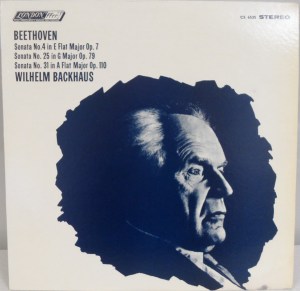
Beethoven / Piano Sonatas / Backhaus – Reviewed in 2008

Hot Stamper Classical and Orchestral Imports on Decca & London

Reviews and Commentaries for Recordings by Decca

CS 6535. This is the best sounding Backhaus LP I’ve ever heard.

The piano is natural and full-bodied, with solid weight, as would be expected from the Decca engineers of the day.

Decca was still making good records in 1967, long after RCA had gone Dynagroove.

(more…)

Liszt / Sonata in B Minor & Other Pieces / Curzon

More of the music of Franz Liszt (1811-1880)

Hot Stamper Classical LPs on Decca & London

This Super Hot Stamper solo piano record is 1963 Decca recording technology at its finest (or would be if we had ten copies to shoot out and could find the White Hot Stamper pressing hidden among them).

As it is, we are happy to have found this one, Super Hot on both sides, an amazingly realistic representation of a piano. You will have a hard time finding better. 

And the music, especially on side two, is compelling and wonderful. This is classical music that will engage you at the deepest and most serious level. Widely considered Liszt’s masterpiece, in Curzon’s forceful hands it is not hard to understand why.

Side One

A++ Super Hot Stamper sound, with a clear piano surrounded in space. Present and dynamic, there is little to fault here, save a touch of smear and a slight lack of weight.

Real pianos in live recitals have weight that I have never heard reproduced by any stereo system, so “real weight” is a relative term, one that applies more to recordings than to the live instrument itself. (more…)

Listening in Depth to Songs for Beginners

Hot Stamper Pressings of the Music of Graham Nash Available Now

Presenting another entry in our extensive listening in depth series with advice on what to listen for as you critically evaluate your copy of Songs for Beginners. Here are some albums currently on our site with similar Track by Track breakdowns.

This is one helluva well recorded album. Most of the credit must go to the team of recording engineers, led here by the esteemed Bill Halverson, the man behind all of the Crosby Stills Nash and Young albums. Nash was clearly influenced by his work with his gifted bandmates, proving with this album that he can hold his own with the best of the best.

Some songs (We Can Change The World, Be Yourself) are grandly scaled productions with the kind of studio polish that would make Supertramp envious. For me, a big speaker guy with a penchant for giving the old volume knob an extra click or two, it just doesn’t get any better.

Others (Sleep Song, Wounded Bird) are quiet and intimate. Their subtlely is highlighted by the big productions surrounding them. This is that rare album in which every aspect of the production, from the arrangements to the final mix, serves to bring out the best qualities in the songs, regardless of scale.

The recording is of course superb throughout, in the best tradition of Crosby Stills and Nash’s classic early albums: transparent, smooth and sweet vocals, with loads of midrange magic ; deep punchy bass; lovely extension on the top to capture the shimmer of the cymbals and harmonic trails of the acoustic guitars; with the whole balanced superbly by one of our all-time heroes, Glyn Johns.

Side One

Better Days

This easily qualifies as the best test track for side one. It starts out with a soft, intimate vocal from Nash — the more intimate the sound here, the better. The hot stamper copies have an immediacy and a presence that is breathtaking.

Listen also for the sound of the piano. If the piano sounds full and rich, yet clear and not at all smeared, you are off to a very good start. On the best copies you can follow the chords behind the lead instruments throughout the song. The piano easily gets lost on most copies. On the truly transparent pressings you can always hear what the piano player is doing, how his contribution is aiding the material overall, even when its far in the background. That’s what a Hot Stamper gives you: the chance to appreciate every instrument as it works it way through the song.

Ah, but what really separates the men from the boys is the double-tracked vocal (one Nash clearly singing out of each speaker or course!), starting with “Now that you know it’s nowhere… What’s to stop you coming home?” On the killer copies he gets very loud but never for a moment does his voice cross the line into hardess or shrillness. To borrow a phrase from those days, his voice stays natural, even when he’s pushing hard. That’s the emotional peak of the song. The last thing you want is for the sound to be aggressive and call attention to itself.

Most copies will have you wincing by this point if you are at any sort of serious level on this track. Only one original stamper gets his voice right on side one. (No reissue or import or heavy vinyl version I’ve ever heard is even competitive with the best originals, so don’t waste your money.)

The bass clarinet solo (I always thought it was a tenor sax!) almost never sounds right unless you have an especially magical copy. It’s usually hard sounding. Leaner copies tend to make it sound thin. Thick and opaque or just plain rolled off copies make it sound dull.

And last but not least, you need well defined deep bass. There’s plenty of it on this album, stuff well under 30 cycles — it really rumbles the room. There’s an organ playing way down deep underneath this track from early on; a startling effect is created when it suddenly comes to a stop. The more startled you are the better. It’s one of the most powerful audio phenomena I’ve ever experienced, further proof that this album is truly an engineering 

Side Two

Chicago / We Can Change the World

The two last songs here are wedded together, the latter being the chorus of the former. Let me tell you folks: this is ANALOG MAGIC AT ITS BEST. You will never hear a CD sound like this if you live to be a hundred. The midrange is so rich and sweet it makes 99% of all the recordings you’ve ever heard pale in comparison.

The more the individual voices can be heard, free of even the slightest trace of grit or grain, the better the copy. The sound is nothing short of GLORIOUS. This song is Demo Disc material. It rivals Anything on Any Super Disc List compiled by Anybody, and that includes me!

The famous female backup singers here are on scores if not hundreds of albums from the era. Some of the very same girls’ voices can clearly be heard on Pretzel Logic and Aja, to name just a couple of albums we’ve played to death around here. See if you can pick them out of the throng.

One last thing: listen for the organ at the beginning of the song. It should be really punchy with tons of solid low end; it drives the beat like crazy. It’s so funky I’m surprised nobody’s sampled it yet. Maybe they have. How the hell would I know? I don’t listen to that shizzle.

N versus C, S, and Y

In fact, the sound of this album is so good in so many ways, it prompted me to ask the question: Are any of the other albums by Nash’s bandmates as well recorded? Albums by CSN and/or Y, not a chance. They’re well-recorded, don’t get me wrong, but this one is in another league altogether.

Surveying the complete output of all the members would be time consuming, so I’ll cut to the chase. The short answer is three: David Crosby’s If Only I Could Remember My Name, the clear winner of this comparison, followed by two of Neil Young’s: After the Gold Rush and Zuma. Each of them has its own “sound” which is detailed on the site in their respective Hot Stamper listings.

Add Graham Nash’s debut to the list and you have a quartet of recordings that put to shame practically anything from the era. Which is really saying something; the late ’60s to mid-’70s is when all the best modern pop recordings were made, in my audiophile opinion (IMAO).