piano-test

Pianos are very good for testing your system, room, tweaks, electricity and all the rest, not to mention turntable setup and adjustment.

Recordings that get the piano to sound neither thin nor smeary usually do well in our shootouts. It’s one of the most important instruments we listen for.

The more full-bodied, powerful and clear the piano sounds, the higher the grades will be for the pressing under review, all other things being equal.

Ladies of the Canyon and its Growly Cellos and Solid Pianos

More of the Music of Joni Mitchell

The growl of the cello on Rainy Night House can clearly be heard behind Joni, with the wood of the instrument sounding real and correct. The kind of You Are There immediacy and transparency of the best copies has to be heard to be believed. 

Listen to the piano Joni plays throughout the album. This is not the thin and hard-sounding instrument that accompanies her on practically every LP you have ever had the misfortune to audition, hoping against hope that someday you would find that “elusive disc,” the one with sound worthy of such extraordinary music.

No, this piano has real weight; it has body; and it’s surrounded by real, three-dimensional studio space.

This side two is warm, rich, and sweet in a way that we’ve only heard on a handful of other copies in the past. Joni’s vocals just couldn’t sound any better; they’re full-bodied, breathy, textured, and shockingly present. This is the copy to play if you want Joni Mitchell singing to you right there in your listening room. What could be better than that?

With the transparency of the better copies comes the sound of Joni’s right foot on the pedal. It’s clearly audible through most of the takes, something the engineers we doubt could hear. And if they did, you can be sure they didn’t think you could.

(more…)

Straight, No Chaser – Now That’s a Piano (and a Saxophone)

monk_strai_1507_1435596984

More of the Music of Thelonious Monk

An outstanding copy we played not long ago had us singing its praises, to wit:

If you want to hear just how good Monk’s big, rich piano can sound, look no further.

Rudy Van Gelder, eat your heart out. This is the piano sound Rudy never seemed to be able to get on tape all those years ago.

Some say it’s the crappy workhorse piano he had set up in his studio. Others say it was just poorly miked. Rather than speculating on something we know little about (good pianos and their miking), let’s just say that Columbia had the piano, the room and the mics to do it right, as you can easily hear on this very record.

  • We like our pianos to sound natural (however one chooses to define the term)
  • We like them to be solidly weighted
  • We like them to be free of smear, a quality that is rarely mentioned in the audiophile reviews we read

Listen to Monk vocalizing — this copy is so resolving you can hear him clearly, yet the overall sound is warm, rich and smooth in the best Columbia tradition.

Speaking of warm, rich and smooth, this is important to the horn sound too. Most copies could not make the sax as full-bodied and free of honk as we would have liked.

This one did, earning lots of points in the process. Hard to fault and definitely hard to beat.

Listen for Smeary Piano Notes on Closing Time

Hot Stamper Pressings of Singer-Songwriter Albums Available Now

Some of the more common problems we ran into during our shootouts for this album were slightly veiled, slightly smeary sound, with not all the top end extension that the best copies have.

You can easily hear that smear on the attack of the piano. More often than not the piano notes are a tad blunted, a quality you notice when you finally hear a pressing with the piano notes rendered clearly.

The Piano

If you have full-range speakers some of the qualities you may recognize in the sound of the piano are WEIGHT and WARMTH. The piano is not hard, brittle or tinkly. Instead the best copies show you a wonderfully full-bodied, warm, rich, smooth piano, one which sounds remarkably like the ones we’ve all heard countless times in piano bars and restaurants.

In other words like a real piano, not a recorded one. This is what we look for in a good piano recording. Bad mastering can ruin the sound, and often does, along with worn out stampers and bad vinyl and five gram needles that scrape off the high frequencies.

But a few — a very few — copies survive all such hazards. They manage to reproduce the full spectrum sound of the piano (and of course the wonderful performances of the musicians) on vintage vinyl, showing us the kind of sound we never expected from a old Tom Waits albums like this.

Lately we have been writing quite a bit about how pianos are good for testing your system, room, tweaks, electricity and all the rest, not to mention turntable setup and adjustment.

Other records that we have found to be good for testing and improving your playback can be found here.

The Piano Stylings of Carole King

More of the Music of Carole King

Reviews and Commentaries for Tapestry

One quality that we had no trouble recognizing on the better copies was transparency.

The more transparent copies made it possible to hear through the mix to focus on Carole’s piano, which is usually placed behind the other instruments and, of course, her voice. There it serves to underpin the music, playing more of a supporting role than a leading one, very unlike the piano on a Joni Mitchell album for example. 

The best copies let you easily follow Carole’s playing all the way through every song, from start to finish, no matter how quiet her part or how far back in the mix the piano may be placed.

If the pressing has a thinner sound, obviously it becomes easier to pick up on the percussive nature of the instrument and “see” it more clearly. However, a thin piano tone on this album is the kiss of death. The best copies allow you to hear the full range of notes — including those played with the left hand — and for that you need both richness and transparency.

This is a tricky balancing act; rarely in our experience do any two copies find precisely the same balance throughout an entire side.

Pianos are very good for testing your system, room, tweaks, electricity and all the rest, not to mention turntable setup and adjustment. More records that are good for testing and improving your playback can be found here.

We used to say this in our listings:

Tough Sledding with Tapestry

There’s a reason you don’t see Tapestry Hot Stampers on the site very often. Folks, take it from us, even in Mint Minus Minus condition it ain’t that easy to find them. People loved Tapestry — it was Number One on the Billboard 200 for fifteen straight weeks, which is still the record for a female solo artist, and charted for more than 300 (!).

It’s a classic and it got played to death. Furthermore, the Ode vinyl the originals were pressed on was not all that quiet to begin with. We probably look at twenty or thirty for every one we find that’s not scratched or worn out. So Mint Minus Minus with no scratches that play and no groove damage to speak of is about the best that we are going to be able to do surface-wise. Sound-wise our copies will trounce any copy you’ve ever heard, or your money back.

Tapestry may not be the quietest title we sell, but we have plenty of perfectly playable copies regularly hitting the site, mostly because we can clean and play them better these days than we could ten or fifteen years ago.


Further Reading

Rose Darling’s Piano Favors Fast Electronics and Tight Bass

Hot Stamper Pressings of the Music of Steely Dan Available Now

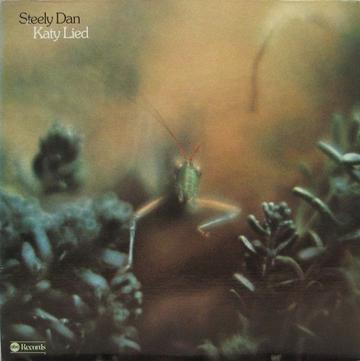
As a huge Steely Dan fan starting with the second album, Countdown to Ecstasy, I rushed down to the local Tower Records to buy Katy Lied as soon I heard it had come out.

Of course I fell in love it with immediately. It has long been a personal favorite, the ultimate expression of the art of Steely Dan on record. I’ve played it many hundreds of times over the last 40+ 50+ years and still listen to it regularly. I cannot imagine ever tiring of it.

Testing with Rose Darling

The piano is tough to get right on this track. If the piano doesn’t sound the way it should, this track will be a mess.

It’s big and bold in the mix and should sound really solid and weighty. Thin or washed out and you are in trouble.

This track punishes equipment that is slow, or has blubbery bass response. Vintage tube equipment is not what the doctor ordered.

If your woofers are too small, or you do not have enough low end definition and weight to reproduce such a large and powerful piano, the part the piano plays in the arrangement will suffer and so will the song. (More on the kind of speakers you need to play this album and hundreds of others here.)

Just wrote this today, please to enjoy:

Throw Back the Little Ones

I’ve been listening to Waka/Jawaka quite a bit lately. On this song, Steely Dan incorporates an homage to Zappa’s unique woodwind and horn arrangements starting at about 1:48. Go to youtube and check it out when you have a minute.

Jimmie Haskell gets the credit for the arrangement but I’m pretty sure I know who inspired him.


Further Reading

Years Ago the Piano on a Copy of Blue Really Took Us Aback

More of the Music of Joni Mitchell

About ten years ago we played a copy of Blue that showed us a piano we had never heard on the album before. We found it on the track The Last Time I Saw Richard.

This is not the thin and hard-sounding instrument that accompanies Joni on every pressing you have ever had the misfortune to audition, hoping against hope that someday you would find that “elusive disc” with sound worthy of such extraordinary music.

No, this piano had real weight; it has body; and it was surrounded by real, three-dimensional studio space. No vinyl pressing we had ever played up to then has managed to capture the sound of the piano on this record any better. Exactly no copies.

For those of you with a certain Heavy Vinyl pressing in your collection, we can only say that the piano on this copy will show you everything that is wrong with the piano on that one.

The piano had no smear, allowing both the percussive aspects of the instrument and the extended harmonics of the notes to be heard clearly and appreciated fully.

Pianos are very good for testing your system, room, tweaks, electricity and all the rest, not to mention turntable setup and adjustment.

A great many more records that are good for testing and improving your playback can be found here.

(more…)

An Exceptionally Natural Piano Recording of Pictures at an Exhibition

More of the music of Modest Mussorgsky (1839-1881)

This original London pressing of the solo piano version of Pictures has uncannily natural piano reproduction, which is why we are awarding this side one our highest sonic grade, A Triple Plus.

The fact that the recording takes place in Kingsway Hall in 1967 no doubt plays a large part in the natural sound. The hall is bigger here than on other copies, the piano even more solidly weighted, yet none of this comes at the expense of the clarity of the playing.

The piano has no smear, allowing both the percussive aspects of the instrument and the extended harmonics of the notes to be heard clearly and appreciated fully.

Pianos are very good for testing your system, room, tweaks, electricity and all the rest, not to mention turntable setup and adjustment. More records that are good for testing and improving your playback can be found here.


Side two has Mehta’s performance of the orchestrated work squeezed onto side two, which is never a good idea if one is looking for high quality orchestral sound. The performance itself is mediocre as well.

We are not, and never have been, big fans of Mehta’s work with the Los Angeles Philharmonic on London Records.

The exceptionally rare copy of Mehta’s Planets can sound good, but 90% of them do not — just don’t make the mistake of telling that to the average audiophile who owns one. Harry told him it was the best, he paid good money for it, and until someone tells him otherwise it had better be “the one Planets to own.” (Why audiophiles need someone to tell them what recordings are the best is a mystery. Can’t they just play them and listen for themselves?)

We see one of our roles here at Better Records as being the guys who actually will “tell you different,” and, more importantly, can back up our opinions with the records that make our case for us.

(more…)

“Yessir, That’s My Baby” – Two Pianos and No Smear on Either?

More of the Music of Count Basie

More of the Music of Oscar Peterson

There was not a trace of smear on the pianos, which is unusual in our experience, although no one ever seems to talk about smeary pianos in the audiophile world other than us.

With 176 keys on hand, this recording presents the audiophile with a great piano test.

The Piano

If you have full-range speakers, some of the qualities you may recognize in the sound of the piano are WEIGHT and WARMTH. The piano is not hard, brittle or tinkly. Instead the best copies show you a wonderfully full-bodied, warm, rich, smooth piano, one which sounds remarkably like the ones we’ve all heard countless times in piano bars and restaurants.

In other words like a real piano, not a recorded one. This is what we look for in a good piano recording. Bad mastering can ruin the sound, and often does, along with worn out stampers and bad vinyl. But some copies survive all such hazards.

They manage to reproduce the full spectrum of the piano’s wide range (and of course the wonderful performance of the pianist) on vintage vinyl, showing us the kind of sound we simply cannot find any other way.

Analogue Productions Heavy Vinyl

AP did another one of the Basie Peterson collaborations on vinyl, a longtime favorite of ours, The Timekeepers. Considering their dismal track record — an unbroken string of failures, with not one success of which I am aware — I’m quite sure the Hot Stamper we are offering here will blow the doors off anything they will ever do on vinyl.

AMG Review

From the same week that resulted in Night Rider and Timekeepers, this is the fifth album that documents the matchup of Count Basie and Oscar Peterson. The two pianists (backed by bassist John Heard and drummer Louis Bellson) play five standards and three blues with predictable swing, finding much more in common with each other than one might have originally suspected.


Further Reading

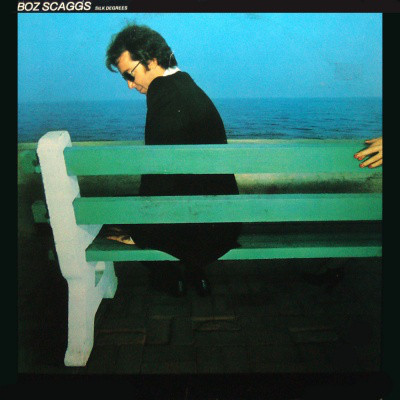
Boz Scaggs’ Rich, Solid Piano – The Forgotten Sound of the Seventies

xxxReviews and Commentaries for the Music of Boz Scaggs

What do you hear on the best copies? Well, the first thing you hear is a rich, solid piano, a piano sound that’s practically missing from the CBS Half-Speed and 90% of the reissues we’ve played.

Like so many recordings from the ’70s, this album is surprisingly natural sounding. I’ve had the same experience with Billy Joel’s ’70s records. I was surprised to hear how well recorded they are — and how full-bodied the piano is — after I stopped listening to the audiophile and import pressings and went back to the original domestic copies. When you get the right ones — that’s how we see our job, finding the right ones — they’re wonderfully rich and smooth (but not too smooth), the way good analog should sound.

And these were the kinds of records that we audiophiles were complaining about back in the day. We lamented the fact that these pressings weren’t audiophile quality, like the best MoFis and Japanese pressings. Can you imagine?

This is how bad even good equipment must have been back then.

Of course we got what we deserved. We got lots of phony, hyped-up pressings to fool us into thinking we were hearing better sound, when in fact the opposite was true. I regret to say that nothing has changed — most pressings aimed at audiophiles are still mediocre and some of them are surely the worst versions of the album ever produced. That’s pretty bad, wouldn’t you say? (For some unfathomable reason, nobody but us ever does say.)

The other record that immediately comes to mind to show you the sound that’s missing from many pressings, both vintage and modern, is Aja. Here’s what we had to say about it:

If you own the Cisco 180 gram pressing, focus on Victor Feldman’s piano at the beginning of the song. It lacks body, weight and ambience on the new pressing, but any of our better Hot Stamper copies will show you a piano with those qualities in spades. It’s some of my favorite work by the Steely Dan vibesman. The thin piano on the Cisco release must be recognized for what it is: a major error on the part of the mastering engineers.

A full piano is key to the sound of the best pressing of Silk Degrees.

The other thing you hear on the best copies is a smooth, sweet top end, which is likewise missing from the above mentioned pressings.

Most copies lack presence and top end.

Dull, thick, opaque sound is far too common on Silk Degrees, which may account for some audiophiles finding the Half-Speed preferable.

Of course, our Hot Stampers give you the presence and highs that let this music come to life. If they didn’t they wouldn’t be Hot Stampers now would they?

(more…)

Mozart – Quintet / Trio Is a Great VTA Test Disc

Hot Stamper Pressings of the Music of Mozart Available Now

CS 6109 is a handy record for VTA adjustment

Listen for fullness and solidity, especially in the piano, although a rich, full sounding clarinet is a joy here as well. 

Some of the copies we played in our shootout lacked the weight and solidity to balance out the qualities of transparency and clarity.

The resulting sound is less natural, with the kind of forced detail that CDs do so well, and live music never does. There is a balance to be found.

The right VTA will be critical in this regard. When you have all the space; the clearest, most extended harmonics; AND good weight and richness in the lower registers of the piano, you are where you need to be (keeping in mind that it can always get better if you have the patience and drive to tweak further).

(more…)