opaque-sound

The audiophile pressings listed here tend to be opaque, lacking clarity and especially transparency.

Even on highly resolving equipment, they make it difficult to “see” all the players and hear “into” the recording.

With these pressings you can’t relax and get lost in the music. Instead you are fighting to break through the barriers created by the substandard quality of the the mastering and/or pressing.

Transparency is one of the key qualities that the best vintage pressings have, often in abundance, and one that modern pressings lack, sometimes badly.

Transparency is especially important to the sound of orchestral recordings, a subject we often discuss on the blog often. Live orchestral music is uncannily transparent.

Records lack transparency to one degree or another, but live, unamplified music never does.

100% No Fun – A Classic Records Disaster

More Bad Sounding Records Audiophiles Should Avoid


UPDATE 2025

I can find no record of the existence of any regular Zoo label pressing. The only ones on Discogs are mastered by Bernie Grundman, on 150 or 180 gram vinyl.

My advice now would be to buy the CD. I own one and it’s great.


Our Zoo label original LP MURDERED the Classic heavy vinyl reissue. It’s not even close.

(more…)

Speakers Corner Mucks Up a Classic Mercury, Part Two

More of the Music of Sergei Rachmaninoff (1873-1943)

For some background, in 2005 we were still selling Heavy Vinyl. We were fans of DCC and Cisco and carried many of the Speakers Corner remasters.

But things were starting to look grim. With every improvement to our playback system, these modern reissues seem to be falling further and further behind.

In the late-’90s, Classic had released some Mercury titles which we’d auditioned and disliked immensely. In 2005 it was Speakers Corner’s turn to have at the Mercury catalog, and they went a different way, finding a “new sound” for the legendary recordings, completely unlike any vintage pressing we’d ever heard.

This was very upsetting. I felt the need to say something.

By 2007 it was clear that Heavy Vinyl was a lost cause and had no business being sold by any audiophile record dealer who cared about sound quality, most especially me. And that was the end of it. This Mercury was one of the records that helped me see the error of my ways.


Part 1 of this discussion of Speakers Corner’s Mercury Series can be found here.

A blog entry on the site from 2005 about the new Mercury reissue series that was coming out noted that:

I am expecting the new Rach 3rd (90283) later this week, and will report my findings as soon as I have a had a chance to evaluate it.

[A few weeks later I followed up with this:]

The news on 90283 is here. It came today. Are you ready? In one sentence:

The most opaque, dull and lifeless 180 gram reissue in the history of the world.

My blog entry from 2005 continues below, transcribed practically word for word.

I hope it’s becoming clear to people now that this series is an enormous fraud perpetrated against all right thinking (right listening?) audiophiles. I can’t imagine a worse sounding record. It makes the most opaque ’70s Phillips or London LP sound positively transparent next to this thick piece of crap. I pulled out my late label copy, far from the best sounding pressing I’ve ever heard, and it killed the new version. The trumpets sound like they’re playing from under a pile of blankets on this 180 gram LP. The sound is so bad it defies understanding.

And the sad thing, in some ways the saddest aspect of this very sad affair, is that I can safely predict right now, with absolutely no fear of being proved wrong, that every major record dealer will rave about it. Mark my words. Every one. Except me of course. But I’m not one of the majors. Thank god I don’t have to sell crap like this to make a living.

And every audiophile who reads a rave review in a dealer’s catalog or on a website should take it for precisely what it is: a naked grab for his money, nothing more, nothing less. It’s all about the money. It’s not about the sound. It’s not about the music. It’s just about money.

Any record dealer who would stoop low enough to take money for a record this bad is telling you something very important about his business: he either can’t tell a good record from a bad one, or he doesn’t care. Either one would make me take my business elsewhere. How do these guys stay in business? (Maybe the fact that most of their catalogs are now given over to equipment explains it.)

And you should be outraged at this kind of fraud. If you give money to retailers who so obviously have nothing but contempt for you, you share in the blame. You’re keeping these guys in business. It makes me think of the scene in Network where Howard the veteran newscaster talks directly to his audience:

So, I want you to get up now. I want all of you to get up out of your chairs. I want you to get up right now and go to the window. Open it, and stick your head out, and yell: ‘I’m as mad as hell, and I’m not gonna take this anymore!’

I want you to get up right now. Sit up. Go to your windows. Open them and stick your head out and yell – ‘I’m as mad as hell and I’m not gonna take this anymore!’ Things have got to change. But first, you’ve gotta get mad!…You’ve got to say, ‘I’m as mad as hell, and I’m not gonna take this anymore!’

After playing this new Mercury, I was filled with questions.

What is to become of the record business?

Do we really need records that sound worse than the worse sounding CDs, at twice the price?

(more…)

The Graceland Remastering Disaster, Part 2

Hot Stamper Pressings of the Music of Paul Simon Available Now

Click on the link below to read the story behind an interview conducted by a well-known reviewer of an engineer who was tasked (by whom I wonder?) with remastering Graceland on Heavy Vinyl.

He apparently had never played an original Sterling-mastered copy of Graceland. Either that, or this  engineer thought the original “needed improvement,” the kind supplied by taking a hatchet to the sound of the original tape.

Analogplanet Visits Sterling Sound and Interviews Mastering Engineer Ryan K. Smith

The interviewer apparently does not know how bad the new version sounds, but we had no trouble recognizing its awfulness here at Better Records. As a public service, we soon set about describing what we heard when we put this remastered piece of junk to the test.

Up against a properly-mastered, properly-pressed early pressing, it earned a failing grade.

Is it the worst version of the album ever pressed on vinyl? Hard to imagine it would have much competition. 

The title of our review gives away the game:

The reviewer who interviewed the remastering engineer responsible for this and no doubt many other awful sounding records has never been able to tell a good record from a bad one, and he carries on that tradition with Graceland.

Ryan Smith, the hack who cut this album, has done quite a lot of work for Analogue Productions. We can’t say we’ve played many of his recuts, but the ones we have played are hopelessly bad, with the overly smooth sound so much in vogue today.

We played his recut of Scheherazade, and rather than just give it the failing grade it deserved, we explained how any audiophile could go about using its mistaken EQ in order to recognize what is wrong with it, and of course, others like it.

(Contrary to popular opinion, it is no better than Bernie Grundman’s bad sounding version from the 90s, the one he cut for Classic Records.)

One of my good customers read this rave review from this same reviewer for the Texas Hurricane Box Set and made the worst mistake any audiophile can make: he believed it.

“His overdriven Stratocaster sound is one that guitar aficionados never tire of hearing live or on record, especially when it’s well recorded. … Yet again, Chad Kassem sets high the box set reissue bar delivering a “must have” package for SRV fans, every bit the equal of the one Doors fans have come to cherish. …every one of these records betters the originals and by a considerable margin. It is not even close…You’ve never heard these albums sound like this. That is a 100 % guaranty. …this is an impeccably produced box set physically and especially sonically. It’s the best these albums have ever and probably will ever sound.” — Music = 9/11; Sound = 10/11 — Michael Fremer

Sure, he’s out $400, but on the bright side he’s now learned a lesson he is very unlikely to forget.

(more…)

L.A. Woman – Rhino Heavy Vinyl Reviewed

Hot Stamper Pressings of the Music of The Doors Available Now

The Rhino pressing we auditioned from the Doors Box Set was surprisingly good. It’s rich and smooth with an extended top end — tonally correct, in other words — and there’s lots of bass.

This is all to the good. For the thirty bucks you might pay for it you’re getting a very good record, assuming yours sounds like ours, something we should really not be assuming, but we do it because there is simply no other way to write about records other than to describe the sound of the ones we actually have played.

What it clearly lacks compared to the best originals is, first and foremost, vocal immediacy.

Jim Morrison seems to be singing through a veil, an effect which becomes more and more bothersome over time, as these kinds of frustrating shortcomings have a habit of doing.

A bit blurry, a bit smeary, somewhat lacking in air and space, on the plus side it has good energy and better bass than most of the copies we played. All in all we would probably give it a “B.” You could do a helluva lot worse.

(more…)

A Night at the Opera – A DCC Disaster

Hot Stamper Pressings of the Music of Queen Available Now

Sonic Grade: F

This DCC pressing is a disaster, one of the worst releases that Kevin Gray and Steve Hoffman ever mastered.

Murky, opaque and compressed: yes, we can agree it has never been an especially good sounding record on anything but the most difficult to find UK pressings [and we know exactly which ones those are now, which only makes this record sound even worse in comparison], but does it deserve this kind of mastering disrespect?

Isn’t the idea to try and FIX what is wrong, rather than to make it worse?

Whether made by DCC or any other label, starting at some point in the mid-90s many audiophile pressings started to have a shortcoming that we find insufferable these days — they are just too damn smooth.

At collector prices no less. Don’t waste your money.

Is it the worst version of the album ever made?

That’s hard to say. But it is the worst sounding version of the album we’ve ever played, and that should be good enough for any audiophile contemplating spending money on this kind of trash. Our advice: don’t do it.

(more…)

Live At The Village Gate on Audio Fidelity Heavy Vinyl

Hot Stamper Pressings of Jazz Albums Available Now

An Audiophile Hall of Shame pressing. It’s yet another Disastrous Heavy Vinyl release with godawful sound.

What a murky mess. Hard to imagine you couldn’t find a common domestic pressing that wouldn’t sound better.

I mention throughout this blog that, starting in the ’90s, the records put out by Cisco, DCC, S&P and finally Audio Fidelity had to fight their way through Kevin Gray’s opaque, airless, low-resolution cutting system. We discuss that subject in some depth here.

Compressedthickdullopaque, and almost completely lacking in ambience, this record has all the hallmarks of a Modern Heavy Vinyl Reissue pressed at RTI.

The average ’70s pressing on the Atlantic Red and Green label will kill this audiophile piece of junk, and it’s unlikely to cost you more than ten bucks. Whatever you do, don’t waste your money on this incompetently remastered reissue.


For 35 years we’ve been helping music loving audiophiles the world over avoid bad sounding records.

To see the records with bad sound or bad music we’ve reviewed that weren’t marketed to audiophiles, click here.

It’s yet another public service from Better Records, the home of the best sounding records ever pressed. Our records sound better than any others you’ve heard or you get your money back.

(more…)

Coppelia and Sylvia / London Vs. Decca – Updated 2025

Hot Stamper Pressings of Music Conducted by Ernest Ansermet Available Now

Once again, the right Decca reissue blows the doors off the original London we played. This has lately become a pattern, but keep in mind it’s a pattern that’s reliable less than half the time, if memory is any guide. Many of the Decca reissues we’ve played over the last few years have failed badly in a head to head with their earlier-mastered and -pressed counterparts.

But the ones that beat all comers are the ones that stick in our minds and show up on our site.


UPDATE 2025

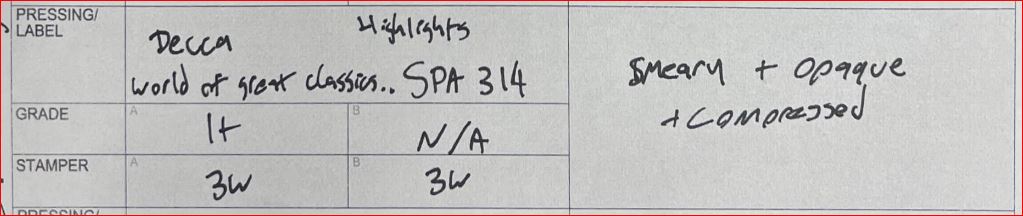
A copy of one of the SPA reissues we used to like shown above made it to our latest shootout and did not do nearly as well as a copy did years ago.

We don’t have those copies anymore and cannot say whether they actually did sound as good as we thought they did.

Our advice would be to assume that this is not the best way to buy this album. But neither is the original, as you will read below.


Clearly a case of confirmation bias, but at least we know something about our own biases, and that puts us well ahead of the audiophile pack.

Record collectors and record collecting audiophiles will tell you it shouldn’t happen, but fools like us, who refuse to accept the prognostications of those supposedly “in the know,” have done the work and come up with the experimental data that’s proven them wrong again and again.

Sort of. We had one, and only one, pressing of the original London (CS 6185), and boy was it a mess — crude as crude can be.

It sounded like an “old London record,” not the Decca engineered and mastered vintage collectible we know it to be.

We’ve played them by the hundreds, so we know that sound fairly well by now.

Are there copies that sound better? Surely there are, but how are you going to find them? Are you going to shell out the going rate of $25-50 on ebay for one (or more) clean copies, only to find that it/they sound every bit as bad as the one we auditioned? The question answers itself.

If, however, you are one of the lucky few who has a nice London or Decca original of this recording, please let us send you this copy so that you can do the shootout for yourself. You may be shocked at how good this music can sound on the right pressing. And if your copy sounds better than ours we will be very shocked indeed. [This offer was only good while we had the record, and it is long gone at this point. We still remember the sound though!]

Production and Engineering

James Walker was the producer, Roy Wallace the engineer for these sessions from April of 1959 in Geneva’s glorious Victoria Hall. It’s yet another remarkable disc from the Golden Age of Vacuum Tube Recording.

The hall the Suisse Romande recorded in was possibly the best recording venue of its day, possibly of all time. More amazing sounding recordings were made there than in any other hall we know of. There is a solidity and richness to the sound beyond all others, yet clarity and transparency are not sacrificed in the least.

It’s as wide, deep and three-dimensional as any, which is of course all to the good, but what makes the sound of these recordings so special is the weight and power of the brass, combined with unerring timbral accuracy of the instruments in every section of the orchestra.

(more…)

More Bad Tube Mastering from the Formerly Brilliant Doug Sax

Audiophile Quality Pressings of Orchestral Music Available Now

Sonic Grade: F

The sound is smeary, thick and opaque because, among other things, the record was mastered by Doug Sax on tube equipment from a copy tape, and not all that well either.

It is yet another murky audiophile piece of trash from the mastering lathe of the formerly brilliant Doug Sax. Back in the day he cut some the best sounding records ever made.

Then he started working for Analogue Productions and never cut a good sounding record again as far as I know. (Obviously I cannot have played everything he worked on from the mid-90s on. Who would have the time? Who would even want to?)

On this Offenbach record, in Doug’s defense it’s only fair to point out that he had dub tapes to work with, which is neither here nor there as these pressings are not worth the dime’s worth of vinyl used to make them.

Should you buy a record because it was made this way?

According to the back of the jacket:

Mastering by Doug Sax at The Mastering Lab using an all vacuum tube system.

Single Step processing was used for this “Limited Edition” release. The stamper was made from the first generation master and not more than 500 were pressed from each stamper. This process allows all records to be of “test pressing quality.” Klavier records are used by many manufacturers and audio specialty shops for demonstrating their equipment.

Maybe the notoriously hearing-challenged Chad Kassem wanted this sound — almost all his remastered titles have the same faults — and simply asked that Doug cut it to sound real good like analog spossed ta sound in the mind of this kingpin, which meant smooth, fat, thick and smeary. (Back in the 70s, if you had a fairly typical stereo system — Japanese receiver and three-way box speakers with a 12″ woofer — you surely know the sound I am talking about. Record stores are one of the few places one can go to hear that sound these days. If you’re old like me, it can really take you back.)

This Is Analog?

Apparently, even in our modern era this is what some folks think analog should sound like.

(more…)

Stravinsky / Le Sacre du Printemps – Speakers Corner Reviewed

More of the music of Igor Stravinsky

We used to think this was one of the better Speakers Corner Deccas.

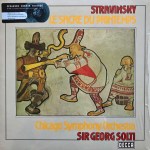
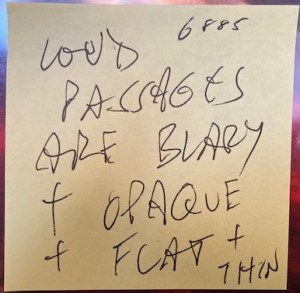
Having recently played the London pressing of the same performance (CS 6885), cut by Decca of course, we think we are almost certainly wrong about the quality of the sound, but who knows? Maybe Speakers Corner remastered the record properly and fixed its shortcomings.

Hah, just joking. In our experience that has never happened and we think it is very unlikely that it ever will.

Years ago we wrote the following:

Wow! What a performance! What dynamic full bodied sound! To be fair, I pulled out my original London, one of those awful mid-’70s English pressings that are never quiet, and yes, some of the ambience on the original is missing here on the new version, but everything else seems right: dynamics, tonality, the frequency extremes (including some pretty awesome deep bass).

Some of the above could be right, the parts about the tonality and such. Speakers Corner could have added some bass and lower midrange to make the sound less thin, and taken out some of the upper midrange to make the loud passages less blary, but it certainly doesn’t solve the most serious issues we had with the recording, which is the fact that it is opaque and flat, two qualities that are the death of orchestral music on vinyl.

Here are the notes we made for the London.

The two paragraphs you see reproduced below are also full of bad advice we had given out in the past:

1. Can’t be sure we would still feel that way but I’m guessing this is a good record if you can pick one up at a cheap price. 

2. If you have a quiet original, great, consider yourself lucky. As few of you have any copy at all, I recommend this one. The alternative is to miss Solti’s energetic performance and the precision of the Chicago Symphony, one of the few orchestras capable of making sense out of this complex and infuriating work. (At least it used to infuriate audiences. Now our modern ears can take a difficult work like this and appreciate the complex rhythms and atonality as the expression of a truly original mind.

This paragraph we would still agree with wholeheartedly:

This is not music to play while you are having dinner. This is music to engage the mind fully. It belongs in any collection. Yours in fact. Unless you have small speakers, in which case you would be wasting your money, as small speakers cannot begin to reproduce the power of this work in the hands of Solti and the CSO [or anybody else for that matter].

Your Number Please – Skip the Mono

More Pop and Jazz Vocal Albums

The mono we played (not pictured) in our shootout did not fare well head to head against the stereo pressings we had on hand.

Yes, it is rich and tubey, and Julie’s voice is solid and full-bodied, but the overall presentation is dark, opaque and small.

How do the mono record lovers of the world find this kind of sound to their liking?  We honestly don’t know.

On today’s modern stereos, the mono pressing leaves a lot to be desired, and for that reason we say skip the mono.

For records that we think sound best in mono, click here.

(more…)