obsess

The albums you see here played an important role in helping me improve my stereo, some of them starting as far back as the mid-’70s.

By the 2000s, we had a heavily-treated, dedicated room, and later still a custom built studio. The challenges posed by these recordings were instrumental in helping us make improvements in every aspect of playback.

The better the stereo got, the more these records showed us just how amazing the right pressings (we call them Hot Stampers) could sound.

Having played so many copies of these albums for so many years, I credit them with teaching me most what I know about records and equipment.

Listening in Depth to Houses of the Holy

Hot Stamper Pressings of the Music of Led Zeppelin Available Now

You really get an understanding of just how much of a production genius Jimmy Page was when you listen to a copy of Houses on high quality modern equipment, the kind that simply did not exist when the record came out in 1973.

To take just one example, listen to how clearly the multi-tracked guitars can be heard in the different layers and areas of the soundstage. On some songs you will have no trouble picking out three, four and even more guitars playing, each with its own unique character. The clarity of the better copies allows you to recognize — perhaps for the first time — the special contribution each is making to the finished song.

Side One

The Song Remains the Same
The Rain Song

Check out the guitars — the sound should be warm, sweet and delicate. There are some dead quiet passages in this song that are almost always going to have some surface noise. Most copies start out a bit noisy but almost always get quieter as the music goes along.

Over the Hills and Far Away

This is a great test track for side one. It starts with lovely acoustic guitars before the Monster Zep Rock Chords come crashing in. If both parts of the song sound correct and balanced, you more than likely have a winner. And the bigger the dynamic contrast between the parts the better.

Turn your volume up good and high in order to get the full effect, then stand back and let the boys have at it.

The Crunge (more…)

Donald Gets Dynamic on Rikki

Pretzel Logic is one knockout of a recording.

Having done shootouts for every Steely Dan title, I can say that sonically this one has no equal in their canon. (Click on that link to see two hundred others.)

Which is really saying something, since Becker and Fagen are known to be audiophiles themselves and real sticklers for sound. No effort in the recording of this album was spared, that I can tell you without fear of contradiction.

They sweated the details on this one. The mix is perfection.

But you would never know it by playing the average pressing of this album, which is dull, compressed and dead as the proverbial doornail.

(We’ve played plenty of records — actually, specific pressings of records — that were dull, compressed, and dead as a doornail. We’ve made links for them by the hundreds here so that audiophiles who do not want records with these problems can more easily avoid them.)

It’s positively criminal the way this amazingly well-recorded music sounds on the typical LP pressing. Hint: avoid all imports and anything not on ABC.) How can you possibly be expected to appreciate the music when you can’t hear it right?

(more…)

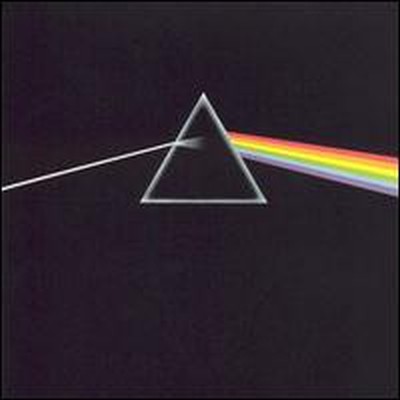
Expanding Space Itself on The Dark Side of the Moon

Many years ago, right around 2015 I believe, we played a copy with all the presence, all the richness, all the size and all the energy we could have ever hoped to hear on a pressing of Dark Side of the Moon.

It did it all and then some.

The raging guitar solos (there are three of them) on Money seemed to somehow expand the system itself, making it bigger and more powerful than I had ever heard.

Even our best copies of Blood Sweat and Tears have never managed to create such a huge space with that kind of raw power. This copy broke through all the barriers, taking the stereo system to an entirely new level of sound.

Listen to the clocks on Time. There are whirring mechanisms that can be heard deep in the soundstage on this copy that I’ve never heard as clearly before. On most copies you can’t even tell they are there.

Talk about transparency — I bet you’ve never heard so many chimes so clearly and cleanly, with such little distortion on this track.

One thing that separates the best copies from the merely good ones is super-low-distortion, extended high frequencies. How some copies manage to correctly capture the overtones of all the clocks, while others, often with the same stamper numbers, do no more than hint at them, is something no one can explain. But the records do not lie. Believe your own two ears. If you hear it, it’s there. When you don’t — the reason we do shootouts in a nutshell — it’s not.

The best sounding parts of this record are nothing less than ASTONISHING. Money is the best example I can think of for side two. When you hear the sax player rip into his solo as Money gets rockin’, it’s almost SCARY! He’s blowin’ his brains out in a way that has never, in my experience anyway, been captured on a piece of plastic. After hearing this copy, I remembered exactly why we felt this album must rank as one of the five best Rock Demo Discs to demonstrate the superiority of analog. There is no CD, and there will never be a CD, that sounds like this.

In fact, when you play the other “good sounding” copies, you realize that the sound you hear is what would naturally be considered as good as this album could get. But now we know better. This pressing took Dark Side to places we never imagined it could go.

(more…)

When Did You First Hear that 10k Boost on Sittin’ In?

Hot Stamper Pressings of the Music of Loggins and Messina Available Now

UPDATE 2026

It took us a long time to recognize it, I can tell you that. 30 years? Maybe even more.

And how about the boost to the low end?

This commentary is from many years ago, perhaps as far back as 2010.

Of course it could not have been written until the stereo had reached the level where these anomalies and others like them could be easily recognized, the clearest kind of evidence of progress in audio.

If you’re not noticing these kinds of things on the vintage vinyl you play, then it’s probably time for a serious upgrade or two.

The anomalies are there, of that there can be no doubt. They’re everywhere. You just need a more accurate and revealing system and room to show them to you.

In that respect, you my find our shootout notes are helpful at pointing you in the right direction as to what you should be listening for. They are especially helpful in recognizing when one side or another falls short in some specific area.

(more…)

The Seeds of Love – A Nearly Perfect Pop Masterpiece

tearsseeds_1510s_1448982243

Hot Stamper Pressings of Art Rock Albums Available Now

The band’s magnum opus, a Colossus of Production to rival the greatest Prog, Psych and Art Rock recordings of all time. (Whew!)

When it comes to Genre Busting Rock I put this album right up at the top of the heap, along with several other landmark albums from the Seventies: Roxy Music’s first, The Original Soundtrack, Crime of the Century, Ambrosia’s first two releases, Fragile, Dark Side of the Moon and a handful of others.

The Seeds Of Love is clearly the band’s masterpiece, and being able to hear it on a White Hot Stamper pressing is nothing short of a THRILL.

I have a long history with this style of Popular Music, stretching all the way back to the early ’70s. I grew up on Bowie, Roxy Music, 10cc, Eno, The Talking Heads, Ambrosia, Peter Gabriel, Supertramp, Yes, Zappa and others, individuals and bands that wanted to play rock music but felt shackled by the constraints of the conventional pop song. Nothing on Sowing the Seeds of Love fits the description of a Conventional Pop Song.

Which albums by The Beatles break all the rules? Side two of Abbey Road and the whole of The White Album, which is why both are Desert Island Discs for me. Can’t get enough of either one.

The Discovery of a Lifetime

When I discovered these arty rock bands in my early twenties I quickly became obsessed with them and remain so to this day.

My equipment was forced to evolve in order to be able to play the scores of challenging recordings issued by these groups and others in the 70s. These albums informed not only my taste in music but the actual stereo I play that music on. I’ve had large dynamic speakers for the last four decades precisely because they do such a good job of bringing to life huge and powerful recordings such as these.

Tears For Fears on this and their previous album continue that tradition of big-as-life and just-as-difficult-to-reproduce records. God bless ’em for it.

Analog Sound

The sound of most copies is aggressive, hard, harsh and thin. What do you expect? The album is recorded digitally and direct metal mastered at Masterdisk.

Most of us analog types put up with the limitations of the sound because we love the music, some of the most moving, brilliantly written and orchestrated psychedelic pop of the last thirty years.

Imagine if the Beatles in their Sgt. Pepper/ Magical Mystery Tour phase kept going in that direction. They very well might have ended up in the neighborhood of Sowing the Seeds of Love.

But wait — the best pressings have smooth, sweet, analog richness and spaciousness I didn’t think was possible for this recording. The bass is full and punchy. When it really starts cooking, such as in the louder, more dynamic sections of Woman in Chains or the title cut, it doesn’t get harsh and abrasive like most copies. It’s got energy and life without making your ears bleed — if you have the system to play it.

(more…)

Listening in Depth to Heavy Weather

Hot Stamper Pressings of the Music of Weather Report Available Now

Heavy Weather has some of the biggest, boldest sound we’ve ever heard.

It’s clearly a big speaker Demo Disc. Play this one as loud as you can. The louder you play it, the better it will sound.

The commentary below contains track-by-track advice on what to listen for when auditioning the album.

Side One

Birdland

Not an easy track to get right; there’s so much upper midrange and high frequency information to deal with. If the synthesizers and horns are too much, the effect is exciting but won’t wear well. Too much 6k is the problem on most copies, along with not enough above 10. That is a deadly combination.

A Remark You Made

Such an original composition. This is the band at their unconventional, uncommercial best.

(more…)

Thick as a Brick Marked a Milestone in 2007

jethrthick_1410_3_1192056381

Hot Stamper Pressings of the Music of Jethro Tull Available Now

Until about 2007, Thick as a Brick was the undiscovered gem (by me anyway) in the Tull catalog. The pressings we’d heard up until then were nothing special, and of course the average pressing of this album is exactly that: no great shakes.

With the advent of better record cleaning fluids and much better tables, phono stages, room treatments and the like — taking full advantage of the remarkable number of revolutions in audio that have occurred over the last two or three decades –some copies of Thick As A Brick have shown themselves to be truly amazing sounding. Even the All Music Guide could hear how well-engineered the album was.

Marking Two Milestones from the Past

The 2007 commentary you see below discusses the pros and cons of both the British and Domestic original pressings. With continuing improvements to the system, room, etc., it would not be long before we realized that the British pressings were simply not competitive with the best domestic ones.

You might say this record helped us mark two important milestones in the developing history of Better Records.

The first, around 2007, was recognized by the fact that we had improved our playback to a very high level, one high enough to reproduce the album with all the clarity, size and energy we were shocked to hear at the time.

The second milestone would result from the audio changes we continued to make for the next couple of years, from 2007 to 2010, which allowed us to recognize that the best British pressings, as good as they might be, were not in the same league as the best domestic ones. We broke down in detail exactly what we were listening for and what were hearing in this commentary, and the Brits were clearly not cutting it at the highest levels by 2010.

If you find yourself with one of more British copies of the album that you think have superior sound — any copies of the album, really — we would love to send you one of our Hot Stampers so you can hear what you are missing.

(more…)

Energy Is the Key to the Best Sounding Pressings of Let’s Dance

Hot Stamper Pressings of the Music of David Bowie Available Now

With Let’s Dance the name of the game is energy, and boy do the best copies! Both sides of this former shootout winner have the deep, punchy bass, smooth vocals and sweet, extended highs that Bowie’s music needs to come alive.

With that big bass and natural top end, this is one record you can turn up good and loud without fear of fatigue. On a big pair of dynamic speakers, you will get more than your money’s worth from the best of our Hot Stamper pressings. 

If you’re a fan of big drums in a big room with jump out of the speakers sound, this is the album for you.

Side One

Modern Love

This track has a tendency to be a bit brighter than those that follow. To find out if your Let’s Dance is killer, see how the title track further down sounds.

China Girl
Let’s Dance

The best sounding track on the album and one of the handful of best sounding Bowie tracks ever recorded. With a truly Hot Stamper copy, try as you might you will be very hard-pressed to find better sound. Demo Disc quality doesn’t begin to do it justice.

(more…)

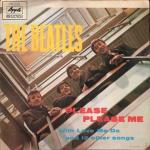
On Please Please Me, Which Is More 3-Dimensional, Mono or Twin Track?

Hot Stamper Pressings of the Music of The Beatles Available Now

With all due respect to George Martin, we’ve played a number of mono pressings of Please Please Me in the past twenty or so years and have never been particularly impressed with any of them. The monos jam all the voices and instruments together in the middle, stacking them one in front of the other, and lots of musical information gets mashed together and simply disappears in the congestion. 

But is twin track stereo any better?

Yes, when you do it the way Norman Smith did on Please Please Me.

Twin Track stereo (which is actually not very much like two-track stereo, I’m sure Wikipedia must have a listing for it if you’re interested) is like two mono tracks running simultaneously. It allows the completely separate voices to occupy one channel and the completely separate instruments to occupy another, with no leakage between them.

On some stereos it may seem as though the musicians and the singers are not playing together the way they would if one were hearing them in mono. They are in fact recorded on two separate mono tracks, the instruments appearing in the left channel and the singers in the right, separated as much as is physically possible.

Stuck in their individual stereo speakers, so far apart from one another, the members of the band don’t even seem to be playing together in the same room.

That’s on some stereos, and by some stereos I mean stereos that need improvement. Here’s why.

Three-Dimensional Mono?

In the final mixing stage, Norman Smith added separate reverb to each of the two channels, sending the reverb for the sound recorded in each channel to the opposite channel. This has the effect of making the studio, the physical space that The Beatles appear to be in, seem to stretch all the way from the right channel, where the Beatles’ voices are heard, to the back left corner of the studio, where the reverb eventually trails off.

(more…)

Thoughts on Hearing an Amazing Copy of Thriller in the 80s

Hot Stamper Pressing of the Music of Michael Jackson Available Now

The killer copy of Thriller that we discovered in our 2006 shootout gave us a whole new appreciation for just how good the album could sound. It was a real breakthrough, and proof that significant progress in audio is just a matter of time and effort, the more the better.


Our review from 2006

I remember twenty years ago (that would be 1986) playing Thriller and thinking the sound was transistory, spitty, and aggressive.

Well, I didn’t have a Triplanar tonearm, a beautiful VPI table and everything that goes along with them back then. (More here.)

Now I can play the record.

I couldn’t back then.

All that spit was simply my table, arm, cartridge and setup not being good enough, along with all the garbage downstream from them feeding the speakers.

The record is no different, it just sounds different now. Which is what makes the record a great test. If you can play this record, you can probably play practically any pop and rock record. (Orchestral music is quite another matter.)

This Pressing Changes Everything

This pressing has a side two that’s so amazing sounding that it completely changed my understanding and appreciation of this album. The average copy is a nice pop record. This copy is a Masterpiece of production and engineering.

(more…)