new-sound

These twenty or so remastered records were given a “new sound,” one very different from the sound they had when first released. We did not find the new sound to be an improvement. Just the opposite: we think it ruins the album. Stick with the earlier pressings if you want to hear these albums sound the way they should.

“There is nothing to be learned from the second kick of a mule.”

Hot Stamper Pressings of Revolver Available Now

In 2022 we finally reviewed the newly remixed Revolver.

As I was reading the newspaper today, I chanced upon Mark Twain’s famous quote and immediately recognized a way to put it to good use. I had been searching my brain for a good way to start a commentary detailing the multitudinous problems with the remixed, half-speed mastered Revolver LP. Kicked in the head was exactly what I needed.

In 2020 I had reviewed the Abbey Road remix and was astonished that anyone would release a record of such utter sonic worthlessness. A few choice lines:

The Half-Speed mastered remixed Abbey Road has to be one of the worst sounding Beatles records we have ever had the displeasure to play.

Hard to imagine you could make Abbey Road sound any worse. It’s absolutely disgraceful.

I will be writing more about its specific shortcomings down the road, but for now let this serve as a warning that you are throwing your money away if you buy this newly remixed LP.

Of course I never did write more about it. The thought of listening critically to the album in order to detail its manifold shortcomings was more than I could bear and onto the back burner the idea went, where it remains to this day.

In 2020 I warned the audiophile community not to go down this foolish half-speed mastered road, and now that they have been kicked in the head a second time, perhaps when they wake up they will come to their senses, although I doubt very much that they will.

Giles Martin is the guilty party here, and I hope it is clear by now that he simply has no clue as to how a Beatles record should sound. If he did have such a clue, this new Revolver would never have seen the light of day.

Getting Down to Brass Tacks

Here are the notes our crack listening panel (our very own Wrecking Crew) made as they listened to the new Revolver.

Note that they listened to side two first, playing a Super Hot stamper ’70s UK pressing head to head with the new release, so we have listed our notes for side two above those for side one.

They listened to the first two tracks on side two in this order:

Good Day Sunshine, And Your Bird Can Sing.

On side one they played the first three tracks and listened to them in this order:

I’m Only Sleeping, Taxman, Eleanor Rigby.


Some of the highlights from side two:

(more…)

The Dreadful Sound of the Heavy Vinyl Reissues Doug Sax Mastered in the 90s

Hot Stamper Pressings of the Music of Sonny Rollins Available Now

Longstanding customers know that we have been relentlessly critical of so-called “audiophile” LPs for years, especially in the case of these Analogue Productions releases from back in the early-90s. A well-known reviewer loved them, I hated them, and he and I haven’t seen eye to eye on much since.


(Old) Newflash!

Just dug up part of my old commentary discussing the faults with the original series that Doug Sax cut for Acoustic Sounds. Check it out.

In the listing for the OJC pressing of Way Out West we wrote:

Guaranteed better than any 33 rpm 180 gram version ever made, or your money back! (Of course I’m referring to a certain pressing from the early 90s mastered by Doug Sax, which is a textbook example of murky, tubby, flabby sound. Too many bad tubes in the chain? Who knows?

This OJC version also has its problems, but at least the shortcomings of the OJC are tolerable. Who can sit through a pressing that’s so thick and lifeless it communicates none of the player’s love for the music they’re making?

If you have midrangy transistor equipment, go with the 180 gram version (at twice the price).

If you have good equipment, go with this one.


UPDATE 2015

We are no longer fans of the OJC of Way Out West, and would never sell a record that sounds the way even the best copies do as a Hot Stamper. It’s not hopeless the way the Heavy Vinyl pressing is, but it’s not very good either. It’s yet another example of a record we was wrong about.

Live and learn, right?


(more…)

We Was Wrong About The Beatles Magical Mystery Tour (Circa 1985-90)

Hot Stamper Pressings of the Music of The Beatles Available Now

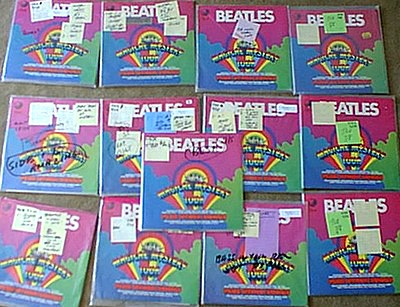
This is a very old and somewhat embarrassing commentary about how ridiculously wrong we were about which are the best sounding German pressings of the Magical Mystery Tour.

Today we would never consider selling a record that sounds as phony as this version of the album does, but we did back in the 90s and probably as late as the 2000s.

Bad sounding records I once liked are common enough on the blog to have their own category, with 76 entries to date. If we had the time to make listings for them, there would surely be hundreds of others. If you’ve been in the audio game for as long as we have, you should have plenty of records that fit that bill. All those old records sitting on the shelves that you haven’t played in years might not sound they way you remember them, but the only way to know that is to pull them out and play them. If you’ve been making regular audio progress, most of them should sound better than ever, but there have to be plenty that won’t. You just don’t know which are which as long as they sit on the shelf.


This German pressing has sound that is dramatically different from that found on other Hot Stamper pressings of MMT we’ve had on the site. I used to be convinced that its sound was clearly superior to the regular German MMT LPs.

Back in the late 80s and into the 90s this was the pressing that I was certain blew them all out of the water.

We know better now. We call this version the “Too Hot” Stamper pressing — the upper mids and top end are much too boosted to be enjoyable on top quality equipment.

It does have some positive qualities though. It has substantially deeper bass than any other version; in fact, it has some of the deepest bass you will ever hear on a pop recording. It can literally rattle the room when Paul goes down deep on Baby You’re A Rich Man.

It also uses a slightly different mix on some tracks and is mastered differently in terms of levels. The level change is most obvious at the beginning of Strawberry Fields, where it starts out very quietly and gets louder after a short while, unlike all other versions which start out pretty much at the same level.

The effect is pleasing, you might even say powerful, but probably not what The Beatles intended, as no other copy I’ve ever heard makes use of the same quiet opening. An unknown mastering engineer made the choice, he created a new sound for the song, probably because he didn’t like all the tape hiss at the opening, during which few instruments were playing loud enough to mask it.

With this mix the record is now more of a Hi-Fi spectacular — great for waking up sleepy stereo systems but not the last word in natural sound.

Records that are boosted on the top and bottom suffer from what we like to call the smile curve. This pressing, as well as lots of records remastered to appeal to audiophiles, have a bad case of it.

(more…)

The Abbey Road Remix on Vinyl

Hot Stamper Pressings of the Music of The Beatles Available Now

We got a copy of the Abbey Road remix in, cleaned it and played it. Now we can officially report the results of our investigation into this modern marvel. Imagine, The Beatles with a new mix! Just what it needed, right?

So what did we hear?

The Half-Speed mastered remixed Abbey Road has to be one of the worst sounding Beatles records we have ever had the misfortune to play.

Hard to imagine you could make Abbey Road sound any worse. It’s absolutely disgraceful.

Is it the worst version of the album ever made? Hard to imagine it would have much competition.

I will be writing more about its specific shortcomings down the road, but for now let this serve as a warning that you are throwing your money away if you buy this newly remixed LP.


UPDATE 2022

As you may have guessed by now, I have completely lost interest in detailing the abundant shortcomings of this awful record. Do yourself a favor and don’t buy one.

If you did buy one, do yourself a different favor: order any UK pressing from 1970-1986 off the web and play that one head to head with it so you can hear how badly they screwed with and screwed up the new mix.

When the remastering is this incompetent, you do not need a Hot Stamper pressing to beat it. Almost any record will do.

Remastering a well-known title and creating a new sound for it is a huge bête noire for us here at Better Records.

Half-Speed mastered disasters that sound as bad as this record does go directly into our audiophile record hall of shame.

If this isn’t the perfect example of a pass/not-yet record, I don’t know what would be.

Some records are so wrong, or are so lacking in qualities that are critically important to their sound — qualities typically found in abundance on the right vintage pressings — that the defenders of these records are fundamentally failing to judge them properly. We call these records Pass/Not-Yet, implying that the supporters of these kinds of records are not where they need to be in audio yet, but that there is still hope. If they target their resources (time and money) well, there is no reason they can’t get to where they need to be, the same way we did. Our audio advice section may be of help in that regard.

(more…)

Remind Me, What Is the Point of Listening to a Quiet Record with Mediocre Sound?

Hot Stamper Pressings of the Music of Igor Stravinsky Available Now

A lackluster reissue from Philips, bad enough to qualify for our hall of shame.

This is some truly dead as a doornail sound, sound which is not remotely competitive with the real Mercury pressings we’ve played. The FR pressings of the recording can be phenomenally good.  Even the later M2 pressings from Philips can be excellent. 

Back in the 80s and 90s, I actually used to like some of the Golden Import pressings.  That was a long time go, and thankfully our playback system is quite a bit more revealing than the one I had back in those days.

After playing literally tens of thousands of records since then, my critical listening skills are better too.

Now when I play these imports, they sound veiled, overly smooth, smeary and compressed, not too different from the average Philips pressing, which of course is exactly what they are. They’re all remastered by Philips, to give the Mercury tapes the sound that Philips thinks they should have. Sadly, not much of the Mercury Living Presence sound has survived.

We complain about mixing and mastering engineers who felt compelled to bring a new sound to old favorites.

The Philips label that produced the Golden Import series are serial offenders in this regard.

The Golden Import pressings might be good for audiophiles who care more about quiet surfaces than good sound.  We are firmly staked at the opposite side of that trade-off.

Quiet vinyl means nothing if the sound is poor, or, at the very least, wrong for the recording.

(more…)

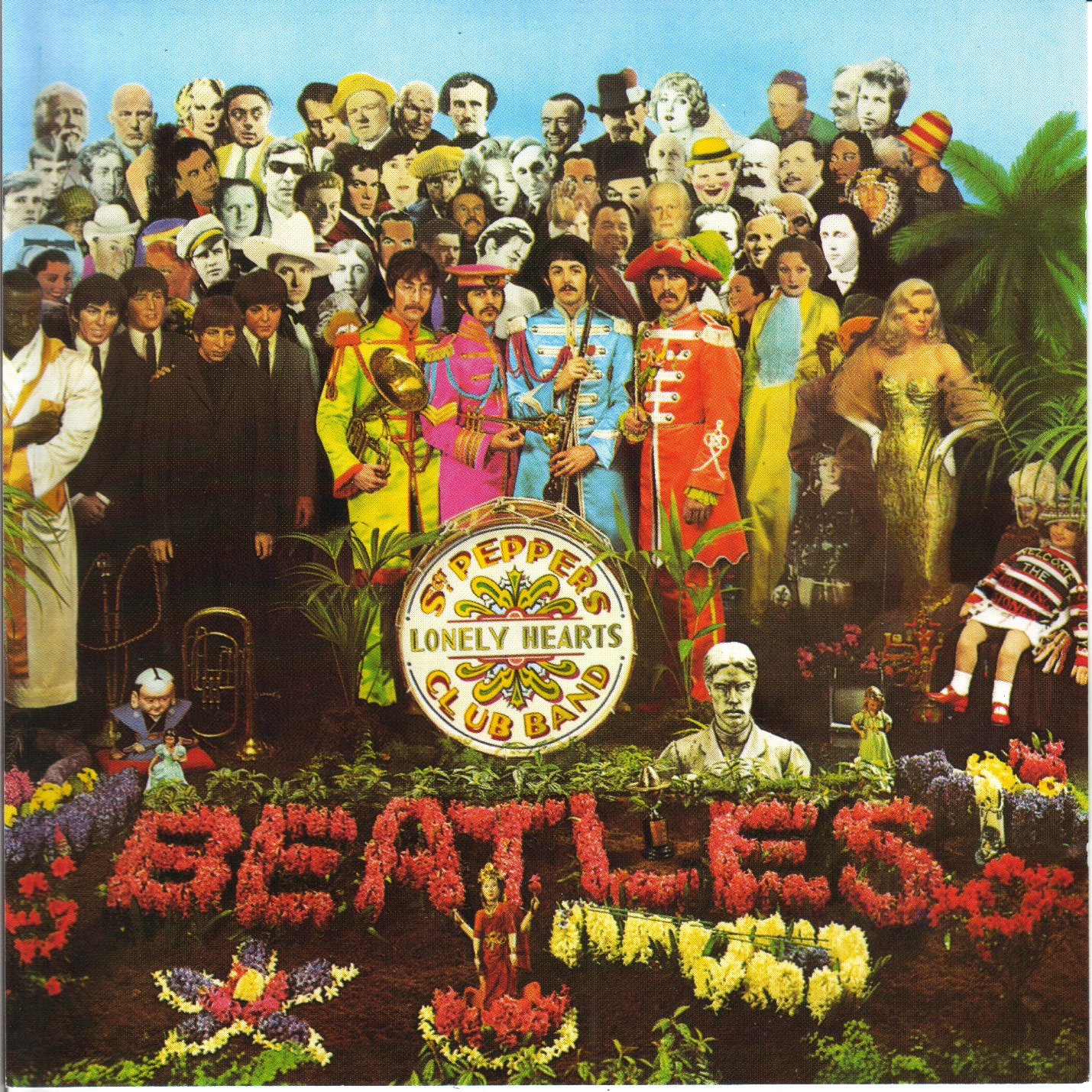
Sgt. Peppers on Heavy Vinyl – The Reviewers from 1982 Blow It Again

beatlessgtHot Stamper Pressings of Sgt. Peppers Available Now

You might agree with some reviewers that EMI’s engineers did a pretty good job with the new Pepper.

In the March 2013 issue of Stereophile, Art Dudley weighed in, finding little to fault on this title but being less impressed with most of the others in the new box set.

His reference disc? The MoFi UHQR. Gadzooks!

Oh, and he also has some old mono pressings and a domestic Let It Be. Now there’s a man who knows his Beatles. Fanatical? Who can blame him? We’re talkin’ The Beatles for Chrissake!

When I read the reviews by writers such as these I often get the sense that I must’ve fallen through some sort of Audio Time Warp and landed back in 1982.

How is it that our so-called experts evince so little understanding of how records are made, how variable the pressings can be, and, more importantly, how absolutely crucial it is to understand and implement rigorous protocols when attempting to carry out comparisons among pressings.

Critically comparing LPs is difficult and time-consuming.

It requires highly developed listening skills that I could not possibly have had because I had no clue as to what they were or how to go about acquiring them.

I see no evidence that the audiophile reviewers of today are better at it than I was in 1982, and I was terrible.

What does one well-known reviewer have to say, keeping in mind that he’s using his original British pressing for comparison? I quote at length — without prejudice so to speak — so there can be no misunderstanding. (Emphasis added.)

(more…)

What to Think When a New Version of Graceland Is Completely Unrecognizable?

Hot Stamper Pressings of the Music of Paul Simon Available Now

Where did this thick, dull, bloated, opaque turd come from?

Having played at least 50-75 copies of the album over the last ten years, I can honestly say I have never heard one that sounded like this new version (maybe some record club copy we picked up by accident did, can’t say it never happened).

Can that possibly be a good thing?

Well, in favor of that proposition, I guess you could say it sounds less like a CD now.

On the other side of the ledger, it now sounds a great deal more like a bad LP.

We listen to piles of pressings of Graceland regularly. We know what the album generally sounds like, the range from bad to good, and we know what qualities the very best copies must have in order to win one of our shootouts.

Above all the one thing Graceland has going for it sonically is CLARITY. It can be open and spacious, tonally correct, with punchy, tight bass and present, breathy vocals. The best of the best copies have all these qualities, but the one quality any good copy must have is clarity, because that’s what’s good about the sound of the record. Without clarity the music doesn’t even work.

The new version has been “fixed.” It got rid of all that pesky grit and grain and CD-like sound from the original digital mix by simply equalizing them away.

Cut the top, cut the upper mids, boost the lower mids and upper bass and voila – now it’s what Graceland would have sounded like had it been all analog from the start, AAA baby!

Or at least analog for those who don’t know what good analog sounds like.

But it never was all analog, and trying to make it sound that way just ruins the one quality that it actually had going for it — clarity.

VTA

You can adjust your VTA and other table settings until you’re blue in the face, you’ll never get this pressing to sound right, and you’ll certainly never get it to sound very much like any Sterling original pressing I’ve ever heard.

The digital spit and grit is still there, under the darker EQ. And now it’s even worse — Simon’s voice has a thick, dull blanket over it, but you can still hear the spit underneath it.

You could probably take the CD and equalize it to sound like this record. But what would be the point?

The Bright Side

Well, perhaps there is a point to this equalization madness.

The CD already exists. It has a sound.

The original record has a sound too, and it’s a fairly common LP in the used bins. You could buy two or three for not that much money and try to find one you like better than the vinyl version you probably already own.

(more…)

A Cosmo’s Factory Shootout from Way Back When

Hot Stamper Pressings of the Music of Creedence Clearwater Revival Available Now

UPDATE 2020

This is a very old commentary describing a shootout we had done more than a decade ago. Some of what you see below would probably still be true. The cutting system used to make the AP pressing no doubt lacked Tubey Magic. It’s also true that many of the records mastered on it were as lifeless and boring as we describe.

The only way to be clear about what is going on with the audiophile pressings in this group is to do another shootout with them, and we just can’t see taking the time to do that when there are so many good vintage pressings we don’t have time to play as it is.

There are only so many hours in the day, why waste them playing this crap?

We do occasionally throw the modern remastered pressings we manage to get hold of into our shootouts when time permits. You can read all about the half-speeds we’ve reviewed here and some of the Heavy Vinyl pressings we’ve played here.

Our latest thinking about this Analogue Productions repress can be found here.


Now, on to our old shootout.

Years ago a customer sent me his copy of the Analogue Productions LP (mastered by Hoffman and Gray) in order to carry out a little shootout I had planned among the five copies I could pull together: two MoFi’s, the Fantasy ORC reissue, a blue label original, the AP, and another reissue. 

Let’s just say there were no real winners, but there sure were some losers.

My take on the Hoffman version is simply this: it has virtually no trace of Tubey Analog Magic. None that I can find anyway.

It sounds like a clean, tonally correct but fairly bass-shy CD.

No pressing I played managed to be so tonally correct and so boring at the same time.

The MoFi has plenty of weird EQ colorations, the kind that bug the hell out of me on 98% of their crappy catalog, but at least it sounds like analog. It’s warm, rich and sweet.

The AP copy has none of those qualities.

More pointless 180 gram vinyl sound, to my ear anyway. I couldn’t sit through it with a gun to my head.

You would need a lot of vintage tubes in your system to get the AP record to sound right, and then every properly-mastered record in your collection would sound worse.

(more…)

Is the Heavy Vinyl from 2012 the Best Sounding Sgt. Pepper?

beatlessgtHot Stamper Pressings of Sgt. Peppers Available Now

You might agree with some reviewers that EMI’s engineers did a pretty good job with the new stereo pressing of Sgt. Pepper mastered by Sean Magee from the 2009 digitally remastered tapes.

In the March 2013 issue of Stereophile Art Dudley weighed in, finding little to fault on this title but being less impressed with most of the others in the new box set. His reference disc? The MoFi UHQR! Oh, and he also has some old mono pressings and a domestic Let It Be.

Now there’s a man who knows his Beatles. Fanatical? Of course he is! We’re talkin’ The Beatles for Chrissakes.

When I read the reviews by writers such as these, I often get the sense that I must’ve fallen through some sort of Audio Time Warp and landed back in 1982. How is it that our so-called experts evince so little understanding of how records are made, how variable the pressings can be, and, more importantly, how absolutely crucial it is to understand and implement rigorous protocols when attempting to carry out comparisons among pressings.

Critically comparing LPs is difficult and time-consuming. It requires highly developed listening skills. I didn’t know how to do it in 1982. I see no evidence that the audiophile reviewers of today are much better at it now than I was in 1982.

Just to take one example: They all seem to be operating under the same evidence-free conceit: that the original is the benchmark against which other pressings must be compared.

To those of us who have played Beatles pressings by the hundreds, this is patent nonsense. To cite just one instance, a recent Hot Stamper listing notes [inaccurately as it turns out, see below]:

We defy any original to step into the ring with it. One thing we can tell you, it would not be a fair fight. The cutting equipment to make a record of this quality did not exist in 1967, not at EMI anyway.

We had the opportunity not long ago to audition a very clean original early pressing of the album and were frankly taken aback by how AWFUL it was in virtually every respect. No top end above 8k or so, flabby bass, murky mids — this was as far from Hot Stamper sound as one could imagine. If it were a Heavy Vinyl or Audiophile pressing we would surely have graded it F and put it in our Hall of Shame.

To be fair we have played exactly one early copy of the record on our current system. (Played a copy or two long ago but on much different equipment, so any judgments we might have made must be considered highly suspect.) Perhaps there are good ones. We have no way of knowing whether there are, and we are certainly not motivated to find out given the price that original Sgt. Pepper’s are fetching these days.

We can tell you this much: no original British pressing of any Beatles album up through Pepper has ever impressed us sonically. We’ve played plenty and have yet to hear one that’s not congested, crude, distorted, bandwidth-limited and full of tube smear. (The monos suffer from all of these problems and more of course, which is only natural; they too are made with the Old School cutting equipment of the day.)

If that’s your sound more power to you. It’s definitely not ours. The hotter the stamper, the less congested, crude, distorted, bandwidth-limited and smeary it will be. (Or your money back.)


UPDATE 2023

There is a copy of a Beatles album on the original label that was competitive with our best 70s pressings, this one. We explained why it’s not a problem to admit we were wrong about the album in question, For Sale, this way:

This finding about For Sale is precisely why live and learn is our motto.

We don’t know it all, and we’ve never claimed that we did. We constantly learn things about pressings in our daily shootouts. That should not be too surprising, as record shootouts are the only way to learn anything about the sound of records that’s actually worth knowing.

Start doing your own experiments and your record knowledge might just take off the way ours has. 99% of what we think we know about the sound of records we’ve learned in shootouts over the course of the last twenty years.

Here is our advice on getting started.

Before this, the only Beatles record we would sell on the Yellow and Black Parlophone label was A Collection of Oldies… But Goldies. That title does have the best sound on the early label. In numerous shootouts, no Black and Silver label pressing from the ’70s was competitive with the best stereo copies made in the ’60s.

Until now, it was clearly the exception to our rule. From With the Beatles up through Yellow Submarine, the best sounding Beatles pressings would always be found on the 70s reissue label.


The Best Pepper Pressings

How did we come to find the best Sgt. Peppers pressings? Our recent commentary about a wonderful Benny Carter record on the original Contemporary Black Label may serve to shed some light on the process.

(more…)

Steppenwolf Gold – Their Great (But Awful Sounding) Hits

Record Collecting for Audiophiles – A Guide to the Fundamentals

There is an interesting story behind how I got my mitts on this particular Heavy Vinyl pressing.

Months ago [now years], a fellow contacted us to buy some of our Hot Stamper pressings.  We sent him one or two, and he soon wrote back to say he was not happy with the sound. We exchanged emails with him for a while, trying to rectify the situation in the hopes that we could get him some records that he would be happy with.

In the middle of all this back and forth, we thought it would be worthwhile knowing what this gentleman thought was a good sounding record, seeing as how ours were not meeting his standards. Our discussion soon crossed over into Heavy Vinyl territory. We asked, “Were there any that he liked the sound of?”  Why yes, there were.

You guessed it. The above-pictured album from Analogue Productions is one he recommended. (There was another he also said we should try, but after playing this one we decided against buying any more records he recommended, for reasons that will soon be evident.)

So we bought a copy. Soon enough we found ourselves playing our newly remastered Heavy Vinyl LP.

Right from the get-go, thick, murky, compressed, lifeless, ambience-free, dead-as-a-doornail sound was now coming out of my speakers. Like sludge from a sewer you might say. The stereo had sounded fine moments before. What the hell was happening?

I quickly grabbed a Super Hot copy of the album off the shelf and put it on the table.

Here was the energy, clarity, presence, space and more that had been missing mere moments ago while the Heavy Vinyl pressing played. Now, coming out my speakers was everything that makes a good vintage pressing such a joy to listen to.

I felt like turning it up and rocking out. The first song is Born to Be Wild. Who doesn’t love to blast Born to Be Wild?

What a difference. Night and Day. Maybe more!

If this Steppenwolf LP isn’t the perfect example of a Pass/Not-Yet record, I can’t imagine what would be.

As I was thinking about the turgid, compressed, veiled, overly smooth but not tonally incorrect sound coming out of my speakers, I thought back about the kinds of stereo systems that can produce that sound on command. They often look like the one you see below.

(more…)