new-sound

These twenty or so remastered records were given a “new sound,” one very different from the sound they had when first released. We did not find the new sound to be an improvement. Just the opposite: we think it ruins the album. Stick with the earlier pressings if you want to hear these albums sound the way they should.

Song for Beginners Was Remixed and Ruined on Classic Records

I’ve listened to Nash’s first solo outing countless times over the last thirty years, even more than Crosby, Stills and Nash’s first album. As I was listening to the Classic pressing, I recall thinking “Wow, I don’t remember that sound being there; this version is so much better I can hear things I never heard before!”

Well, owners of this album (all five of you) will certainly hear things you never heard before, because some of the tracks on this album have been remixed and some of the instruments re-recorded. How about them apples.

Both the snare and the kick drum on some songs are clearly too “modern” sounding for anything recorded in 1971. For Pete’s sake, they’d be right at home on Nevermind.

Sometimes the vocal tracks are different—probably alternate takes I would think, as Graham obviously can’t sing like he did thirty years ago to even attempt a re-recording.

As you can imagine, remastering a well-known title and creating a new sound for it is a huge bête noire for us here at Better Records. This Classic Records release is like nails on a blackboard to me now.

No doubt the idea was Graham’s but it was a very bad one indeed. (If you can get hold of the original unadulterated CD, I highly recommend it. The sound is excellent.)

(more…)

Speakers Corner Ruins a Classic Mercury, Part One

More of the Music of Sergei Rachmaninoff (1873-1943)

This commentary was written in 2004.

We carried Heavy Vinyl back then, and for that, knowing what I know now, I can only apologize.

Back then, I thought I knew a great deal more about records and  how to reproduce them than I actually did.  Yes, I have to admit it: I suffered from the Dunning-Kruger effect.

On the bright side, there is one very powerful benefit that I gained from being so mistaken. Having failed to recognize my own shortcomings, the signs that someone thinks they know more than they do are easy for me to spot. Here is one of my favorite examples. I link to it a lot.

If you want to see the effect played out in the cyber world, go to any audiophile forum and start reading any thread about records you find there. The D-K effect is hard to miss. Some of the experts on these forums have even convinced themselves that they know things that cannot be known, which is always a sure sign they know a great deal less than they think they do.  

Our Old Commentary

Some thoughts on the new 180 gram Mercury reissues by Speakers Corner and a bunch of other record related stuff.

The Absolute Sound weighed in with their view of the series:

Speakers Corner has given these recordings the respect they deserve. The packaging is gorgeous: a black album titled “The Living Presence of 20th Century Music” and displaying the Mercury logo holds the three records with their original covers and liner notes. In addition, there are informative annotations on the music and Dorati, and a history of Mercury Living Presence…They sound at least as good and in some ways better than the originals…There are no negatives and not enough superlatives to describe these magnificent reissues. It’s rare that performance, sound, and musical value combine at this level in a recording.

Arthur B. Lintgen, The Absolute Sound, February/March 2004

Let me start by saying that I have not listened to a single one of the new Mercury titles.

Now that that’s out of the way, let me state for the record that the chances of the above statements being true are so close to zero that they cannot be calculated by anything but the latest Cray computer.

Has Speakers Corner produced a single classical record that’s better than a well-mastered, properly-pressed vintage pressing? One or two. Maybe. [These days we would say zero is the right number.]  So what are the chances they did so with these? Almost none I would say.

The above review reminds me of the nonsense I read in TAS and elsewhere in the mid-’90s regarding the supposed superiority of the Classic Living Stereo reissues. After playing their first three titles: 1806, 1817 and 2222, I could find no resemblance between the reviews I read and the actual sound of the records I heard.

The sound was, in a word, awful. To this day I consider them to be the Single Worst Reissue Series in the History of the World. [Presently there are too many contenders for that title to hold that view anymore.]

(more…)

Speakers Corner Mucks Up a Classic Mercury, Part Two

More of the Music of Sergei Rachmaninoff (1873-1943)

For some background, in 2005 we were still selling Heavy Vinyl. We were fans of DCC and Cisco and carried many of the Speakers Corner remasters.

But things were starting to look grim. With every improvement to our playback system, these modern reissues seem to be falling further and further behind.

In the late-’90s, Classic had released some Mercury titles which we’d auditioned and disliked immensely. In 2005 it was Speakers Corner’s turn to have at the Mercury catalog, and they went a different way, finding a “new sound” for the legendary recordings, completely unlike any vintage pressing we’d ever heard.

This was very upsetting. I felt the need to say something.

By 2007 it was clear that Heavy Vinyl was a lost cause and had no business being sold by any audiophile record dealer who cared about sound quality, most especially me. And that was the end of it. This Mercury was one of the records that helped me see the error of my ways.


Part 1 of this discussion of Speakers Corner’s Mercury Series can be found here.

A blog entry on the site from 2005 about the new Mercury reissue series that was coming out noted that:

I am expecting the new Rach 3rd (90283) later this week, and will report my findings as soon as I have a had a chance to evaluate it.

[A few weeks later I followed up with this:]

The news on 90283 is here. It came today. Are you ready? In one sentence:

The most opaque, dull and lifeless 180 gram reissue in the history of the world.

My blog entry from 2005 continues below, transcribed practically word for word.

I hope it’s becoming clear to people now that this series is an enormous fraud perpetrated against all right thinking (right listening?) audiophiles. I can’t imagine a worse sounding record. It makes the most opaque ’70s Phillips or London LP sound positively transparent next to this thick piece of crap. I pulled out my late label copy, far from the best sounding pressing I’ve ever heard, and it killed the new version. The trumpets sound like they’re playing from under a pile of blankets on this 180 gram LP. The sound is so bad it defies understanding.

And the sad thing, in some ways the saddest aspect of this very sad affair, is that I can safely predict right now, with absolutely no fear of being proved wrong, that every major record dealer will rave about it. Mark my words. Every one. Except me of course. But I’m not one of the majors. Thank god I don’t have to sell crap like this to make a living.

And every audiophile who reads a rave review in a dealer’s catalog or on a website should take it for precisely what it is: a naked grab for his money, nothing more, nothing less. It’s all about the money. It’s not about the sound. It’s not about the music. It’s just about money.

Any record dealer who would stoop low enough to take money for a record this bad is telling you something very important about his business: he either can’t tell a good record from a bad one, or he doesn’t care. Either one would make me take my business elsewhere. How do these guys stay in business? (Maybe the fact that most of their catalogs are now given over to equipment explains it.)

And you should be outraged at this kind of fraud. If you give money to retailers who so obviously have nothing but contempt for you, you share in the blame. You’re keeping these guys in business. It makes me think of the scene in Network where Howard the veteran newscaster talks directly to his audience:

So, I want you to get up now. I want all of you to get up out of your chairs. I want you to get up right now and go to the window. Open it, and stick your head out, and yell: ‘I’m as mad as hell, and I’m not gonna take this anymore!’

I want you to get up right now. Sit up. Go to your windows. Open them and stick your head out and yell – ‘I’m as mad as hell and I’m not gonna take this anymore!’ Things have got to change. But first, you’ve gotta get mad!…You’ve got to say, ‘I’m as mad as hell, and I’m not gonna take this anymore!’

After playing this new Mercury, I was filled with questions.

What is to become of the record business?

Do we really need records that sound worse than the worse sounding CDs, at twice the price?

(more…)

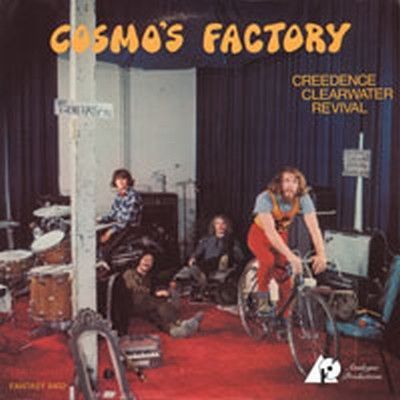
Why Would Anyone Want to Take All the Fun Out of CCR’s Music? Part Two

More of the Music of Creedence Clearwater Revival

This commentary is at least ten years old. Still holds up though!

The last time I played one of Chad’s CCR pressings, which I confess was close to a decade ago, it had all the bad qualities of the Bonnie Raitt disc on DCC, a sound that I’ve grown to dislike more with each passing year.

But what the new AP version really gets wrong is the guitar sound.

Creedence’s music lives or dies by its grungy guitars, and the AP pressing is as wrong as they come.


Latest Findings as of 2022

This commentary used to end this way:

The fat, smeary, overly-smooth guitars you hear on the record, lacking any semblance of the grungy energy that are the true hallmarks of this band’s recordings, probably means that some audiophile mastering engineer got hold of the tapes and tried to “fix” what he didn’t like about the sound.

You know, the sound that is all over the radio to this very day. Something was apparently wrong with it. So now that it’s been fixed, everything that’s good about CCR’s recordings is missing, and everything that has replaced those sonic elements has made the sound worse.

Nice job! Keep up the good work. Chad is proud of ya, no doubt about it.

It has now become clear that the various mastering engineers Chad hires are not the ones trying to fix what they don’t like about the sound. Chad is El Jefe, the one telling them what to fix and rejecting their work until these remastered albums sound the way he wants them to sound.

There is no use complaining about the awful work Doug Sax, Steve Hoffman, Kevin Gray, George Marino or anyone else did when hired to master for Analogue Productions. Their task was to please Chad. He is the customer, he is the one paying their fees, and he is the one getting the sound he wants.

He apparently thinks he is saving the world from bad sound, but we sure don’t see it that way. Just the opposite in fact.

If Chad wanted better sounding records — records that are more lively, more tonally accurate, less bloated down low and less smoothed-over up top — veteran engineers such as the gentlemen named above would surely have been able to master these titles more correctly than the evidence provided by the records would lead you to believe.

But Chad, like many other audiophiles, is a My-Fi guy, not a Hi-Fi guy, and he likes the sound he likes, regardless of what is on the master tapes or what other pressings — mastered by a number of different engineers, often over the course of many decades — might sound like.

He wants the sound he wants, and their job is to give it to him.

Bernie Grundman, the man in charge of remastering Aja, is finding out that his way is not going to work for Chad. If it takes seven test pressings before Aja has the sound Chad likes, then he will just have to keep working it until Chad hears “his Aja” sounding the way it should.

When it finally comes out, I have no doubt that it will be very different from any pressing of Aja you or I have ever heard. It won’t sound much like the early pressings that Bernie Grundman mastered for ABC in 1977, which are of course the ones we sell. Unless I miss my guess, it will be very different from the master tape. (Something I freely admit I have no way of ever knowing.)

It will sound the way Chad likes music to sound. He paid a small fortune for the privilege of making Steely Dan sound the way he wants them to sound. Now that the die is cast, those of us with good stereos and basic critical listening skills can go pound sand. The mid-fi guys are being pandered to — in the audiophile world, that’s where the Heavy Vinyl money is — and expecting anything else from this atrocious label means you haven’t been listening very carefully to the records they’ve been releasing for more than 30 years.

Will I Like the New Steely Dan Remasters?

If you think this pressing of Tea for the Tillerman sounds good, it’s a near certainty you will want to be the first on your block to collect all the newly remastered Steely Dan Heavy Vinyls.

The same goes for this pressing of Stand Up. If this is the sound you are looking for, you can be sure Chad will give it to you, good and hard (apologies to H.L. Mencken).

Do these records sound fine to you? You’re happy with them, are you?

Then you have much to look forward to with the release of the complete Steely Dan LP collection!

These Analogue Productions releases will no doubt share many of the sonic characteristics of the above-mentioned titles.

How could they not? They are guaranteed to sound the way Chad wants them to sound. Chad is the customer, and the customer is always right.

If you’re Bernie Grundman, it might take you six or seven runs at it until you find that indescribable and elusive “Chad” sound, but you will have to keep at it until you do, assuming you want to get paid.

Our review for the first of the series that we’ve had the chance to play is in, and here it is.

Could it have been worse? Absolutely. Is it really very good? No, it’s not.

Considering his dismal track record, it’s probably as good sounding a record as Chad is able to make.

To paraphrase Cormac McCarthy:

It’s a mess of a record, ain’t it, Tom?

If it ain’t, it’ll do till a mess gets here.

(more…)

The Beach Boys – Sail on, Sailor

More of the Music of The Beach Boys

Reviews and Commentaries for the Music of The Beach Boys 

The original record is dull on the lead vocal, but the chorus is magic.

All the other versions get is wrong as far as I can tell, and in exactly the way I describe in this commentary for Jackson Browne’s first album:  Jackson Browne’s debut – smooth or detailed, which Is right?


UPDATE 2025

The youtube clip posted here has been removed, sorry!


Most of the clips posted here are so modern and phony and wrong they make my head hurt. Really boosted on the top. Who on earth wants that sound? Apparently some people do.

The real pressings never sounded that way. Although they may need some modest help in the EQ department, making wholesale changes to the sound — as was clearly done for most of these modern versions — is just wrong.

It ruins everything that is good about the recording.

Now do you see why we have so little respect for modern mastering engineers?

They ruin classic titles like Surfs Up with their “improvements.” They destroy what is good about vintage analog while promoting themselves as the protectors of vintage analog.

The only people who can be trusted to promote the sound of vintage analog are the people who sell it and write about it.

The rest of them are frauds and charlatans and, as far as I can tell, deaf as a post.

Two CDs that Sound Nothing Like Their Vinyl Counterparts

Reviews and Commentaries for Sticky Fingers

Reviews and Commentaries for Back in Black

I made the mistake of buying both Back in Black and Sticky Fingers on CD to listen to in the car, and both are a disaster — no bass, no rock weight, with boosted upper mids, no doubt in a misguided attempt to provide more “clarity” and “detail.”

But trying to achieve more clarity at the expense of the rock and roll firepower that makes both of these albums Must Own Rock Records is beyond foolish.

These albums did not need a new sound or a more modern sound. The sound of the original pressings of both of them is superb, as close to faultless as you are likely to find in this world.

Mobile Fidelity managed to get more transparency in the midrange for their pressing, and look what it got them: our award for the worst version ever.

On both of these CDs, even in the car I couldn’t get past the third song.

If this is what the digital lovers of the world think those albums actually sound like, they are living in some kind of parallel universe.

The best pressings on vinyl sound nothing like them. In fact the best pressings sound so good they are on our Rock and Pop Top 100. Rest assured that you don’t get to be on our Top 100 with anemic, upper midrangy sound.


New to the Blog? Start Here

(more…)

Hall, Oates and Mobile Fidelity – A Counterfactual Approach to Remastering

Hot Stamper Pressings of the Music of Hall and Oates Available Now

We here present a set of ideas about remastering that Mobile Fidelity could have used to guide them as they went about cutting their version of Hall and Oates’ masterpiece, Abandoned Luncheonette.

This is the approach they could have taken when it came time to produce an audiophile pressing of Abandoned Luncheonette, an album originally released in 1973.

By the time Mobile Fidelity released their version of the album in 1980, the record was already being offered as a Super Saver reissue, of minimal quality at a reduced price, produced solely for the purpose of keeping record store bins stocked with back catalog. (In our experience it is the rare Super Saver pressing that is worth the vinyl it’s pressed on.)

However, there is nothing inherently wrong with such a budget release. And the Super Saver version may even have some merit. But let’s assume for a moment that it does not.

Why Abandoned Luncheonette?

Now imagine that Mobile Fidelity knows, or at least believes, two things.

One, the album is a Masterpiece that belongs in any right-thinking audiophile’s collection, and two, the current version does not sound very good. The wise men at MoFi recognize that an opportunity to do some good for the audiophile community and make a buck at the same time has presented itself.

Audiophiles may not know it, but they are in need of a good sounding copy of this brilliant album, and they deserve one that sounds every bit as good as the shockingly good sounding originals (like the ones we sell).

In addition, we at MoFi can go Atlantic’s original one better.

We can now press the album on quieter vinyl than Atlantic ever could.

Next, Mobile Fidelity greenlights this project and gets a real master tape from Atlantic. (There are many tapes that masquerade as masters and aren’t any such thing, but let’s assume for the moment that Mobile Fidelity did get a real tape.)

They would also need a nice batch of original pressings, which in our opinion are the best, and would easily be recognized as being the best sounding by anyone playing the album on good equipment. The best originals are lively, rich and smooth, befitting an expensive, high quality studio recording from the era.

So instead of Mobile Fidelity trying to create a new sound for this album, they could have taken a different approach. They could’ve just said to themselves: let’s make a copy of the record that sounds as good as the original, and because we can press it on expensive, high-quality Japanese vinyl, we can justify selling it at a premium price to audiophiles looking for the best sound and quiet vinyl.

They could then cut a number of reference lacquers trying to re-create the best qualities of the originals, and then test those lacquers up against the best originals, in something that might be called a “shootout” long before the term was commonly used bu audiophiles of our persuasion.

The Counterfactual Part

This is what they could have done. That’s why we are calling this commentary a counterfactual.

They did something else entirely.

They tried to make the record sound better than any of the copies they had at hand. They tried to fix the sound. In trying to fix the sound, they made it worse because they simply were not capable of recognizing how right the good originals were.

They must have thought them dull, because the Brain Trust at Mobile Fidelity boosted the hell out of the upper midrange and top end. (Using the concept of reverse engineering, I assume their playback equipment was dull, a fairly safe assumption considering how many Mobile Fidelity records are bright enough to peel the paint.)

They Were on a Mission

They of course would never have been able to get the bass right, because half speed mastering always causes problems down low.

But they could have made the record tonally correct, and fairly transparent in the midrange, and then could have pressed that sound onto state-of-the-art Japanese vinyl.

But none of these things interested Mobile Fidelity at the time. They were hell-bent on making everything they touched better. In the process, practically everything they touched got worse, as anyone with good equipment and two working ears who has played a large selection of their records can attest.

(more…)

Love Is the Thing – Remixed, Remastered and Ruined

More Hot Stamper Pressings of Pop and Jazz Vocal Albums

Love Is the Thing on DCC was given a “new sound” and I don’t like it

I really liked the Nat King Cole albums on DCC when they came out back in the ’90s. Thought they were a revelation as a matter of fact.

Now I find them insufferable. Here are some of my reasons for not liking Hoffman’s remix.

Nat’s voice is much too forward and loud in the mix; consequently the orchestra is too soft. The balance is off. At least on my stereo, at the levels I play the record at, the balance seems off. You surely have a different system, in a different room, and may not feel the way I do.

But without a top pressing to compare, how do you know the mix is right or wrong? Like everything in audio, it’s relative.

The balance problem is bad enough, but what really sets my teeth on edge is the fact that the Nat King Cole record on DCC doesn’t sound remotely like any Nat King Cole record I have ever heard, outside of the ones Hoffman worked on of course.

Where is all the Capitol reverb? Nat’s records all have it, and although the reverb may be a bit excessive or unnatural in some ways, at least to some people, when you take it away you end up with a sound that never existed before, and, to my ears, it’s a sound that’s just wrong for the music.

The more I listened to the DCC the less I liked it.

The first full-length commentary I ever wrote in my record catalog in 1994 took Analogue Productions to task for remastering Way Out West and giving it a “new sound,” a sound I had never heard coming from any Contemporary pressing, from any era.

I didn’t like what Doug Sax did with Way Out West, Jazz Giant, Waltz for Debby and many, many others, and I don’t like what Steve Hoffman and Kevin Gray did to Love Is the Thing, The Very Thought of You and Just One Of Those Things.

I have tried to listen to the Gold CD in my car, but even in the car I found the sound boring and insufferable.

Is this the kind of sound you hear on your DCC Nat King Cole records? If it is, we recommend you try a Hot Stamper. If it doesn’t kill your DCC you get your money back.

At the very least it will show you some of the things your DCC is doing differently, and, we think, wrong.

(more…)

Why Would Anyone Want to Take All the Fun Out of CCR’s Music? Part One

More of the Music of Creedence Clearwater Revival

The last time I played the MoFi pressing mentioned below I found the sound so weirdly colored as to defy understanding. Ten years ago when I wrote this commentary I apparently found it more tolerable.  More recently I clearly did not.

When an audiophile record sounds worse than it used to, there is a very good chance that you are making progress in audio.

Of course this is not something to be assumed. (Speaking of assumptions, you can find more on the subject here).

Rather it is something to be tested. (You can read more about some of the rigorous and extensive record testing we have conducted over the last twenty years here.)

Even if 99 times out of a hundred it turns out to be the case that the modern remastered record can now be seen for the fake it always was, there is still a one out of a hundred chance that the record may in fact be better than you remember.

These audiophile records are easily called out for their illusory superiority for the simple reason that the better your stereo gets, the more obvious their colorations and shortcomings become. This was my experience, and I pass this information on in the hopes that you will make progress with your stereo system and find them every bit as wrong as I do.

We’ve created a section for the worst of them, and even with 274 entries we could easily double that number if we were inclined to carry out more auditions and catalog their manifold shortcomings.

With the number of Heavy Vinyl records being pressed today, triple or quadruple that number I suspect would be possible.

Without sounding even more arrogant than some believe me to be, I have better things to do with my time. Thank god we are in the business of selling good records and not in the business of reviewing bad ones.


Further Reading

Records are getting awfully expensive these days, and it’s not just our Hot Stampers that seem priced for perfection.

If you are still buying these modern remastered pressings, making the same mistakes that I was making before I knew better, take the advice of some of our customers and stop throwing your money away on Heavy Vinyl and Half-Speed mastered LPs.

At the very least let us send you a Hot Stamper pressing — of any album you choose — that can show you what is wrong with your copy. of the album.

And if for some reason you disagree with us that our record sounds better than yours, we will happily give you all your money back and wish you the best.

Ruben and the Jets – An Astonishingly Badly Remixed CD

Hot Stamper Pressings of the Music of Frank Zappa Available Now

The album was reissued on CD in 1985, and almost all of the rhythm tracks were re-recorded at that time. Since all of the reissues that followed have contained the new versions of the material, early pressings of this album, such as this one, are the only way to hear this album the way it was originally recorded.

I made the mistake of buying the new CD and was appalled — yes, that’s the right word for it — by both the modernized sound and the wrong-headed re-recording of the rhythm tracks.

The only way to hear this music properly is on the early Blue Label Verve LP. (more…)