lacks-top-end

RCA Released this Awful Living Stereo Recording in 1958

Hot Stamper Pressings of the Music of Tchaikovsky Available Now

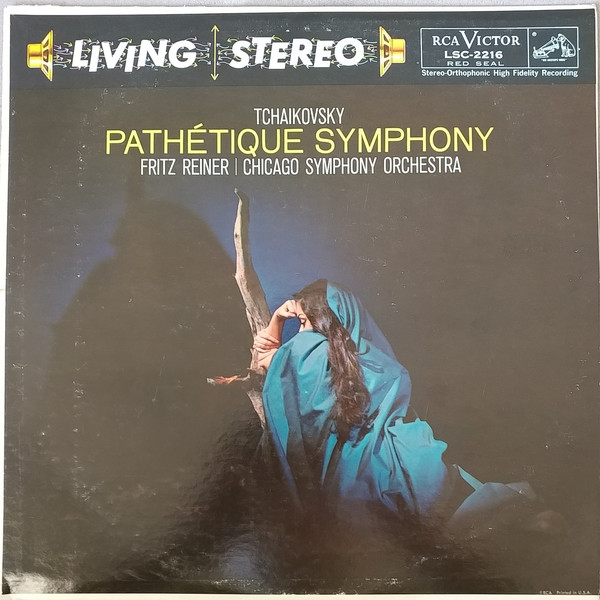
Some audiophiles buy albums based on their labels. For example, this pressing from the Golden Age of Living Stereo might appeal to a certain kind of audiophile who treasures LSC’s with the original Shaded Dog label.

More than that, he might limit himself to 1S Indianapolis pressings. Hoorah! What could be better?

However, many records from this era simply do not sound good, and this is one of them. We have never heard a good sounding copy of LSC 2216, and we’ve played quite a number of them over the decades we’ve been in the business of selling Golden Age classical records.

A copy came in just last week so I figured it was time to give it a spin and see if there was any reason to change my opinion. Hey, maybe this one had Hot Stampers! Can’t say it wouldn’t be possible. Unlikely, yes, impossible, no.

So here’s what I heard. No real top above 6k, hardly any bottom, dry and thin, but with a very wide stage – the textbook definition of “boxy sound.”

If you are a fan of Living Stereo pressings, have you noticed that many of them – this one for example – don’t sound good?

If you’re an audiophile with good equipment, you should have. But did you? Or did you buy into the hype surrounding these rare LSC pressings and just ignore the problems with the sound?

(more…)

How Good Are the Later Reissues of The Bridge?

When we did this shootout ten years ago, we thought the reissues with the cover you see to the left actually sounded better than the original pressings, but we were wrong and we have to admit it, as painful as that may be.

True, we never cared much for the later reissues described below — the tan labels can be passable but fall well short of the standards we set now.

However, even the best orange label pressings from 1975 don’t sound as good to us now as we thought they did ten years ago.

They can be good, but in our experience they can never be great.

Great is the sound that can only be found on the best originals, and they win all the shootouts now.

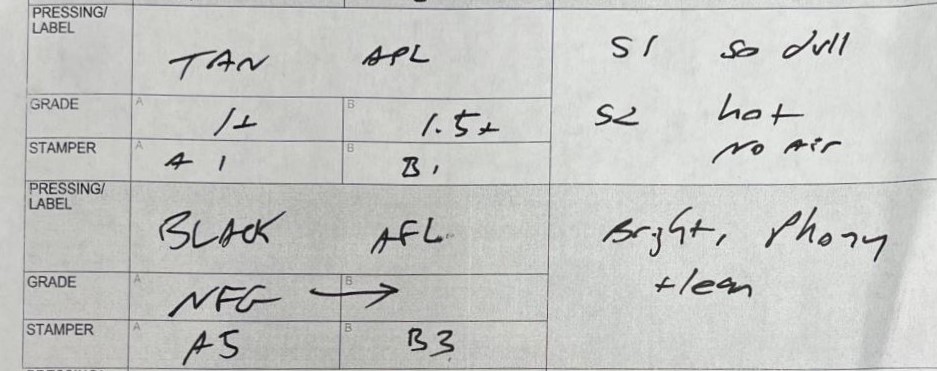
The notes for the AFL pressing with the black label describe it as bright, phony and lean.

This is the kind of sound better suited to the stone age stereos of the past.

I should know. I had a stereo all the way up until the late-90s — not exactly stone age quality, but far from the sound we have now — that prevented me from hearing my records with the highest quality reproduction.

As a result of the shortcomings of my system, I was wrong about a lot of records. (I loved DCC back in those days. Not that many years later I would undergo a “deconversion” as my stereo and critical listening skills improved.)

Of course, I was convinced my stereo was fantastic. It sure sounded better to me than any other system I’d ever heard, and by a long shot.

I had been working with expensive stereo equipment for more than twenty years at that point. The system I had put together by then cost a lot of money, played at loud levels with great energy, was in a dedicated room, et cetera, et cetera.

Are the audiophiles of today making the same mistakes I made back then?

Probably, if not almost certainly, and the one test we can use to determine which audiophiles have made the least amount of progress in this hobby are those who play records like the ones on this list and find nothing wrong with them. Their defense? “They sound just fine to me and who are you to say otherwise?”

Well, we’re the guys who say “you don’t know what you’re missing, and we have the superior-sounding pressing to prove it.”

Which, of course, as is the way of these things, almost always falls on deaf ears, pun intended.

Bottom Line

As of 2024, it’s clear to us that the early pressings have the potential for the best sound, but that the reissues can still sound very good, certainly quite a bit better than any Heavy Vinyl reissue is likely to.

Want to find your own top quality copy?

(more…)

Manna – Super Hot Versus White Hot

Hot Stamper Pressings of Great Sounding Pop Albums Available Now

Back in the mid- to late-2000s, we felt we owed our Hot Stamper customers a more complete picture of the good and bad qualities we heard in our shootout for practically every record we played.

The idea was that the buyer could listen along for what the record was doing well and what it might not be doing so well. If you noticed that the top end was a little soft, well, that’s what we might have heard too. We would put that shortcoming, and any others we thought worth mentioning, right there in the listing.

Over the years, in order to avoid having to write every listing from scratch, we streamlined the process and dropped the criticisms.

Below you can see a typical example of an older listing. This is how we used to recognize when a record was Super Hot as opposed to White Hot.

This commentary on the famous recording of The Firebird with Dorati discusses the same issues in more depth.

Side One

A++, with good balance and lots of rockin’ energy. It’s transparent — just listen to how clear the drums are on the first track. It’s a bit dry and doesn’t have all the top end extension of the best, so Super Hot is a fair grade we think.

(more…)

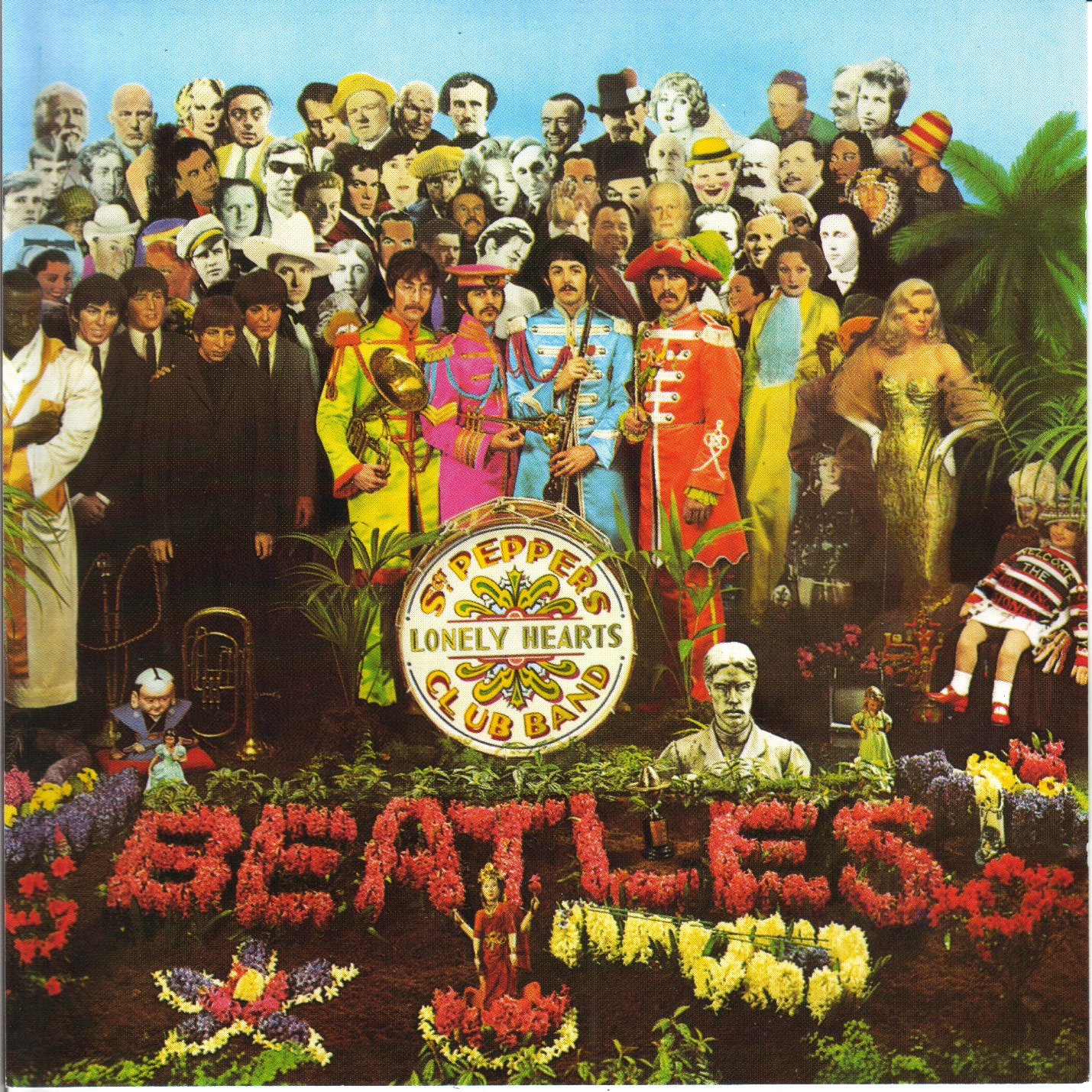
Is the Heavy Vinyl from 2012 the Best Sounding Sgt. Pepper?

beatlessgtHot Stamper Pressings of Sgt. Peppers Available Now

You might agree with some reviewers that EMI’s engineers did a pretty good job with the new stereo pressing of Sgt. Pepper mastered by Sean Magee from the 2009 digitally remastered tapes.

In the March 2013 issue of Stereophile Art Dudley weighed in, finding little to fault on this title but being less impressed with most of the others in the new box set. His reference disc? The MoFi UHQR! Oh, and he also has some old mono pressings and a domestic Let It Be.

Now there’s a man who knows his Beatles. Fanatical? Of course he is! We’re talkin’ The Beatles for Chrissakes.

When I read the reviews by writers such as these, I often get the sense that I must’ve fallen through some sort of Audio Time Warp and landed back in 1982. How is it that our so-called experts evince so little understanding of how records are made, how variable the pressings can be, and, more importantly, how absolutely crucial it is to understand and implement rigorous protocols when attempting to carry out comparisons among pressings.

Critically comparing LPs is difficult and time-consuming. It requires highly developed listening skills. I didn’t know how to do it in 1982. I see no evidence that the audiophile reviewers of today are much better at it now than I was in 1982.

Just to take one example: They all seem to be operating under the same evidence-free conceit: that the original is the benchmark against which other pressings must be compared.

To those of us who have played Beatles pressings by the hundreds, this is patent nonsense. To cite just one instance, a recent Hot Stamper listing notes [inaccurately as it turns out, see below]:

We defy any original to step into the ring with it. One thing we can tell you, it would not be a fair fight. The cutting equipment to make a record of this quality did not exist in 1967, not at EMI anyway.

We had the opportunity not long ago to audition a very clean original early pressing of the album and were frankly taken aback by how AWFUL it was in virtually every respect. No top end above 8k or so, flabby bass, murky mids — this was as far from Hot Stamper sound as one could imagine. If it were a Heavy Vinyl or Audiophile pressing we would surely have graded it F and put it in our Hall of Shame.

To be fair we have played exactly one early copy of the record on our current system. (Played a copy or two long ago but on much different equipment, so any judgments we might have made must be considered highly suspect.) Perhaps there are good ones. We have no way of knowing whether there are, and we are certainly not motivated to find out given the price that original Sgt. Pepper’s are fetching these days.

We can tell you this much: no original British pressing of any Beatles album up through Pepper has ever impressed us sonically. We’ve played plenty and have yet to hear one that’s not congested, crude, distorted, bandwidth-limited and full of tube smear. (The monos suffer from all of these problems and more of course, which is only natural; they too are made with the Old School cutting equipment of the day.)

If that’s your sound more power to you. It’s definitely not ours. The hotter the stamper, the less congested, crude, distorted, bandwidth-limited and smeary it will be. (Or your money back.)


UPDATE 2023

There is a copy of a Beatles album on the original label that was competitive with our best 70s pressings, this one. We explained why it’s not a problem to admit we were wrong about the album in question, For Sale, this way:

This finding about For Sale is precisely why live and learn is our motto.

We don’t know it all, and we’ve never claimed that we did. We constantly learn things about pressings in our daily shootouts. That should not be too surprising, as record shootouts are the only way to learn anything about the sound of records that’s actually worth knowing.

Start doing your own experiments and your record knowledge might just take off the way ours has. 99% of what we think we know about the sound of records we’ve learned in shootouts over the course of the last twenty years.

Here is our advice on getting started.

Before this, the only Beatles record we would sell on the Yellow and Black Parlophone label was A Collection of Oldies… But Goldies. That title does have the best sound on the early label. In numerous shootouts, no Black and Silver label pressing from the ’70s was competitive with the best stereo copies made in the ’60s.

Until now, it was clearly the exception to our rule. From With the Beatles up through Yellow Submarine, the best sounding Beatles pressings would always be found on the 70s reissue label.


The Best Pepper Pressings

How did we come to find the best Sgt. Peppers pressings? Our recent commentary about a wonderful Benny Carter record on the original Contemporary Black Label may serve to shed some light on the process.

(more…)

If You Can’t Make a Good Record, Why Make Any Record At All?

Hot Stamper Pressings of the Music of Steely Dan Available Now

This Speakers Corner Heavy Vinyl pressing has to be one of the worst sounding versions of the album ever pressed.

You think the average ABC or MCA pressing is opaque, flat and lifeless, not to mention compromised at both ends of the frequency spectrum?

You ain’t heard nothin’ yet!

As bad as the typical copy of this album is, the Speakers Corner Heavy Vinyl is even worse, with not a single redeeming quality to its credit.

If this is what passes for an Audiophile Record these days, and it is, it’s just one more nail in the coffin for Heavy Vinyl.

But that’s not the half of it.

Go to Acoustic Sounds’ website and read all the positive customer reviews — they love it! Is there any heavy vinyl pressing on the planet that a sizable contingent of audiophiles won’t say something nice about, no matter how bad it sounds? I can’t think of one.

To sum up, this record is nothing less than an affront to analog itself. I guarantee you the CD is better, if you get a good one. I own four or five and the best of them has far more musical energy than this thick, dull, opaque and boring piece of audiophile analog trash.

It was probably made from a digital copy of the master, or more likely a digital copy of an analog dub of the master — three generations, that’s sure what it sounds like — but that’s no excuse.

If you can’t make a good record, don’t make any record at all. Shelve the project. The audiophile vinyl world is drowning in bad sounding pressings; we don’t need any more, thank you very much.

(more…)

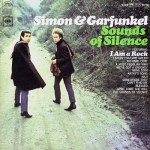
Listening in Depth to Sounds of Silence

More of the Music of Simon and Garfunkel

Presenting another entry in our extensive Listening in Depth series with advice on what to listen for as you critically evaluate your copy of Sounds of Silence. Here are some albums currently on our site with similar Track by Track breakdowns.

Sounds of Silence is made from a second generation tape, as we explain below. Since we listen to all the records we sell, we like to point out such things so our customers know what they are getting.

This album is the proverbial tough nut to crack, a mix of folkie tracks and ambitious big production numbers, all recorded on a four track machine and bounced down maybe just a few too many times along the way. Some got handed a troublesome case of Top 40 EQ — hey, this is 1965, it’s the way they thought pop records should sound.

But many of the best tracks survived just fine. They can sound wonderful, it’s just that they rarely do. This is precisely where we come into the picture.

The key to good sounding pressings of this record is to look for the ones with a top end. Now of course you can’t see the top end when you buy the record. But most of the copies of this album you pick up are going to sound like cassettes. There won’t be much over 8K, and that means hard, harsh, transistor radio sound. You need extended highs to balance out the upper midrange.

(more…)

What Do You Mean by “Boxy” Sound?

More of the Music of Tchaikovsky

Many Golden Age classical records simply do not have very good sound, and this is one of them.

We’ve never heard a good sounding copy of LSC 2216, and we’ve played quite a number of them over the decades that we’ve been in the business of selling them. (LSC 1901, with Monteux conducting, is no better.)

A copy came in a while back so I figured it was time to give it a spin and see if there was any reason to change my opinion. Hey, maybe this one had Hot Stampers!

Can’t say it wouldn’t be possible. Unlikely, yes, impossible, no.

So here’s what I heard. No real top above 6k, hardly any bottom, but with a very wide stage – the textbook definition of “boxy sound.” (Dry and thin too, on a vintage RCA pressing no less!)

If you are a fan of Living Stereo pressings, have you noticed that many of them – this one for example – don’t sound good?

If you’re an audiophile with good equipment, you should have. But did you? Or did you buy into the hype surrounding these rare LSC pressings and just ignore the problems with the sound?

(more…)

Between The Buttons – How Do the Original UK Deccas Sound?

More of the Music of The Rolling Stones

This LP has the British track listing, so don’t pick this one up if you’re looking for great sounding versions of Let’s Spend The Night Together or Ruby Tuesday. A bummer, but the domestic copies sound AWFUL, so what can you do?

Also, the early UK Decca label pressings have never impressed us.

Congested and compressed, with no real top, who in his right mind could possibly tolerate that kind of sound nowadays?

The early Deccas might be passable on an old school system, but they are too unpleasant to be played on the high quality modern equipment we use.


Want to find your own top quality copy?

Consider taking our moderately helpful advice concerning the pressings that tend to win our shootouts.

(more…)

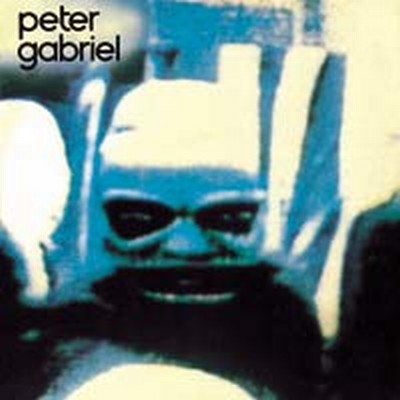
Security – Specific Strengths and Weaknesses

Hot Stamper Pressings of the Music of Peter Gabriel Available Now

This copy on side one has right on the money tonality from top to bottom, with big drums and smooth, silky voices in the choruses. We took it down from our top grade because it lacked a little of the top end extension we heard on other copies.

Side two is even better at A++ to A+++, with everything going for it. We heard one copy with better transient information, so we docked it half a plus off our top grade.

Still, this turned out to be our best overall copy.

The Music

This is one of the most important records in the Peter Gabriel canon, groundbreaking and influential on so many levels. The entire album is a wonderful journey; anyone with a pop-prog bend will enjoy the ride. Just turn the volume up good and loud, turn off your mind, relax and float along with PG and the boys. You’re in good hands.

I take exception to the AMG review referring to the album as mood music. These are fully developed songs, any one of which would stand up well on its own against others in the PG canon. The more you listen to the album the more you will appreciate that every track here is at least good while many of them are nothing short of brilliant.

(more…)

L.A. Woman on German Heavy Vinyl, Part Two

Part One can be found here.

I have a Super Saver budget reissue domestic pressing of LA Woman. Want to guess what it sounds like? It sounds exactly like this German version. When I described the sound of the German version to Steve, he immediately recognized what I was talking about. There is a tape — they call it “the master tape” — of L.A. Woman that has exactly the bad qualities I have described above. I’m guessing that my Super Saver copy is a flat transfer of that bad tape. (When budget reissues are mastered, it’s often the case that the transfer is flat or something very close to it, because little time and expense is justified for a cheap reissue.)

Now if the Super Saver is a flat transfer and sounds just like this German pressing, I think we can safely infer that this new 180 gram remastered record is a flat transfer. It’s a flat transfer of a bad tape. Nothing more, nothing less.

And nothing new. There are tons of badly remastered records out there. I’m sure you’ve bought some. I could spend days listing them in the Records We Don’t Sell section. Most of the records found on my competitor’s Web sites could be cut and pasted into that section if I wanted to take the time to do it.

But how is it that such a bad record seems to have met with such favor among audiophiles? I’m frankly at a loss to understand it. I’m sure some of you reading this commentary own the record. Some of you no doubt LIKE the record. So let me think of a few reasons why you might not have noticed how bad sounding a record it is.

(more…)