con-wis

Many audiophiles are inclined to believe the conventional wisdom they receive from other enthusiasts.

Some of it is right, some of it is wrong, but if you don’t know how to critically listen to records for yourself, you will never be able to tell which is which.

You’ll be stuck with the approaches most audiophiles use — guessing and assuming. Neither are a reliable method for getting at the truth.

Are the Originals the Best Sounding Pressings of Moondog Matinee?

More of the Music of The Band

In the case of this album, no. The copies with the later covers always win our shootouts.

This is not the least bit surprising to us. We’re the guys who are all about sound, not originality.

We discussed it in this commentary: Are hot stampers just original pressings?

Side One

  • Ain’t Got No Home
  • Holy Cow
  • Share Your Love
  • Mystery Train
  • Third Man Theme

Side Two

  • Promised Land
  • The Great Pretender
  • I’m Ready
  • Saved
  • A Change Is Gonna Come

AMG Review

The Band essentially went back to being the Hawks of the late ’50s and early ’60s on this album of cover tunes. They demonstrated considerable expertise on their versions of rock & roll and R&B standards like Clarence “Frogman” Henry’s “Ain’t Got No Home,” Chuck Berry’s “The Promised Land,” and Fats Domino’s “I’m Ready.”

(more…)

How Can Anybody Not Hear What’s Wrong with Old Records Like These?

beatlrubbeoriginalRecord Collecting – A Guide to the Fundamentals

It is our strongly held belief that if your equipment (regardless of cost) or your critical listening skills do not allow you to hear the kinds of sonic differences among pressings we describe, then whether you are just getting started in audio or are a self-identified audio expert writing for the most prestigious magazines and websites, you still have a very long way to go in this hobby.

Purveyors of the old paradigms — original is better, money buys good sound — may eventually find their approach to records and equipment unsatisfactory (when it isn’t just plain wrong), but they will only do so if they start to rely more on empirical findings and less on convenient theories and received wisdom.

A reviewer we know all too well is clearly stuck in the old, mistaken paradigm, illustrated perfectly by this comment:

It’s not my pleasure to be so negative but since I have a clean UK original (signed for me by George Martin!) I’ll not be playing this one again. Yes, there are some panning mistakes and whatever else Martin “cleaned up” but really, sometimes it’s best to leave well-enough (and this album was well-enough!) alone.

We can’t imagine how anyone can have a system in this day and age that can obscure the flaws of the original Parlophone pressings of Rubber Soul (or any other Yellow and Black label Parlophone pressing for that matter, other than Yellow Submarine and Oldies but Goldies).


UPDATE 2022

Here is another exception to that “rule.”


This reviewer apparently does (as do some of our customers, truth be told), but we have something very different indeed. One might even consider it the opposite of such a system.

Our system is designed to relentlessly and ruthlessly expose the flaws of every record we play.

Only the best of the best can survive that level of scrutiny. Our system (comprising equipment, setup, tweaks, room treatments, electricity) operates at the highest level of fidelity we have been able to achieve to date. We are constantly making improvements to our playback system in search of even better sound.

Real Progress

But wait a minute, who are we to talk about being fooled? Bear in mind that as recently as 2000 or so we were still recommending DCC and other Heavy Vinyl pressings. These are records that, with few exceptions, I would have a hard time sitting through nowadays.

My system couldn’t show me how colored and lifeless they were then, but it sure can now.

It’s amazing how far you can get in 10 years [now 20] if you’re obsessive enough and driven enough, and are also willing to devote huge amounts of your time and effort to the pursuit of better audio. This will be especially true if you are perfectly happy to let your ears, not your brain, inform your understanding of the sound of the records you play.

If we thought like most audiophiles, that money buys good sound and original pressings are usually the best, there would be no such thing as Hot Stampers. Old thinking and wrong thinking can really slow down your progress.

(more…)

The Original Is Better? Sez Who?

Hot Stamper Pressings that Sound Their Best on the Right Reissue Available Now

Which albums sound better on the right vintage reissue pressing?

These do.

Just to take one example: The original Reprise pressing of Jazz Waltz, whether in mono or stereo, has never sounded very good to us. The mono is quite a bit worse than the stereo – no surprise there – but both must be considered poor reflections of the master tape.

We sold one many years ago, describing it this way: “Beautiful original with decent sound — rich, smooth and sweet.” Which it was, but from us that’s little more than damning it with faint praise.

The Discovery pressing is so much bigger, clearer and livelier it’s almost hard to imagine it and the 1962 Reprise original were both made from the same tape.

Something sure went wrong the first time around — I think it should be safe to say at least that much.

Does the Original Always Have the Best Sound?

Not for those of us who play records rather than merely collect them.

(more…)

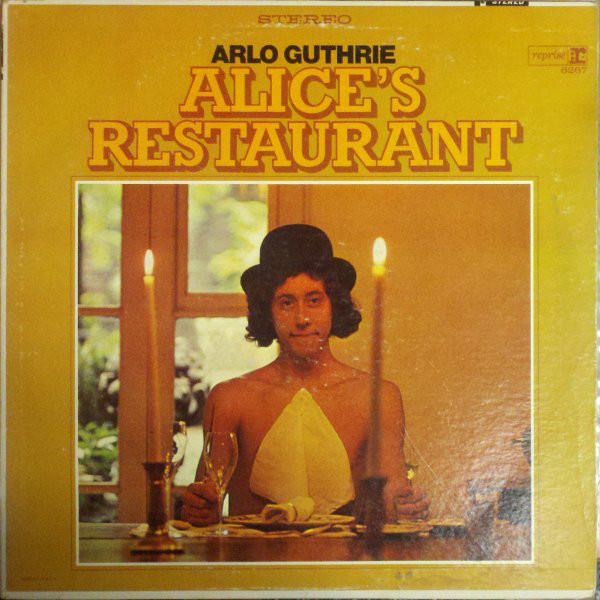
The Tri-Color Pressings Are Hard to Beat on Alice’s Restaurant

More of the Music of Arlo Guthrie

More Hot Stamper Pressings of Classic Debut Albums

This two-tone Reprise stereo pressings of Arlo Guthrie’s classic debut often do well in our shootouts, but the Tri-Color originals are a step up in class, when and if they can be found with quiet enough surfaces.

The originals win the shootouts, but they need to be mastered and pressed right, and cleaned properly, to beat the best of the second pressings.

The originals tend to have exceptionally Tubey Magical sound and it certainly doesn’t take a pair of golden ears to hear it.

The 18 minute plus title song sounds wonderful – natural, Tubey Magical, and tonally correct, as befits any top quality vintage pressing, especially one with Lee Herschberg handling the engineering duties.

As we never tire of saying:

This vintage pressing has the kind of Tubey Magical Midrange that modern records can barely BEGIN to reproduce. Folks, that sound is gone and it sure isn’t showing signs of coming back. If you love hearing INTO a recording, actually being able to “see” the performers, and feeling as if you are sitting in the studio with the band, this is the record for you. It’s what vintage all analog recordings are known for — this sound.

If you exclusively play modern repressings of vintage recordings, I can say without fear of contradiction that you have never heard this kind of sound on vinyl. Old records have it — not often, and certainly not always — but maybe one out of a hundred new records do, and those are some pretty long odds.

(more…)

John writes: “The only problem I have with my evaluations is that I never heard his records.”

More Commentaries Prompted by Forums, Videos and Comments Sections

If you haven’t had a chance yet, please check out the interview Wired conducted with me a few years back.

If you have some time on your hands, maybe too much time on your hands, go to the comments section and read the 300 plus postings that can be found there, the writers of which seem to be offended by the very idea of Hot Stampers. They also decry the obvious shortcomings of analog vinyl itself, as well as the ridiculously expensive equipment some “credulous, misguided audiophiles,” their terms, use to play vinyl records, as if you didn’t know already!

Here is one that I found to be especially interesting, from a psychological perspective if not from an audio one: 

Bad, mismatched system setup. Customer base probably has the same. Also evaluation process is questionable. Uses a mediocre solid state amp and looks for “tubey magic” because of some misplaced concept of “accuracy” as I discussed before. [Man, this guy has got our number all right, ouch!]

Yes, there is a lot of bad stuff out there, and it does give the stereo industry as a whole a bad name. I have heard some pretty crappy, expensive setups in my day.

I was listening to Phoebe Snow’s “Second Childhood” on my best system last night. Boy, I love my new turntable!

The only problem I have with my evaluations is that I never heard his records. My comments are probably correct, but it would be interesting to audition a few of his “golden” albums just to confirm he hasn’t really found anything. The reason I am confident that he probably does not have anything is because virtually every repressing I’ve heard is better than the original. Claiming otherwise hurts his credibility.

John

There is one sentence in the paragraphs above that should raise a giant red flag and help you to appreciate how reliable John’s analysis of our stereo and methods might turn out to be. If you didn’t catch it the first time through, give it another shot. Okay, here goes:

The reason I am confident that he probably does not have anything is because virtually every repressing I’ve heard is better than the original.

That’s so strange! Virtually every repressing I’ve heard is worse than the original.

What gives?

If I may paraphrase our writer: the reason I am confident that he probably does not know anything about records or audio is that he thinks repressings are always better than vintage pressings.

We’ve critically auditioned tens of thousands of records, including many hundreds of repressings, admittedly on our “bad, mismatched system setup,” and I guess we must have gotten it all wrong over the 38 years we’ve been in the audiophile record business. The shame of it all!

Obviously, John knows he does not need to try one of our Hot Stampers. You can see him talking himself into the wisdom of doing nothing with every succeeding paragraph.

It’s easy for him to be right by simply pretending to know something he cannot possibly know.

(Knowledge that is not backed up by empirical findings [1] comes in for a lot of criticism here at Better Records, and for good reason. Guessing, speculating and assuming are poor approaches to separating the good pressings from the bad ones.)

And if he did ever order one, and had at least a halfway decent stereo to play it on, it would turn his world upside down so fast it would make his head hurt, and the possibility of that happening would be very, very upsetting. It makes no sense for John to risk such an outcome.

Even if our records were as cheap as the ones he is buying, even the superior sound would not justify the psychological damage that would result. He would basically have to start his collection over again, as this good customer did.  A few hundred others just like him have done the same, and they’re the ones that will be keeping us in business for years to come. To paraphrase another famous saying, “They’ve heard the future, and it works!”

Better for John to follow the path he is on. It’s working for him. Why would he want to rock his own boat?

(more…)
Oliver Nelson’s Masterpiece – So Much Better Sounding on the (Right) Reissue

Hot Stamper Pressings that Sound Their Best on the Right Reissue

For those of you who still cling to the idea that the originals are better, this Hot Stamper pressing of the album should be just the ticket to set you straight.

Yes, we can all agree that Rudy Van Gelder recorded it, brilliantly as a matter of fact. Shouldn’t he be the most natural choice to transfer the tape to disc, knowing, as we must assume he does, exactly what to fix and what to leave alone in the mix?

Maybe he should be; it’s a point worth arguing.

But ideas such as this are only of value once they have been tested empirically and found to be true.

(more…)

Letter of the Week – “…if you want to pay $700 for Aja, go right ahead.” I took his advice, and I’m glad I did!

Hot Stamper Pressings of the Music of Steely Dan Available Now

One of our good customers recently watched a video on Steve Westman’s youtube channel of an interview Steve conducted with Michael Fremer. (I appeared with Steve back in October of 2022. You can find the interview here.)

This video upset my customer so much that he felt he needed to get a few things off his chest, which he did in the letter you can find right after my commentary below. He does not pull many punches.

I would like to comment on some of the points he makes, points which I hope will be of interest to our readers. That is what you see here at the top.

At the end of my comments I have reproduced the letter, so if you don’t care to see Fremer raked over the coals, please feel free to stop reading at the end of my comments. Mike Esposito, the guy who exposed MoFi’s duplicity, comes in for some criticism as well. (Justified in my opinion, because Mr. Esposito sure likes some bad sounding records. But why pick on him? Modern audiophile reviewers seem to like nothing but bad sounding records, the same way I did in 1982. Except it’s not 1982 anymore, and there is simply no excuse for having equipment that cannot help you tell a good sounding record from a bad one.)

Our customer, let’s call him Mr. A, had this to say in Point No. 2:

[Fremer] says old records in good shape still sound the best. [Which is true.] He says the playback gear back in the day could not even reveal how great those albums actually are. [Also true.] He says that there are significant variations from one stamper to another and you need to get the right stamper. [True again.] (In his view of the world, there’s no variations in pressings within the same stamper. Apart from this detail, he supports every point you make. He even says, “if you want to pay $700 for Aja, go right ahead.” I took his advice, and I’m glad I did!)

I don’t think he says any of these things nearly as often as they need to be said, or with any real conviction. They are footnotes, a kind of anodyne lip service. They’re the fine print that nobody reads. They’re boxes that get checked off so that we don’t have to talk about them anymore.

I don’t think his readers think any of the statements above are relevant to their ongoing pursuit of high-quality vinyl. They want to know how amazing the new pressings are so that they can be assured that buying the record they were going to buy anyway is clearly the right choice. There’s a name for this kind of biased thinking. [1]

Making generalizations about records is rarely of much use. The devil is in the details. Let’s take a look at what Fremer has written recently about originals.

In his review for the new Stand Up on Heavy Vinyl from Chad, he notes that it has great “transient clarity on top and bottom,” and the original has hyped-up mids and upper mids. This is because he is making the most obvious mistake any record collector could possibly make.

He thinks the original pressing is the standard against which the new pressing should be judged.

But this is out and out poppycock, the kind of conventional wisdom that new collectors might fall for, but only the most benighted veterans would still believe nowadays. We discuss this myth here and in hundreds of reviews on the blog.

There are currently about 150 listings for reissues that beat the originals, compared to 700 or so listings for records in which the early pressings — not necessarily first pressings, but the right early pressings — can be expected to win shootouts.

Stand Up is one of the titles we have found to be clearly superior on the right reissue. After playing dozens of copies over the course of about twenty years, something that no individual audiophile could be expected to have the wherewithal to pull off, we’ve heard our share of great Stand Ups and awful ones.

Fremer makes the common mistake of stopping with his one original. Thinking inside the box, he naturally gets it wrong. It’s a mistake that few record collectors don’t make. I should know, I was one of them.

A big part of the fun of record collecting is learning about them, a subject I have devoted all of my adult life to. There is precious little learning going on when you buy an original and simply assume you now know what the album really sounds like. This blog is practically dedicated to the proposition that nothing could be further from the truth.

(more…)

What Are Some Good General Rules for Finding Records with the Highest Quality Sound?

More Entries from Tom’s Audiophile Notebook

The Riverside pressings we’ve auditioned of both The Thelonious Monk Orchestra – At Town Hall and Thelonious Monk Quartet Plus Two – At The Blackhawk were just awful sounding.

The OJC reissues of both albums from the 80s, although better, were not overflowing with the rich, natural, relaxed analog sound we were looking for either.

Ah, but a few years back (2015, maybe?) we happened to drop the needle on one of these Monk Milestone Two-Fers. Here was the sound we were looking for and had had so little luck finding until then.

Which prompts the question that should be on the mind of every audiophile:

What are the rules for collecting records with the best sound quality?

The answer, of course, is that there are no such rules and there never will be.

There is only trial and error. Our full-time staff has been running trials — we call them shootouts  and needle drops — for more than twenty years now, with far more errors than successes. Such is the nature of records.

(more…)

Fire and Water on a Mythical Pink Island

Reviews and Commentaries for Island Pressings on the Pink Label

Free’s Third Album on the original British Island pink label — wow!

Found one at a local record store a while back. It was the first one I’d ever seen in nice enough condition to buy. Checking the dead wax was a bit of a shock though. Care to guess where it was mastered? Right here in the good old U S of A. In fact, at one of the worst mastering houses of all time: Bell Sound in New York. [This is not fair. We have found many good pressings mastered at Bell Sound.]

Now what does that tell you about British First Pressings? Are those the ones you’re looking for? Don’t get me wrong; I look for them too. But you had better look before you leap, or you’ll end up with a bad sounding, probably quite expensive pressing.

It’s one more reason why we try to play as many records as we can here at Better Records. You can’t rely on anything but the grooves.

Rules of Thumb

Which brings up another interesting issue. Some audiophiles use the following rule of thumb for rock record collecting.

If it’s an English band, get the import pressing. If it’s an American band, the tapes should be here in this country, so the original domestic pressing should be the best.

As a rule of thumb it’s not bad. It’s just wrong so often (Led Zeppelin, Cat Stevens, The Eagles, etc.) that you must be very careful how you apply it.

Same with reissue versus original. Nice rule of thumb but only if you have enough copies of the title to know that you’re not just assuming the original is better. You actually have the data — gathered from the other LPs you have played — to back it up.

(more…)

Guilty – Bab’s Best

More of the Music of Barbra Streisand

This ain’t no zombie audiophile BS, the kind of sleep-inducing, reverb-drenched trash that passes for “female vocals” in bad audio showrooms around the globe. (Paging Diana Krall.) This is Barbra and The Bee Gees at the peak of their Pop Powers. It just doesn’t get any better.

This is THE BEST ALBUM Babs ever made, and you can take that to the bank. It’s also one of the best sounding, if not THE best sounding of her later Monster Pop Productions. Can’t say for sure as I haven’t played all that many. Her first album is a true Demo Disc as well, but that one’s all about the Tubey Magical ’60s Columbia era, the Golden Age of Natural Sound, a world away from Guilty and its layers and layers of tracks. Having said that, there are multi-tracks and then there are multi-tracks.

The engineers and producers here pull it off brilliantly.

If you don’t feel something deep inside when playing this record, open up a vein and let some of that ice water that passes for blood in your system run out.

It’s From WHERE?

This very copy was on the site for a long time. Nobody wanted to buy it even though it was quite cheap, and there’s a good reason nobody wanted to buy it: it’s a Japanese pressing.

That’s right, it’s one of those typically awful Japanese pressings that we criticize endlessly on the site, the purest form of audiophle BS vinyl in the history of the world. We played side one and heard the kind of sound that did not exactly float our boats. (Before it was cleaned it really sounded bad.)

But when we filpped it over we were positively KNOCKED OUT by the sound and decided it had to be part of our shootout. While evaluating the record the listening panel (mostly me) had no idea which pressing was playing. When the Side Two A Triple Plus Gold Star was awarded to this much-maligned Japanese pressing we were FLABBERGASTED.

(more…)