con-wis

Many audiophiles are inclined to believe the conventional wisdom they receive from other enthusiasts.

Some of it is right, some of it is wrong, but if you don’t know how to critically listen to records for yourself, you will never be able to tell which is which.

You’ll be stuck with the approaches most audiophiles use — guessing and assuming. Neither are a reliable method for getting at the truth.

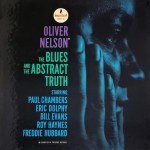
Oliver Nelson and RVG – Mastering Better than the Master?

More Music and Arrangements by Oliver Nelson

The sound of this Shootout Winning reissue is tonally correct, Tubey Magical and above all natural. The timbre of each and every instrument is right and it doesn’t take a pair of golden ears to hear it. So high-resolution too. If you love ’50s and ’60s jazz you cannot go wrong here.

For those record lovers who still cling to the idea that the originals are better, this pressing will hopefully set you straight.

Yes, we can all agree that Rudy Van Gelder recorded it, brilliantly as a matter of fact. Shouldn’t he be the most natural choice to transfer the tape to disc, knowing, as we must assume he does, exactly what to fix and what to leave alone in the mix?

Maybe he should be; it’s a point worth arguing.

But ideas such as this are only of value once they have been tested empirically and found to be true.

We tested this very proposition in our recent shootout, as well as in previous ones of course. It is our contention, based on the experience of hearing quite a number of copies over the years, that Rudy did not cut the original record as well as he should have. For those of you who would like to know who did, we proudly offer this copy to make the case.

Three words say it all: Hearing is believing.

(And if you own any modern Heavy Vinyl reissue we would love for you to be able to appreciate all the musical information that you’ve been missing when playing it. I remember the one from the ’90s on Impulse being nothing special, and the Speakers Corner pressing in the 2000s if memory serves was passable at best.)

(more…)

Atlantic Crossing – Thick, Dull and Dubby on British Vinyl

Another Well Recorded Album that Should Be More Popular with Audiophiles

The copies we liked best were the biggest and richest, the least thin and dry. Many of the brighter copies also had sibilance problems which the richer and tubier ones did not.

On some of the Rod Stewart albums that we happen to know well, the British pressings are clearly superior; the first two Rod Stewart albums come immediately to mind. After that, strange as it may seem, all the best pressings are domestic. This album is certainly no exception.

I remember bringing back a few Brit copies from England many years ago and being surprised that they were so thick, dull and dubby sounding. Of course, they were; the album was recorded right here in the good old US of A. The master tapes are here. The Brit pressings sound dubby because they are made from copy tapes.

If there is any doubt, the following is a list of the studios in which Atlantic Crossing was recorded.

  • A&R, NY
  • Criteria, Miami, FL
  • Wally Heider, Los Angeles, CA
  • Hi Recording and
  • Muscle Shoals Sound, AL

(more…)

Forget the Roulette Originals of Dreamy

More of the Music of Sarah Vaughan

The original release for Dreamy is on Roulette, a label we have often found to have problems in the sound department (not to mention notoriously bad vinyl).

The originals we’ve played over the years have much too much honk and hardness in the midrange to be taken seriously, at least by us anyway, and certainly not at the prices we charge. When we stumbled upon these good Emus reissues, the skies opened up and the sun shone down upon Sarah’s wonderful 1960 album of ballads as it had never done before.

This reissue is spacious, open, transparent, rich and sweet. It’s yet another remarkable disc from the Golden Age of Vacuum Tube Recording Technology, with the added benefit of mastering using the more modern cutting equipment of the ’70s. We are of course here referring to the good modern mastering of 30+ years ago, not the dubious modern mastering of today.

The combination of old and new works wonders on this title as you will surely hear for yourself on these superb sides.

We were impressed with the fact that these pressings excel in so many areas of reproduction. What was odd about it — odd to most audiophiles but not necessarily to us — was just how rich and Tubey Magical the reissue can be on the right pressing.

This leads me to think that most of the natural, full-bodied, lively, clear, rich sound of the album is on the tape, and that all one has to do to get that vintage sound on to a record is simply to thread up the tape on the right machine and hit play.

The fact that nobody seems to be able to make a record that sounds this good these days tells me that in fact, I’m wrong to think that such an approach would work. It just seems to me that somebody should have been able to figure out how to do it by now. In our experience that is simply not the case in the modern world of vinyl reissues, and has not been for many years.

The Original Pressings of The Beatles Albums Are the Best Sounding, Right?

beatles help labelHot Stamper Pressings of the Music of The Beatles Available Now

No, they are most definitely not. At least the ones on the label you see pictured are not (with the exceptions noted below).

We think it’s just another example of mistaken audiophile thinking.

Back in 2005 we compared the MFSL pressing of Help to a British Parlophone copy of the Help album and were — mistakenly, as you may have already surmised — impressed by the MoFi. We wrote:

Mobile Fidelity did a GREAT JOB with Help!. Help! is a famously dull sounding record. I don’t know of a single original pressing that has the top end mastered properly. Mobile Fidelity restored the highs that are missing from most copies.

The source of the error in our commentary above is in this sentence, see if you can spot it:

I don’t know of a single original pressing that has the top end mastered properly.

Did you figure it out? If you’ve spent any time on this blog you did.

Original pressing?

Is that the standard?

Why? Who said so? Where is it written?

(more…)

Should You Collect the Original Pressing on Lush Life?

Hot Stamper Pressings of the Music of John Coltrane Available Now

Should you collect the original pressings on this title?

Absolutely not. Which means we were way off the mark with Lush Life.

It’s yet another case of live and learn. Previously we had written:

“There are great sounding originals, but they are few and far between…”

We no longer believe that to be true. In fact we believe the opposite of that statement to be true. The original we had on hand — noisy but with reasonably good sound, or so we thought — was an absolute joke next to our best Hot Stamper pressings. Half the size, half the clarity and presence, half the life and energy, half the immediacy, half the studio space. It was simply not remotely competitive with the copies we now know (or at least believe, all knowledge being provisional) to have the best sound.

Are there better originals than the ones we’ve played? No doubt. If you want to spend your day searching for them, more power to you. And if you do find one that impresses you, we are happy to send you one of our Hot Copies to play against it. We are confident that the outcome would be clearly favorable to our pressing. Ten seconds of side one should be enough to convince you that our record is in an entirely different league, a league we had no idea even existed until just this year.

By the way, the mono original we played was by far the worst sound I have ever heard for the album.

By far.

(more…)

Three Labels, But Only One Ever Wins Shootouts

More Hot Stamper Pressings that Sound Better on the Right Reissue

There are three Epic labels for this record.

The originals are yellow, the first reissue is orange, and the last reissue is bluish black.

I can tell you that only one of those labels produced the best sounding copies in our shootout.

Beyond that you will have to buy a sample of each and do your own shootout. Finding clean copies was quite difficult; it took us a long time to get enough to play, and, as we said, most pressings are dreadful.

Those of you who like to read our commentaries and play along at home are going to have a rough time with this title. We sure did.

But the results are worth it, because we LOVE this music! Music just doesn’t get any better. If this album doesn’t lift your spirits, I can’t imagine what would. And note that many of the best songs here are exclusive to this greatest hits and cannot be found on any other album. That makes it a Must Own in our book.

(more…)

Jellyfish’s Bellybutton – DMM Mastering and Small Sample Sizes

Reviews and Commentaries for the Music of Jellyfish

The problem with the typical copy of this record is gritty, grainy, grungy sound — not the kind that’s on the master tape, the kind that’s added during the mastering and pressing of the record. When that crap goes away, as it so clearly does on side one of the copy we played recently, it lets you see just how good sounding this record can be. And that means REALLY good sounding.

While during the shootout I had completely forgotten that all the domestic pressings of Bellybutton are direct metal mastered. (The import pressings are clearly made from copy tapes and are to be avoided.) It was only afterwards, when looking for stamper variations, that I noticed the DMM in the dead wax .

On most copies the CD-like opacity and grunge would naturally be attributed to the Direct Metal Mastering process; that’s the conventional wisdom, so those with a small data sample (in most cases the size of that data sample will be no more than one) could be forgiven for reaching such a conclusion. Based on our findings, it turns out to be completely erroneous.

The bad pressings do indeed sound more like CDs. The better pressings do not. All are DMM, so the conventional wisdom, a term of disparagement here at Better Records to start with, again shows how little probative value it actually brings to the discussion.

We would love to hear a version of the album that was not Direct Metal Mastered, just for comparisons sake. That unfortunately is an experiment that cannot be run. What we can do is play the CDs — I have several, the earliest ones being the best — and note that they are clearly grungier and grittier sounding than the better LP pressings. Some of that sound is on the Master Tape, how much we will probably never know.

Spilt Milk, their second album, is one of my top two or three personal favorites of all time, right up there with Ambrosia’s first and The White Album. (more…)

Which Epic Labels for 12 Dreams Have the Best Sound?

More of the Music of Spirit

Here is some moderately helpful advice concerning the pressings that tend to win shootouts.

Don’t bother with the black label Epic reissues. In our experience they are consistently awful.

Yellow is the original label and orange the first reissue; both can be good.

The reviews reproduced below tell the story of the album far better than I can. If you like Pink Floyd, The Beatles (circa Revolver and Pepper), and the myriad other bands who took off in the direction of Psych Rock and Art Rock, you should find much to like here.

And if you don’t we give you your money back.

(more…)