cd-sound

The titles linked here have sound that reminds us of the run-of-the-mill CD, in some cases worse.

We have nothing against the sound of CDs. I own hundreds with excellent sound.

But a record should sound like a record, not a CD, or what’s the point? CDs are cheap. If you like that sound, just buy the CD.

Stop wasting your money on modern sounding Heavy Vinyl LPs. They can’t compete with the best vintage vinyl pressings.

Machine Head on Rhino Vinyl Sounds Like a CD

Hot Stamper Pressings of the Music of Deep Purple Available Now

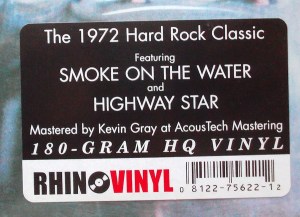
Mastered by Kevin Gray, this record has what we would call ”modern” sound, which is to say it’s clean and tonally correct, but it’s missing the Tubey Magic the British originals are swimming in.

In other words, it sounds like a CD.

I’m guessing that very few people have ever heard this record sound the way our best Hot Stamper pressings can sound.

For one thing, the domestic pressings are made from dubbed tapes, and that’s what most of us Americans would have owned. The original domestic pressings are smeary, veiled and small as a rule

Yes, the average copy may be nothing special, but this one is a boring, lifeless mess, so save your money.

Rhino Records has really made a mockery of the analog medium. Rhino touts their releases as being pressed on “180 gram High Performance Vinyl.” However, if they are using “performance” as a synonym “sound quality,” we have found the performance of their vinyl to be quite low, lower than the average copy one might stumble upon in the used record bins.

Who can be bothered to play a record that has so few of the qualities audiophiles should be looking for on vinyl?

Back in 2007 we put the question this way: why own a turntable if you’re going to play mediocrities like these?


Further Reading

Records are getting awfully expensive these days, and it’s not just our Hot Stampers that seem priced for perfection.

If you are still buying these modern remastered pressings, making the same kind of mistakes that I was making before I knew better, take the advice of some of our customers and stop throwing your money away on Heavy Vinyl and Half-Speed mastered LPs.

(more…)

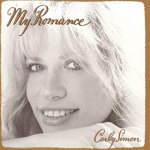
My Romance – Forget the Vinyl, Just Buy the CD

More of the Music of Carly Simon

This album from 1990 contains lovely music, for the most part, but the CD-like sound is just not going to cut it. I had played the album ten or twenty years and liked it just fine, but the last time we dropped the needle on it we realized the sound was unacceptably processed, especially the vocal.

Don’t get me wrong, there are plenty of heavily-processed recordings we like.

But for this album, covers of some of Sinatra’s most iconic songs, we felt the sound was completely wrong for the material.

Our advice: If you like the album, you might as well just buy the CD.

(more…)

Chad Has Served Poor Jethro Tull Most Barbarously

Hot Stamper Pressings of the Music of Jethro Tull Available Now

With a nod to our old friend, John Barleycorn.

We were finally able to get our hands on Analogue Productions’ newly remastered Stand Up, an album we know well, having played the British copies from every era by the score. Our notes for the sound can be seen below.

If ever a record deserved a “no” grade, as in “not acceptable,” this new 45 RPM pressing mastered by Kevin Gray deserves such a grade, because it’s just awful. (This link will take you to a great many more records best avoided by audiophiles in search of better sound. Although we’ve only linked to about 75 pressings here on the blog, it should be noted that the world is full of bad sounding records.)

But let’s put that grade in context. The last time a good sounding version of Stand Up was released, as far as we can tell, was 1989, and that version was the Mobile Fidelity Gold CD. I bought mine soon after it came out. I wasn’t even planning on buying a CD player when the Compact Disc was first invented, but then Mobile Fidelity played a dirty trick on me. Instead of releasing Loggins and Messina’s first album on vinyl, they put it out exclusively on CD as part of their Silver MFCD series.

As a die-hard MoFi fan, that sealed the deal: now I had to buy a CD player. I picked up a cheap Magnavox player, the 1040. I think it ran me less than $100, and played my new Sittin’ In CD, which, as I recall, sounded pretty good. (One of my other early CD purchases was Tumbleweed Connection, the regular label release, and it was dreadful.)

I still own Stand Up on Gold CD, and I still find it superb in every way. (Many of the MFSL Gold CDs from this era are excellent and worth seeking out.)

It sounds nothing like this new vinyl release, and that’s a good thing.

On vinyl, Stand Up has rarely been given the care it deserved. The last version of Stand Up to have sound we would want to listen to was pressed in the UK in the early ’70s. That was close to fifty years ago.

We sold some domestic pressings of the album back in the early 2000s, describing them at the time as made from dub tapes with all the shortcomings that entails, but mastered very well from dub tapes. The best domestic pressings are rich, smooth, tonally correct and natural sounding. They’re too dubby to sell as Hot Stampers, but they are not bad records. Some later Chrysalis pressings are big and open, but often they are too thin and bass-shy for the music to work. We’ve never taken them seriously.

It wasn’t long before we’d eliminated everything but the early UK pressings for our shootouts, and we quickly discovered that the earliest of the UK pressings on the older Island label were not good at all. We wrote about the problem with some originals more than ten years ago.

What was surprising about the shootouts we had done in past years was how disappointing most of the early British pressings we played were. They were flat, lacked energy and just didn’t rock the way they should have.

We learned the hard way that most British Pink label pressings aren’t especially rich, that some are small and recessed, and some are just so smeary, thick and opaque that they frustrate the hell out of you as you’re trying to hear what any of the musicians other than Ian Anderson is doing.

So when a reviewer comes along and says something positive about the new pressing compared to some unidentified original, we appreciate the problem that is at the root of his mistaken judgments:

Here’s the deal: if the goal was to duplicate the original pink label Island sound, this reissue misses that, which is good because this new double 45 reissue is far superior to the original in every possible way.

The tape was in great shape, that’s for sure. Clarity, transparency, high frequency extension and especially transient precision are all far superior to the original. Bass is honest, not hyped up and the mastering delivers full dynamics that are somewhat (but only slightly), compressed on the original. Ian Anderson’s vocals are naturally present as if you are on the other side of the microphone. Most importantly, the overall timbral balance sounds honest and correct. But especially great is the transient clarity on top and bottom.

If you’re fortunate to have an original pink label Island, at first you might think the sound is somewhat “laid back”, but that’s only because the mids and upper mids are not hyped up as they are on the original. That adds some excitement, but it clouds the picture and greatly obscures detail.

If you scroll down to our notes, you will see what we thought of the “laid back” sound this reviewer talks about. (Keep in mind that we first read the above review mere moments ago.)

We think “smaller, thick and stuck in the speakers” may be someone’s idea of “laid back,” but, just so there is no misunderstanding, it’s our idea of “awful.”

None of these are good things. Our Hot Stamper pressings are never small, thick or stuck in the speakers. They’re the records with the opposite of that sound. Our records are big, transparent and open. That’s why we can charge so much money for them and have people scooping them up from our Wednesday mailer the moment they become available.

They deliver the big, bold sound that the brilliant engineer for the album, Andy Johns, was known for. Laid back was not in his vocabulary.

Here is more of what we heard on side one.

Jeffrey Goes to Leicester Square

“Transients are sharp but body is dull. Kinda phony.”

Phony sound is the key here. Messing with the EQ in the mastering benefits some aspects of the sound at the expense of others.

Nothing new there. Audiophile pressings with wacky EQ are the norm. I would be surprised if any common Reprise pressing from back in the day wouldn’t sound more “right,” more tonally correct, more seamless. I’ve played quite a few and I don’t recall ever hearing one sound “phony.”

On side two we played the first two tracks.

(more…)

Francis Albert Sinatra & Antonio Carlos Jobim on Bad Rhino Heavy Vinyl

More of the Music of Frank Sinatra

Reviews and Commentaries for the Music of Frank Sinatra

Sonic Grade: C-

The Rhino 180 gram LP mastered by Kevin Gray is passable, but the real thing is the real thing and just can’t be beat by some wannabe reissue.

There is a richness, a sweetness and a relaxed naturalness on the best early pressings that are virtually never found on modern remasterings.

Rhino Records has really made a mockery of the analog medium. Rhino touts their releases as being pressed on “180 gram High Performance Vinyl.” However, if they are using performance to refer to sound quality, we have found the performance of their vinyl to be quite low, lower than the average copy one might stumble upon in the used record bins.
Mastered by Kevin Gray, this record has what we would call ”modern” sound, which is to say it’s clean and tonally correct, but it’s missing the analog qualities the better originals have plenty of, most notably Tubey Magic. [1]

In other words, it sounds like a CD.

Who can be bothered to play a record that has so few of the qualities audiophiles are looking for on vinyl?

Back in 2007 we put the question this way: Why own a turntable if you’re going to play mediocrities like these?


[1] Some records are so completely lacking in Analog Warmth, Richness and Sweetness that they sound like CDs, and bad ones at that. They have so little Tubey Magic that you might as well peg the figure at ZERO.

This is decidedly not our sound. No Hot Stamper pressing could possibly lack Tubey Magic — it’s one of the things that sets our records apart from the modern mediocrity known as the Heavy Vinyl LP.

Past Masters – Digital Remastering at its Worst

Hot Stamper Pressings of The Beatles Available Now

A hall of shame pressing and another album reviewed and found to be better suited to the stone age stereos of the past.

The late-’80s import pressings of this album are bright (the tambourine on Hey Jude will tear your head off, just to cite one example) and aggressive and very digital sounding.

Unfortunately, if you want better sounding versions of these songs, you’re gonna have to buy lots of pressings of the band’s albums and singles and EPs in order to find good sounding versions of them, which is exactly what I did back in the ’80s. It took me years to do it.

In the ’90s, when I was actually selling this awful record (because my system was just too dark and unrevealing to show me how awful it was), I wrote:

These are all the songs that aren’t on the original 13 British albums, so for those of you with the MoFi Beatles box, these 2 LPs give you all the tracks you don’t have.  

This was written so long ago that we actually refer to the MoFi Beatles Box as something an audiophile would own (!)

To be clear, in this day and age, no serious audiophile who loves The Beatles should have the MoFi Box Set or Past Masters in his collection.

(more…)

1812 Overture on Telarc

More of the music of Peter Ilyich Tchaikovsky (1840-1893)

Reviews and Commentaries for Recordings of the 1812 Overture

Sonic Grade: D

If you want an amazingly dynamic 1812 with huge amounts of deep bass reproduced for the cannon, you can’t do much better than this (or its UHQR brother). 

But if you want rich, sweet and tonally correct brass and strings, you had best look elsewhere. I’ve never liked the sound of this record and I’m guessing if I heard a copy today I would like it even less. 

Who in his right mind thinks live classical music actually sounds like this?

Telarc makes clean, modern sounding records. To these ears they sound pretty much like CDs.

If that’s your sound you can save yourself a lot of money avoiding vintage Golden Age recordings, especially the ones we sell. They’re much more expensive and rarely as quiet, but — again, to these ears — the colors and textures of real instruments seems to come to life in their grooves, and in practically no others.

We include in this modern group analog labels such as Reference, Sheffield, Chesky, Athena and the like. Having heard hundreds of amazing vintage pressings, at this stage of the game I find it hard to take any of them seriously.

Twenty years ago, maybe. But twenty years is a long time, especially in the world of audio.

We started a list of records that suffer from a lack of Tubey Magic like this one, and it can be found here.

(more…)

John Coltrane – Another in a Very Long Line of Disappointing Rhino Remasters

More of the Music of John Coltrane

Mastered by Kevin Gray, this record has what we like to call ”modern” sound, which is to say it’s clean and tonally correct for the most part, but it’s missing the Tubey Magic the originals and the good reissues both have plenty of.

In other words, it sounds too much like a CD.

Any properly-mastered, properly-pressed 70s copy on the red and green label will be richer, fuller, sweeter, and just plain more enjoyable than this 180 gram version.

It’s below average, which means it merits a D.

That said, “Giant Steps” is not an easy record to find in good condition, because any serious jazz lover would have played it plenty. It is inarguably one of John Coltrane’s greatest achievements. 

Rhino Records has really made a mockery of the analog medium. Rhino touts their releases as being pressed on “180 gram High Performance Vinyl”. However, if they are using performance to refer to sound quality, we have found the performance of their vinyl to be unsatisfactory, with sound quality substantially lower than the average copy one might stumble upon in the used record bins.

(more…)

Ray Charles & Betty Carter – DCC Clear Vinyl Pressing

More Soul, Blues and R&B Albums with Hot Stampers

This Dunhill Compact Classics LP pressed on CLEAR VINYL is one of DCCs earliest forays into analog production from way back in 1988.

Unfortunately it sounds like a bad CD.

Screechy, bright, shrill, thin and harsh, it’s hard to imagine worse sound for this music.

No warmth.

No sweetness.

No richness.

No Tubey Magic. In other words,

No trace of the original’s analog sound.

I have to wonder how records this awful get released.

You can be sure that Hoffman’s Gold CD murders it in every way.

(more…)

Another Bad Sounding Chet Baker Album on OJC

Hot Stamper Pressings of Top Quality Jazz Recordings Available Now

It Could Happen to You badly needed to be mastered with some tubes in the chain, but that didn’t happen. We’ve written a fair amount on that subject, and you can find more here.

It’s another case of an OJC with zero tubey magic. You might as well be playing the CD. I would bet money it sounds just like this record. Maybe even better!

I suppose if you have a super-tubey phono stage, preamp or amp (like the Mac 30 you see below), you might be able to supply some of the Tubey Magic missing from this pressing, but then all your properly mastered records wouldn’t sound right, now would they?

The OJC pressing of this album is obviously better suited to the old school audio systems of the 60s and 70s than the modern systems of today. These kinds of records used to sound good on those older systems, and I should know, I had an old school stereo and some of the records I used to think sounded good back in the day don’t sound too good to me anymore (although this one never did).

For a more complete list of those records, click here.

(more…)

Sergio Mendes & Brasil ’66 – Another Spitty and Thin MoFi

Sonic Grade: D

An Audiophile Hall of Shame pressing and another MoFi LP reviewed and found wanting.

So spitty and thin! Why, in God’s name, why would you want to ruin such a wonderful recording?

When you have a recording that is already plenty bright, adding top end and taking out more lower midrange is the last thing in the world you should be doing. Since that was the standard operating procedure for MoFi and other Half-Speed mastering outfits around this time, that’s exactly the approach they ended up taking.

Those of you who have had the opportunity to play the Mobile Fidelity pressing of this record should know what a disaster it is.

Is brighter better? Apparently Mobile Fidelity thinks so. It sounds like a bad CD.

But it’s not a bad CD. It’s an expensive audiophile record!

If you’ve spent any time on this site, you should know by now that many audiophile records sound WORSE than the typical CD.

The typical CD does not have an equalization curve resembling a smile. The classic smile curve starts up high on the left, gets low in the middle, and rises again at the end, resulting in boosted bass, boosted top end, and a sucked out midrange — the Mobile Fidelity formula in a nutshell.

But they forgot to boost the bass on this album, so it’s closer to a half-smile I suppose.

More letters, reviews and commentaries for the debut album by Sergio Mendes and Brasil ’66