bright-sound

Below you will find a small sampling of records we played that we found to be too bright.

Keep in mind that the modern Heavy Vinyl reissue consistently has the opposite problem. They are almost always overly smooth and dull, displaying a frustrating and irritating lack of presence and clarity in the upper-midrange. The new Beatles remasters are the perfect example of just what a bad idea it was to boost the bass and cut the highs on their albums. They sound nothing like the ones we offer as Hot Stampers.

Our Hot Stamper Beatles pressings are as tonally correct as any that have ever been produced, yet they do not lack for clarity and presence in the least. Correct tonality is fundamental to the sound of our Hot Stamper LPs.

Skip the A3/B2 OJC on Some Like It Hot

Hot Stamper Pressings of the Music of Barney Kessel Available Now

Some Like It Hot badly needed to be made using tubes in the mastering chain, but that didn’t happen.

It’s another case of an OJC with zero Tubey Magic. You might as well be playing the CD. I would bet money it sounds just like this record. Maybe even better.

I suppose if you have a super-tubey phono stage, preamp or amp, you might be able to supply some of the Tubey Magic missing from this pressing, but then all your correctly mastered records wouldn’t sound right, now would they?

We had two copies of the OJC and one of them did better than this one. It earned a Super Hot grade for one side. If you see this OJC pressing in your local record store, avoid these stampers. The sound isn’t awful, but it’s not very good either, especially considering how amazing the tapes must be, based on the sound of our White Hot Stamper shootout winner.

The OJC pressing of this album is much better suited to the old school audio systems of the 60s and 70s than the modern systems of today. These kinds of reissues used to sound good on those older systems, and I should know, I had an old school stereo and some of the records I used to think sounded good back in the day don’t sound too good to me anymore (although this one never did).
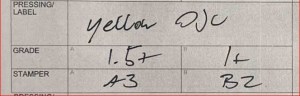
The OJC pressings of Some Like It Hot are thinner and brighter than even the worst of the later pressings we’ve auditioned. That is decidedly not our sound. It’s not the sound Roy DuNann was famous for, and we don’t like it either, although we have to admit that we did find the sound of many of these OJC pressings more tolerable — even enjoyable — in the past.

Our old system from the 80s and 90s was tubier, tonally darker and dramatically less revealing, which strongly worked to the advantage of leaner, brighter, less Tubey Magical titles such as this one. Pretty much everybody I knew had a system that suffered from those same afflictions.

Like most audiophiles, I thought my stereo sounded great.

And the reality is that no matter how hard I worked or how much money I spent, I would never have been able to achieve top quality sound for one simple reason: most of the critically important revolutionary advances in audio had not yet come to pass.

It would take many technological improvements and decades of effort until I would have anything like the system I do now.

(more…)

You Say the Budget Stereo Treasury Has Better Sound than the Speakers Corner?

Hot Stamper Pressings of the Music of Borodin Available Now

The Borodin album you see pictured is a decent enough Speakers Corner Decca repress.

The Heavy Vinyl reissue of this title is not bad, but like a number of reissues, it lacks the bottom end weight found on the early London pressings.

(Classic Records pressings rarely had that problem. Just the opposite in fact. The bass was boosted most of the time, especially the deep bass, but for some reason the lower strings are never rich the way the best vintage pressings can be.)

I remember this Speakers Corner pressing being a little flat and bright.

Since I haven’t played it in years, there is some chance that I could be wrong. I have never had trouble admitting to the possibility, a fact that makes us practically unique in the world of audiophile reviewers.

The glorious sound I hear on the best London pressings is simply not the kind of thing I hear on 180 gram records by Speakers Corner, or anybody else for that matter.

They do a good job some of the time, but none of their records can compete with a vintage pressing when that vintage pressing is mastered and pressed properly. 

The best pressings of this UK London Stereo Treasury from the Seventies will beat the pants off of it. That ought to tell you something, right?

(more…)

Peter Gabriel on Classic Records

Hot Stamper Pressings of the Music of Peter Gabriel Available Now

Sonic Grade: D (or worse!)

An audiophile hall of shame pressing and another Classic Records rock album badly mastered for the benefit of audiophiles looking for easy answers and quick fixes.

We have a special section for bad sounding records that are marketed to audiophiles, and you can find that section here.

It currently has 281 entries, but if someone wanted to audition more of them — that person is definitely not me, although I cannot imagine anyone more qualified — the number could easily hit 500.

If one were to do just the Music Matters and Analogue Productions albums released to date, a thousand would be no problem.

And if one were simply to include vintage Japanese pressings, the kind many audiophiles regularly bought in the 80s and 90s for their quieter vinyl and supposedly higher quality mastering, our bad audiophile record section would contain multitudes. Multitudes I tell you!

(more…)

Skip the OJCs of Letter from Home and Come Along With Me

Hot Stamper Pressings of Excellent Jazz Recordings Available Now

If you see this OJC pressing in your local record store, our best advice is to skip it. We found the sound to be much too dry and bright — think CD-like sound — for our tastes. Veiled too, lacking the resolution common to good vintage pressings.

We’ve never played an early pressing of the album, but we know a bad sounding record when we hear one, and this OJC is pretty bad.

It clearly lacks Tubey Magic as well as weight in the lower registers, and that is simply not a sound we can abide, whether it’s found on a cheap jazz reissue or a modern Heavy Vinyl pressing.

Same with Come Along With Me. The copy we played years ago had many of the same problems.

Our OJC Overview

We’ve easily played more than a hundred OJC pressings in the more than 37 years we’ve been in the record business.

Some OJC pressings have the potential to be great.

We’ve even found some of the more recent pressings on OJC that have good — not great mind you, but good — sound. (Just to be clear, any OJC produced this century is to our way of thinking a recent pressing.)

Some are we’ve played are just awful.

And the only way to judge them fairly is to judge them individually, which requires actually throwing one on the turntable and giving it a spin. If it shows promise, we buy a bunch more and see if we can find some good ones.

If the sound is hopeless, we don’t pursue it. We have way too many potentially good sounding records waiting to be played.

It’s a Lot of Work

Since virtually no record collectors or audiophiles like going the extra mile, they draw faulty conclusions based on their lack of rigor, among other things, when evaluating pressings. They are quick to judge the whole series based on a few examples.

OJC’s are cheap reissues sourced from digital tapes, run for the hills!

Those who approach the problem of finding top quality pressings with what can only be described as an utter lack of seriousness can be found on every audiophile forum there is. The youtubers are the worst, but are the self-identified aristocrats of audio any better?

I see no evidence to support that proposition, for or against. None of them in our estimation seem to know much about the mysteries and arcana that lie at the heart of the vinyl LP.

(more…)

LSC 2433 – Hard to Recommend on Living Stereo

Hot Stamper Pressings of Living Stereo Titles Available Now

I’ve never liked this recording of the Grand Canyon Suite, but not having played a copy in twenty years or so, I thought we should get one in and give it a spin before we give up on it entirely.

That was money down the drain. The sound was thick, bright and crude.

Definitely not our sound, and we hope not yours either.

Lots of Morton Gould’s recordings for RCA from this era have been disappointing. We’ll add this one to the list.

If you want to avoid records with these problems, click on any of the links below to see the titles we’ve found over the years to have the same issues.

There are quite a number of pressings that we’ve played with crude sound. It’s unlikely that anyone reading this blog would be happy with such crude sounding pressings.

Here are some with thick sound and here are some with bright sound. Audiophiles would do well to avoid all of them.

Lewis Layton is one of our favorite engineers, but this album is clearly not up to his usual standards, at least it isn’t on the copies we’ve played.

Waking Up a Dull Stereo

If your system is dull, dull, deadly dull, the way old school systems tend to be, this record has the hyped-up sound guaranteed to bring it to life in no time.

There are scores of commentaries on the site about the huge improvements in audio available to the discerning (and well-healed) audiophile. It’s the reason Hot Stampers can and do sound dramatically better than the average vintage pressing, or Heavy Vinyl counterpart: because your stereo is good enough to show you the difference.

With such a stereo you will continue to be fooled by bad records, just as I and all my audio buds were fooled thirty and forty years ago. Audio has improved immensely in that time. If you’re still playing Heavy Vinyl and audiophile pressings, as wall as vintage Golden Age classical records that don’t sound good, there’s a world of sound you’re missing. We discussed the issue in a commentary entitled: some stereos make it difficult to find the best sounding pressings

My advice is to get better equipment, and that will allow you to do a better job of recognizing bad records when you play them.

(more…)

An Insult to Aaron Copland on Reference Records

Hot Stamper Pressings of Orchestral Music Available Now

Yet another Reference Record we’ve reviewed and found wanting.

In all the years I was selling audiophile records, one of the labels whose appeal made no sense to me whatsoever (along with their long-forgotten TAS list brethren, American Gramaphone and Telarc) was Reference Records.

Back then, when I would hear one of their orchestral or classical recordings, I was always left thinking, “Why do audiophiles like these records?”

I was confused, because at that time, back in the 80s, I had simply not developed the listening skills that today make it so easy to recognize the faults of their recordings.

I made the mistake of thinking that other audiophiles with more advanced equipment and more refined listening skills must be hearing something I was not.

I had trouble putting my finger on what I didn’t like about them, but now, having worked full time (and then some!) for more than twenty years to develop better critical listening skills, the shortcomings of their records, or, to be more accurate, the shortcomings of this particular copy of this particular title, took no time at all to work out.

My transcribed notes for RR-22:

  • Lean tonality
  • No real weight
  • No Tubey Magic
  • Blurry imaging when loud
  • No real depth
  • Bright tonal balance

Is this the sound you are looking for in an audiophile record?

Shouldn’t you be looking for audiophile quality sound?

Well, you sure won’t find it here.

On our current playback system, this Reference Record is nothing but a joke, a joke played on a much-too-credulous audiophile public by the ridiculously inept and misguided engineers and producers who worked for Reference Records.

This is a reference for something? For what?

As I wrote about another one of their awful releases, if this is your idea of a reference record, you are in real trouble.

It would be hard to imagine that anyone who has ever heard a good vintage classical recording — here are some of our favorites — could ever confuse this piece of audiophile trash with actual hi-fidelity orchestral sound.

(more…)

Sounds Unheard Of! – Another Analogue Productions Disaster

Hot Stamper Pressings Featuring Shelly Manne Available Now

Remember the 90s Acoustic Sounds Analog Revival series mastered by Stan Ricker? This was one of the titles they did, and completely ruined of course, as was the case with all the titles from that series that we played.

Ricker boosted the hell out of the top end, as is his wont, so all the percussion had the phony MoFi exaggerated sizzle and tizziness that we dislike so much around here at Better Records.

Yes, it’s the very same phony top that many audiophiles do not seem bothered by to this day. 

The whole series was an audio disaster, but oddly enough, I cannot remember reading a single word of criticism in the audiophile press discussing the shortcomings of that series of (badly) Half-Speed mastered LPs — outside of my own reviews of course. Has anything in audio really changed?

If I were to try to “reverse engineer” the sound of a system that could play this record and hide its many faults, I would look for a system that was thick, dark and overly smooth, with no real extension on the top end to speak of. Stan’s 10k boost — along with other the colorations he favors — is just what the doctor ordered for such a system.

I know that sound. I had a system in the 90s with many of the same shortcomings, but of course I didn’t know any of that.

I didn’t know what I didn’t know back then.

(more…)

Talk About Getting the Sound Wrong – What Was Decca Thinking?

Hot Stamper Pressings of the Music of The Rolling Stones Available Now

Even though we know that the UK Decca pressings have not done well in our shootouts for more years than I care to remember, if we see one for cheap locally you know we’re going to buy it and get it another chance at the brass ring no matter how many times it’s failed in the past.

As you can see from our shootout notes, the Decca import has once again let us down.

It’s bright, with no warmth or weight. It’s not musical like the London pressings with the right stampers are.

If a certain kind of audiophile were to play this record, the kind of audiophile who might be given to simplistic conclusions based on insufficiently small sets of data — which, in our experience, pretty much covers the entire audiophile record collector community, including, if not especially, the so-called expert reviewers — the conclusion such a person might reach is that Beggars Banquet is just not very well recorded.

If Decca pressings don’t sound good, what on earth would?

Or, to put it another way, if Decca, the label that the Stones recorded this album for, can’t figure out how to make Beggars sound its best, why would we assume that any other company could?

We would, naturally, assume that Decca did the best they could with the tape and the mediocre quality of the sound you hear — 1+/1.5+ is pretty much our definition of mediocre — is all there is.

The Option that Is Almost Always Wrong

Worse — if a new Heavy Vinyl pressing of the album came out with even halfway-decent sound, then it would prove beyond a doubt that some modern mastering engineer had finally figured out how to get Beggars to sound right.

But of course it would prove no such thing.

If all you have to guide you is conventional collector wisdom, then the one thing you can be sure of is that the Decca pressing from the UK should have better sound than any other, especially any record made in the states.

But it doesn’t. It’s possible I suppose – we haven’t played every pressing ever made – but it sure is unlikely based on the evidence presented to our ears over the course of the last twenty to thirty years or so.

If you would like to hear Beggars Banquet sound right, and have the hundreds of dollars we charge for a copy that is guaranteed to sound right or your money back, click on the link. It’s rare that we have one in stock, but you never know.

(more…)

Skip the Original OJC of West Coast Sound (C3507)

Hot Stamper Pressings of Contemporary Jazz Albums Available Now

UPDATE 2025

A new shootout for this title gave us a better understanding of the OJC relative to the other pressings we were playing. We came across one fairly good sounding OJC pressing out of the three we played, one that earned grades of 2+/1.5+, so if you have an OJC, play it and see whether it is one of the good ones or, as is most likely the case, one of the bad ones.

Side two is the side to play to hear what we are on about. The grades ranged from decent, 1.5+, to just awful, NFG.


The sound of the early OJC pressings of West Coast Sound that we played recently were not to our liking.

They are brighter and thinner than even the worst of the real Contemporary pressings.

That is decidedly not our sound.

We have to admit that we used to find the sound of many of these OJC pressings much more tolerable in the past.

More than tolerable. Enjoyable. Recommendable. Saleable even.

Nothing to be ashamed of, that was many years ago. As you may already know, live and learn is our motto. Getting it wrong is a feature, not a bug, of collecting if your goal is to find the best sounding pressings of the music you love.

(If you have some other goal, this may not be the right blog for you. Definitely steer clear of this website. The prices there are ridiculous!)

It’s true: Our old system from the 80s and 90s was tubier, tonally darker and dramatically less revealing, which strongly worked to the advantage of leaner, brighter, less Tubey Magical titles such as this one.

That was thirty or more years ago. Pretty much every dynamic speaker system I ran into had that sound. And I was never a fan of screens or horns. Like most audiophiles, I thought my stereo sounded great. It sure sounded right to me at the time.

And the reality is that no matter how hard I worked or how much money I spent, I would never have been able to achieve substantially better sound for one simple reason: most of the critically important revolutions in audio had not yet come to pass. It would take many technological improvements and decades of effort until I would have anything like the system I do now.

The Riddle of the Vastly Different Sides Has Been Solved

Hot Stamper Pressings of Recordings Featuring the Violin

About ten or fifteen years ago we came across a puzzling Shaded Dog pressing of the Bruch / Vieuxtemps recording from 1962 with Heifetz, LSC 2603.

We were surprised at the time how much worse one side sounded than the other. That had rarely if ever happened back in those early Living Stereo shootout days.

We sold the record as a one-sided disc with one complete performance in top quality sound, The Scottish Fantasy. Obviously the Vieuxtemps / Concerto No. 5 wasn’t worth playing; the sound was sub-par, a pale shadow of the sound of the other side of the record. You can read all about it here.

Well, we ran into those stampers again, or at the very least we ran into a copy with the same bad stampers for side one, 5s. Something sure went wrong somewhere, as you can see from our notes below.

At the time we described this curious pressing this way:

The violin is captured beautifully on side two. More importantly there is a lovely lyricism in Heifetz’s playing which suits Bruch’s Romantic work perfectly. I know of no better performance.

The performance of the Vieuxtemps Concerto No. 5 is also wonderful, but the sound is not. Want proof that two sides of the same record can have vastly different sound? Here it is. Note how oversized the violin on side one is, how smeary the orchestra, how little texture there is to anything in the soundfield. This side one is no Hot Stamper.

All true, and now that we know that 5s etched stampers are responsible for the bad sound and not just some pressing anomaly, we can all sleep peacefully once again.

(more…)