beyond-white-hot

When a pressing — really, one side of a pressing in most cases — goes FAR beyond anything we’d ever heard for the title, we used to award it Four Pluses. In the interests of consistency, we no longer use that grade. These listings are offered as examples of breakthroughs that came our way in the past.

A Killer Copy of Pictures at an Exhibition

Hot Stamper Pressings of the Music of Mussorgsky Available Now

We describe the better copies of Muti’s Pictures for EMI this way in our listings:

Our favorite performance by far, with big, bold and powerful sonics like no other recording we know.

The brass clarity, the dynamics, the deep bass and the sheer power of the orchestra are almost hard to believe. No vintage recording of these works compares with Muti’s – and Stravinsky’s Firebird Suite is an extra special added bonus on side two.

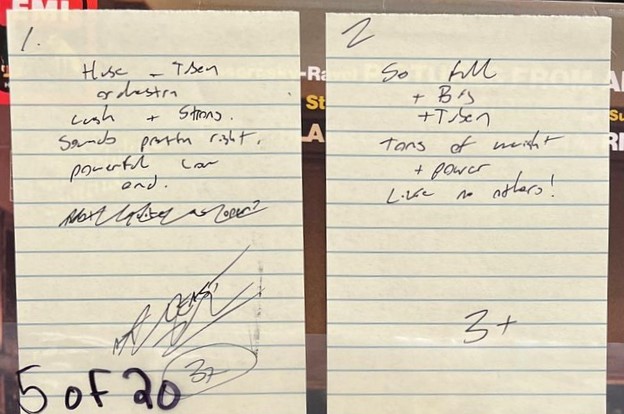
Here are the notes for our most recent Shootout Winning pressing to back up everything we say.

Side One

  • Huge and tubey orchestra
  • Lush and strong
  • Sounds pretty right
  • Powerful low end

Side Two

  • So full and big and tubey
  • Tons of weight and power
  • Like no others!

No doubt the enthusiastic nature of these notes is in response to the big finish for Pictures.

It is a very special piece of music, one that has thrilled me as an music-loving audiophile since I first heard it on record sometime in my twenties, and this was a very special pressing of the recording. In the old days a side two like this might have been given a grade of Four Pluses, but we don’t do that anymore, for reasons explained elsewhere on the blog.

Regardless of what grade we chose to give it, this side two was superior to either side of every other copy we played. It set a standard that no other side could meet. Yes, exceptional vintage pressings with sound that good are out there sitting in the record bins.

More from Our Listing

There is a slightly multi-miked quality to this recording. If you’ve been playing true Golden Age records all day you will notice that the instruments are more naturally and correctly spaced and sized on those recordings.

But, this is still a KNOCKOUT record which is guaranteed to bring any stereo to its knees. The dynamics, the deep bass and the sheer power of the orchestra have to be heard to be believed.

What does the typical EMI pressing of this album sound like? Not good. Sour brass, smeary or shrill strings, lacking in bass — mid-hall dead-as-a-doornail sound is fairly typical. Almost all the copies I’ve played are spacious, but so what? The sound of the instruments is often wrong and in my book that trumps any benefits concerning soundstaging or depth.

But the Hot Stampers give you the presence and immediacy you need to get involved in the work. The strings on the better copies have rosiny texture. The brass has weight — not the full measure of an RCA or London recording, but at least you get the impression that those instruments are trying to sound correct. And the bass drum really goes deep, unlike the Golden Age recordings I’ve heard.

(more…)

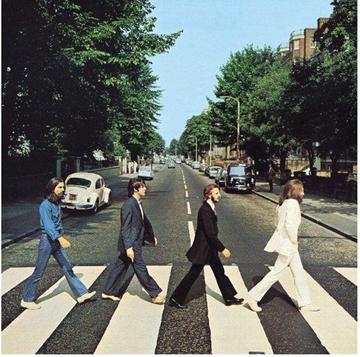
Our Four Plus Abbey Road Shootout Winner from 2010

Hot Stamper Pressings of Abbey Road Available Now

This listing is from many years ago, possibly as early as 2010.

Our lengthy commentary entitled outliers and out-of-this-world sound talks about how rare these kinds of pressings are and how to go about finding them. We no longer give out Four Pluses as a matter of policy, but that doesn’t mean we don’t come across records that deserve them from time to time.


An exceptional copy of The Beatles’ last and arguably greatest album with THE BEST SIDE TWO WE HAVE EVER HEARD — QUADRUPLE PLUS (A++++)!

If you’ve heard the disastrous new pressing, then you know how important it is to play a real, vintage, analog pressing. A copy this good might just give you a new appreciation for one of the Greatest Rock Albums of All Time.  A permanent member of the Better Records Top 100, and a Desert Island Disc if ever there was one.

Abbey Road checks off a number of important boxes for us here at Better Records. Here are three for starters:

The blog you are on now as well as our website are both devoted to very special records such as these.

Abbey Road is the very definition of a big speaker album. The better pressings have the kind of ENERGY in their grooves that are sure to leave most audiophile systems begging for mercy.

This is one of the The Beatles’ many audio challenges that await you. If you don’t have a system designed to play records with this kind of sonic power, don’t expect to hear them the way the band, Geoff Emerick, George Martin and everyone else involved in the production wanted you to.

It’s clear that The Beatles albums informed not only my taste in music, but the actual stereo I play that music on. It’s what progress in audio is all about. I’ve had large scale dynamic speakers for close to five decades, precisely in order to play demanding recordings such as Abbey Road, an album I fell in love with “all those years ago.”

(more…)

In 2016 We Had to Raise the Bar for Wings at the Speed of Sound

Hot Stamper Pressings of the Music of Paul McCartney Available Now

Okay, we’re not too proud to admit it.

We was wrong about Wings at the Speed of Sound as a recording.

Yes, that kind of thing happens when you regularly play thousands and thousands of records year after year.

The right pressing can show you that your understanding of a given recording is, shall we say, incomplete.

The great thing about our business is that, whenever we have new data that serves to correct a past mistaken judgment, the result is that we are then able to offer even better sounding pressings to our customers.

That way everybody wins. We’ve never pretended to know it all, and there’s no reason for us to start now.

Back to Wings at the Speed of Sound. Previously we had written:

I can’t even begin to convey to you what a rough shootout this was. Copy after copy bored us to tears and most of them were too noisy. It was one of those shootouts that almost defeated us, but we persevered and managed to find a few Hot Stampers. They didn’t do miracles and turn Speed Of Sound into a stunning Demo Disc, but they sounded musical, correct and enjoyable, and that seems to be all you can ask for on this album. 

This is not true.

We played a copy that earned our very special grade of Four Pluses (on one side, two sides would have been too much to ask for) because it showed us an At the Speed of Sound that we had no idea could possibly exist, this after having played dozens of imports and domestic pressings over the previous twenty years or so.

It was DRAMATICALLY bigger and more transparent, with no sacrifice in richness or smoothness.

Here was a very different Wings at the Speed of Sound. Why did it take us so long to find it?

We had never managed to clean and play a copy with the right stampers that could show us the brilliance of the sound that must be on the master tape. We needed to do more research and development, which of course we are in the habit of doing regularly with Classic Rock records, our bread and butter and the heart of our business.

Before we did this shootout, we had no idea how high to set the bar. Which leads us to:

This Key Takeaway 

In that respect we were in exactly the same place as every record loving audiophile on the face of the Earth.

How good can the record sound? How high is up?

We discussed this all-too-common mystery [1] in a listing we wrote for an amazing sounding copy of Heart’s Little Queen album we discovered many years ago, linked here.

In our old listing, we noted: Now that we know what stampers to look for, future pressings are likely to be very, very good sounding, if everything goes the way we hope it will.

[Things did go our way, with plenty of Shootout Winning White Hot copies having been found since we made that breakthrough all the way back in 2016. The right stampers are about five times more rare than the wrong ones, but they can be found. You just have to know what to look for.] 

(more…)

Way Back in 2007 We Discovered the Hottest Meddle Stampers of Them All

Hot Stamper Pressings of the Music of Pink Floyd Available Now

UPDATE 2020

This review from 2007 describes our experience of having stumbled upon the right stampers for Meddle. To this day, only these stampers and no others have won the many shootouts we’ve done for the album in the ensuing years, perhaps as many as a dozen shootouts or more.

These stampers are also very hard to find, which is why you may not have seen a copy of Meddle hit the site in a while. If we could find them, believe me, we would have them up all the time, as this is one amazing sounding album.

To see more albums with one set of stampers that consistently win shootouts, click here.

Want to find your own shootout winner?

Scroll to the bottom to see our advice on doing just that.


This Harvest Green Label British Import pressing has a side one that goes FAR beyond anything we’ve ever heard for this album. We had no choice but to award this side one the very rare A with FOUR pluses. We’ve never given any side of any other Pink Floyd record such a high grade, so you can be sure that you’ve never heard them sound this amazing.

  • Our lengthy commentary entitled outliers and out-of-this-world sound talks about how rare these kinds of pressings are and how to go about finding them.
  • We no longer give Four Pluses out as a matter of policy, but that doesn’t mean we don’t come across records that deserve them from time to time.
  • Nowadays we often place them under the general heading of breakthrough pressings. These are records that, out of the blue, reveal to us sound that fundamentally changes what we thought we knew about these often familiar recordings.
  • When this pressing (or pressings) landed on our turntable, we found ourselves asking “Who knew?
  • Perhaps an even better question would have been “how high is up?”

(more…)

In 2014, This Was the Best Sounding Tom Petty Record We’d Ever Played

Hot Stamper Pressings of the Music of Tom Petty Available Now

In 2014 we wrote:

Damn the Torpedoes is the best sounding Tom Petty album we have ever played.

Credit must go to SHELLY YAKUS, someone who we freely admit, now with a sense of embarrassment, has never been one of our favorite engineers.

After hearing this beyond-White Hot Stamper side two and a killer copy of Animal Notes, we realized we’d seriously underestimated the man, and for that we can only apologize.

If your Damn the Torpedoes doesn’t sound good (and it probably doesn’t), you sure can’t blame him — the master tape is mind-boggling in its size, weight, power and rock n’ roll energy.

Our 2014 better than White Hot Stamper copy had the kind of sound we never expected to hear on Damn The Torpedoes, an album that’s typically bright, thin, pinched and transistory — radio friendly but not especially audiophile friendly.

Well folks, all that’s changed, and by “all” I don’t necessarily mean all to include the records themselves. This may very well be a record that sounded gritty and pinched before it was cleaned. And our stereo has come a long way in the last five or ten years, as I hope yours has too.

One sign that you’re making progress in this hobby is that at least some of the records you’ve played recently, records that had never sounded especially good to you before, are now sounding very good indeed.

In our case Damn the Torpedoes is one of those records. It’s the best sounding Tom Petty album we have ever played.

We wrote about another famous rock album that somehow got a whole lot better sounding here. An excerpt:

The recordings don’t change.

Our ability to find, clean and play the pressings made from them does, and that’s what the Hot Stamper revolution is all about.

You have a choice. You can choose to take the standard audiophile approach, which is to buy the record that is supposed to be the best pressing and then just consider the case closed.

You did the right thing, you played by the rules. You bought the pressing you were told to buy, the one you read the reviews about, the one on the list, the one they said was made from the master tape, the one supposedly pressed on the best vinyl, and on and on.

Cross that title off and move on to the next, right?

When — sometimes if but usually when — the sound of the record doesn’t live up to the hype surrounding it, you merely accept the fact that the recording itself must be at fault.

Prepare to allot a fair amount of time to complaining about such an unfortunate state of affairs. “If only they had recorded the album better…” you say to yourself as you toddle off to bed, ending your listening session prematurely, fatigued and frustrated with a record that — for some reason — doesn’t sound as good as you remember.

We did it too, more times than I care to admit.

(more…)

Ziggy Stardust Broke the Price Barrier in 2007

UPDATE 2024

The following is our 2007 commentary for the best Ziggy Stardust we had ever heard up to that time. Note that for the most part we were playing early British pressings back in those days, a mistake we did not know we were making. (Heroes was the same way, and it took us another ten years to figure out that one.)

In 2007, all we had to go by was the conventional wisdom that the original UK pressings on the RCA orange label should be the best, so that’s mostly what we were playing. I’m not even sure what pressing won this long-ago shootout. 

Looking back in 2024, it’s obvious to us that we had a great deal more research and development to do.

As best as I can tell, it would take us about ten more years to discover the pressings, like this one, that, based on our database going all the way back to 2017, consistently win our shootouts.


This RCA Import has DRAMATICALLY better sound than any Ziggy LP we’ve ever played here at Better Records. Whatever you think you know about the sound of this record, THINK AGAIN. The sound of this copy is so far beyond any expectation I had that hearing it was nothing short of a REVELATION. It’s TWO FULL GRADES better than any copy we played in our shootout.

After hearing this copy we had to lower our grades for every other pressing we had played. This was a completely new standard. (more…)

Stevie Ray Vaughan – Beyond White Hot Stamper Sound

More of the Music of Stevie Ray Vaughan

Years ago we heard a copy sound so much better than any copy we had ever played that we gave it a grade of Four Pluses on side two.

  • Our lengthy commentary entitled outliers and out-of-this-world sound talks about how rare these kinds of pressings are and how to go about finding them.
  • We no longer give Four Pluses out as a matter of policy, but that doesn’t mean we don’t come across records that deserve them from time to time.
  • Nowadays we often place them under the general heading of breakthrough pressings. These are records that, out of the blue, reveal to us sound that fundamentally changes what we thought we knew about these often familiar recordings.
  • When this pressing (or pressings) landed on our turntable, we found ourselves asking “Who knew?
  • Perhaps an even better question would have been “how high is up?”

The Sky Is Crying is one of the best sounding rock records ever made, especially if you are fortunate to have access to the kind of big speaker system that can play it at very loud levels like we do.

The song Little Wing rocks as hard on this pressing as any song we’ve ever heard, with demo disc sound to rival the greatest rock recordings of all time.

The guitar solos on Little Wing are as huge and lively as any we have ever heard (assuming you have a copy that sounds like this one).

(more…)

Outliers & Out-of-This-World Sound

More Outlier Pressings We’ve Discovered

This commentary was written about ten years ago and updated more than a few times since.

A while back we did a monster-sized shootout for Blood, Sweat and Tears’ second release, an album we consider THE Best Sounding Rock Record of All Time.

In the midst of the discussion of a particular pressing that completely blew our minds — a copy we gave a Hot Stamper grade of A with Four Pluses, the highest honor we can bestow upon it — various issues arose, issues such as: How did this copy get to be so good? and What does it take to find such a copy? and, to paraphrase David Byrne, How did it get here?


  • We no longer give Four Pluses out as a matter of policy, but that doesn’t mean we don’t come across records that deserve them from time to time.
  • Nowadays we usually place them under the general heading of breakthrough pressings. These are records that, out of the blue, reveal to us sound that fundamentally changes what we thought we knew about these familiar recordings.
  • When this pressing (or pressings) landed on our turntable, we found ourselves asking “Who knew?
  • Perhaps an even better question would have been “How high is up?”

Which brings us to this commentary, which centers around the concept of outliers.

Wikipedia defines an outlier this way:

In statistics, an outlier is an observation that is numerically distant from the rest of the data.

In other words, it’s something that is very far from normal. In the standard bell curve distribution pictured below, the outliers are at the far left and far right, far from the vast majority of the data which is in the middle.

In the world of records, most copies of any title you care to name would be average sounding. The vertical line in the center of the graph shows probability; the highest probability is that any single copy of a record will be at the top of the curve near the middle, which means it will simply be average. The closer to the vertical line it is, the more average it will be. As you move away from the vertical line, the data point — the record — becomes less and less average. As you move away from the center, to the left or the right, the record is either better sounding or worse sounding than average.

Hot Stampers are simply those copies that, for whatever reason, are far to the right of center, far “better” than the average. And as the curve above demonstrates, there are a lot fewer of them than there are copies in the middle. 


Measuring the Record

Malcolm Gladwell has a bestselling and highly entertaining book about outliers which I recommend to all. Last year I read The Black Swan (or as much of it as I could stand given how poorly written it is) which talks about some of these same issues. Hot Stampers can be understood to a large degree by understanding statistical distributions. Why statistics you ask? Simple. We can’t tell what a record is going to sound like until we play it. For all practical purposes we are buying them randomly and “measuring” them to see where they fall on the curve. We may be measuring them using a turntable and registering the data aurally, but it’s still very much measurement and it’s still very much data that we are recording.

No Theory, Just Data

Many of these ideas were addressed in the recent shootout we did for BS&T’s second album. We played a large number of copies (the data), we found a few amazing ones (the outliers), and we tried to determine how many copies it really takes to find those records that sound so amazing they defy not only conventional wisdom, but our understanding of records per se.

We don’t know what causes these records to sound so good. We know ’em when we hear ’em and that’s pretty much all we can say we really know. Everything else is speculation and guesswork.

We have data. What we don’t have is a theory that explains that data.

And it simply won’t do to ignore the data because we can’t explain it. Hot Stamper Deniers are those members of the audiophile community who, when faced with something they don’t want to be true, simply manufacture reasons why it can’t or shouldn’t be true.

That’s not science. Practicing science means following the data wherever it leads. The truth is found in the record’s grooves and nowhere else. If you don’t think record collecting is a science, you’re not doing it right.

Ignoring Outliers

Wikipedia has a good line about ignoring outliers. Under the heading of Caution they write: “… it is ill-advised to ignore the presence of outliers. Outliers that cannot be readily explained demand special attention.” Here here.

Now let’s see where the grooves for Blood, Sweat and Tears’ second album led us. They demanded special attention and by god we gave it to them.

The Grooves

We noted some new qualities to the sound that we would like to discuss; they’re what separated the men from the boys this time around. What we learned can be summed up in a few short words: it’s all about the brass. Let me give you just one example of how big a role the brass plays in our understanding of this recording. The best copies present a huge wall of sound that seems to extend beyond the outside edges of the speakers, as well as above them, by quite a significant amount. If you closed your eyes and drew a rectangle in the air marking the boundary of the soundscape, it would easily be 20 or 25% larger than the boundary of sound for the typically good sounding original pressing, the kind that might earn an A or A Plus rating.

Size Matters

The effect of this size differential is ENORMOUS. The power of the music ramps up beyond all understanding — how could this recording possibly be this BIG and POWERFUL? How did it achieve this kind of scale? You may need 50 copies to find one like this, which prompts the question: why don’t the other 49 sound the way this one does?

The sound we heard on the Four Plus copy has to be on the master tape in some sense, doesn’t it? Mastering clearly contributes to the sound, but can it really be a factor of this magnitude?

Intuition says no. More likely it’s the mastering of the other copies that is one of the many factors holding them back, along with worn stampers, bad stampers, bad metal mothers, bad plating, bad vinyl, bad needles and all the rest — all of the above and more contributing to the fact that the average copy of this album is just plain bad news.

Conventional Wisdom

Any reason you like for why a record doesn’t sound good is as valid as any other, so you might as well pick one you are comfortable with; they’re all equally meaningless. Of course the reverse of this is just as true: why a record sounds good is anyone’s guess, and a guess is all it can ever be.

People like having answers, and audiophiles are no different from other people in this respect. Since there are no answers to any of these questions, answers in this case being defined as demonstrable conclusions based on evidence gained through the use of the scientific method, most people, audiophiles included, are happy — if not better off — making up the answers with which they are most comfortable.

This is precisely why the term “conventional wisdom” was coined, to describe the easy answers people readily adopt in order to avoid doing the hard work of actually finding out the truth.

(more…)

Magical Mystery Tour – Our Beyond White Hot Copy from 2007

Hot Stamper Pressings of the Music of The Beatles Available Now

Looking back, 2007 seems to have been a milestone year for us here at Better Records, although we certainly did not know that at the time.

Later that same year we swore off Heavy Vinyl for good (prompted by the mediocre sound of the Rhino pressing of Blue) and committed ourselves to doing record shootouts of vintage pressings full time. (Please excuse the overuse of capitals.)


Our Commentary from 2007

The best sounding Magical Mystery Tour ever! Hot Stamper copies of this album are a regular feature on this site, but we’ve NEVER heard one like this — on EITHER side.

We had no choice but to award this album the very rare grade of A++++ (Four Pluses!) on both sides.

Our lengthy commentary entitled  entitled outliers and out-of-this-world sound talks about how rare these kinds of pressings are and how to go about finding them.

We no longer give Four Pluses out as a matter of policy, but that doesn’t mean we don’t come across records that deserve them from time to time.

(more…)

Parallel Lines – We Broke Through in 2016

Hot Stamper Pressings of the Music of Blondie Available Now

Can this kind of music get any better? This album is a MASTERPIECE of Pure Pop, ranking right up there with The Cars first album. I can’t think of many albums from the era with the perfect blend of writing, production and musicianship Blondie achieved with Parallel Lines.

As expected, if you clean and play enough copies of a standard domestic major label album like this one, sooner or later you will stumble upon The One, and boy did we ever.

This side two had OFF THE CHARTS with presence, breathy vocals, and punchy drums. It was positively swimming in studio ambience, with every instrument occupying its own space in the mix and surrounded by air.

There was not a trace of grain, just the silky sweet highs we’ve come to expect from analog done right. 

Gone is the compressed muck of the MOFI (and most domestic pressings, to be fair). In its place is the kind of clarity, transparency and pure ROCK AND ROLL POWER previous pressings only hinted at. I became a giant fan of this album the moment I heard it back in 1978, but the sound always left much to be desired.

So many copies were thick and compressed; the music was cookin’ but the sound seemed to be holding it back.

But there are good sounding pressings, and now we know which ones they are.