bad-tube

Here we discuss some of the badly tube-mastered modern pressings we’ve played.

They reveal to the careful listener the kind of incompetent mastering that typically results in pressings with shockingly unnatural sound quality.

Most of them are too rich and too smooth, perfect for the mid-fi systems favored by the Heavy Vinyl collectors who buy them, but absolutely disastrous on any system — even a modest one — that is capable of reproducing records with reasonably high fidelity.

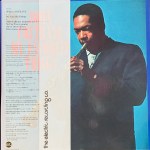
The Electric Recording Company Does My Favorite Things No Favors

Hot Stamper Pressings of the Music of John Coltrane Available Now

My Favorite Things happens to be one of our favorite Coltrane records, but we much prefer the stereo pressing of the album. (This is almost always the case when an album has been recorded in stereo, as My Favorite Things was in 1960, later released on Atlantic vinyl in 1961.)

We even tell you what to listen for to help you separate the best pressings from the merely good ones: the piano.

A solid, full-bodied, clear and powerful piano. As we focused on the sound of the instrument, we couldn’t help but notice how brilliant McCoy Tyner is. This may be John Coltrane’s album, but Tyner’s contribution is critically important to the success of My Favorite Things.

The engineering duties were handled by Tom Dowd (whose work you surely know well) and Phil Iehle, who happens to be the man who recorded some of Coltrane’s most iconic albums for Atlantic: Giant Steps (1960) and Coltrane Jazz (also in 1961).

Our last shootout for My Favorite Things was in 2018, not exactly yesterday, but in our defense let me just say that we have done plenty of other Coltrane albums from this period and feel as though we would have no trouble recognizing the sound his engineers were going for.

Unfortunately for those of you who have bought into the idea that the Electric Recording Company produces records with audiophile quality sound, you will find an utterly alien My Favorite Things, one nobody has ever heard before and one that no audiophile should want anything to do with.

Allow us to lay out the specifics of our complaints:

Notes for Side One

  • Big and full but smeary, flat and dull sax
  • No space or depth anywhere
  • Bloated bass
  • A mess

Notes for Side Two

  1. Side two is even worse
  2. Where is the breathy detail of the sax?

Electric Recording Company

We’ve played a few other ERC releases produced by the gentleman who owns The Electric Recording Company, a Mr. Pete Hutchison.

As you no doubt know, we would not be correct in using the term “mastered.” He does no mastering. He does “transferring.” He transfers the tapes to disc and puts them in nice jackets of his own design.

(more…)

Seriously, This is Your Idea of Analog?

Audiophile Quality Pressings of Orchestral Music Available Now

Whether made by Klavier or any other label, starting at some point in the mid-90s, many Heavy Vinyl pressings started to have a shortcoming that nowadays we find insufferable: they are just too damn smooth.

Smeary, thickdullopaque, and lacking in ambience, this record has all the hallmarks of the modern Heavy Vinyl reissue.

The sound is smeary, thick and opaque because, among other things, the record was mastered by Doug Sax from a copy tape, and not all that well either.

It is yet another murky audiophile piece of trash from the mastering lathe of the formerly brilliant Doug Sax. He used to cut the best sounding records in the world. Then he started working for Analogue Productions and never cut a good record again as far as I know.

On this record, in Doug’s defense it’s only fair to point out that he had dub tapes to work with, which is neither here nor there as these pressings are not worth the dime’s worth of vinyl used to make them.

Maybe the hearing-challenged Chad Kassem wanted this sound — almost all his remastered titles have the same faults as this Klavier — and simply asked that Doug cut it to sound real good like analog spossed to sound in the mind of this kingpin, which meant smooth, fat, thick and smeary.

Yes, this is exactly what some folks think analog should sound like.

Just ask whoever mastered the Beatles records in 2014. Somebody boosted the bass and smoothed out the upper midrange, and I don’t think they did that by accident. They actually thought it was good idea.

Harry Moss obviously would not have agreed, but he’s not around anymore to do the job right.

(more…)

Robert Brook Reviews the ERC Pressing of My Favorite Things

One of our good customers has a blog which he calls

A GUIDE FOR THE DEDICATED ANALOG AUDIOPHILE

Here is Robert’s review of ERC’s mono release of My Favorite Things. MFT happens to be one of our favorite Coltrane records, but we understandably prefer the stereo pressings, which is almost always the case when an album has been recorded in stereo, as My Favorite Things was in 1960.

ELECTRIC RECORDING COMPANY’s Reissue of MY FAVORITE THINGS

We even tell you what to listen for to help you separate the best pressings from the merely good ones: the piano.

A solid, full-bodied, clear and powerful piano. As we focused on the sound of the instrument, we couldn’t help but notice how brilliant McCoy Tyner is. This may be John Coltrane’s album, but Tyner’s contribution is critically important to the success of My Favorite Things.

The engineering duties were handled by Tom Dowd (whose work you surely know well) and Phil Iehle, who happens to be the man who recorded some of Coltrane’s most iconic albums for Atlantic: Giant Steps (1960) and Coltrane Jazz (also in 1961).

Electric Recording Company

We’ve played a number of ERC releases.

In the video embedded in the Washington Post article “In Search of the Perfect Sound,” at some point you can hear me exclaim “This guy makes mud pies!” while listening to the ERC pressing of Quiet Kenny.  I am happy to stand behind that judgment, and I think Robert Brook would agree with me about that.

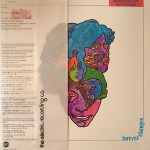
Here is our review of ERC’s Forever Changes.

Our commentary making the case that these albums are aimed primarily at collectors and speculators, not audiophiles, can be found here.

We have now played the ERC pressing of My Favorite Things for ourselves and will be reviewing it soon.

Other Opinions

As much as we dislike these records, there are some music lovers who are quite pleased with them. A certain JLysaker wrote the following on discogs in 2021 about the ERC records a friend of his gave him (!) (edited for brevity).

I own 4 lps from this label. All sound amazing… The [Way] Out West pressing, stereo, is probably the best sounding LP I own… I also had an AP edition of one of the albums and the ERC pressing was hands down more natural sounding and imaged with greater clarity, and not just to my ears but to that of another buddy there for a listen.

Was it $500 better? I really doubt sonic differences translate into clear dollar amounts, but I would understand someone saying: ‘I’ll stick with damn good.’ Then again, some albums are dear to people and they want to hear it in the best possible fashion, and that probably won’t be through an original pressing — too rare, condition issues, and so forth as pointed out below. So they pop for one of these, as I did with My Favorite Things, which isn’t even a well recorded album.

And I am glad I did as Coltrane’s soprano never sounded better to me, and I have been listening to that recording for decades. So, from experience, these pressings are special. But acquiring them involves serious opportunity costs for anyone not rolling in the dough. And I doubt I ever would have sprung for one if an evil friend hadn’t given me some.

But here I am, feeling neither scammed nor screwed, and quite certain that those releasing these records are qualified to do so.

Others in the comments section were not so positive. Then again, nobody gave them the records and the price struck them as a bit high (median pricing for the album is currently $723.10).

We get similar complaints about our prices, but then again, we’re in the business of selling the best sounding pressings ever made, which is clearly not the case with ERC. They’re in the business of selling mud pies.

(more…)

Every Day Is Record Store Day at The Electric Recording Company

Our Review of The Electric Recording Company’s Release of Forever Changes

Recently we took the Electric Recording Company to task for their botched mastering of Love’s Forever Changes.

At ERC they like to point out they are doing things differently, and boy are they ever. They do not remaster the tapes, they simply transfer the tapes onto disc without any interference from equalizers, compressors and the like.

Naturally, they seem less willing to discuss the sludge-like sound their vintage tube cutting amplifiers bring to every tape that’s forced to go through them before it gets to the cutting stylus. I hope to discuss this issue in more depth down the road.

What Is It, Exactly

For now, let’s try to get to the heart of what this pressing is.

This is not an audiophile record, properly understood.

No member of the audiophile community, those lovers of sound you’ve heard so much about, could possibly put up with a record that sounds as bad as this one does.

Having played two of their releases and knowing how all of them are made, I would be surprised if any of this company’s records are any better than awful.

No, this is plain and simply a collectible.

It exists because it could be made as a very limited edition at a profit.

It exists because it could be made with exceptionally high quality packaging.

The vinyl inside the fancy packaging is only there to make sure that all the elements of a collectible release are accounted for.

All the value is tied up in the collector appeal of the release, none in the vinyl, because the vinyl is junk.

(more…)

A Kinder, Gentler Approach to Record Reviewing

Record Collecting for Audiophiles from A to Z

Allow me to respond to a comment left by a fellow named Ian Malone.

It was left in the comments section for the interview Steve Westman did with me.

He wrote:

Quite happy for you to promote your business Tom, but surely you are a better person than doing it in this way. I know that other people in the industry have said unkind things about you but you can rise above these insults.

My response:

I never say that the people making these modern records, as well as those reviewing them, are malicious or evil. I say they make or review bad sounding records and are simply misguided and, more than anything else, incompetent.

Am I being unkind? If Michael Bay makes one bad movie after another, are we unkind to point that out? I don’t know whether or not he is a bad person, but I do know that he is a bad filmmaker, and gets called out regularly for putting out a bad product.

Everyone understands that this is a matter of taste. If you always wished The Beatles albums had more bass, more compression and a smoother tonal balance overall, you can buy the new Heavy Vinyl pressings and get the sound you prefer on every title The Beatles ever released.

However, I hope you know that the sound I have just described does not exist on the master tapes.

I have no way of actually knowing that for a fact, but since no mastering engineer before 2014 had ever put that sound on an actual record, I think we can safely say that the evidence supports the idea that a completely “new sound” was specifically created for The Beatles when their catalog was remastered early in this century. [1]

A New Sound

Call it The New Beatles Sound. I am on record as not liking engineers who create a new sound for records that had perfectly good sound already. Those of us who do not like our Beatles album to have those qualities should not be buying these newly remastered versions.

We offer the consumer an alternative sound, and, since our Beatles Hot Stampers are far and away our best sellers, it seems our customers agree with us that they actually do sound better. Some come back, sure, but not many, and I don’t think anyone has ever said they liked the new pressings better, although I cannot rule out that possibility in the future, audiophiles being who they are.

In some ways we operate like Consumer Reports. Blender X is terrible at making margaritas and blender Y is good at making those delicious drinks. The company that makes bad blenders should be called to account. If there is a name attached to that company, then I guess we can say that the person who runs that company should learn how to make better blenders or find something else to do with his time.

(more…)

More Bad Tube Mastering from the Formerly Brilliant Doug Sax

Audiophile Quality Pressings of Orchestral Music Available Now

Sonic Grade: F

The sound is smeary, thick and opaque because, among other things, the record was mastered by Doug Sax on tube equipment from a copy tape, and not all that well either.

It is yet another murky audiophile piece of trash from the mastering lathe of the formerly brilliant Doug Sax. Back in the day he cut some the best sounding records ever made.

Then he started working for Analogue Productions and never cut a good sounding record again as far as I know. (Obviously I cannot have played everything he worked on from the mid-90s on. Who would have the time? Who would even want to?)

On this Offenbach record, in Doug’s defense it’s only fair to point out that he had dub tapes to work with, which is neither here nor there as these pressings are not worth the dime’s worth of vinyl used to make them.

Should you buy a record because it was made this way?

According to the back of the jacket:

Mastering by Doug Sax at The Mastering Lab using an all vacuum tube system.

Single Step processing was used for this “Limited Edition” release. The stamper was made from the first generation master and not more than 500 were pressed from each stamper. This process allows all records to be of “test pressing quality.” Klavier records are used by many manufacturers and audio specialty shops for demonstrating their equipment.

Maybe the notoriously hearing-challenged Chad Kassem wanted this sound — almost all his remastered titles have the same faults — and simply asked that Doug cut it to sound real good like analog spossed ta sound in the mind of this kingpin, which meant smooth, fat, thick and smeary. (Back in the 70s, if you had a fairly typical stereo system — Japanese receiver and three-way box speakers with a 12″ woofer — you surely know the sound I am talking about. Record stores are one of the few places one can go to hear that sound these days. If you’re old like me, it can really take you back.)

This Is Analog?

Apparently, even in our modern era this is what some folks think analog should sound like.

(more…)

Audiophile Reviewers Raved About This Doug Sax Tube-Mastered Mess

User comments

More of the music of Sergei Rachmaninoff (1873-1943)

The reviews below will sound depressingly familiar to you if you have been in audio for as long as I have.

Sonic Grade: F

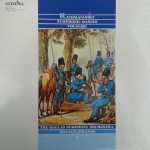
This Athena LP is now long out of print, but it received rave reviews when it was released. (We quote many of them below.) This album is a member of the TAS Super Disc list, but we found the sound awfully opaque, smeary, slow and compressed, the kind of bad “analog” sound that Doug Sax brought to the early AP releases. 

The sticker on the shrink wrap of a previous copy had these quotes:

“…for this is the definitive symphonic recording to date.” – J. Gordon Holt/ Stereophile

“Wins ‘Best Record of the Year’ award against tough competition.” – Joe Hart/High End Audio Press & Music Review

“HP heard the Athena remastering of the Rachmaninoff and found it stunning. He could recommend it without reservation.” – Harry Pearson/The Absolute Sound #57

I guess things never change.

And doubtlessly he continued to refer to himself in the third person until the end.

Reviewer malpractice? We’ve been writing about it for more than 25 years.

(more…)

Le Cid on Klavier – Now With Added Smile Curve

Presenting Yet Another Pressing Perfectly Suited to the Stereos of the Past

This hi-fi-ish Doug Sax/ Acoustic Sounds butchering of Fremaux’s performance from 1971 is insufferable. These Klavier pressings of EMI recordings are nothing but Audiophile Bullshit.

Can this possibly be the sound that EMI engineer Stuart Eltham was after?

Back in the day, audiophiles in droves bought this pressing from all the major mail order audiophile record dealers (you know who I’m talking about), apparently not noticing the overblown bass and spark-spark-sparkling top end. 

Perhaps the same audiophiles who think that Mobile Fidelity makes good sounding records? It would not surprise me. Same odd-tasting wine, different bottle.

The Smile Curve

If you’ve spent any time on this site, you should know by now that many audiophile records sound worse than the typical CD. The typical CD does not have an equalization curve resembling a smile. The classic smile curve starts up high on the left, gets low in the middle, and rises again at the end, resulting in boosted bass, boosted top end, and a sucked out midrange — the Mobile Fidelity formula in a nutshell.

If your system needs boosted bass and highs, perhaps because your speakers are too small, well, I suppose you could try this Klavier pressing.

Here’s a better idea.

Fix your f-ing stereo so you won’t need phony audiophile records like this one to make it sound good.

Either of the two records you see below will be dramatically better sounding than the Klavier Heavy Vinyl. The best pressings of this one win all the shootouts, but the Greensleeves Budget reissue pressing can also sound very good, with the better pressings earning a grade of 2+ or thereabouts.

(more…)

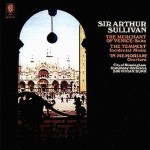
The Merchant of Venice Suite – Another Dubby Klavier Record

Hot Stamper Pressings of Classical and Orchestral Music

Sonic Grade: F

A Hall of Shame Pressing and another Heavy Vinyl Classical LP debunked.

This record sounds like it was mastered from copy tapes, which is where at least some of its dubby sound comes from. All the Klavier Heavy Vinyl pressings we’ve played have this problem.

Yes, it is yet another murky, smeary Audiophile Piece of Trash from the mastering lathe of the formerly brilliant Doug Sax. He used to cut the best sounding records in the world. Once he started cutting Heavy Vinyl it was all over.


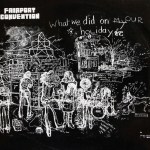
Listening in Depth to What We Did On Our Holidays

More of the Music of Richard Thompson

This RARE Island Sunray British Import LP has Hot Stamper sound, full of the Tubey Magic you expect from a British Folk album in 1969 (and the unavoidable sonic shortcomings you should expect if you know much about this band and their records).

It’s without a doubt the nicest copy we have ever seen, the acquisition of which was purely a matter of luck, as early pressings are virtually impossible to find in anything but beat-to-death condition. 

The “haunting, ethereal” vocals of the lovely Sandy Denny (or Alexandra Elene McLean Denny as she’s listed on the sleeve) are sublime on this British early copy.

Some of you may recognize her voice from a ditty called ‘Battle of Evermore,’ found on a grayish ’70s rock album that no one even bothered to name. Wonder what ever became of that group? No doubt by now their story is lost to the sands of time. I have to say I thought the music was pretty good though.

The sound varies greatly from track to track. We played the first three songs on each side and guessed that the rest would fall in line with the average of the three we heard.

Side One

The third track gets the balance of tubes and clarity about right.

The second track has a Fleetwood Mac bluesy sound with grungy guitars and surprisingly sweet and breathy vocals.

The first track has too many tubes and sounds “dubby.”

Side Two

Again, the first track is rich but a bit too tubey.

Track two gets it right — still Tubey Magical but clear and clean, some of the best sound we heard.

Track three is the same way, rich and sweet and maybe a bit fat but that’s the way these British Folk Albums are supposed to sound, if our experience with dozens of them can serve as a guide.

(more…)