Val Garay, Engineer – Reviews and Commentaries

Energy Is Key to the Best Copies of JT

Hot Stamper Pressings of the Music of James Taylor Available Now

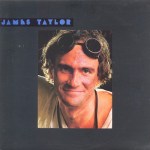
The good copies really rock on songs like I Was Only Telling A Lie, yet have lovely transparent, delicate sound on the ballads, songs such as Another Grey Morning or There We Are.

Just turn up the volume and play the opening to Honey Don’t Leave L.A. — this is James Taylor and his super-tight studio band at the peak of their powers. Russ Kunkel hits the drum twice, then clicks his sticks together so quickly you can hardly notice it, then goes back to the drums for the rest of the intro. On a superb copy like this one, the subtleties of his performance are clearly on display.

Until copies like this one came along, we had never even noticed that stick trick. Now it’s the high point of the whole intro.

Sound and Music

As audiophiles, we all know that sound and music are inseparable. In our shootout, after dropping the needle on a dozen or so copies, all originals by the way, we know when the music is working its magic and when it’s not.

As with any pop album, there are always some songs that sound better than others, but when you find yourself marvelling at how well-written and well-produced a song is, you know that the sound is doing what it’s supposed to do. It’s communicating the Musical Values of the material.

The most important of all these musical values is energy, and boy do the best copies of JT have it going on.

Val Garay is the man behind so many of our favorite recordings: JT (a Top 100 title), Simple Dreams (also a Top 100 title), Andrew Gold, Prisoner In Disguise, etc.

They all share his trademark super-punchy, jump-out-the-speakers, rich and smooth analog sound.

With big drums — can’t forget those. (To be clear, only the best copies share it. Most copies only hint at it.)

I don’t think Mr Garay gets anything like his due with audiophiles and the reviewers who write for them. This is a shame; the guy makes Demo Disc quality pop records about as good as those kinds of records can be made.

If you have a big speaker system that really rocks, you owe it to yourself to get to know his work. This is truly a knockout disc if you have the equipment designed to play it.

We do, and it’s records like this that make the effort and expense of building a full-range dynamic system worthwhile.

(more…)

Listening in Depth to Heart Like a Wheel

More of the Music of Linda Ronstadt

Presenting another entry in our extensive Listening in Depth series with advice on precisely what to listen for as you critically evaluate your copy of Heart Like a Wheel.

A key test on either side was to listen to all the multi-tracked guitars and see how easy it was to separate each of them out in the mix. Most of the time they are just one big jangly blur. The best copies let you hear how many guitars there are and what each of them is doing.

Pay special attention to Andrew Gold’s Abbey Road-ish guitars heard throughout the album. He is all over this record, playing piano, guitar, drums and singing in the background.

If anybody deserves credit besides Linda for the success of HLAW, it’s Andrew Gold.

Our In-Depth Track Commentary

Side One

You’re No Good

Right from the git-go, if the opening drum and bass intro on this one doesn’t get your foot tapping, something definitely ain’t right. Check to make sure your stereo is working up to par with a record you know well. If it is, your copy of HLAW belongs on the reject pile along with the other 90% of the copies ever pressed.

It Doesn’t Matter Anymore

Amazing acoustic guitars! Lots of tubey magic for a mid-’70s pop album. And just listen to the breathy quality of Linda’s voice. She’s swimming in echo, but it’s a good kind of echo. Being able to hear so much of it tells you that your pressing is one of the few with tremendous transparency and high resolution.

Faithless Love

Another superb arrangement with excellent sound. The banjo that opens this track is key — the picking should have a very strong plucky quality, with lovely trailing harmonics, even some fret buzz.

So many copies are veiled or blunted sounding; this clearly demonstrates a lack of transient information.

The copies without the trailing harmonics lack resolution.

Once you hear either of these problems on the banjo, you can be sure to find them on the voices and guitars throughout the side.

That the Cisco pressing doesn’t do a very good job reproducing the banjo should be clear for all to hear. If you want the sound of the real thing, only the best Capitol pressings are going to be able to give it to you.

(more…)

The Asylum Sound We Love – Great in the Seventies, Gone by the Eighties

Hot Stamper Pressings on the Asylum Label Available Now

Superb engineering by Greg Ladanyi (Toto 4, The Pretender, El Rayo-X, demo discs one and all).

If you know the “Asylum Sound” — think of the Tubey Magical analog of The Eagles’ first album and you won’t be far off — you can be sure the best copies of All This and Heaven Too have plenty of it.

Rarely do we run into recordings from the mid- to late-70s with richer, fuller sound. The bass on the best copies is always huge and note-like.

In the 80s, the engineer for this very record, Greg Ladanyi, would produce solo albums for the likes of Don Henley with no bass.

How this came to be I cannot begin to understand, but record after record that we play from that decade is bright and thin like a transistor radio. This is the main reason why you see so few of them on the site.

But Andrew Gold’s albums from the later 70s are amazingly rich and tubey. That sound apparently never went out of style with him, and it definitely never went out of style with us.

In fact, albums with those sonic qualities make up the bulk of our offerings, from The Beatles to The Eagles, Pink Floyd to Elton John, Simon and Garfunkel to Graham Nash.

In our world, the more “modern” something sounds, the lower its grade is likely to be, other things being equal.

(more…)

Listening in Depth to JT

Hot Stamper Pressings of the Music of James Taylor Available Now

There are five or six James Taylor records that are Desert Island Discs for me. His albums really do set a standard that few other singer/songwriters’ albums can meet.

Start with the first album, which we can’t find for you because only the British ones sound good and they are just to hard to find in clean condition [not true, we did the shootout in 2022], Sweet Baby James and JT.

The next group to pursue would contain Mud Slide Slim, One Man Dog and Dad Loves His Work, and then maybe Flag.

As audiophiles we all know that sound and music are inseparable. After dropping the needle on a dozen or so copies, all originals by the way, you KNOW when the music is working its magic and when it’s not. As with any pop album there are always some songs that sound better than others, but when you find yourself marvelling at how well-written and well-produced a song is, you know that the sound is doing what it needs to do. It’s communicating the Musical Values of the material.

The most important of all these musical values is energy, and boy do the best copies have plenty of it.

Side One

Your Smiling Face

Our favorite test track for side one. The best copies have punchy bass and drums that are hard to beat!

(more…)

Dad Loves His Work – Beyond White Hot in 2010

Hot Stamper Pressings of the Music of James Taylor Available Now

This Hot Stamper original Columbia is THE KING, the Best Sounding Copy we have ever played — the sound was OUT OF THIS WORLD! In fact, side two went so far beyond what we’ve come to expect from this album that we had to award it the rare Four Plus (A++++) grade.

We no longer give Four Pluses out as a matter of policy, but that doesn’t mean we don’t come across records that deserve them from time to time.

Even recordings that are as heavily processed as this one. We don’t have a problem with that approach when it works as well as it does here. Mud Slide Slim this is not. It’s also 1981, not 1971. We prefer the recordings from 1971, undeniably the Golden Age for rock and pop recording quality[1], but we know that to expect the sound of the ’70s in 1981 would simply be setting oneself up for disappointment.

Those days are gone, as are the amazing sounding pressings that came out then, and nobody, repeat nobody, pressing records today can figure out how they did it.

The soundstage and depth on our best Hot Stamper copies is HUGE — this is without a doubt the most spacious recording by James Taylor we’ve ever heard. If you want your speakers to disappear, replaced by a huge studio full of musicians playing their hearts out, this is the album that can do it.

But of course there’s a lot more to the sound of the best copies than a big soundstage.

Tonality is key.

As usually happens in these shootouts, we learned that there’s so much more to this album than just great songs. What really makes this music work on the best copies was the result of two qualities we found were in fairly short supply:

(1) Correct Tonality

Most copies have a phony MoFi-like top end boost in the 10k region that we found irritating as hell. The longer we listened the less we liked the copies that had that boost, which adds a kind of “sparkle” to cymbals and guitars that has no business being there.

Now if you’re a MoFi fan and you like the boosted highs that label is famous for, don’t waste your money buying a Hot Stamper copy from us. Our copies are the ones with the correct and more natural-sounding top end. The guitars will sound like real guitars and the voices will sound like real voices.

(2) Lower Midrange and Bottom End Weight

When the vocals sound thin, bright and phony, as they do on so many copies of this album (partly no doubt the result of the grainy crap vinyl Columbia is infamous for) that hi-fi-ish sound takes all the fun out of the music. Many tracks have background vocals and big choruses, and the best copies make all the singers sound like they are standing in a big room, shoulder to shoulder, with the full lower midrange weight that that image implies.

The good copies capture that energy and bring it into the mix with the full-bodied sound it no doubt had live in the studio. When the EQ or the vinyl goes awry, causing Taylor and crew’s voices to take on a lean or gritty quality, the party’s over.

Transparency and That Feeling of Reality

Transparency is always a big deal on pop recordings such as this. Of course this has to be a multi-miked, multi-tracked, overdubbed pop record — they don’t make them any other way — but it doesn’t have to FEEL like one.

When you get a good copy it feels like all these guys are live in the studio. They may have their own mics, and are certainly being placed artificially in the soundfield to suit the needs of the track (kick drum here, hand-claps over there), but the transparency of the killer pressings makes them sound like they are all in the same room playing together, clearly occupying their own share of the space in the studio.

This is one of our favorite Taylor albums here at Better Records. It’s the last album by the man that bears any resemblance to the genius of his early work. It’s steeply, steeply downhill after DLHW. (Case in point: His specials for PBS of the last few years are a positive cure for insomnia, with every song slowed down and all the energy drained from the material.)

But he still had fire in his belly when he made this one — one listen to Stand and Fight is all the evidence you need; the song rocks as hard as anything the guy ever did. (And it’s got plenty of cowbell, always a good sign.)

(more…)

Heart Like A Wheel Is an Album Everyone Needs to Hear

More of the Music of Linda Ronstadt

Reviews and Commentaries for Heart Like a Wheel

We’ve recently compiled a list of records we think every audiophile should get to know better, along the lines of “the 1001 records you need to hear before you die,” but with less accent on morbidity and more on the joy these amazing audiophile-quality recordings can bring to your life.

The list is purposely wide-ranging. It includes some famous titles (Tumbleweed Connection, The Yes Album), but for the most part I have gone out of way to choose titles from talented artists that are less well known (Atlantic Crossing, Kiln House, Dad Loves His Work), which simply means that you won’t find Every Picture Tells a Story or Rumours or Sweet Baby James on this list because masterpieces of that caliber should already be in your collection and don’t need me to recommend them.

Which is not to say there aren’t some well known masterpieces on the list, because not every well known record is necessarily well known to audiophiles, and some records are just too good not to put on a list of records we think every audiophile ought to get to know better.

Out of the thousands of records we have auditioned and reviewed, there are a couple of hundred that have stood the test of time for us and we feel are deserving of a listen. Many of these will not be to your taste, but they were to mine.

Heart Like A Wheel

I’ve been playing HLAW since the year it came out, roughly 48 years by my calculation, and I can tell you it is no easy task to find this kind of smooth, sweet, analog sound on the album. Folks, we heard it for ourselves: the Heart Like A Wheel magic is here on practically every song.

A Must Own Pop Record

Linda’s Masterpiece, and a recording that should be part of any serious Popular Music Collection. Others that belong in that category can be found here.

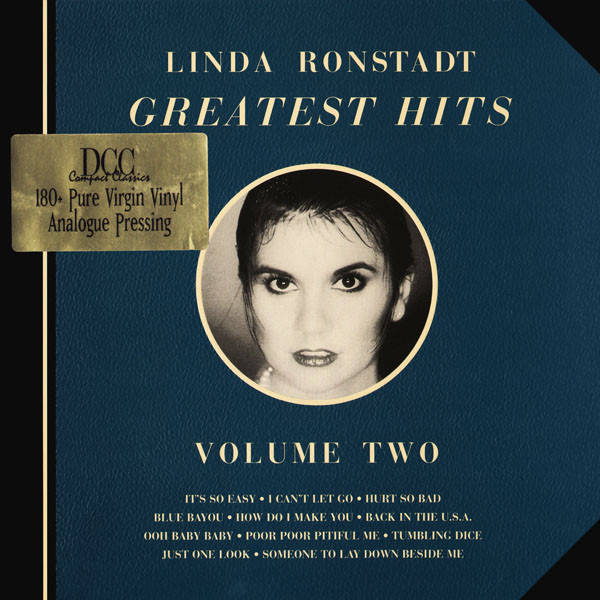
Can You Hear the Bloated Bass on This DCC Pressing?

More of the Music of Linda Ronstadt

This review was written many years ago, around 2004 I think. This was one of the first DCC records I did a shootout with up against run-of-the-mill Mastering Lab domestic pressings, only to find, somewhat surprisingly, at least at that time, that the DCC came up short, as you will see in the review below.


As much as I admire Steve Hoffman’s work for DCC, on this title the DCC is not as good as the best domestic copies. The best domestic pressings are just plain more fun.

The DCC sounds thick in the midrange and fat in the bass, although some of that boost in the bass could have been used to the advantage of some of the domestic pressings we played. 1 DB or so at 50-60 cycles would help, but the DCC has a boost in the middle and upper bass that causes the bass to sound bloated next to a properly mastered, properly pressed LP. 

I like rich sounding records just like Steve does, but his version of this title is too rich for my blood. If your system is lean sounding you may prefer the DCC, but we found it less than agreeable over here.

Not sure why so few reviewers and audiophiles notice these rather obvious shortcomings, but we sure do, and we don’t like it when records sound that way. These are records for those who are not sufficiently advanced in the hobby to know just how compromised and wrong they are.

(more…)

Heart Like A Wheel – Does Bernie Ever Get Bored?

More of the Music of Linda Ronstadt

Years ago we wrote:

One thing we noted with interest while doing this shootout was how compressed the first track is. When the chorus comes in, and Linda seems to be singing louder — should be singing louder, with a substantial coterie of vocalists backing her up — the volume is actually lower. In the verse immediately following you can hear that not only is she singing louder, but the amount of dynamic contrast in her voice is greater. Go figure.

The compression also means that that song will never sound the way we would wish it to. But that doesn’t mean it won’t sound good. It means it will sound good in more of a radio-friendly way. On a good copy, one with relatively little grain and plenty of bass, the music can still be very enjoyable, and that includes a Number One Pop Hit like “You’re No Good.”

Do we still see things this way? Well, yes and no. It’s not exactly that we were wrong, but that better cleaning and better playback (all that revolutions in audio stuff) have now allowed us to hear that some copies are actually much more dynamic on this track than others. Quite dynamic in fact.

Think about it. Bernie Grundman is going to cut this record many, many times, maybe more times than he wants to. Is he always going to apply exactly the same amount of compression to each cutting, or is he going to experiment a bit and see what works better over time? Or maybe he just learned a thing or two as he went along.

Which is pretty much what we do when playing copy after copy. The best pressings show us precisely what it is they are doing when they actually work. We can’t know that in advance; we’re learning on the job so to speak.

(more…)

Give It Up Again For Val Garay on Prisoner in Disguise

More of the Music of Linda Ronstadt

More Records with Specific Advice on What to Listen For

The soundfield has a three-dimensional quality that was pretty much nonexistent on most of the other copies we played. Drop the needle on Many Rivers To Cross and check out the amazing sound of the organ coming from the back of the room. Only the highest resolution copies give you that kind of soundstage depth.

The piano sounds natural and weighty. The fiddle on The Sweetest Gift (played by our man David Lindley) is full of rosiny texture.

Emmylou Harris, dueting here with Linda, is SUPERB, with truly Demonstration Quality Sound on the best copies.

The acoustic guitars are tonally Right On The Money throughout — the transient information is captured perfectly. Listen to the opening guitar in the right channel of The Sweetest Gift; we used it as a test track and when that guitar is RIGHT THERE you know you have a copy with Hot Stampers.

What A Supporting Cast!

Check out all the cool cats who helped make this record: EmmyLou Harris, James Taylor, Lowell George, Andrew Gold, Peter Asher, Val Garay, Russ Kunkel, David Lindley, JD Souther and more. You see those same names all over our site! Perhaps it is time to rethink the conventional wisdom that says Linda Ronstadt’s records are not for audiophiles. Those people are involved with some of our all-time favorite records, and their contributions really help this music sound great.

Another Ignored Gem From Linda

I confess to never having taken this album seriously (much like Simple Dreams, an album I now LOVE), dismissing it as a commercial collection of pop hits with as much depth as the L.A. river, but I was wrong wrong WRONG. This is a great album on the right LP, not the compressed piece of grainy cardboard pop we’re used to. The typical pressing barely hints at the tremendous energy and top-quality musicianship that characterizes practically every track on this wonderful record.

Give It Up Again For Val Garay

Kudos must go to Val Garay, the man behind one of our favorite recordings, JT, with which this album shares much in common. That same super-punchy, jump-out-the-speakers, rich and smooth ANALOG sound is everywhere in evidence. I don’t think Mr. Garay gets anything like his due with audiophiles and the reviewers who write for them. This is a shame. The guy makes Top Quality Pop Records about as good as they can be made, and if you have the kind of Big System that can really rock out, you owe it to yourself to get to know his work.

(more…)

Letter of the Week – Aphex Aural Excitement

One of our good customers had this to say about some Hot Stampers he purchased a while back:

Hey Tom, 

Love your efforts to upgrade audio listening. Keep it up! FYI (and you may already be aware of this) the original Aphex units were handmade tube pieces that used the nature of “Tubey Magic” to accentuate the even-order harmonics so pleasing to the human ear when they occur in music and voice.

The later solid state units just didn’t sound the same and are basically crap. Only a handful of original tube models survived and are rented out to studios or artists when they feel the need. Here’s a great link to an interview with Val Garay.

Cheers!
Paul K.