seventies

We Didn’t Know How Good We Had It in the Seventies

Hot Stamper Pressings of Well-Recorded Folk Rock Albums Available Now

Stealin’ Home has long been a Folkie-Pop favorite of mine, mostly on the strength of the consistently smart songwriting, polished production and audiophile sound quality.

But really, to be truthful, what I found attractive right from the start was Iain Matthews’s especially clear, sweet tenor. That’s the hook that drew me to the album.

Only later would I be pleasantly surprised to find that the recorded sound was wonderful; that the production was equal to the best major label Rock and Pop around (a comparison to The Doobie Brothers would not be a stretch); and, with repeated listening, it was clear that the level of songwriting was high indeed (an a capella rendition of Rodgers and Hammerstein’s You’ve Got to Be Carefully Taught, which opens side two, can’t help but raise your averages).

ian_matthews_-_stealin_homeWe Didn’t Know How Good We Had It

Produced in 1978, the best copies are rich, smooth and sweet in the best tradition of ANALOG recording.

Only a few years later this sound was out of style, replaced by the edgy, hard, digital qualities preferred by synthpop bands like Tears for Fears and Simple Minds.

This would turn out to be a bad time for audiophiles (like me) who liked the pop music of the day but not the pop sound of the day. Heavy-handed processing as well as the overuse of synthesizers and drum effects, with the whole of the production slathered in digital reverb, have resulted in most of the albums from the early- to mid-80s being all but impossible to enjoy on a modern high-end system. Believe me, we’ve tried.


UPDATE 2026

Getting distortion out of the system, electricity, room and all the rest helps make the records from the 80s much more enjoyable. Brothers in Arms comes instantly to mind, but there are scores of others. Obviously some heavily processed recordings are going to sound much better than others, especially if you have the right pressings, but few of them can compete with the better recordings from the 70s.

(more…)

Takin’ It to the Streets – The Rich, Smooth Sound of Seventies Analog

Hot Stamper Pressings of the Music of The Doobie Brothers Available Now

Recently we did one of our regular shootouts for Takin’ It To The Streets, using pressings we know from experience to have the potential for Hot Stamper sound. We cleaned them as carefully as we always do, then we unplugged everything in the house we could get away with, carefully warmed up the system, Talisman’d it, found the right VTA for our Triplanar arm (by ear of course) and proceeded to spend the next couple of hours playing copy after copy on side one, after which we repeated the process for side two.

If you have five or ten copies of a record and play them over and over against each other, the process itself teaches you what’s right and what’s wrong with the sound of the album. Once your ears are completely tuned to what the best pressings do well that the others do not do as well, using a few specific passages of music, it will quickly become obvious how well any given pressing reproduces those passages.

The process could not be more simple. The first step is to go deep into the sound. There you find something special, something you can’t find on most copies. Now, with the hard-won knowledge of precisely what to listen for, you are perfectly positioned to critique any and all pressings that come your way.

The Rich, Smooth Sound of Seventies Analog

Credit Donn Landee (and Ted Templeman too) with the rich, smooth, oh-so-analog sound of the best copies. He’s recorded many of our favorite albums here at Better Records.

(more…)

The Asylum Sound We Love – Great in the Seventies, Gone by the Eighties

Hot Stamper Pressings on the Asylum Label Available Now

Superb engineering by Greg Ladanyi (Toto 4, The Pretender, El Rayo-X, demo discs one and all).

If you know the “Asylum Sound” — think of the Tubey Magical analog of The Eagles’ first album and you won’t be far off — you can be sure the best copies of All This and Heaven Too have plenty of it.

Rarely do we run into recordings from the mid- to late-70s with richer, fuller sound. The bass on the best copies is always huge and note-like.

In the 80s, the engineer for this very record, Greg Ladanyi, would produce solo albums for the likes of Don Henley with no bass.

How this came to be I cannot begin to understand, but record after record that we play from that decade is bright and thin like a transistor radio. This is the main reason why you see so few of them on the site.

But Andrew Gold’s albums from the later 70s are amazingly rich and tubey. That sound apparently never went out of style with him, and it definitely never went out of style with us.

In fact, albums with those sonic qualities make up the bulk of our offerings, from The Beatles to The Eagles, Pink Floyd to Elton John, Simon and Garfunkel to Graham Nash.

In our world, the more “modern” something sounds, the lower its grade is likely to be, other things being equal.

(more…)

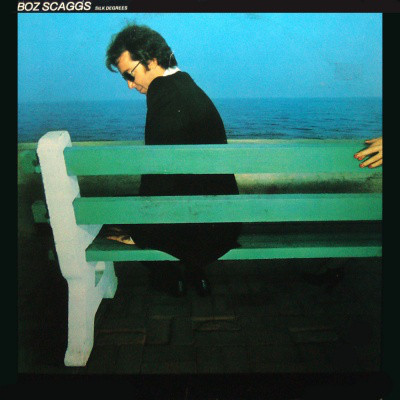
Boz Scaggs’ Rich, Solid Piano – The Forgotten Sound of the Seventies

xxxReviews and Commentaries for the Music of Boz Scaggs

What do you hear on the best copies? Well, the first thing you hear is a rich, solid piano, a piano sound that’s practically missing from the CBS Half-Speed and 90% of the reissues we’ve played.

Like so many recordings from the ’70s, this album is surprisingly natural sounding. I’ve had the same experience with Billy Joel’s ’70s records. I was surprised to hear how well recorded they are — and how full-bodied the piano is — after I stopped listening to the audiophile and import pressings and went back to the original domestic copies. When you get the right ones — that’s how we see our job, finding the right ones — they’re wonderfully rich and smooth (but not too smooth), the way good analog should sound.

And these were the kinds of records that we audiophiles were complaining about back in the day. We lamented the fact that these pressings weren’t audiophile quality, like the best MoFis and Japanese pressings. Can you imagine?

This is how bad even good equipment must have been back then.

Of course we got what we deserved. We got lots of phony, hyped-up pressings to fool us into thinking we were hearing better sound, when in fact the opposite was true. I regret to say that nothing has changed — most pressings aimed at audiophiles are still mediocre and some of them are surely the worst versions of the album ever produced. That’s pretty bad, wouldn’t you say? (For some unfathomable reason, nobody but us ever does say.)

The other record that immediately comes to mind to show you the sound that’s missing from many pressings, both vintage and modern, is Aja. Here’s what we had to say about it:

If you own the Cisco 180 gram pressing, focus on Victor Feldman’s piano at the beginning of the song. It lacks body, weight and ambience on the new pressing, but any of our better Hot Stamper copies will show you a piano with those qualities in spades. It’s some of my favorite work by the Steely Dan vibesman. The thin piano on the Cisco release must be recognized for what it is: a major error on the part of the mastering engineers.

A full piano is key to the sound of the best pressing of Silk Degrees.

The other thing you hear on the best copies is a smooth, sweet top end, which is likewise missing from the above mentioned pressings.

Most copies lack presence and top end.

Dull, thick, opaque sound is far too common on Silk Degrees, which may account for some audiophiles finding the Half-Speed preferable.

Of course, our Hot Stampers give you the presence and highs that let this music come to life. If they didn’t they wouldn’t be Hot Stampers now would they?

(more…)