*Reviewing the Reviewers

We call out the usual suspects in the reviewing world and explain how following their advice will prevent the serious audiophile from making progress in this hobby.

Our advice, on the other hand, can take your enjoyment of recorded music to levels you have not yet begun to imagine. To learn more, click on Start Here, found at the top of every page.

Turning Master Tapes into Mud Pies – The Magic of the Electric Recording Company

Hot Stamper Pressings of Psychedelic Rock Recordings Available Now

UPDATE 2026

This commentary originally came out in 2023 I believe. The comments section at the end is a bit of a hoot. Man, there sure are some real wackos in the world of audio.


““It’s magical what they’re doing, recreating these old records,” Fremer said as he swapped out more Electric Recording discs.”

Swapped them out? Anyone with an ounce of respect for Love’s music would have tossed them into the nearest trash bin.

We did a shootout for Love’s Forever Changes earlier this year, and it was our good luck to get hold of a copy of the Electric Recording Company’s pressing of the album in order to see how it would fare against our Gold Label Stereo original LPs.
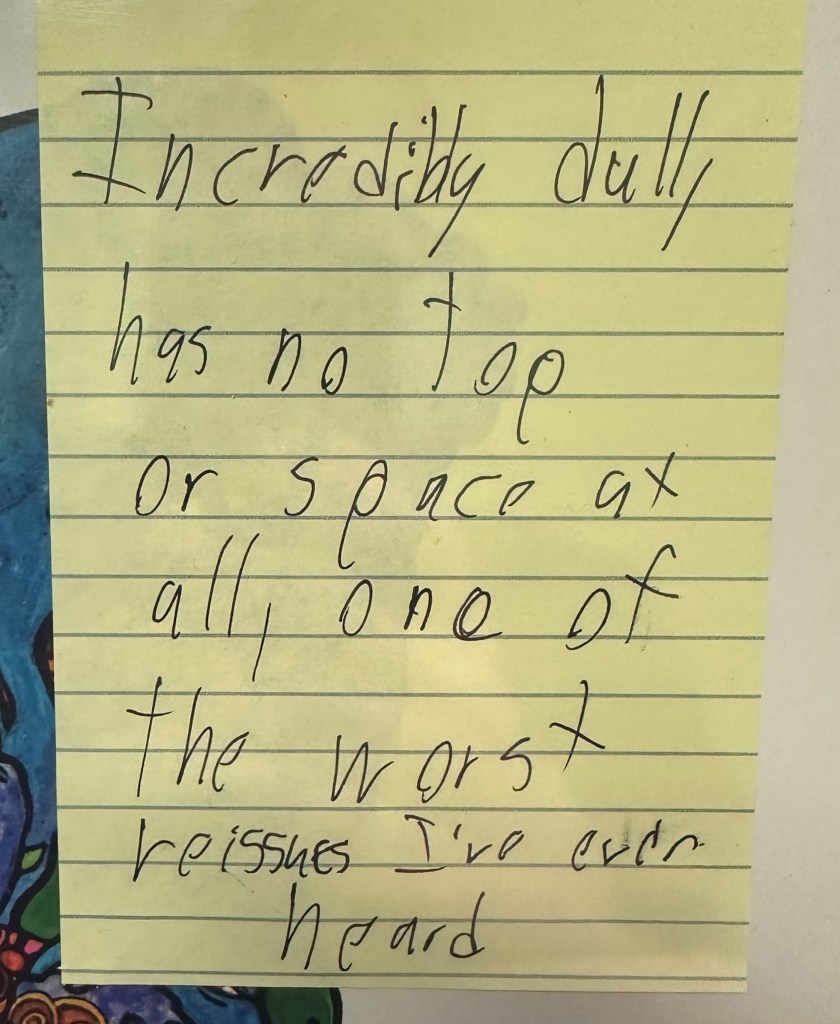
As you can see from the notes, to say that we could hardly believe what we were hearing clearly understates the depth of our befuddlement.

We simply have no context for a record that sounds as bad as this record sounds. We’ve never heard anything like it, and we’ve played a lot of records in the 37 years we’ve been in business. After critically auditioning thousands upon thousands of pressings in our shootouts, all day every day for the last twenty years, we’ve worn out scores of cartridges and even our Triplanar tonearm.

But this is new ground for us. A quick recap:

  • Incredibly dull,
  • Has no top or space at all,
  • One of the worst reissues I’ve ever heard.

You get the picture. What more needs be said? Last year I wrote the following:

Pete Hutchison of The Electric Recording Company makes some of the worst sounding records I have ever played in my life.

If you play me one of his awful records, and don’t tell me who made it, I can judge the record on its merits, the way we judge all records. We test records blindly for precisely this reason. We let the record tell us how well it was made, what it does right and wrong relative to other pressings of the same album, comparing apples to apples.

His records tell me he loves the sound of the murkiest, muddiest vintage tube equipment ever made, and wants every record he produces to have that sound.

In my book that is an egregious case of My-Fi, not Hi-Fi. We wrote about it here.

It’s astonishing to me that anyone takes this guy seriously.

In the Washington Post video, we did a little comparison on camera for two pressings of Quiet Kenny, a record I will have more to say about in Part Two of this commentary. Here is Geoff Edgers’ description in the article of how it all went down.

(more…)

If It’s Made from the Real Master Tape, Shouldn’t Blue Sound Better than This?

Hot Stamper Pressings of the Music of Joni Mitchell Available Now

UPDATE 2026

I wrote the commentary you see below way back in 2006. I wanted to give our customers an incentive to critically listen to the new Rhino pressing of Blue, a Heavy Vinyl reissue we actually gave out for free with every Hot Stamper of the album we sold.

We wanted our customers to try and answer the question I had posed in my review as to what aspect of the sound was improved in the new pressing, relative to the vintage copy they would have just purchased from us.

For those of you who have been reading our commentaries about modern remasterings, you know that rarely do we find any area of their sound that could be considered in any way “improved.”

As you will see from our commentary below, no less a personage than Michael Fremer had said at the time that the Rhino pressing “has far greater presence and physicality and is more immediate, dynamic, detailed and especially transparent.”

As hard as it may be to believe, I actually agreed with him about one of those qualities.

I’ve broken down his list below. If you have one of our Hot Stampers and the Rhino reissue, play them back to back and try to hear what is better about the reissue. Which of the following does it have more of compared to even the best vintage pressings?

  • More presence,
  • More physicality (whatever that is),
  • More immediacy,
  • More dynamics.
  • More detail,
  • More transparency

I had posed this question on the blog over the course of many years and never got anything approaching a serious answer.

I was going to reveal what quality I thought it was at some point, but I have since decided that it is better left for the reader to figure out for himself rather than have me tell him. What do you learn from being given an answer? Nothing, or next to nothing, so why do it?

Similarly, the Heavy Vinyl Led Zeppelin II and Brothers in Arms reissues are very good sounding records, with obvious shortcomings which I had hoped my readers would be able to spot and write to me about. None have to date, or at least none have told me what they are, which works out to be more or less the same thing.

I will have a great deal more to say on this subject down the road, one that is critically important for audiophiles regardless of their experience. For now let me leave you with what Steve Hoffman had to say about the work he did on Blue. (You can find the quote on Joni Mitchell’s website.)

This is a really wonderful album; Joni just laid it all out there for the world to hear. Brave, especially back in the day & I feel that this new version is the true giant killer.

Unlike the original 1970’s pressings, this new version was mastered without ANY added compression whatsoever, making it a true problem child in cutting (of our own making) but I wouldn’t have it any other way. After many spoiled lacquer masters and one too many Altoids, it was finished to everybody’s satisfaction.

The effort was worth it. The ebb and flow of the music is totally intact. Parts were cut, plated and pressed at Record Tech (RTI) and the actual 1971 Reprise master tape (as recorded and mixed at A&M Recording Studios) was used in disk cutting, bypassing the usual/”EQ’d and Compressed Cutting Master” completely.

Unlike the DCC, most of the songs on this vinyl version were cut without ANY equalization at all so this will be the closest you will ever be able to get to the sound of the true master tape of Blue. It was exciting to work on and I’m sure it will please y’all.

Steve Hoffman, mastering engineer

(more…)

Houses of the Holy on Classic Records and 156 Other Records No Audiophile Should Want Anything to Do With

Hot Stamper Pressings of the Music of Led Zeppelin Available Now

Houses of the Holy is another one of the very bad records Michael Fremer put on his 2009 Top LP list, while passing over one of Classic’s better titles, the first Led Zeppelin album.

(We don’t like it as much as we used to, but it is still a good record if you get a good pressing of it, something that can never be guaranteed of course. We link to our review of it below.)

Michael Fremer’s web site used to be called called musicangle (now defunct). On this site you would have been able to find a feature called157 In-Print LPs You Should Own!”

Surprisingly it seems that the link still works. If I had made a list this misguided, it surely would have turned into a “I’m sorry,  I didn’t know what I was talking about” commentary. I would have felt an obligation to correct the record, out of sheer embarrassment at the very least.

But this guy apparently never learns. As far as he’s concerned, what worked in 1982 ain’t broke and don’t need fixing.

The List

I can’t begin to count the bad records on this list.

There are scores of them — albums that are so bad that we actually created an audiophile hall of shame section to help you avoid them.  Obviously we never got around to making listings for them all and cataloging their flaws. Who has that kind of time? 

But Michael Fremer holds just the opposite view — he thinks these are records you should own. Now I suppose we can disagree over the merits (or lack of them) of a title such as Houses of the Holy on Classic (reviewed here). It’s a free country after all.

But the reason this list does such positive harm to the record-loving audiophile public, in my opinion, is that MF passes over one of the best records Classic ever cut, Led Zeppelin’s first album, in order to put the ridiculously bright and aggressive Houses of the Holy on the list in its place.

(more…)

Imagine on Mobile Fidelity from 1984

Hot Stamper Pressings of the Music of John Lennon Available Now

This Jack Hunt-mastered Half Speed has the midrange suckout that Mobile Fidelity was notorious for.

Lennon and his piano on the first track sound like they are coming from another room.

And yet somehow there are still “audiophiles” in this day and age that defend the records put out by this ridiculous label.

Oy vey. What is wrong with these people?

I Have a Theory

Actually, I have a good idea why so many so-called audiophile records have a sucked-out midrange.

A midrange suckout creates depth in a system that has difficulty reproducing depth.

Imagine that instead of having your speakers pulled well out from the back wall as they should be, instead you have placed your speakers right up against the wall.

This arrangement, though preferable aesthetically and dramatically more family- and wife-friendly, has the unfortunate effect of seriously limiting your speakers’ ability to reproduce whatever three-dimensional space exists on your recordings.

I hinted back in 2022 that I was going to discuss this idea down the road, and like most things that I was supposed to write about down the road, we’re still waiting to see it.

The album I was going to write more about was Kind of Blue.

(more…)

Letter of the Week – “Oh my gosh, so much money wasted on magic buttons, secret sauce and dilithium crystals…”

Hot Stamper Pressings of Miles’s Albums Available Now

One of our good customers had this to say about some Hot Stampers he purchased a long time ago (emphasis added):

Hey Tom,

I imagine you get a little bored with audiophile negativity around the concept of Hot Stampers. I have to admit, they are expensive and I sometimes just can’t push myself to buy (even though I want to). As an alternative I have purchased some of the “new” remastered all analogue classics like Kind of Blue hoping to get great sound.

I listen for enjoyment, but like many folks I get caught up in the hype of technology hoping for better sound. Oh my gosh, so much money wasted on magic buttons, secret sauce and dilithium crystals for a different but really not better sound.

So, to the point, I purchased a copy of Kind of Blue from you about 2 years ago. It was graded by you as A++ – A+++ on both sides. I tell myself this story when I need an incentive and want to buy another Hot Stamper.

I played the newly remastered UHQR KOB. It was quiet, wonderful, excellent.

And so just for fun I decided to listen to the copy of KOB I bought from you.

My Hot Stamper is a re-press from Columbia probably from the ’70’s. The difference between both copies was startling.

My Hot Stamper copy of KOB had bigger dynamics, air, tonal awareness, spatial sense.

Bass, sax, piano and Miles – alive and vibrant. It sounded better. The only negative difference was the vinyl was not as quiet.

My experience with the albums I buy from you has always been satisfying because they sound so good. So thanks and screw all the naysayers .

Anyways, just felt like saying thanks and trying to push myself forward on my next purchase.

Best, Art

Art,

Thanks for your letter. You are our letter of the week!

This caught my eye:

“…so much money wasted on magic buttons, secrete sauce and dilithium crystals for a different but really not better sound.”

Ain’t it the truth. Lots of smoke and mirrors and fancy packaging, but when the record in question is at best mediocre, as you discovered for yourself, we describe such a record as putting lipstick on a pig.

Michael Fremer says it’s the best KOB ever, and will be for all time.

Why can’t you hear what he can?

Seriously, could there be a more absurd and ridiculous statement? When discusssing pressings, this kind of certainty is the unmistakable mark of shallow and misguided thinking.  Audiophiles as a group evince far too much credulity and not nearly enough skepticism about both records and audio, which is why they are always looking for easy answers and quick fixes.

They don’t want to do the work. They want someone to tell them they don’t have to do the work.

(more…)

Who on Earth Could Possibly Take the Sound of this Ridiculous Remaster Seriously?

Hot Stamper Pressings on Decca and London Available Now

There actually is such a person who does exactly that, can you imagine?

Only an Audiophile True Believer could be fooled by sound so ridiculously unnatural.

But the world is full of such people. They bought into the audiophile BS of Mobile Fidelity in the 80s and apparently haven’t learned much since.

Now they think Heavy Vinyl is the answer to the world’s problems. The more things change…

If your stereo is any good at all, you should have no trouble hearing the sonic qualities of this album we describe below. If you are on this blog, and you have tried some of our Hot Stamper pressings, there is a good chance you’re hearing pretty much what we’re hearing. Why else why would you pay our prices?

One thing I can tell you: we would never charge money for a record that sounds as weird and wrong as this MoFi.

A well-known reviewer has many kind things to say about this pressing, but we think it sounds like a hi-fi-ish version of a 70s London, which means it’s opaque and the strings are badly lacking in Tubey Magical sheen and richness.

The bass is like jello on the MoFi, unlike the real London, which has fairly decent bass.

If an audiophile reviewer cannot hear the obvious faults of this pressing, I would say there’s a good chance one or both of the following is true:

  1. His equipment is not telling him what the record is really doing, and/or,
  2. His listening skills are not sufficiently developed to notice the shortcomings in the sound.

The result is the worst kind of reviewer malpractice.

But is it really the worst kind? It seems to be the only kind!

MoFi had a bad habit of making bright classical records. I suppose you could say they had a bad habit of making bright records in general. A few are dull, some are just right, but most of them are bright in one way or another.

Dull playback equipment? An attempt to confuse detail with resolution? Whatever the reasons, the better and more accurate your equipment becomes, the more obvious this shortcoming will be. My tolerance for their phony EQ is at an all time low. But hey, that’s me.

(more…)

A Collection of Beatles Oldies on Video – Expert Advice?

The LOST Beatles Album | Cancelled By Apple – Should It Be Re-released?

Click on the link above to see an interesting and informative video that we think is well worth watching.

Allow me to make a few points:

As to the question posed above, my vote would of course be no. The new Beatles albums are awful sounding. Here are a few of rour eviews detailing their many shortcomings:

After playing those three, we gave up on the idea of playing the rest of the set.

The Mono Box (in analog!) was even worse. We played one record, heard truly awful sound, and that was all she wrote.

Mushy Sound Quality

Andrew Milton, the Parlogram Auctions guy, offers opinions about the sound quality of the various pressings he reviews. Naturally we are skeptical of reviewers’ opinions for reasons that should be clear to readers of this blog.

We have no idea how he cleans his records or how carefully he plays his records, or even what he listens for.

Frankly, even if we knew all those things it wouldn’t mean much to us. So many reviewers like so many bad sounding modern records that we’ve learned not to take anything they say seriously.

The comment about the 1G stampers being “mushy” that Andrew makes about 19 minutes in is one we take exception to. Part of the problem with his comment is that we can’t really be sure what he means by “mushy.” If it means smeary or thick, that has not been our experience with the best cleaned originals.

Since the later pressings tend to be thinner and less Tubey Magical, they are probably even less “mushy,” assuming I have the definition of the term right.

My guess is that he has a system with problems like those we had thirty years ago.

Our playback systems from the 80s and 90s were tubier, tonally darker and dramatically less revealing, which strongly worked to the advantage of leaner, brighter, less Tubey Magical pressings such as the reissues of A Collection of Beatles Oldies…

But to say that the 1G stampers were used for both the originals as well as the reissues with the Black and Silver labels and that therefore the sound is the same is definitely a sign that Andrew’s understanding of stampers and pressings is hopelessly incomplete.

What We Think We Know

We have done a number of shootouts for the album over the last ten years or so, and our experimental approach using many dozens of copies provides us with strong evidence to support the following conclusions regarding the originals versus the reissues:

(more…)

How Does the Heavy Vinyl Rubber Soul Sound?

Hot Stamper Pressings of Rubber Soul Available Now

This review was originally written in 2015.


We are so excited to tell you about the first of the Heavy Vinyl Beatles remasters we’ve played! As we cycle through our regular Hot Stamper shootouts for The Beatles’ albums we will be of course be reviewing more of them*. I specifically chose this one to start with, having spent a great deal of time over the last year testing the best vinyl pressings against three different CD versions of Rubber Soul.

The short version of our review of the new Rubber Soul vinyl would simply point out that it’s awful, and, unsurprisingly, it’s awful in most of the ways that practically all modern Heavy Vinyl records are: it’s opaque, airless, energy-less and just a drag.

I was looking forward to the opportunity to take Michael Fremer, the foremost champion of thicky vinyl, to task in expectation of his usual rave review, when to my surprise I found the rug had been pulled out from under me — he didn’t like it either. Damn!

MF could hear how bad it was. True to form, he thinks he knows why it doesn’t sound good:

As expected, Rubber Soul, sourced from George Martin’s 1987 16 bit, 44.1k remix sounds like a CD. Why should it sound like anything else? That’s from what it was essentially mastered. The sound is flattened against the speakers, hard, two-dimensional and generally hash on top, yet it does have a few good qualities as CDs often do: there’s good clarity and detail on some instruments. The strings are dreadful and the voices not far behind. The overall sound is dry and decay is unnaturally fast and falls into dead zone.

It strikes me as odd that the new vinyl should sound like a CD. I have listened to the newly remastered 2009 CD of Rubber Soul in stereo extensively and think it sounds quite good, clearly better than the Heavy Vinyl pressing that’s made from the very same 16 bit, 44.1k remixed digital source.

If the source makes the new vinyl sound bad, why doesn’t it make the new CD sound bad? I can tell you that the new CD sounds dramatically better than the 1987 CD I’ve owned for twenty years. They’re not even close. How could that be if, as MF seems to believe, the compromised digital source is the problem?

Lucky for me I didn’t know what the source for the new CD was when I was listening to it. I assumed it came from the carefully remastered hi-rez tapes that were being used to make the new series in its entirety, digital sources that are supposed to result in sound with more analog qualities.

Well, based on what I’ve heard, they do, and those more analog qualities obviously extend to the new Rubber Soul compact disc. At least to these ears they do.

It’s possible my ignorance of the source tape allowed me to avoid the kind of confirmation bias — hearing what you expect to hear — that is surely one of the biggest pitfalls in all of audio and a pit that Fremer falls into regularly.

(more…)

Got Nice Equipment? It’s a Good First Step, but Only a First Step

Revolutions in Audio, Anyone?

Nice equipment is only the first step on the long, long, long road to good sound.

The audio magazines that their reviewers write for are purveyors of what we consider to be one of the most pernicious falsehoods in all of audio — that buying more expensive equipment is the key to better sound. (Note that is is a falsehood, not a lie; they probably actually believe it.)

From the audiophile rags’ point of view, this makes perfect sense. They extoll the virtues of one piece of sexy hardware after another on page after page of their glossy magazines. The ten bucks a year you pony up to subscribe doesn’t even cover the cost of all that pretty paper. They make their real money by selling advertising to equipment manufacturers, who in turn advertise equipment they want you to buy. What are all the glossy pages of these magazines devoted to? The fawning and credulous discussion of the sexy equipment being advertised.

stereooldSee how that works? It ain’t rocket science. These magazines have a vested interest in convincing you that the Newer and More Expensive the equipment you own, the better will be the sound in your home.

Wrongheaded Thinking

It’s easily demonstrated how wrongheaded this way of thinking is. If you’ve been in audio for any length of time, you know that one bad interconnect can ruin the sound of a stereo. We’ve all been there. All it takes is one little wire — the wrong wire in the wrong place — to make all that expensive equipment sound like shit.

Or a bad room. Or the speakers on the wrong wall. Or VTA too high. Or too low. Or a mismatch between the arm and cartridge. Or a mismatch between the speaker and amp. Or about 68 million other things, any one of which can turn the sound of all that sexy equipment into musically unpleasant dreck.

(more…)

Suite Espanola – How Do the Remastered Pressings Sound?

Decca and London Hot Stamper Pressings Available Now

In 2011 we made the (usually pointless) effort to compare a London pressing to the 180 gram Speakers Corner reissue which we were carrying at the time. We noted simply that the Heavy Vinyl pressing “was a joke next to this copy.”

I wish I could tell you in what way it was a joke — we try to be specific about the shortcomings of these records, which is why we publish our notes for some of them — but the old notes are long gone.

Naturally, we don’t have the reissue to play this time around. Still, we are confident that the results of any comparison would be the same.

Mark Lehman in the Absolute Sound gave the ORG Heavy Vinyl remastering Five Stars, having this to say about the sound:

ORG’s 45rpm remastering is terrific (as indeed are all of the ORG vinyl reissues I’ve heard). Comparison with the late- 60s London LP on which the Suite first appeared reveals sharpened and clarified attacks and articulations, more tightly focused individual strands, fuller and warmer string choirs, more resonant brass, more pillowy air around flutes, clarinets, and oboes, and more nuance and opulence in the orchestral blends.

The total effect is to make Albeniz’s composition even more sweeping, rhapsodic, richly hued, evocative, and involving—and that’s saying something, considering how good the sonics are on this recording’s first incarnation.

If only any of this were true!

We readily admit we have never played the ORG pressing and have no plans to, but when has a Heavy Vinyl pressing ever had any of the qualities described above, let alone in such abundance?

Never in our experience, and our experience extends to more than four hundred of them.

Enough Already

Enough about records we’ve never played. Let’s discuss some of the pressings of this very recording that we actually have played, it being a favorite of ours for which we have done a number of shootouts.

The Super Analogue remaster from the 90s was awful. I would give it an F if I were grading it today.

The Speakers Corner pressing earned a B grade from us, which makes it one of the better releases on that label. I would guess that one or two out of ten would rate a B. I don’t know of any record of theirs that rates a grade higher than B.

Using letter grades, our grading system of White Hot, Super Hot and Hot would translate to something like A Plus, A and A Minus.

Which means that there is no Heavy Vinyl pressing, from any era, on any label, that should be able to beat any Hot Stamper pressing on our site, and we back that up with a 100% money back guarantee.


UPDATE 2024

Stop the presses and hold your horses.

As of 2024 we actually know of more than one Shootout Winning title pressed on modern Heavy Vinyl. You can read about one of them here.

There is another one as well and we will be writing about that one soon.

We now return you to our old commentary.

(more…)