Audiophile Labels – Reviews and Commentaries

Carnival of the Animals on Klavier Is Another Doug Sax-Mastered Disaster

Hot Stamper Pressings of the Music of Saint-Saens Available Now

Yet another murky, smeary audiophile piece of vinyl trash from the mastering lathe of the formerly brilliant Doug Sax. He used to cut the best sounding records in the world. (Exhibit A: this one.)

Then he started working for perhaps the worst record label of all time and to my knowledge never cut a good sounding record again.

This record may be on the TAS Super Disc list, but we don’t think it belongs there. Instead, it belongs on the bad TAS list that we created specifically for these far-from-super records.

To be fair, the real EMI is on there as well, ASD 2753. However, including the Klavier on the list brings into doubt the compentence of whoever is curating it these days.

This Klavier pressing, along with all the Classic Records titles, as well as other modern reissues, renders the advice found there all but useless. Is anyone calling attention to all the bad sounding records that have lately been recommended by The Absolute Sound? I think we might just be the only ones. If you know of any others, please email me at tom@better-records.com.

Doug Sax

For those of us who remember the consistently superb work Doug Sax was doing in the 70s, we sadly note that he passed away in 2015. I was honored to have met him a few years before then at a Chopin concert with Lincoln Mayorga performing on the piano. (Impressively performing, I might add. He played the complete Chopin Preludes from memory, all 24 of them.)

Both he and Lincoln were gentlemen and artists of the highest caliber. Needless to say, I hope this awful sounding Klavier is not the kind of record that he would want to be remembered by.

On this record, in Doug’s defense it should be noted that he had only second generation tapes to work with, which is neither here nor there as these pressings are not worth the dime’s worth of vinyl used to make them and should never have seen the light of day.

Can this dubbysmeary sound possibly be what EMI engineer Stuart Eltham was after?

Hard to believe. We’ve played plenty of his recordings and we cannot ever remember any of the non-audiophile pressings having this kind of sound.

But isn’t that just the way? The mainstream labels mass produce the good sounding pressings and the audiophile labels produce the limited edition junk.

Now there’s a rule of thumb you might want to keep in mind, especially if you’ve made the mistake of buying any of the Heavy Vinyl pressings we reviewed in 2024 and 2025, a parade of horribles that defy understanding.

Actually, if we understand that there is a need for vinyl product for the lo- to mid-fi record collector market, it makes perfect sense. That’s what Klavier was in the business of producing, and now everybody wants in on the action, hence the proliferation of crap Heavy Vinyl pressings coming to market, practically every one even worse sounding than the last.

(more…)

Letter of the Week – “I find myself just wanting to go back to a hot stamper regardless of the artist or genre.”

Hot Stamper Pressings of Jazz Piano Recordings Available Now

One of our good customers had this to say about some Hot Stampers he purchased recently:

Gotta tip my cap to you folks. You have been blowing my mind with some amazing sound. Disc after disc. To the point where I am now having a love-hate relationship with my hot stampers due to the fact they’ve practically rendered the bulk of my 200+ record collection considerably less enjoyable to listen to.

Every time I listen to a ‘modern’ reissue now, even the good ones, I don’t necessarily dislike it—many of them are great—but they’re not the same and I find myself just wanting to go back to a hot stamper regardless of the artist or genre.

All I want is that sound. I can’t get enough of it.

I’ve got some incredible reissues too. From music matters jazz to Impex 1-steps. Lucky enough to even have a couple MMJ on their SRX vinyl as well. And boy is that quiet. Almost digital, it’s creepy. And it is great sound by today’s ‘normal’ standards.

But now that I’ve heard what kind of mind-blowing sound is actually possible, well, these are not that.

Close—and better than MANY of the alternatives—but no cigar.
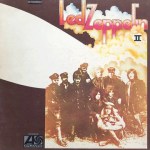
The Zep II is incredible. Easily the best sounding album I now own and the crown jewel of my collection. And so quiet too. Especially compared to my other 2 RL hot mix copies I got while I was in hot pursuit of the holy grail. I love that you guys conservatively grade everything. More often than not I’ve been impressed by how much more quiet the records are than I expect them to be. As I mentioned previously this was a huge splurge for me and not something I’ll be able to do often, but now having heard it many times over it’s unequivocally worth every penny.

It occurred to me while listening to it the other night that you guys aren’t selling records. You’re selling time machines. I now possess a near infinitely-reusable ticket to go to a Led Zeppelin concert literally any time I feel like it. And I wasn’t even born yet when that was actually possible. Still trying to wrap my head around that. Could easily say the same for my Dark Side hot stamper as well.

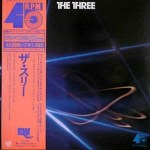
Almost equally as exiting was to take a flier on the 45 rpm copy of The Three you all put on offer a couple weeks ago. I had never heard of the album or Joe Sample at all for that matter. I’ve since listened to the track Funky Blues easily 20+ times since I got it, to the point where I’m forcing myself to curtail my listening frequency before I cause groove damage.

This might just be my new favorite song. And it’s easily catapulted to one of my top 10 favorite albums.

The first time I heard Shelly Manne whack that snare a few seconds into the song I nearly dropped my drink. Then he did it again a few measures later and I knew I was in for a real treat. The piano is just haunting. Even the bass is unreal. I’ll stop here because I’m sure you don’t need me to tell you, but thank you for this one, this is something special as well.

I love it so much I have an ask. Any chance you guys have a low grade hot stamper copy of the 33 rpm version kicking around after your last shootout? After spending 400 on the 45 I can’t justify a second copy for hundreds of dollars but I’m dying to hear the rest of the album now. I’d pull the trigger on even your lowest grade most affordable copy if you have one, just to hear the last 2 tracks. And possibly take a little wear and tear off the poor grooves of my 45 at the same time!

Anyway I’ve rambled on enough for one evening (no Zep pun intended) but did want to be sure to express my sincere gratitude for your services. You all have well-earned another loyal customer at this point. Appreciate you indulging me and look forward to many more hot stampers to come!

Best,
Carter

Carter,

Thank you very much for taking the time to write about your experiences with three of the very special records we’ve sent you. Those are amazingly good records, no question about it.

And it seems you have discovered through those three pressings what our Hot Stampers have in such abundance, and what modern records are mostly missing to their all-but-fatal detriment.

We don’t go out of our way to use many technical terms here on the blog, but since there is one that perfectly fits the quality you describe, we will look the other way and just break our longstanding rule and put it out there, simply because it has a special something that we feel perfectly describes the aspect of the sound you are hearing but not quite able to put your finger on.

The phrase you are most likely looking for is je ne sais quoi.

As the dictionary has it, there is without a doubt an appealing quality to our records that cannot be adequately described or expressed.

The appealing quality of our Hot Stamper pressings is born of many factors, most of which we do not understand.

But here’s one: our records are cleaned in such a way that the mysterious quality you speak of is brought out to an exceptional — I might go so far as to say unparalleled — degree. No other cleaning regimen of which we are aware can do what The Prelude System can do for maximum JNSQ Factor (if I may take the liberty of abbreviating the term. Easier to type that way, to be honest).

We talk about all the things we are listening for when comparing records — various aspects of the bass reproduction, the amount of midrange presence, spaciousness, etc., etc., and we write down what we are hearing in all those areas on our notes, some of which we share with our readers right here on the blog.

If you’ve ever done one of these multi-record shootouts, you know it helps to focus on the details of the recording as you listen and scribble away at your notes. It gives you something to do while the music is impressing the hell out of your eardrums and sending endorphins surging deep into your brain matter.

But what is the final grade going to be? Do you simply add up all the factors and weigh them appropriately to come up with the overall grade you then award the record? What about the JNSQ factor? How much of that goes into the final grade?

It’s really not that complicated. The best sides do everything right. The next best sides do almost everything right, falling short in one area or another, which means they typically earn grades of 2.5+, and on down the line to the Supers and those with lesser grades.

The JNSQ Factor doesn’t really seem to make that much of a difference because all the particulars are there in the sound and they all add up to a fabulous listening experience, the kind you described in your letter.

But all of the above talk about grading misses the point entirely.

The JNSQ factor is the thing that vintage pressings have in spades and modern pressings are mostly missing. They are the mysterious, unnameable heart and soul of vintage vinyl. They are the main reason your new records don’t feel right even when they mostly sound right.

How it came to be that mass-produced records from 50 to 75 years ago often have all the magic of the music encoded in their grooves and new records rarely do is a mystery no one seems to be able to answer. We certainly can’t.

But we know it when we hear it.

And if we hear it, there must be something to it, and if there is something to it, that thing is going to need a name.

Je ne sais quoi works as well as any other, so we’ll go with that one if it’s all the same to you.

(more…)

An Insult to Aaron Copland on Reference Records

Hot Stamper Pressings of Orchestral Music Available Now

Yet another Reference Record we’ve reviewed and found wanting.

In all the years I was selling audiophile records, one of the labels whose appeal made no sense to me whatsoever (along with their long-forgotten TAS list brethren, American Gramaphone and Telarc) was Reference Records.

Back then, when I would hear one of their orchestral or classical recordings, I was always left thinking, “Why do audiophiles like these records?”

I was confused, because at that time, back in the 80s, I had simply not developed the listening skills that today make it so easy to recognize the faults of their recordings.

I made the mistake of thinking that other audiophiles with more advanced equipment and more refined listening skills must be hearing something I was not.

I had trouble putting my finger on what I didn’t like about them, but now, having worked full time (and then some!) for more than twenty years to develop better critical listening skills, the shortcomings of their records, or, to be more accurate, the shortcomings of this particular copy of this particular title, took no time at all to work out.

My transcribed notes for RR-22:

  • Lean tonality
  • No real weight
  • No Tubey Magic
  • Blurry imaging when loud
  • No real depth
  • Bright tonal balance

Is this the sound you are looking for in an audiophile record?

Shouldn’t you be looking for audiophile quality sound?

Well, you sure won’t find it here.

On our current playback system, this Reference Record is nothing but a joke, a joke played on a much-too-credulous audiophile public by the ridiculously inept and misguided engineers and producers who worked for Reference Records.

This is a reference for something? For what?

As I wrote about another one of their awful releases, if this is your idea of a reference record, you are in real trouble.

It would be hard to imagine that anyone who has ever heard a good vintage classical recording — here are some of our favorites — could ever confuse this piece of audiophile trash with actual hi-fidelity orchestral sound.

(more…)

The Power of the Orchestra – Remastered by the Brain Trust at Chesky

Hot Stamper Pressings of Pictures at an Exhibition Available Now

Sonic Grade: F

Lifeless, compressed and thin sounding, here you will find practically none of the weight and whomp that turn the best Living Stereo pressings into the powerful listening experiences we know them to be.

We know that because we’ve played them by the hundreds on big speakers at loud levels.

It’s clean and transparent, I’ll give it that, which is no doubt why so many audiophiles have been fooled into thinking it actually sounds better than the original.

But of course there is no original. There are thousands of them, and they all sound different. (A concept we embraced many years ago and have never found any reason to doubt.)

The commentary reproduced below, from way back when, discusses a pair of records that proves our case in the clearest possible way.

We sold a 2-pack of Hot Stamper pressings, one with a good side one and one with a good side two. Why? Because the other sides were terrible! If you have a bad original, perhaps the Chesky will be better.

Our advice is not to own a bad original, or this poorly-mastered Chesky reissue, but instead we advise that you make the effort to find a good original, or two or three, as many as it takes to get two good sides.

(more…)

Seriously, This is Your Idea of Analog?

Audiophile Quality Pressings of Orchestral Music Available Now

Whether made by Klavier or any other label, starting at some point in the mid-90s, many Heavy Vinyl pressings started to have a shortcoming that nowadays we find insufferable: they are just too damn smooth.

Smeary, thickdullopaque, and lacking in ambience, this record has all the hallmarks of the modern Heavy Vinyl reissue.

The sound is smeary, thick and opaque because, among other things, the record was mastered by Doug Sax from a copy tape, and not all that well either.

It is yet another murky audiophile piece of trash from the mastering lathe of the formerly brilliant Doug Sax. He used to cut the best sounding records in the world. Then he started working for Analogue Productions and never cut a good record again as far as I know.

On this record, in Doug’s defense it’s only fair to point out that he had dub tapes to work with, which is neither here nor there as these pressings are not worth the dime’s worth of vinyl used to make them.

Maybe the hearing-challenged Chad Kassem wanted this sound — almost all his remastered titles have the same faults as this Klavier — and simply asked that Doug cut it to sound real good like analog spossed to sound in the mind of this kingpin, which meant smooth, fat, thick and smeary.

Yes, this is exactly what some folks think analog should sound like.

Just ask whoever mastered the Beatles records in 2014. Somebody boosted the bass and smoothed out the upper midrange, and I don’t think they did that by accident. They actually thought it was good idea.

Harry Moss obviously would not have agreed, but he’s not around anymore to do the job right.

(more…)

We Used to Really Like The Forward Look on UHQR

Audiophile Records with Honest-to-Goodness Top Quality Sound

Hot Stamper Pressings of Live Jazz Recordings Available Now

This is a very old review, probably from 2010 or thereabouts.

Hard to say what we would think of this pressing today, what with our unwavering antipathy to Half Speed mastering. In the case of this record, you can add the consistently poor track record of the so-called UHQR to our list of reasons for suspecting that the quality would not in fact by Ultra High.

You are no doubt aware that the UHQR was recently brought back from the dead by Analogue Productions on a pressing whose packaging is quite a bit more impressive than its sound.

Our Old Review

This is a BRAND NEW UNPLAYED Reference 45 RPM Half-Speed Mastered UHQR LP. They only made 1,000 of these, so sealed or unplayed copies are virtually non-existent.

This is actually one of the best sounding Reference Records. It was recorded in the ’50s on location and has very natural sound. Half-Speed Mastered by Jack Hunt even!

I think the exceptionally natural sound found on this record is the result of two factors:

  1. It’s a live recording, meaning not everything can be controlled and the space is real, not engineered. And,
  2. This is early days in the recording history of Keith Johnson. As time went on he thought his engineering skills were improving, but I see little evidence of that in the results of his labors: the records he’s been making since 1957.

His records are as phony and weird as practically every other audiophile label of the day (M&K, Telarc, Chesky), no doubt the result of these audiophile types thinking they knew a lot more about recording music than turned out to be the case.

Play any vintage pressing from the ’50s to see exactly what they failed to accomplish.

We know of at least two releases on Reference Records with “astoundingly” bad sound.

Both figure prominently on our list of the worst kind of audiophile bullshit records.


Further Reading

If This Is Your Idea of a Reference Record, You Are in Real Trouble

Hot Stamper Pressings of TAS List Super Disc Albums Available Now

An astoundingly bad Sound Show!!

An audiophile hall of shame pressing and a Half-Speed mastered disaster if there ever was one. If this Reference LP isn’t the perfect example of a pass/not-yet record, I can’t imagine what would be. It is just awful.

Mastered by none other than Stan Ricker. RR-7 also appears to still be on Harry Pearson’s TAS List.

My recent notes can be seen below. (The 1 in the upper left hand corner is my abbreviation for side one, which seems to be the worst side of the two here.)

Track two, the Red Norvo selection, is a real mess, highlighting the problems typically caused by Half Speed Mastering, especially at the hands of one of the most notorious “Audiophile” Mastering Engineers of All Time, the late Stan Ricker. Who cut as many bad sounding records as SR/2 himself? No one I can think of comes close.

His records, with few exceptions, suffer from bad bass (probably bloated and poorly defined in this case, my notes don’t say but after playing these records for thirty years I doubt I’m very off with this guess) and phony, boosted highs, which cause the striking of the mallets to be emphasized in an especially unnatural and unpleasant way.

Arthur Lyman had dramatically better sound in the 50s.

How come none of the audiophiles at Reference Records bothered to figure out how he did it?

Can anybody take sound like this seriously?

There is only one group that buys into this kind of ridiculous, shockingly unnatural sound, and they go by the name of Audiophiles. They are the True Believers who can be found expressing their opinions on every audiophile forum on the internet. They will tell you all the reasons why this record should sound good — most of which can be found on the back of the jacket — without ever noticing that the sound is actually quite awful, regardless of the good intentions of Professor Johnson, Stan Ricker and everybody else involved with this disastrous piece of audiophile trash.

Can you imagine using a record this wrong to test and tune your stereo with?

One thing you can be sure of: You would end up with one lousy sounding system.

But Mobile Fidelity has been making Half Speed mastered records that sound every bit as wrong as this one, and they are still at it, to the tune of millions of dollars in sales a year.

Dire Straits’ first album comes to mind immediately. I’m just waiting to find the time to review it.

Self-described audiophiles seem to be eating their records up, never noticing how phony they sound. For the life of me I cannot understand it.

The bad records Mobile Fidelity was making in the 70s and 80s tended to have sloppy bass, sucked-out mids and a boosted top end.

The ones they make now tend to be overly smooth up top (the sound of analog!), with sloppy bass and sucked-out mids.

Apparently there is a market for records with that kind of sound.

(more…)

More Bad Tube Mastering from the Formerly Brilliant Doug Sax

Audiophile Quality Pressings of Orchestral Music Available Now

Sonic Grade: F

The sound is smeary, thick and opaque because, among other things, the record was mastered by Doug Sax on tube equipment from a copy tape, and not all that well either.

It is yet another murky audiophile piece of trash from the mastering lathe of the formerly brilliant Doug Sax. Back in the day he cut some the best sounding records ever made.

Then he started working for Analogue Productions and never cut a good sounding record again as far as I know. (Obviously I cannot have played everything he worked on from the mid-90s on. Who would have the time? Who would even want to?)

On this Offenbach record, in Doug’s defense it’s only fair to point out that he had dub tapes to work with, which is neither here nor there as these pressings are not worth the dime’s worth of vinyl used to make them.

Should you buy a record because it was made this way?

According to the back of the jacket:

Mastering by Doug Sax at The Mastering Lab using an all vacuum tube system.

Single Step processing was used for this “Limited Edition” release. The stamper was made from the first generation master and not more than 500 were pressed from each stamper. This process allows all records to be of “test pressing quality.” Klavier records are used by many manufacturers and audio specialty shops for demonstrating their equipment.

Maybe the notoriously hearing-challenged Chad Kassem wanted this sound — almost all his remastered titles have the same faults — and simply asked that Doug cut it to sound real good like analog spossed ta sound in the mind of this kingpin, which meant smooth, fat, thick and smeary. (Back in the 70s, if you had a fairly typical stereo system — Japanese receiver and three-way box speakers with a 12″ woofer — you surely know the sound I am talking about. Record stores are one of the few places one can go to hear that sound these days. If you’re old like me, it can really take you back.)

This Is Analog?

Apparently, even in our modern era this is what some folks think analog should sound like.

(more…)

1812 Overture on Telarc

More of the music of Peter Ilyich Tchaikovsky (1840-1893)

Reviews and Commentaries for Recordings of the 1812 Overture

Sonic Grade: D

If you want an amazingly dynamic 1812 with huge amounts of deep bass reproduced for the cannon, you can’t do much better than this (or its UHQR brother). 

But if you want rich, sweet and tonally correct brass and strings, you had best look elsewhere. I’ve never liked the sound of this record and I’m guessing if I heard a copy today I would like it even less. 

Who in his right mind thinks live classical music actually sounds like this?

Telarc makes clean, modern sounding records. To these ears they sound pretty much like CDs.

If that’s your sound you can save yourself a lot of money avoiding vintage Golden Age recordings, especially the ones we sell. They’re much more expensive and rarely as quiet, but — again, to these ears — the colors and textures of real instruments seems to come to life in their grooves, and in practically no others.

We include in this modern group analog labels such as Reference, Sheffield, Chesky, Athena and the like. Having heard hundreds of amazing vintage pressings, at this stage of the game I find it hard to take any of them seriously.

Twenty years ago, maybe. But twenty years is a long time, especially in the world of audio.

We started a list of records that suffer from a lack of Tubey Magic like this one, and it can be found here.

(more…)

We Heap Scorn Upon Chesky Records, With Good Reason

More of the music of Rimsky-Korsakov (1844-1908)

Sonic Grade: F

Chesky is one of the WORST AUDIOPHILE LABELS in the history of the world. Their recordings are so artificial and “wrong” that they defy understanding. That some audiophiles actually buy into this junk sound is equal parts astonishing and depressing.

Their own records are a joke, and their remasterings of the RCA Living Stereo catalog are an abomination.

The best RCA Living Stereo pressings are full of Tubey Magic. The Chesky pressings I have played have none.

What else would you need to know about their awful records than that?

If there is a more CLUELESS audiophile label on the planet, I don’t know what it could be, and I don’t want to find out. 

(Turns out there is someone producing the worst kind of remastered junk vinyl who may be even more clueless than Chesky, imagine that!)