Audiophile Labels – Reviews and Commentaries

Le Cid on Klavier – Now With Added Smile Curve

Presenting Yet Another Pressing Perfectly Suited to the Stereos of the Past

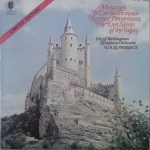
This hi-fi-ish Doug Sax/ Acoustic Sounds butchering of Fremaux’s performance from 1971 is insufferable. These Klavier pressings of EMI recordings are nothing but Audiophile Bullshit.

Can this possibly be the sound that EMI engineer Stuart Eltham was after?

Back in the day, audiophiles in droves bought this pressing from all the major mail order audiophile record dealers (you know who I’m talking about), apparently not noticing the overblown bass and spark-spark-sparkling top end. 

Perhaps the same audiophiles who think that Mobile Fidelity makes good sounding records? It would not surprise me. Same odd-tasting wine, different bottle.

The Smile Curve

If you’ve spent any time on this site, you should know by now that many audiophile records sound worse than the typical CD. The typical CD does not have an equalization curve resembling a smile. The classic smile curve starts up high on the left, gets low in the middle, and rises again at the end, resulting in boosted bass, boosted top end, and a sucked out midrange — the Mobile Fidelity formula in a nutshell.

If your system needs boosted bass and highs, perhaps because your speakers are too small, well, I suppose you could try this Klavier pressing.

Here’s a better idea.

Fix your f-ing stereo so you won’t need phony audiophile records like this one to make it sound good.

Either of the two records you see below will be dramatically better sounding than the Klavier Heavy Vinyl. The best pressings of this one win all the shootouts, but the Greensleeves Budget reissue pressing can also sound very good, with the better pressings earning a grade of 2+ or thereabouts.

(more…)

The Fox Touch Is Not As Good As We Thought, Sorry!

Hot Stamper Pressings of the Music of J.S. Bach Available Now

The review reproduced below was written in 2010. More recently (2015 or so) I have played copies of these Crystal Clear organ recordings and been much less impressed.

The ambience is a fraction of what it should be, and the reason I know that is that the vintage organ recordings we play these days have dramatically more size and space than these audiophile pressings do. (We wrote about it here.)

A classic case of live and learn.

As we like to say, all these audiophile records sound great sitting on the shelf. When you finally pull one out to play it, you may find that it doesn’t sound the nearly as good as you remember, and that’s a good thing.

It’s a sign you are making progress in this hobby.

Ten years from now, if during that time you’ve worked hard on your stereo system, room, electricity and all the rest, your Heavy Vinyl pressings will also have plenty of flaws you never knew were there.

Our customers know what I am talking about. Some have even written us letters about it.

Linked here are some other records that are good for testing orchestral depth, size and space.


Our old review — way off the mark it seems!

White Hot on both sides, a DEMO DISC quality organ Direct to Disc recording.

Full, rich, spacious, big and transparent, with no smear.

The size and power of a huge church organ captured in glorious direct to disc analog.

We’ve never been fans of Crystal Clear, but even we must admit this recording is Hard To Fault.

Are we changing our tune about Audiophile records? Not in the least; we love the ones that sound right.

The fact that so few of them do is not our fault. 

The methods used to make a given record are of no interest whatsoever to us. We clean and play the pressings that we have on hand and judge the sound and music according to a single standard that we set for all such recordings. Organ records, in this case, get judged against other organ records. If you’ve been an audiophile for forty years as I have, you’ve heard plenty of organ records.

Practically every audiophile label on the planet produced at least one, and most made more than one. Some of the major labels made them by the dozen in the ’50s and ’60s, and many of those can sound quite wonderful.

Who made this one, how they made it or why they made it the way they did is none of our concern, nor in our mind should it be of any concern to you. The music, the sound and the surfaces are what are important in a record, nothing else.

Richter was making recordings of this caliber for London in the ’50s. Clearly the direct to disc process is not revelatory when it comes to organ records (or any other records for that matter), but finding vintage Londons with quiet vinyl that sound as good as this disc does is neither easy nor cheap these days, so we are happy to offer our Bach loving customers a chance to hear these classic works sounding as good as they can outside of a church or concert hall.

(more…)

Organ Music From Westminster and Its 16 Cycle Note

The piece by Mozart on side one has a true 16 cycle note. Since it has virtually no overtones, the note is more often than not completely undetectable; few stereos in my experience have ever been able to reproduce it. If you have a full-range system, this record will allow you to hear deep bass you may have never heard before.

Let me warn you that these records require extremely transparent, full-bandwidth, neutral stereo systems to sound their best. Most records are “goosed up” in various ways to play on any stereo, regardless of quality. These are the opposite. From my admittedly prejudiced point of view, tubes are an absolute must for the magic of these live recordings to come through. [Or so I thought in 2006. Now, not so much.]

If your system leans more toward the budget side, these Fulton records will leave you wondering what in the world that Tom Port character was talking about.

And of course organ records require good deep bass, the hardest part of the frequency range to reproduce in the typical listening room. With this organ record at least you’ll know what the goal should be.

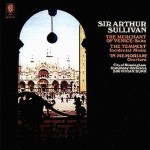
The Merchant of Venice Suite – Another Dubby Klavier Record

Hot Stamper Pressings of Classical and Orchestral Music

Sonic Grade: F

A Hall of Shame Pressing and another Heavy Vinyl Classical LP debunked.

This record sounds like it was mastered from copy tapes, which is where at least some of its dubby sound comes from. All the Klavier Heavy Vinyl pressings we’ve played have this problem.

Yes, it is yet another murky, smeary Audiophile Piece of Trash from the mastering lathe of the formerly brilliant Doug Sax. He used to cut the best sounding records in the world. Once he started cutting Heavy Vinyl it was all over.